
Grease Stains on Pavers: Absorb First, Protect Joint Sand
Blot the oil right away, cover the spot with an absorbent like cat litter, then scrub with a degreasing detergent and a stiff nylon brush. Fresh stains usually give way to household products. Older ones need a poultice, often more than once. Pressure washers can help rinse residue, but misused, they can loosen joints and dislodge pavers.
TL;DR:
- Leave an absorbent on the spill for 2–6 hours, or overnight for stubborn spots, and scrub from the stain's outer edge inward.
- Use dish soap for light marks, a degreaser approved for your paver on set stains, and repeated poultice applications for deep, old stains over several days.
- Use a pressure washer only after treatment to rinse residue; test at low pressure, avoid narrow nozzles, and replace joint sand after the pavers dry.
- Apply a paver compatible sealer only after the surface is completely clean and dry, then follow the manufacturer's reapplication schedule to limit future oil penetration.
- If discoloration persists after several poultice cycles and a labeled remover, replace a paver set in sand or consult a professional before lifting mortared stones.
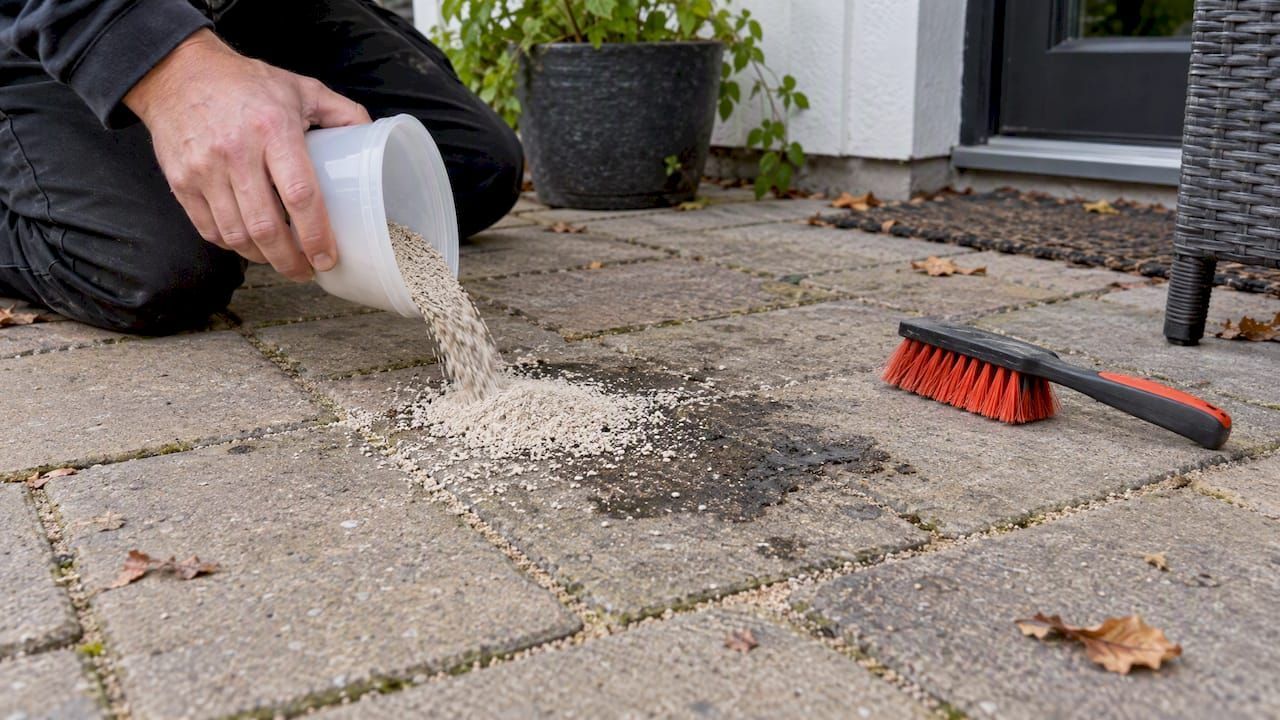
Table of Contents
- What should you do in the first hour after a spill?
- How do you match the method to the stain?
- How does a poultice pull grease out of pavers?
- When is a pressure washer worth using?
- How do you keep grease from coming back?
- What if the stain won't budge?
- What do we recommend from our surface-care experience?
- Why gentle and patient beats aggressive?
- Which Oceancare products fit each job?
- FAQ
- Sources
What should you do in the first hour after a spill?
Speed matters more than strength. Oil that sits on porous pavers keeps soaking in, so the goal is to catch it before it travels deeper.
- Blot, don't wipe. Press paper towels or old rags onto the spill to lift excess oil. Wiping spreads it into more pores.
- Cover the stain with an absorbent such as cat litter, baking soda, or cornstarch. Kitty litter, sawdust, and baking soda all work for this job.
- Let it sit for 2–6 hours, or overnight for stubborn spots, then sweep it up.
- Squirt dish soap or a degreasing detergent directly on the stain and scrub with a stiff nylon brush. Skip wire brushes, which can scratch the surface.
- Rinse with hot water and repeat if a shadow remains.
Work from the outside of the spot inward so you don't push the oil toward clean pavers.
How do you match the method to the stain?
Start gentle and escalate only when the stain tells you to. Each step up in strength raises the odds of dulling the paver or washing out joint sand.
- Fresh or light stains: Dish soap or laundry detergent, a nylon brush, and hot water often finish the job in one session.
- Mild or set-in stains: Use an absorbent first, then a commercial degreaser. Give it enough dwell time to break down the oil before you scrub, and follow the label.
- Deep or old stains: Poultice-style cleaners or specialized oil and grease removers are usually needed. Several treatments over several days may be necessary, and some discoloration can remain on very old stains.
Pro Tip: Test any cleaner on a hidden corner first and let it dry completely. Wet pavers look darker, so judge the result only once the spot is dry.
Manufacturer guidance backs this ladder: detergents lift surface oil and reveal deeper stains, which then call for a dedicated remover or poultice. Always follow the dilution and material-compatibility instructions on the label.
How does a poultice pull grease out of pavers?
Scrubbing works on the surface. A poultice works from below. As the paste dries, it draws oil up and out of the paver's pores, which is why it beats repeated scrubbing on old stains.
Poultices outperform scrubbing on old stains because the drying absorbent creates a pull outward from the pores, while pressure alone mainly moves water across the surface without extracting embedded oil.
A simple homemade version mixes an absorbent such as baking soda or diatomaceous earth with a little degreasing detergent and water. Commercial poultices exist too, but use only products whose label permits your specific paver material.
- Clean off loose dirt and soak up any surface oil.
- Mix the poultice to a thick, peanut-butter paste.
- Spread it over the stain, extending slightly past the edges in an even layer.
- Cover loosely with plastic if the product directs it, and let it dry until it is crumbly and pale.
- Scrape it off, scrub the area, and rinse well.
- Repeat until the stain stops fading.
Plan on more than one round. Setting that expectation up front keeps you from reaching for harsher chemicals out of frustration.
When is a pressure washer worth using?
Think of a pressure washer as a rinsing tool, not a stain extractor. A moderate electric unit can remove surface residue and moss, but it usually won't pull oil out of deep pores. Use it after degreasing or poultice work to flush loosened residue.
- Test in a hidden spot at low pressure before you commit.
- Avoid narrow, high-pressure nozzles. Strong spray can dislodge pavers that aren't securely embedded and strip joint sand.
- Keep the wand moving and hold it at an angle rather than straight down.
- Steer runoff away from garden beds and lawn, since degreaser and oil residue don't belong in plant roots.
- Refill joints with fresh sand once the pavers dry.
If you'd rather hand off a large driveway, a pro who handles sweeping and power washing can take on the rinse stage safely.
How do you keep grease from coming back?
Cleaning fixes the stain. Prevention keeps you from repeating the work. The biggest wins are simple habits.
- Sweep regularly so grit and drips don't build up and hold oil against the surface.
- Put a mat or drip tray under the grill, the car, and anywhere you do messy work.
- Wipe up spills the same day, before oil settles into the pores.
- Apply a paver-compatible sealer, which forms a barrier that slows oil from soaking in. Routine sweeping, prompt cleanup, and a sealer make up the standard protection plan.
- Reapply the sealer on the interval the manufacturer gives.
For surfaces where color and the environment matter, choose a non-acid, low-VOC, plant-based sealer. Our guide on how to protect outdoor stone covers reapplication schedules and compatibility in more detail.
Pro Tip: Seal only after the pavers are completely clean and dry. Sealing over a hidden oil stain can lock it in.
What if the stain won't budge?
After several poultice and degreasing cycles, a faint shadow sometimes stays. That doesn't mean you did anything wrong. Older oil can bond with the paver itself.
Before giving up, run through this order: finish your poultice rounds, try a labeled oil and grease remover made for your paver type, and test it somewhere out of sight first. Our tips on surface restoration can help with the deeper-cleaning workflow.
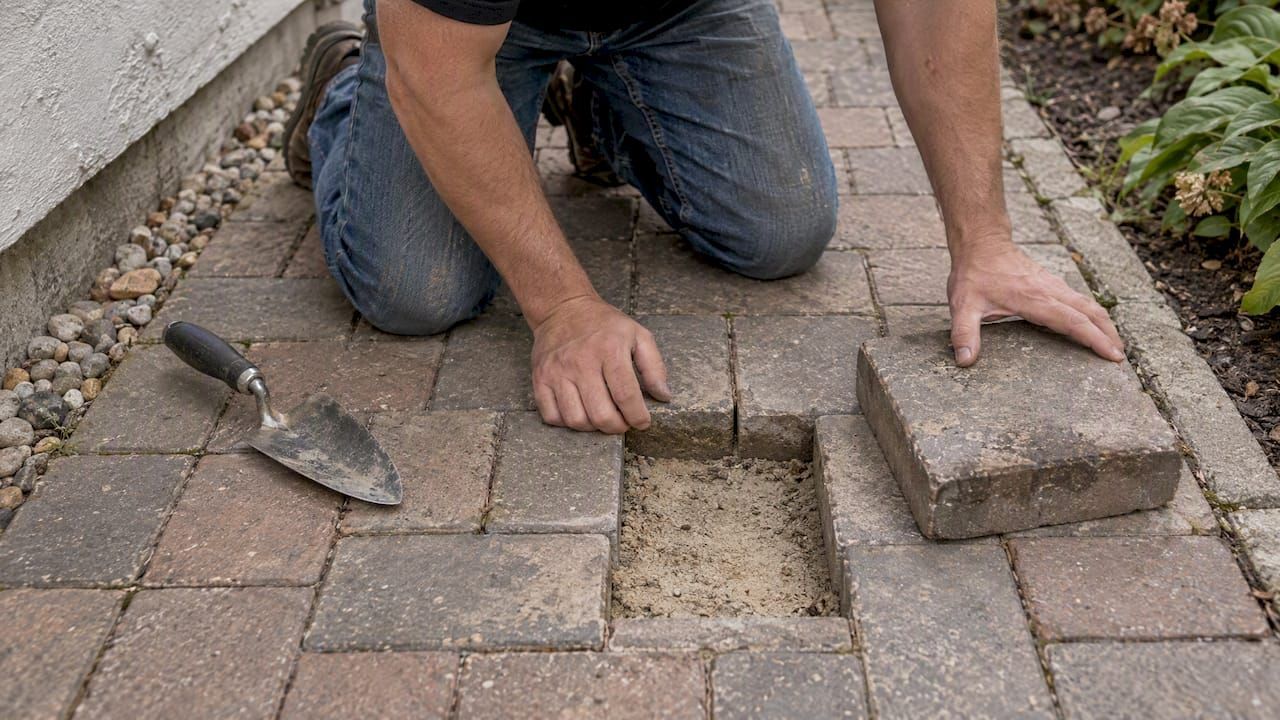
If the discoloration remains, replacing the single affected paver is a practical, often inexpensive fix. With a modular, sand-set installation, you can lift the piece, level the bed, and drop in a match. If your pavers are mortared or the layout is complex, talk with a pro before you start prying.
What do we recommend from our surface-care experience?
Our products are built around plant-based, biodegradable cleaners and low-VOC sealers, and that shapes how we treat pavers. Gentle options can both treat and protect a surface while keeping the impact on your yard low.
Our shortcut is patience. Run several mild cycles of absorb, degrease, and poultice rather than jumping to harsh chemistry. That preserves joint sand and keeps paver color even. Our deeper look at biodegradable outdoor surface cleaning explains how to pick products for each job.
Why gentle and patient beats aggressive?
Most advice on grease stains skips straight to power: stronger chemicals, higher psi, harsher brushes. I think that gets the priorities backward. A grease stain is an absorption problem, not a scrubbing problem, and force mostly damages the things you want to keep, namely joint sand, surface texture, and color.
What the evidence supports is a staged approach: absorb first, degrease second, poultice third. Each stage does a different job, and skipping ahead wastes the strength you'd need later. Most homeowners underestimate how many gentle repeats it takes and overestimate what one aggressive pass can do.
The other overlooked piece is protection. People treat sealing as optional polish, yet it is the one step that changes what the next spill does. If you clean a stain but leave the pavers bare, you've reset the clock, not solved the problem. Do the patient cleaning first, then seal.
Which Oceancare products fit each job?
For fresh and routine grease, our Home Essential Cleaners are the right class: plant-based and gentler than harsh degreasers. For lasting protection after cleaning, choose from our Stone & Grout Sealers, which help limit future staining. Not sure which suits your pavers? Our guide to choosing safe home cleaners walks you through it. Visit the product pages and pick your pair today.
FAQ
Does WD-40 remove oil stains from pavers?
Not reliably. WD-40 is itself an oil-based product, so it can leave its own residue on porous pavers. Stick with a degreasing detergent or a labeled oil and grease remover.
Does grease permanently stain pavers?
Not always. Fresh grease usually comes out with prompt treatment, but older stains may need several poultice treatments and can leave faint discoloration on very old stains.
Does Dawn remove grease from concrete and pavers?
Yes, dish soap like Dawn can lift fresh or light grease when you scrub with a stiff nylon brush and rinse with hot water. Deep-set stains typically need a poultice or specialized remover afterward.
What is the best degreaser for grease stains on pavers?
Choose a degreaser whose label permits your paver material. Specialized oil and grease removers reach deeper than detergents, and plant-based formulas are gentler on joints and surrounding plants.
Sources

