
How to Protect Outdoor Stone: 2026 Homeowner Guide
TL;DR:
- Protecting outdoor stone involves applying penetrating sealers, cleaning with pH-neutral products, and following seasonal routines to prevent damage. Choosing the right sealer, especially siloxane or silicone-based penetrating types, is essential for effective water and oil resistance without trapping moisture. Regular maintenance, including resealing every 1-5 years and careful cleaning, reduces the risk of freeze-thaw cracks and surface deterioration.
Protecting outdoor stone means applying penetrating impregnating sealers, cleaning with pH-neutral products, and following a seasonal maintenance routine to prevent moisture damage, staining, and freeze-thaw deterioration. The industry term for this practice is stone surface protection , and it covers everything from granite patios to limestone steps and slate walkways. Knowing how to protect outdoor stone correctly saves you from costly repairs down the road. Topical sealers trap moisture and fail outdoors, while penetrating sealers let the stone breathe and repel water from within. This guide covers sealer selection, safe cleaning methods, seasonal care, and the mistakes that accelerate stone damage.

How to protect outdoor stone with the right sealer
Sealer selection is the single most important decision in stone surface protection. Get it wrong, and you create more problems than you solve.
Penetrating vs. topical sealers
Penetrating impregnating sealers work by soaking into the stone's pores and forming a barrier below the surface. They repel water and oil without changing the stone's appearance or blocking its ability to release moisture vapor. Topical or film-forming sealers sit on top of the surface. Outdoors, that film traps moisture underneath, which leads to blistering, peeling, and spalling over time.
Silicone and siloxane-based penetrating sealers offer the best freeze-thaw protection for outdoor use. They bond chemically with the stone's minerals and stay flexible through temperature swings. For pool surrounds, patios, and walkways exposed to rain and ground moisture, a siloxane-based product is the standard recommendation from stone care professionals.
Pro Tip: Do a water bead test before resealing. Pour a small amount of water on the stone surface. If it absorbs within 5 minutes, the sealer has worn off and reapplication is due.
How often should you reseal?
Resealing frequency depends on stone density and sun and weather exposure. Porous stones like sandstone, travertine, and limestone need resealing every 1–3 years. Denser stones like granite or slate can go 3–5 years between applications. High-traffic areas and surfaces in direct sun or heavy rain need attention on the shorter end of those ranges.
Sealer application requires the right conditions. Apply sealers when the stone surface is dry, the temperature is between 50°F and 80°F, and no rain is forecast within 24 hours. Direct sunlight causes the sealer to dry too fast, leaving streaks and uneven coverage. Early morning on a mild, overcast day is the ideal window.
| Sealer type | Best use | Reapplication frequency |
|---|---|---|
| Siloxane penetrating | Outdoor patios, steps, pool decks | Every 2–5 years |
| Silicone penetrating | Porous stone in freeze-thaw climates | Every 1–3 years |
| Topical film-forming | Interior floors only | Not recommended outdoors |
| Water-based penetrating | General outdoor stone, low VOC | Every 2–4 years |
How to clean outdoor stone safely without causing damage
Cleaning is preparation. You cannot seal dirty or wet stone and expect good results. The cleaning method you choose also determines whether the stone stays intact or gets damaged before the sealer even goes on.
What to use and what to avoid
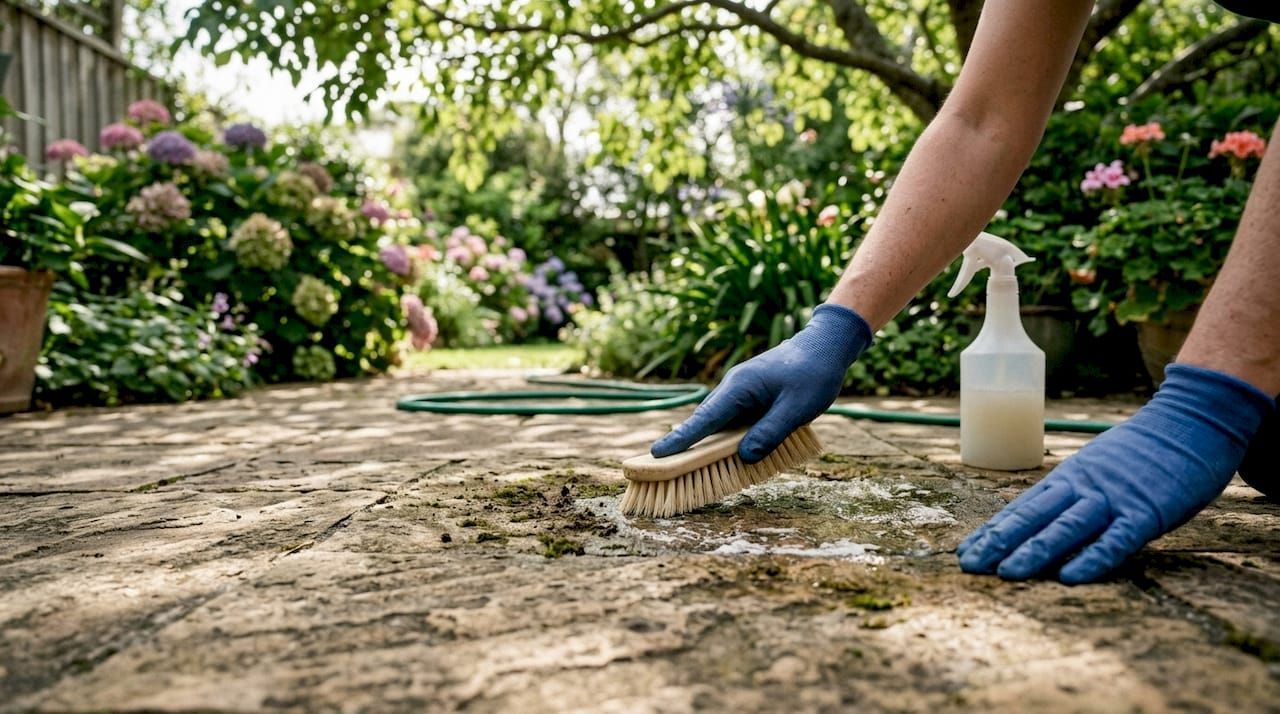
Use pH-neutral or stone-specific cleaners only. Acidic substances like vinegar, lemon juice, and many general-purpose household cleaners etch the surface of calcium-based stones like limestone and marble. Bleach discolors grout and weakens the stone's surface over time. Abrasive scrubbing pads and wire brushes scratch the surface and open up pores to more contamination.
Safe cleaning tools and products for outdoor stone include:
- pH-neutral stone cleaners formulated for natural stone surfaces
- Soft-bristle brushes or non-abrasive scrubbing pads
- Low-pressure washing at under 1,500 PSI to remove dirt without stripping the stone
- Clean water rinse to remove all cleaner residue before it dries
Guidance on using pH-neutral cleaners for patios, walkways, and pool decks confirms that the right cleaner chemistry protects the stone's integrity while still removing grime effectively.
Pro Tip: Pressure washing removes sealers, so always plan to reseal within one week after a pressure wash, once the stone is completely dry.
Letting the stone dry completely
Stone must be fully dry before sealer goes on. Moisture trapped under a sealer creates the same problem as a topical coating: it has nowhere to go and causes the sealer to fail. In humid climates, wait at least 48 hours after cleaning before applying any sealer. In dry conditions, 24 hours is usually enough, but test with the water bead method first.
What seasonal care routines protect outdoor stone year-round?
Stone maintenance is not a one-time event. Think of it the way you think about car maintenance. Sealing outdoor stone is a seasonal routine, not a permanent fix. Each season brings a different threat, and a short routine each quarter keeps damage from building up.
Spring and summer care
Spring is the time to inspect for damage caused by winter freeze-thaw cycles. Look for cracks, chips, or shifting pavers. Catching these early prevents water from getting into larger gaps and causing more structural damage. Clean the surface thoroughly in spring to remove winter grime, salt residue, and organic debris before the warm season begins.
Summer brings UV exposure and heat. Both can degrade sealers faster on south-facing surfaces. Check whether the sealer is still performing by running the water bead test. If the stone absorbs water quickly, reseal before the hottest months arrive.
Fall and winter care
- Remove organic debris regularly. Leaves, dirt, and plant matter retain moisture against the stone surface, which feeds staining and accelerates freeze-thaw damage. Clear debris weekly in fall.
- Apply sealer in late summer or early fall. This gives the sealer time to cure fully before the first freeze. Applying sealer after temperatures drop below 50°F prevents proper bonding.
- Use plastic-edged snow shovels. Metal snow shovels scratch stone surfaces and chip edges. A plastic shovel removes snow without contact damage.
- Choose the right deicer. Sodium chloride (rock salt) chemically deteriorates stone and corrodes grout. Calcium chloride and calcium magnesium acetate are safer alternatives that melt ice without attacking the stone.
- Inspect after each freeze-thaw event. Water expands about 9% when it freezes inside stone pores. That expansion creates internal pressure that causes spalling and cracking. Catching new cracks early limits the damage.
What are common mistakes that damage outdoor stone?
Most stone damage comes from a short list of repeated errors. Recognizing them is the fastest way to stop the cycle of deterioration.
- Using film-forming sealers outdoors. Topical coatings blister and peel when moisture gets trapped beneath them. Once they fail, removing them requires aggressive stripping that can damage the stone. Learn more about common sealer problems before choosing a product.
- Sealing wet or cold stone. Applying sealer when the stone is damp or below 50°F prevents proper penetration and bonding. The sealer sits on the surface and fails quickly.
- Using acidic or abrasive cleaners. Vinegar, citrus-based degreasers, and scouring powders etch soft stones and strip grout. The damage is permanent and cannot be reversed by resealing.
- Skipping resealing intervals. Unsealed or under-sealed stone absorbs water freely. In freeze-thaw climates, that leads to spalling within a single winter. Staining from oil, rust, and organic matter also becomes much harder to remove once it penetrates deep into unsealed pores.
- Using metal tools for snow and ice removal. Metal shovels and ice picks scratch the surface and chip edges. Even one winter season of metal tool use can cause visible damage to softer stones like limestone or sandstone.
- Ignoring professional advice for cracked stone. Surface sealing cannot fix structural cracks or shifting pavers. Cracked or heaving stone needs professional assessment before any sealing work begins.
For homeowners near pools or water features, healthy cleaning practices that avoid harsh chemicals protect both the stone and the surrounding environment.
Key Takeaways
Effective outdoor stone protection requires penetrating sealers, pH-neutral cleaners, and a consistent seasonal maintenance routine applied before freeze-thaw cycles begin.
| Point | Details |
|---|---|
| Choose penetrating sealers | Siloxane or silicone-based penetrating sealers protect without trapping moisture. |
| Reseal on schedule | Porous stones need resealing every 1–3 years; denser stones every 3–5 years. |
| Clean safely before sealing | Use pH-neutral cleaners and pressure under 1,500 PSI; let stone dry fully before sealing. |
| Manage winter carefully | Use plastic shovels and calcium-based deicers to avoid scratching and chemical damage. |
| Inspect every season | Catch cracks and sealer wear early to prevent costly freeze-thaw spalling. |
What I've learned from watching stone surfaces fail
The most common pattern I see is homeowners sealing their stone once, assuming the job is done, and then wondering why the surface looks worse three years later. Sealing is not a one-time fix. It is a maintenance cycle, and skipping it has compounding consequences.
The second thing I notice is that people reach for whatever cleaner is under the sink. Vinegar is the most destructive choice for limestone and travertine, yet it gets recommended constantly because it is "natural." Natural does not mean safe for stone. A pH-neutral cleaner costs about the same and does the job without etching the surface.
One thing I genuinely respect about certain older stone installations is the patina they develop over time. Some stones look better with age when they are maintained properly. Aggressive cleaning strips that character. The goal is protection, not sterilization. Balance protection and aesthetic preference rather than scrubbing the stone back to factory condition every spring.
For cracked or structurally compromised stone, no sealer fixes the underlying problem. Get a professional assessment before spending money on products. Sealing a cracked paver just seals the crack in place.
Stone protection products from Oceancarestore
Outdoor stone needs products built for outdoor conditions. Oceancarestore carries a range of stone and grout sealers formulated specifically for penetrating protection on natural stone surfaces, including patios, steps, pool surrounds, and walkways. These are low-VOC, plant-based formulas designed to protect without trapping moisture or harming the surrounding environment.
The cleaning products in the Oceancarestore line use pH-neutral chemistry that removes grime without etching sensitive stone surfaces. For homeowners managing pool tile alongside outdoor stone, the pool tile maintenance collection covers both surfaces with products safe for regular use. Whether you are preparing for a first seal or refreshing a surface that has gone too long without care, Oceancarestore's product range covers the full maintenance cycle.
FAQ
What is the best sealer for outdoor stone?
Penetrating impregnating sealers, particularly siloxane or silicone-based formulas, are the best choice for outdoor stone. They repel water and oil from within the stone without trapping moisture or forming a surface film that can peel.
How often should outdoor stone be sealed?
Porous stones like travertine and sandstone need resealing every 1–3 years, while denser stones like granite can go 3–5 years between applications. High-traffic or heavily exposed surfaces need attention on the shorter end of those ranges.
Can I use vinegar to clean outdoor stone?
Vinegar is acidic and permanently etches calcium-based stones like limestone, marble, and travertine. Use a pH-neutral stone-specific cleaner instead to remove dirt without damaging the surface.
What temperature is best for applying stone sealer?
Apply sealer when the stone surface temperature is between 50°F and 80°F, the stone is completely dry, and no rain is expected within 24 hours. Avoid applying in direct sunlight, which causes the sealer to dry unevenly.
What deicer is safe for outdoor stone in winter?
Calcium chloride and calcium magnesium acetate are safer alternatives to rock salt (sodium chloride). Rock salt chemically deteriorates stone surfaces and corrodes grout over repeated winter seasons.

