
Biodegradable outdoor surface cleaning guide: 90% faster
Outdoor grime is relentless. Pool tiles collect calcium and algae, natural stone absorbs oil and mold, and patios turn gray with seasons of buildup. The instinct is to reach for the strongest cleaner you can find, but conventional products often leave behind chemical residues that wash into your garden, pool water, and local waterways. Biodegradable cleaners offer a genuinely powerful alternative. They break down safely in the environment, protect your family and pets, and work effectively on the surfaces you care most about. This guide walks you through every step, from choosing ingredients to verifying results, so you can clean smarter without compromising safety.
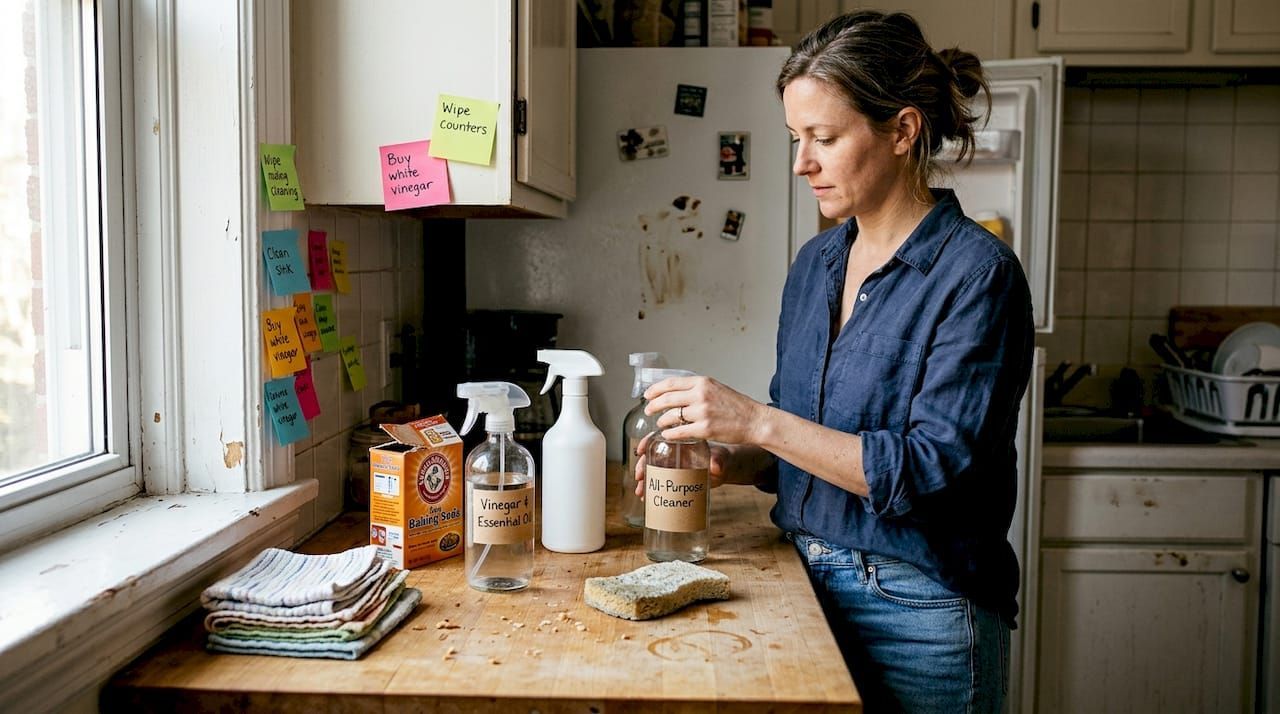
Table of Contents
- Why biodegradable cleaners matter for outdoor surfaces
- Essential tools and ingredients for biodegradable cleaning
- Step-by-step: Biodegradable cleaning for pool tiles, stone, and outdoor areas
- Troubleshooting: Common mistakes and safer alternatives
- How to verify results: Ensuring a truly clean, safe surface
- Going beyond the basics: What most guides miss about biodegradable cleaning
- Take your eco-friendly cleaning further with specialized solutions
- Frequently asked questions
Key Takeaways
| Point | Details |
|---|---|
| Safer outdoor cleaning | Biodegradable cleaners protect your health and environment compared to traditional chemicals. |
| Matching cleaner to surface | Always choose and test cleaners based on your specific outdoor surface for best results. |
| Bulk savings for managers | Buying natural cleaning ingredients in bulk can reduce property management costs by up to 20%. |
| Verify for safety | Check every cleaned surface for residue, streaks, and damage before frequent use. |
Why biodegradable cleaners matter for outdoor surfaces
Conventional cleaners often contain phosphates, chlorine compounds, and synthetic surfactants. When these wash off your patio or pool deck, they flow into storm drains and eventually reach local waterways, harming aquatic wildlife and disrupting plant ecosystems. That's not a minor concern. It's a direct consequence of every cleaning session.
Biodegradable alternatives break down naturally in soil and water. Green cleaners biodegrade 90% faster than conventional chemicals, which means far less long-term contamination from routine maintenance. For homeowners with gardens, pets, or a pool, that difference is significant.
Here's a quick comparison of conventional versus biodegradable cleaner impacts:
| Factor | Conventional cleaners | Biodegradable cleaners |
|---|---|---|
| Runoff risk | High | Low |
| Wildlife impact | Harmful | Minimal |
| Residue on surfaces | Possible | Rare with proper rinse |
| Safe for pool water | Often not | Generally yes |
| Cost over time | Moderate to high | Lower with bulk buying |
For property managers overseeing multiple units, bulk purchasing of biodegradable options like white vinegar, castile soap, and baking soda can reduce supply costs meaningfully. These ingredients are widely available and easy to store.
Some of the most effective biodegradable options include:
- White vinegar : Cuts through mineral deposits and organic buildup
- Baking soda : Gentle abrasive for surface grime
- Castile soap : Plant-based, low-lather, safe for most surfaces
- Lemon juice : Natural acid for light stains and deodorizing
- Enzyme-based cleaners : Breaks down organic matter at a molecular level
"The shift to biodegradable cleaning isn't just about the environment. It's about protecting the surfaces you've invested in and the people who use them every day."
Exploring safer solutions for surface care can help you match the right product to each specific surface. And if you're still weighing your options, reviewing natural vs. chemical cleaners gives useful context for making that decision confidently.
One critical point: DIY green cleaners are effective but require compatibility testing before full application. A cleaner that works beautifully on concrete may damage polished marble. Always check surface type before you start.
Essential tools and ingredients for biodegradable cleaning
Getting results from biodegradable cleaning starts with having the right setup. The ingredients matter, but so do the tools you use to apply and scrub them.
Here's a comparison of core biodegradable ingredients by cleaning power and surface compatibility:
| Ingredient | Cleaning strength | Best for | Avoid on |
|---|---|---|---|
| White vinegar | Strong (acid) | Pool tiles, grout, patios | Marble, limestone |
| Baking soda | Mild (abrasive) | Light grime, deodorizing | Polished stone |
| Castile soap | Moderate | General surfaces, stone | None (pH-neutral) |
| Tea tree oil | Antifungal | Mold, mildew | Sensitive finishes |
| Lemon juice | Mild acid | Light stains, odors | Calcareous stone |
Beyond ingredients, your tools make a real difference. Microfiber cloths are especially valuable because they reduce airborne dust and pollutants while cleaning more effectively than cotton rags at the same task. They also require less cleaning solution overall, which means less product waste.
Essential tools to keep on hand:
- Microfiber cloths : For wiping, buffing, and applying solutions
- Soft-bristle brushes : For grout lines and textured stone
- Spray bottles : For controlled application of diluted solutions
- Buckets : For mixing and rinsing
- Squeegees : For pool tile lines and smooth vertical surfaces
For property managers, bulk natural ingredients like vinegar and baking soda can cut supply costs by 20% or more compared to branded specialty products. That adds up quickly across multiple properties.
Pro Tip: Always use separate labeled tools for pool areas, natural stone, and patio surfaces. Cross-contamination, like using a brush that touched vinegar on marble, can cause unintended damage.
For a broader overview of smart preparation habits, the eco home cleaning best practices guide is worth reviewing before your first session. You can also find a full product and tool breakdown in the cleaning essentials guide.
Step-by-step: Biodegradable cleaning for pool tiles, stone, and outdoor areas
With the right tools ready, here's how to clean each surface type safely and effectively.
Pool tiles
- Rinse the tile surface with clean water to remove loose debris.
- Apply a 1:1 dilution of white vinegar and water using a spray bottle.
- Let it sit for 5 to 10 minutes to loosen mineral deposits.
- Scrub gently with a soft-bristle brush, focusing on grout lines and waterline buildup.
- Rinse thoroughly with fresh water to neutralize any acid residue.
Natural stone surfaces
- Conduct a patch test in a small, hidden area before full application.
- Mix a few drops of castile soap into warm water for a pH-neutral solution.
- Apply with a microfiber cloth using light, circular motions.
- Avoid any acid-based cleaner on calcareous stone like marble or limestone.
- Rinse with clean water and allow to air dry completely.
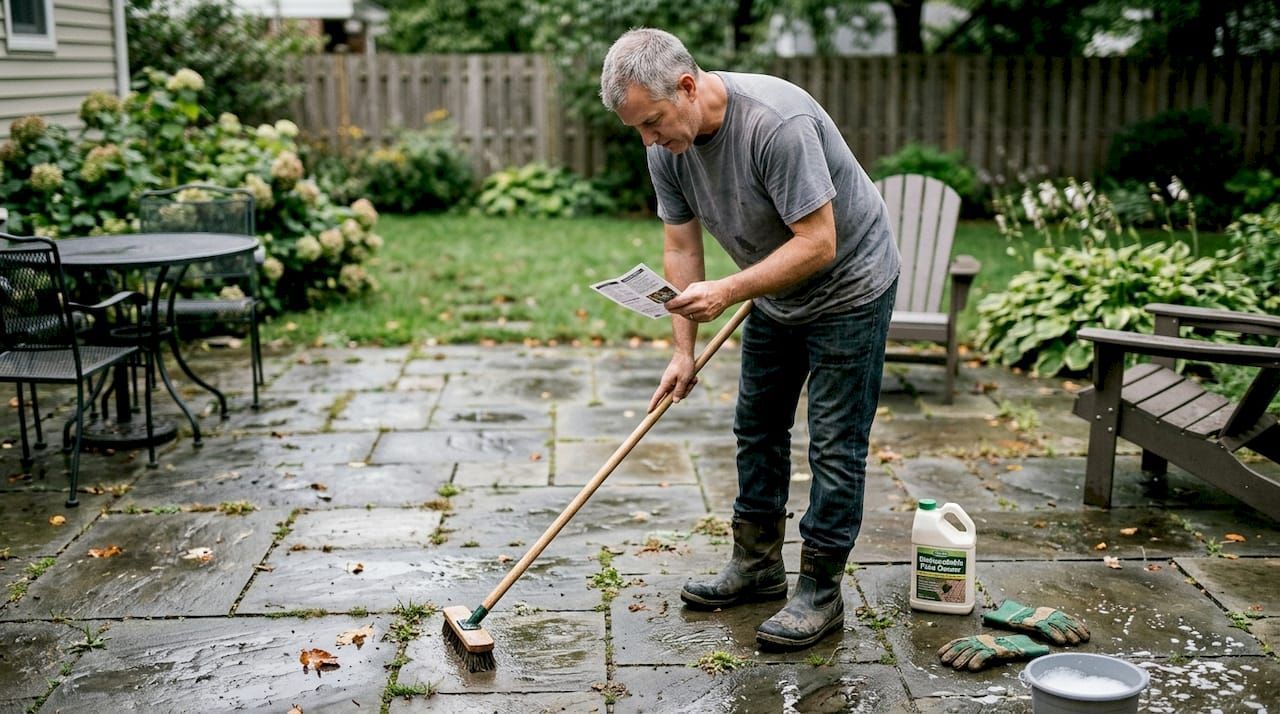
Patios and porous outdoor surfaces
- Sweep away loose dirt, leaves, and debris first.
- Mix a biodegradable cleaner (castile soap or enzyme-based solution) in a bucket.
- Mop or scrub the surface in sections, working from one end to the other.
- Rinse with a hose and allow to dry quickly to prevent mold regrowth.
When it comes to bacterial removal, vinegar achieves a log reduction of 2.1 to 2.9 CFU/cm² on surfaces, making it noticeably more effective than baking soda for microbial cleaning. However, baking soda still outperforms vinegar for absorbing odors and tackling certain mineral-free grime.
Pro Tip: Always conduct a patch test, especially on natural stone. Even a product labeled safe can react differently depending on the stone's finish, porosity, or previous sealer.
For more guidance on making smart product choices, see choosing safe home cleaners and the eco-friendly grout cleaning guide. If you want to go deeper on ingredient safety, the non-toxic surface cleaning resource covers the key considerations clearly.
Troubleshooting: Common mistakes and safer alternatives
Eco-friendly cleaning is forgiving in many ways, but a few common errors can still cause real damage or leave you with disappointing results.
The most frequent mistakes include:
- Overusing vinegar on stone : Even diluted, repeated acid exposure etches marble, travertine, and limestone over time
- Skipping the rinse step : Residue from any cleaner, including biodegradable ones, can attract more dirt or leave streaks
- Using abrasive tools : Steel wool or stiff wire brushes scratch tile glazing and polish finishes permanently
- Mixing incompatible ingredients : Vinegar and castile soap cancel each other out when combined, reducing effectiveness
- Mislabeling spray bottles : Using the wrong solution on the wrong surface is a surprisingly common source of damage
"Acids damage limestone, marble, and some tile finishes even at low concentrations. The label 'natural' does not mean 'safe for every surface.'"
DIY green cleaners may vary in pH, and checking compatibility before applying to a new surface is not optional. It's a basic step that prevents costly repairs.
If you notice a white haze after cleaning, that's usually mineral residue from hard water or an incompletely rinsed cleaner. A second rinse with clean water typically resolves it. For persistent streaks on stone, a pH-neutral cleaner applied with a fresh microfiber cloth usually does the job without risking damage.
For a detailed breakdown of what goes wrong most often, the avoid surface cleaning mistakes guide covers the five most common errors and how to fix each one.
A simple habit that prevents most of these problems: label every spray bottle clearly with the solution name, dilution ratio, and which surfaces it's approved for. It takes 30 seconds and saves a lot of frustration.
How to verify results: Ensuring a truly clean, safe surface
Finishing a cleaning session doesn't mean the job is done. Verifying that surfaces are genuinely clean and undamaged is the step most people skip, and it's where problems quietly develop.
Use this checklist after every cleaning session:
- Look for streaks or haze under direct light
- Check grout lines for remaining discoloration or residue
- Run your hand across the surface to feel for grit or stickiness
- On sealed stone, test water absorption by dropping a small amount of water on the surface. It should bead up, not soak in immediately
- Inspect tile edges and corners where cleaner tends to pool
Green cleaners are effective when surfaces are properly prepared and rinsed. The preparation and rinse steps are just as important as the cleaning itself.
Here's a quick reference for reading what you see after cleaning:
| Visual cue | What it means | Action needed |
|---|---|---|
| Water beads on stone | Sealer intact, surface clean | None |
| Water absorbs quickly | Sealer worn or surface porous | Reseal surface |
| White haze on tile | Mineral residue or cleaner buildup | Rinse again |
| Dull patch on stone | Acid etching or abrasion | Consult a professional |
| Even color, no streaks | Surface clean and undamaged | None |
Repeat cleaning only when buildup is visible or when the water absorption test shows the sealer is compromised. Over-cleaning is a real issue. It strips sealers faster, wears down surface finishes, and wastes product. Less frequent, thorough cleaning beats frequent light scrubbing every time.
For product recommendations that support long-term surface health, the best eco-friendly cleaners guide is a solid starting point.
Going beyond the basics: What most guides miss about biodegradable cleaning
Here's something most cleaning guides won't tell you: the word "biodegradable" has become a shortcut for "safe," and that assumption causes real damage every year. A cleaner can be fully plant-based, certified biodegradable, and still etch your marble or strip your stone sealer if the pH is wrong for that surface.
The mindset shift that actually protects your surfaces is this: know your surface first, then choose your cleaner. Not the other way around.
We've seen homeowners follow a single online recipe for months before noticing their travertine had slowly dulled. The cleaner was biodegradable. It was also acidic. Routine testing and surface-specific maintenance matter far more than any universal recipe.
True eco-cleaning means using fewer products, chosen carefully, and applied correctly. Stocking ten different "natural" cleaners and rotating them randomly is not sustainable cleaning. It's noise. The home essential cleaners that actually work are the ones matched to your specific surfaces and used consistently.
Take your eco-friendly cleaning further with specialized solutions
Ready to simplify your routine? The steps in this guide give you a strong foundation, but maintaining pool tiles, natural stone, and outdoor features over the long term often calls for purpose-built products that go beyond pantry staples.
At
Oceancare Store, we specialize in biodegradable, plant-based cleaners and sealers designed specifically for the surfaces you're working with. Whether you need a
pool tile restorer for stubborn waterline buildup or want to explore our full range of eco-friendly cleaning products, every product is formulated to protect your surfaces while keeping your home and environment safe. Check out our curated list of top eco-friendly cleaners 2026 to find the right fit for every area of your property.
Frequently asked questions
Which biodegradable cleaner is best for pool tiles?
Vinegar is a top choice for everyday organic buildup because it achieves a log reduction of 2.1 to 2.9 CFU/cm² on surfaces, while enzyme-based cleaners work well for stubborn organic stains at the waterline.
Will biodegradable cleaners damage natural stone?
Avoid acidic cleaners like vinegar on calcareous stone surfaces such as marble and limestone. DIY green cleaners must be tested for pH and surface compatibility before full use, and pH-neutral biodegradable products are the safer choice for stone.
Are biodegradable cleaners safe for pets and gardens?
Most biodegradable solutions are far safer for pets and plants than conventional chemical cleaners, but rinsing thoroughly after each session is still important to prevent any residue from accumulating on surfaces or washing into garden beds.
How often should outdoor surfaces be cleaned?
Clean pool tiles and outdoor stone seasonally at minimum, or as soon as visible buildup appears. Cleaning on demand rather than on a fixed schedule helps preserve surface life and reduces unnecessary wear on sealers.
Is baking soda effective for tough stains?
Baking soda is useful for light grime and deodorizing but significantly less effective than vinegar for microbial cleaning, with baking soda achieving a log reduction below 0.8 compared to vinegar's 2.1 to 2.9 range. For mineral stains, a dedicated calcium releaser outperforms both.
Recommended
- 7 Hard Surface Cleaning Best Practices for Eco Homes
- Eco-Friendly Grout Cleaning Guide for Safe Surface Care
- Eco-Friendly Cleaning: Safer Solutions for Surface Care
- 7 Essential Steps for a Hard Surface Cleaning Checklist
- Detergenti per superfici esterne: guida pratica 2026 – Evoluzione Chimica
- Car Detailing Workflow At Home: 70% Less Harmful Runoff

