
24–48 Hour Poultice Can Lift Chlorine Stains on Stone for Homeowners
If a cleaner with chlorine or household bleach hit your stone, rinse immediately. Some marks are surface deposits you can remove with patience, while others are permanent color loss or etching that no cleaning method reverses. Rinse now with plain water, then work through the identification and treatment steps below before you try anything stronger.
TL;DR:
- A powdery crust usually signals removable mineral deposits, while a smooth matte patch suggests etching; a lighter patch without texture change may indicate color loss.
- After rinsing and drying, begin with water, then try a pH neutral stone cleaner or mild dish detergent; stop after two or three gentle attempts.
- For deeper discoloration, cover a hydrogen peroxide and absorbent powder poultice for 24 to 48 hours, then reassess after two or three cycles.
- Never mix bleach with ammonia cleaners, which release toxic gas, or apply acids to marble, travertine, or limestone because these stones etch easily.
- Sealing porous stone slows penetration but does not protect it from bleach; follow the sealer maker's schedule and test cleaners on a hidden area.
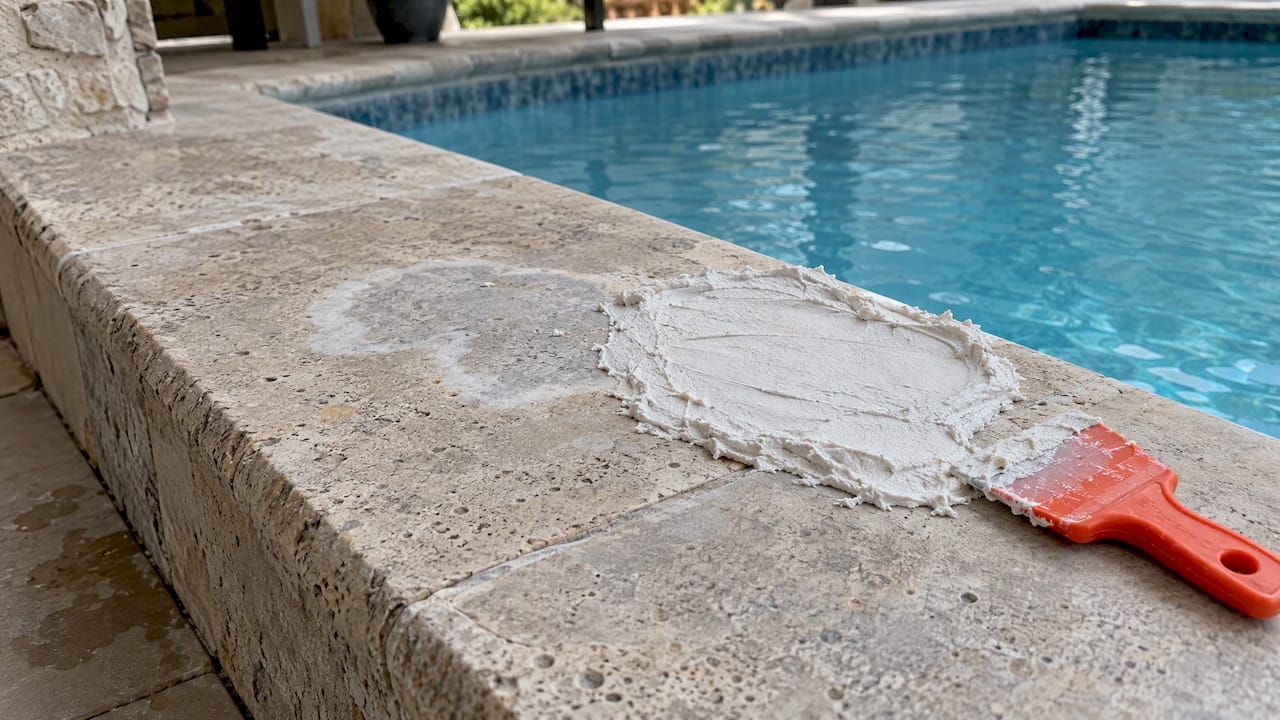
Table of Contents
- Is it a stain, a bleach mark, or chemical etching?
- What to do in the first few minutes
- Cleaning surface chlorine and bleach marks step by step
- Using a poultice for deeper bleach discoloration
- What not to use, and the safety rules that matter most
- Preventing chlorine stains before they start
- How we approach stone-safe, low-VOC treatment
- What realistic restoration looks like
- Treat your stone with products made for it, not against it
- FAQ
- Sources
Is it a stain, a bleach mark, or chemical etching?
Before reaching for any cleaner, figure out what you are actually looking at. Chlorine and bleach can leave three very different marks, and each needs a different response.
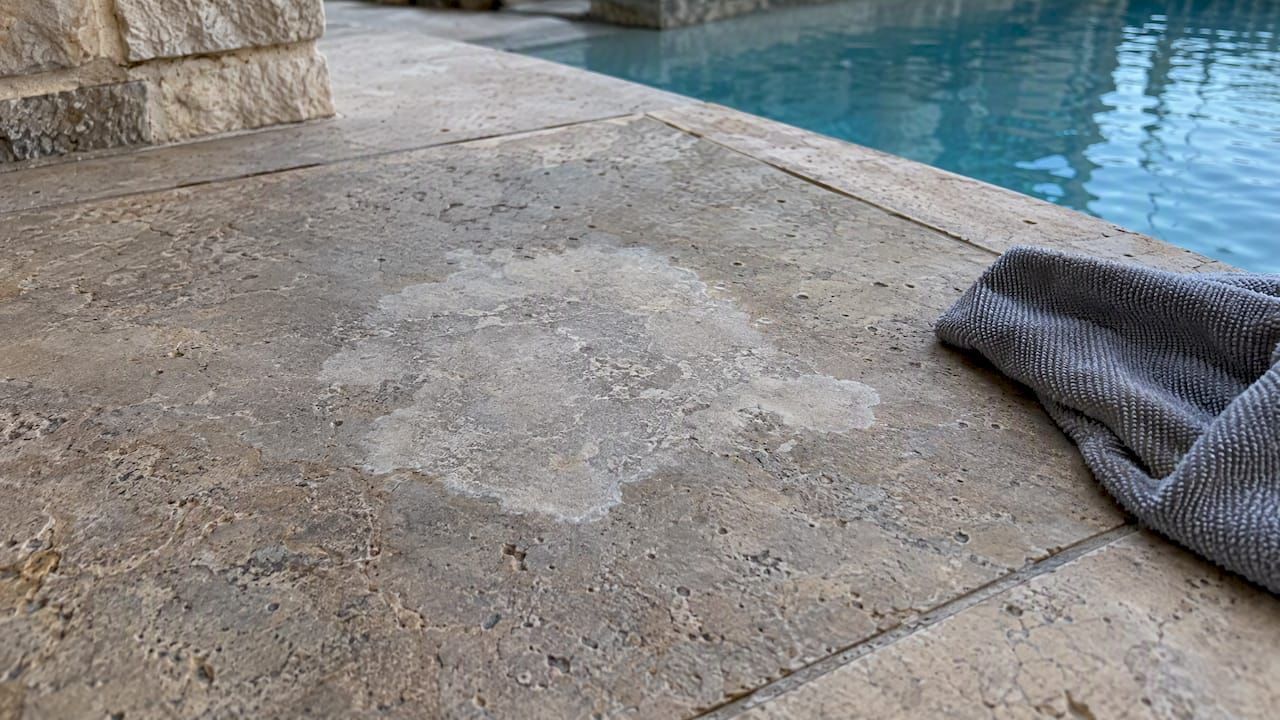
- A powdery white crust or ring usually means mineral deposits or efflorescence, not chemical damage.
- A faded, lighter patch with no texture change often means the bleach pulled color or dye out of the stone itself.
- A dull, slightly rough spot that catches your fingernail is likely etching, a chemical reaction that has eaten into the surface.
Run your fingers over the area with dry hands. A crust feels powdery and can often be brushed or rinsed away. An etch feels smooth but matte, like the polish was erased. Marble, travertine, and limestone are calcareous stones and react fastest to bleach and chlorine, according to Natural Stone Institute stain guidance. Granite and quartzite resist etching far better because they are not calcium-based. Whatever you find, test your cleaning approach on a hidden corner first.
What to do in the first few minutes
Speed matters more than technique in the first minutes after exposure.
- Flood the area with plain water to dilute and carry off the chemical.
- Blot spilled liquid with a clean cloth instead of rubbing it into the pores.
- Remove the source, whether that is a splashed bottle, a wet towel, or pool runoff.
- Skip any neutralizing chemical. Water is the safest first response.
- Contain runoff if you are near grass, metal, or other finishes, and open windows or doors for airflow.
Pro Tip: Never add another cleaning product on top of a fresh bleach spill. Mixing bleach with ammonia-based cleaners produces toxic gas, a hazard HowStuffWorks flags as one of the most common accidental poisonings in home cleaning.
Cleaning surface chlorine and bleach marks step by step
Once the area is rinsed and dry, start with the gentlest method that could work and only escalate if it fails.
- Wipe with water and a soft cloth first. Many light marks lift with nothing more.
- Move to a pH-neutral stone cleaner or a few drops of mild dish detergent in warm water if water alone does not clear it.
- Apply with a soft cloth or sponge, working in small circles, then rinse thoroughly and dry.
- For bleach-related discoloration that looks organic (a yellowish tinge rather than a clean white fade), diluted hydrogen peroxide can help lift the residue on many stones, though results vary by stone type and porosity.
A conservative sequence matters because testing and starting with the least invasive method first reduces the risk of permanent damage , a principle Natural Stone Institute guidance emphasizes for anyone treating an unfamiliar stain.
Watch for signs the stain is not responding: no change after two or three gentle attempts, or the spot staying matte even after rinsing and drying fully. That is your cue to stop scrubbing and move to a poultice instead of pushing harder with the same cleaner.
Using a poultice for deeper bleach discoloration
A poultice pulls a stain out of the stone rather than scrubbing it off the surface, which makes it the right tool when a mark has soaked below the surface or when color loss extends deeper than a quick wipe can reach.
- Choose an absorbent medium such as talc, kaolin clay, or diatomaceous earth mixed into a paste.
- For bleach or organic staining, mix the powder with diluted hydrogen peroxide rather than water, following the stone-specific cautions in GSA poulticing guidance.
- Spread the paste thick enough, extending it beyond the visible stain so dissolved material has room to migrate into the poultice.
- Cover with plastic wrap, tape the edges, and leave it to work for 24 to 48 hours.
- Remove the dried poultice, rinse the area, and inspect. Repeat if the stain has lightened but not cleared.
Aggressive poulticing or repeated oxidizer applications can lighten the surrounding stone unevenly, so stop and reassess after two or three cycles rather than pushing indefinitely.
What not to use, and the safety rules that matter most
Some common cleaning instincts make bleach damage worse or create a genuine hazard.
- Never combine bleach with ammonia-based cleaners. The reaction releases chloramine gas, a well-documented household poisoning risk.
- Avoid acid-based or muriatic products on marble, travertine, or limestone. NPS masonry guidance warns that acids etch calcareous stone and can leave chloride salts that cause long-term damage.
- Skip sanding, wire brushes, or abrasive pads. Mechanical abrasion can smooth away the etch in appearance but strips the polish permanently.
- Wear gloves and eye protection when handling peroxide or poultice pastes, and keep the area ventilated.
Pro Tip: When in doubt about a cleaner's compatibility with your stone, check our guide on cleaner selection and stone safety before applying anything new.
For a deeper look at why bleach specifically causes trouble on stone tile, our breakdown of bleach use on stone tile covers the mechanism in more detail.
Preventing chlorine stains before they start
The easiest stain to treat is the one that never sets in.
- Seal porous stone with a product matched to its type. Sealers reduce how quickly liquids penetrate, but they do not make stone immune to bleach or chlorine contact.
- Rinse any splash or spill within minutes, especially around pool decks and laundry areas.
- Use pH-neutral cleaners for routine maintenance and test any new product on a hidden spot first.
- Around pools, keep chlorine levels balanced, control splash onto coping and deck stone, and route drainage away from unsealed surfaces.
- Reseal on the schedule your sealer manufacturer recommends, since worn sealer offers little protection even if the surface still looks fine.
Our eco-friendly bathroom cleaning guide walks through test-patch habits that apply equally well to pool decks and kitchen counters.
How we approach stone-safe, low-VOC treatment
Our approach to cleaning and sealing products follows the conservative, least-invasive logic described above: water first, pH-neutral formulas next, oxidizers only when needed, and acids avoided on calcareous stone entirely.
- A calcium removal case study shows an acid-free approach to mineral buildup that parallels the gentle-first method used for bleach marks.
- The coverage includes why plant-based cleaners tend to be safer for both the stone and the people using them.
- A restoration overview on essential stone restoration methods explains where poulticing fits among other repair techniques.
What realistic restoration looks like
Some bleach damage is permanent; for professional bathroom upgrades related to stone surfaces, consider contacting Bathroom Remodeling in Lexington & Columbia, SC experts who understand these material sensitivities. Dye loss and etching do not always respond to even careful poulticing, and accepting a partial improvement is sometimes the honest outcome rather than a failure of technique.
Document the stain with a photo before you start, test any product on a hidden area first, and give each conservative step a real chance before moving to something stronger. Patience protects the stone more than persistence does.
Treat your stone with products made for it, not against it
Chlorine and bleach damage often starts with a cleaner that was never meant for natural stone in the first place. We formulate our Home Essential Cleaners and stone lines to be pH-neutral, plant-based, and acid-free, so routine cleaning near pools, kitchens, and bathrooms does not set up the next stain.
- For routine wipe-downs and spill response, pH-neutral cleaners formulated to be gentle enough for marble and limestone can be used.
- If a deeper mark needs poulticing, pair an absorbent medium with a low-VOC liquid rather than a harsh commercial oxidizer.
- Once the stain is resolved, our Stone & Grout Sealers help reduce how far the next splash can penetrate.
Start with a small trial size, test it on a hidden spot, and build from there. Browse our stone and grout sealers to find the right match for your surface.
FAQ
chlorine stains on natural stone
The right remover depends on the stain type: pH-neutral cleaners handle light surface deposits, while deeper or dye-related stains usually need a poultice made from an absorbent medium and a compatible liquid. Testing on a hidden area first, as recommended by Natural Stone Institute, avoids making the mark worse.
How do I remove chlorine stains from concrete?
Rinse the area thoroughly with water first, then apply a poultice using an absorbent powder mixed with diluted hydrogen peroxide for organic or bleach-related discoloration, following the process in GSA poulticing guidance. Let it dry fully before removing, and repeat if needed.
Can I use hydrogen peroxide to remove stains from natural stone?
Diluted hydrogen peroxide can help lift organic or bleach-related discoloration on many stones, especially when used in a poultice rather than applied directly. NPS masonry guidance recommends peroxide-based approaches over acids for calcareous stone like marble and limestone.
Will bleach damage stones?
Bleach can permanently remove color from dyed or finished stone and can etch calcareous stones such as marble, travertine, and limestone. Rinsing immediately after contact limits the damage, but some color loss or etching does not reverse once it happens.
Sources

