
Homeowners Start Concrete Efflorescence Removal With a Dry Brush
Dry brushing and targeted cleaning remove most efflorescence, but you have to fix the moisture source first or the white powder will return. Start with a stiff dry brush, move to a damp wipe or poultice, and keep diluted acid (muriatic or phosphoric) as a last resort. Our eco-friendly cleaners cover routine maintenance afterward.
TL;DR:
- A wet test separates soluble salts, which wipe away, from hard, insoluble crusts that resist water and may need careful mechanical removal.
- Mark and photograph a cleaned patch, then check it after dry weather and rain; persistent dampness, seepage, or visible leaks warrant professional help.
- Use a stiff nylon brush and vacuum first; use a barely damp wipe or paper pulp poultice for soluble salts, avoiding heavy washing.
- Reserve acid treatment for qualified professionals, never use muriatic acid on clay brick, and avoid sandblasting, which can damage masonry.
- Direct soil slope and downspouts away from the foundation, repair cracks, and apply coatings or sealers only after water intrusion is controlled.
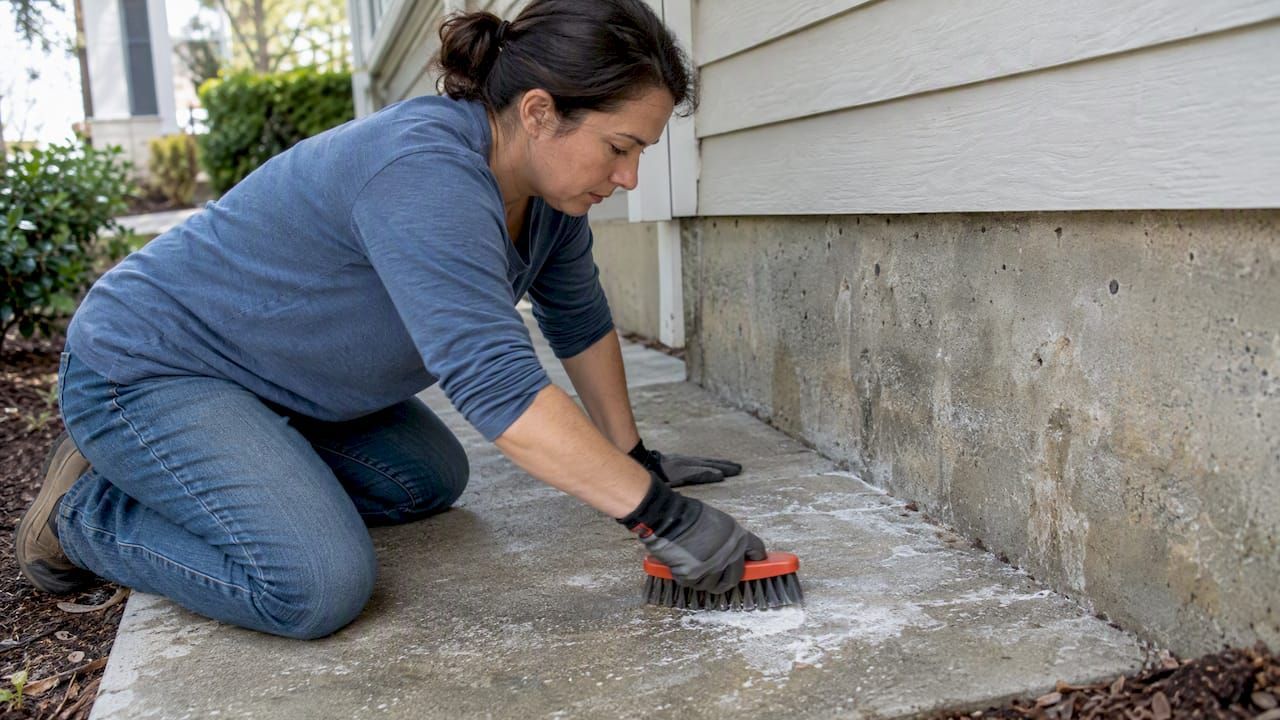
Table of Contents
- What is efflorescence, and is yours soluble or insoluble?
- Why does efflorescence keep coming back?
- How do you inspect the problem and know when to call a pro?
- How do you remove efflorescence step by step?
- How do you stop efflorescence from returning?
- How do you use cleaners and acids safely?
- How do our eco-friendly cleaners and sealers fit this plan?
- Why I put moisture first and cleaning second
- Where can you find eco-friendly cleaners and sealers after removal?
- FAQ
- Sources
What is efflorescence, and is yours soluble or insoluble?
Efflorescence is the white, powdery crust left behind when water moves through porous concrete, dissolves salts, and evaporates at the surface. Telling the two main types apart decides which cleaning method you need.
- Soluble salts: They brush off dry or wipe away with a lightly damp cloth.
- Insoluble (carbonated) deposits: They look like a hard, chalky crust and do not dissolve with water. A quick wet test helps: if the white film seems to disappear when you wet it and comes back as it dries, you are likely dealing with efflorescence rather than a stubborn coating.
- Early-age efflorescence: According to masonry industry guidance, it appears in fresh construction and often cleans off easily as materials cure.
- Late-age efflorescence: The same guidance says it signals a persistent water entry source that should be repaired before you remove the deposits.
Why does efflorescence keep coming back?
Concrete is porous, so any water that enters it can carry dissolved salts toward the surface. When that water evaporates, the salts stay behind. Remove the powder without stopping the water and the cycle simply restarts, because cleaning treats the symptom only.
The most common household sources are:
- Groundwater or rising damp pushing through a basement slab or wall
- Poor exterior grading that sends rain toward the foundation
- Clogged or undersized gutters and downspouts that dump roof runoff beside the wall
- Plumbing leaks inside or behind walls
- High indoor humidity that keeps surfaces damp
Groundworks notes that efflorescence will not disappear on its own while the underlying moisture source persists. It also warns that in basements, hydrostatic pressure forcing water through concrete can lead to foundation damage if the signs are ignored.
How do you inspect the problem and know when to call a pro?
Run through this order before you pick up a brush:
- Note where the deposits sit: near grade level, along cracks, or close to plumbing lines.
- Wet a small patch to see whether the white film is a soluble salt.
- Brush the area clean, mark its edges with painter's tape, and photograph it.
- Recheck the same patch after dry weather and again after rain.
- Walk the outside of the house during a storm and look for pooling water, overflowing gutters, or downspouts that end at the wall.
- Call a professional if dampness continues after repairs, if you see signs of hydrostatic pressure such as water seeping through floor joints, or if you find visible leaks.
A photo log turns guesswork into a pattern. If deposits keep landing in the same spot, that spot is pointing at your water source.
How do you remove efflorescence step by step?
University extension guidance on efflorescence control lays out the order we follow here: gentle first, harsh last.
- Dry brush and vacuum. Use a stiff nylon brush, then vacuum the loose salts so they do not get wet and soak back in.
- Damp wipe or poultice for soluble deposits. Wipe with a barely damp chamois or sponge. For heavy buildup, a paper-pulp poultice can draw salts out of the concrete. Skip heavy washing, which pushes dissolved salts deeper.
- Wire brush insoluble crusts. Loosen hard deposits with a wire brush before reaching for chemicals.
- Leave acid treatment to a professional. Acid can damage masonry and requires careful handling, so consult a qualified professional before considering it.
- Never sandblast masonry. Aggressive abrasives damage the surface, so leave them to professionals.
Pro Tip: If the first poultice leaves salt behind, repeat the cycle. Several rounds usually pull more out than one heavy treatment.
If moisture is still moving through the wall, expect the deposits to come back: Groundworks states that efflorescence will not go away on its own while the moisture source persists, so no cleaner is a permanent fix.
If your problem is on outdoor paving, our paver efflorescence removal guide walks through the same logic for that surface.
How do you stop efflorescence from returning?
Prevention is water management. Start outside, where it is cheapest, and work inward.
- Grading and gutters: Slope soil away from the foundation. Groundworks recommends grading that slopes away from the foundation, and downspouts should discharge well away from the wall.
- Exterior damp-proofing: Building America guidance describes damp-proof coatings such as asphalt emulsion on below-grade walls, parging on masonry block, free-draining backfill, and perimeter drains.
- Interior steps: Seal cracks, run a dehumidifier in damp rooms, and consider a sump pump where groundwater is a recurring problem. For slabs, the same program recommends treating site water first, patching cracks, sealing them with urethane sealant, and applying two coats of concrete-compatible epoxy paint.
- Surface prep matters: Coatings and sealers only hold when the slab is clean and moisture has been dealt with, a point also stressed in ACI's guide to protective treatments.
Seasonal landscape upkeep helps too, and this seasonal exterior stone care guide covers drainage and yard care that keep water moving away from your masonry.
How do you use cleaners and acids safely?
Safety comes before speed, especially with acid.
- Wear chemical-resistant gloves, safety goggles, and long sleeves.
- Test on a small, dry, hidden spot before treating the whole surface.
- Protect nearby plants, metal fixtures, and other materials, and rinse runoff well.
- Leave acid treatment and cleanup to a qualified professional.
- Do not use muriatic acid on clay brick.
- Follow the manufacturer's directions for every proprietary product.
Pro Tip: Do not handle or mix acids yourself. Consult a qualified professional for acid treatment.
How do our eco-friendly cleaners and sealers fit this plan?
We specialize in biodegradable, plant-based, low-VOC cleaners and sealers for hard surfaces, and that focus shapes how we approach efflorescence: gentle methods first, acid only when nothing else works. For routine upkeep after you have cleared the salts, a non-acid cleaner is a sensible choice, and a compatible sealer can protect the surface once moisture is under control. Choose products rated for concrete and follow the surface-prep directions on the label. Our guide to removing calcium buildup without acid shows the approach on sensitive stone, and our walkthrough on tile efflorescence covers tiled concrete.
Why I put moisture first and cleaning second
If I could give you one rule, it would be this: stop the water before you scrub the salt. A spotless wall that stays damp is just a white wall waiting to happen again. Start gentle, test before you reach for acid, and bring in a professional when dampness survives your repairs. That approach protects your concrete and your time.
Where can you find eco-friendly cleaners and sealers after removal?
Once the deposits are gone and the moisture is handled, upkeep is simple. We offer:
- Home Essential Cleaners: non-acid, low-VOC options for routine maintenance on hard surfaces.
- Stone & Grout Sealers: protective sealers for stone and grout.
- Pool Tile Maintenance Products: cleaning and protection for tiled concrete and pool coping.
Browse our categories and read the application guides to match the right cleaner or sealer to your surface, then pick up what you need when you are ready.
FAQ
What is the most effective cleaner for removing efflorescence?
For many deposits, start with a stiff dry brush and a lightly damp wipe. Hard, insoluble crusts may need a wire brush and a cautious dilute acid wash, tested first on a small area, as extension guidance describes.
Will efflorescence go away on its own in concrete?
Not while moisture keeps moving through the concrete. Groundworks says it will not disappear on its own if the source persists. Fresh construction is the exception, since early-age deposits often clear as materials cure.
What is the white powder on my basement walls?
It is most likely efflorescence, salt left behind when moisture passes through the wall and evaporates. A wet test helps confirm it, and persistent powder points to a water source worth finding.
What is efflorescence on pavers?
It is the same salt deposit appearing as a white haze on paver surfaces. It forms when water carries salts through the pavers and evaporates, and it is cleaned with the same gentle-first approach described in our paver guide.
Sources

