
7 Safe Steps to Remove Efflorescence from Pavers for Homeowners
That white powder on your pavers is almost always efflorescence, and the fix follows one order: confirm it, dry brush it, rinse it gently, then escalate to a paver-safe cleaner only if it persists. Never seal over it. Sealing traps the salts underneath and locks in the exact problem you're trying to solve.
TL;DR:
- Light efflorescence often fades on its own as soluble salts are exhausted, while heavy deposits require a careful cleaning routine.
- Start with dry brushing and rinsing using garden tools before escalating to paver-safe cleaners or acid only as a last resort.
- Avoid sealing immediately after cleaning and ensure proper drainage, re-sanding joints with polymeric sand, and waiting 60 to 90 days post-installation to prevent new efflorescence.
- Using acid-based cleaners without precise dilution and neutralization can damage pavers, so choose paver-specific products and follow label instructions carefully.
- Recurring efflorescence may indicate underlying drainage or grading issues that require professional assessment and correction.
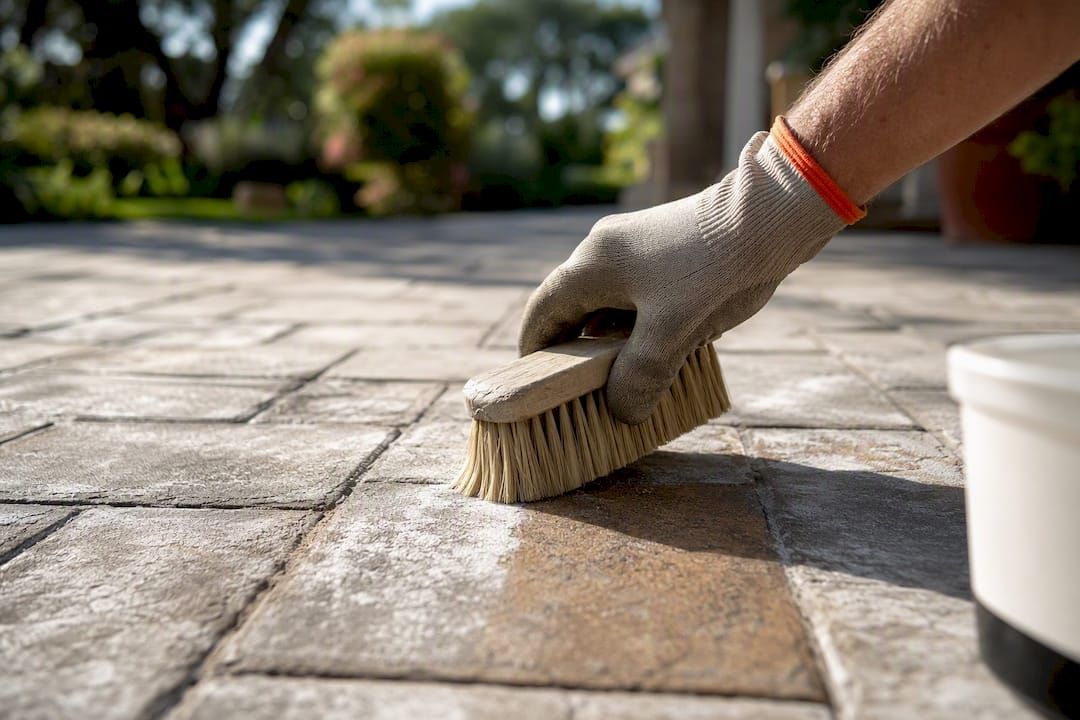
Table of Contents
- Should You Wait, DIY, or Call in Stronger Help?
- How Do You Remove Efflorescence from Pavers Step by Step?
- Choosing the Right Efflorescence Cleaner Without Damaging Your Pavers
- Preventing Efflorescence and Knowing When to Seal
- When Should You Call a Professional for Efflorescence?
- Why Eco-Friendly, Non-Acid Cleaning Deserves a Second Look
- Which Oceancarestore Products Fit Your Efflorescence Stage
- Sources
Should You Wait, DIY, or Call in Stronger Help?
Not every white haze needs a chemical fight. Light efflorescence, a thin, dusty film that wipes off easily and hasn't reappeared for more than a couple of cleaning cycles, often fades on its own as the soluble salts in the concrete get exhausted. Heavy efflorescence looks thicker, crusty in spots, and keeps coming back within days of a rinse. That's your signal to move past patience and into an actual cleaning routine.
Before you touch a paver, gather the right gear:
- A stiff nylon brush (never wire, which can scratch and etch the surface)
- A garden hose with an adjustable nozzle, or a pump sprayer for cleaner application
- Rubber gloves and eye protection
- Plastic sheeting to protect nearby plants and metal fixtures from runoff
If your pavers are newly installed, hold off on sealing entirely. Most manufacturers and installers recommend waiting 60 to 90 days after installation before sealing, since fresh concrete releases salts as it cures and sealing too early just bottles them in.
How Do You Remove Efflorescence from Pavers Step by Step?
Start with the least invasive method and only escalate if it doesn't work. Skipping straight to acid or a pressure washer is how homeowners end up with etched, discolored pavers that look worse than the efflorescence ever did.
- Confirm it's efflorescence. Rub the deposit with a finger. If it's dusty, transfers easily, and seems to vanish when you wet the area (only to return once it dries), you're dealing with efflorescence, not algae or leftover sealer haze. A greasy, dark, or fuzzy residue is a different problem with a different fix.
- Test an inconspicuous spot first. Pick a corner or an area hidden by furniture and try your chosen method there before treating the whole patio or walkway.
- Go dry before you go wet. Sweep, brush with the stiff nylon brush, or use a shop vacuum or leaf blower to lift loose salt crystals off the surface. This alone resolves a surprising number of light cases.
- Rinse at low pressure. Use a standard garden hose, not a pressure washer, to wash away what the brush loosened. Let the pavers dry fully, then reassess in daylight. Some efflorescence won't show its true extent until the surface dries out completely.
- Bring in a paver-specific efflorescence cleaner if the residue persists. Pre-wet the surface, dilute the product exactly per the label, work in small sections rather than the whole area at once, scrub with your nylon brush, and rinse thoroughly before it dries on the surface.
- Reserve acid-based or muriatic acid cleaners for stubborn, last-resort cases. These are effective but risky. Follow the label's dilution ratio precisely, neutralize the residue afterward (a baking soda rinse is a common approach, though you should check the product label since some formulas call for a specific neutralizer), and keep runoff away from plants and metal hardware.
- Re-sand the joints and let everything dry completely. Once the pavers are clean and salt-free, replace lost joint sand and give the surface time to dry before you think about sealing.
Pro Tip: Keep a small notebook or phone photo log of where and when efflorescence appears on your patio. If it shows up in the same spot every few weeks despite cleaning, that's a moisture pattern, not a cleaning failure, and it points straight to a drainage fix.
Choosing the Right Efflorescence Cleaner Without Damaging Your Pavers
Paver-specific efflorescence cleaners, general masonry cleaners, and homemade acidic mixes are not interchangeable. Paver-specific formulas are balanced for the surface; general masonry cleaners can be stronger than pavers need; improvised kitchen-acid mixes are the most common cause of etching and discoloration that a professional later has to fix.
Whatever you choose, read the label like it matters, because it does:
- Dilution ratio (never eyeball this, especially with acid-based products)
- Dwell time (how long the product sits before you scrub or rinse)
- Neutralization step (some products need it, some don't; the label decides)
- Rinse volume needed to fully clear the product from the surface
Using acid-based cleaners without following exact dilution and neutralization guidance is the fastest way to etch a surface or compromise how well a future sealer bonds. The most common mistakes homeowners make: grabbing straight muriatic acid instead of a diluted paver formula, letting any cleaner dry on the surface before rinsing, and reaching for a pressure washer on the "high" setting when a garden hose would have done the job.

Preventing Efflorescence and Knowing When to Seal
Cleaning treats the symptom. Drainage treats the cause. If water keeps moving through or under your pavers, salts will keep migrating to the surface no matter how often you scrub.
- Check that your patio or walkway grades away from the house and toward proper drainage, not toward low spots where water pools.
- Re-sand joints with polymeric sand after any cleaning; it resists washout better than standard joint sand and helps block water infiltration.
- Adjust sprinklers so they aren't soaking the same section of pavers every day, which is a frequent, overlooked cause of recurring efflorescence.
- Wait until pavers are completely dry and efflorescence cycles have stopped, typically 60 to 90 days after installation or a deep clean, before applying sealer.
- Choose a breathable sealer made for pavers so moisture vapor can still escape instead of getting trapped underneath.
When Should You Call a Professional for Efflorescence?
Some efflorescence problems aren't cleaning problems at all. Watch for these signs:
- Efflorescence keeps returning within a week or two despite proper dry brushing and rinsing.
- You see standing water, sunken sections, or cracked pavers nearby , which points to a base or grading failure underneath.
- Joint sand keeps washing out even after re-sanding, suggesting water is moving through the joints faster than it should.
A qualified contractor will typically map moisture sources, check the base material for compaction or drainage failure, and correct grading rather than just treating the surface again. When you call one, ask how they diagnose the cause (not just the symptom), what fix they recommend, their estimated timeline, and whether the work carries any warranty.
Why Eco-Friendly, Non-Acid Cleaning Deserves a Second Look
Muriatic acid gets efflorescence off fast, but fast isn't the same as smart. It can etch stone, kill nearby grass and shrubs, and corrode metal railings and furniture legs if runoff isn't controlled. For most residential cases, a pH-balanced, plant-safe formula does the job without the collateral damage, and it doesn't ask you to handle a hazardous chemical on a Saturday afternoon.
That's the case for reaching for a non-acid, biodegradable formula before an acid one: it's gentler on the surface, safer around kids, pets, and landscaping, and just as capable on the light-to-moderate efflorescence most homeowners are actually dealing with.
Which Oceancarestore Products Fit Your Efflorescence Stage
For light, fresh efflorescence, start with the pH-neutral tile and stone cleaner. It's gentle enough for regular maintenance and often clears a thin haze without any acid involved. If the deposit is thicker or has been building for months, the intensive stone cleaner concentrate is formulated to cut through stubborn mineral buildup while staying biodegradable and low VOC, so you're not trading one problem for another.
Some product lines skip the harsh-acid gamble entirely. Cleaners and sealers that are plant-based and low VOC can offer effective cleaning with less environmental impact, reducing concerns about runoff harming landscaping or corroding metal hardware nearby. Once the surface is clean and fully dry, the high-performance penetrating sealer locks in that result and helps resist future salt migration, provided you've waited out the recommended drying window first. Not sure which comes first for your situation? The cleaner versus sealer guide breaks down exactly when to reach for each one.
Always test any product on a small, hidden section of paver before treating the whole surface, and follow the label's dilution and dwell time instructions exactly. Browse the full lineup at Oceancarestore and pick the product that matches where your pavers actually stand today.
Sources
For deeper reading on the chemistry and process behind this guide, ConcreteNetwork's efflorescence explainer covers why calcium carbonate forms on the surface. The ICPI offers manufacturer-grade installation and maintenance standards. Calymavel's 8-step process and AcidMagic's masonry cleaning guidance both informed the step-by-step sequence above. For plant-friendly runoff practices, see this Chicago Home Inspect guide on cleaning masonry naturally.
- How to Remove Efflorescence from Pavers in 8 Steps (Calymavel)

