
How to Clean Travertine Pavers Without Etching Them
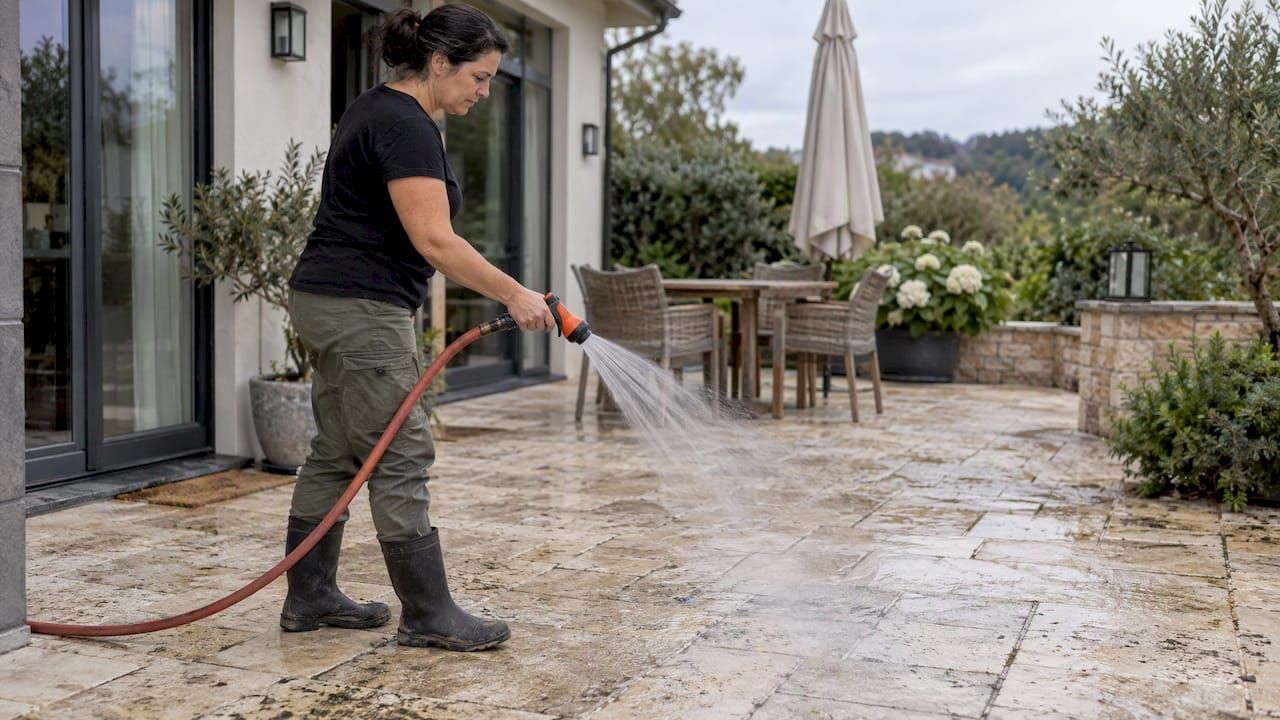
To clean travertine pavers, sweep them, wet them with clear water, scrub with a pH-neutral stone cleaner and a soft brush, then rinse thoroughly. Skip vinegar, lemon-based products and acid "brighteners." Travertine is mostly calcium carbonate, so acid does not lift dirt off it. It eats the stone. The same steps work for a travertine pool deck, a patio or a walkway, and most of them carry over to other soft stone such as a flagstone patio, with one caveat covered below.
TL;DR
- Use only a pH-neutral, stone-safe cleaner. The Natural Stone Institute says calcium carbonate is sensitive to acids, so mild, non-acidic cleaners are recommended.
- Never use vinegar, citrus cleaners or acid-based rust and calcium removers. The damage is etching, which looks like a dull patch and cannot be scrubbed away.
- Sweep and rinse often, scrub with a soft brush, and keep pressure washing gentle, with a wide fan tip and distance.
- Treat deep stains with a poultice, not harder scrubbing. Plan on a 24 to 48 hour dwell.
- Cleaning is not protecting. A penetrating sealer in good condition keeps the next round of dirt, salt and water out of the pores.
Table of Contents
- Why travertine needs different cleaning than concrete or porcelain
- What you need before you start
- Routine cleaning, step by step
- Algae, moss and mildew
- Pressure washing: use less than you think
- What not to use
- Removing deep stains with a poultice
- Cleaning is not protecting: sealing outdoor travertine
- A note on flagstone and other patio stones
- Our perspective
- Cleaning products for travertine from Oceancare
- A simple yearly routine
- Common mistakes
- FAQ
- Sources
Why travertine needs different cleaning than concrete or porcelain
Travertine is a sedimentary rock formed from mineral springs. It is porous, with the pits and banding that give it character, and it is calcareous: its main compound is calcium carbonate, the same material as shells and pearls. That chemistry drives every rule in this guide.
Two consequences matter for outdoor paving:
- It reacts to acid. A laboratory study of acidic weathering on travertine, limestone and marble tested how these carbonate stones respond to acidic exposure, alongside water absorption and salt crystallization resistance. Rain is mildly acidic and city air adds more, which is one reason sealed, well-maintained surfaces age better.
- It absorbs. Open pores take in pool water, plant tannins, rust, oil and salt. A clean-looking paver that no longer beads water will soak up the next spill faster than a sealed one.
So the goal of cleaning is to remove surface soil with a gentle, neutral chemistry and to avoid pushing contaminants deeper.
What you need before you start
- A soft-bristle push broom and a garden hose with a spray nozzle
- A pH-neutral stone cleaner (check the label says neutral or acid-free, and is rated for natural stone)
- A soft nylon deck brush or a soft-bristle scrub brush. No wire brushes, which leave scratches and can leave rust specks
- A bucket, a clean mop or microfiber pad for small areas
- Gloves and eye protection
- Plastic sheeting, tape and an absorbent powder such as kaolin or diatomaceous earth if you expect to poultice a stain
Move planters, grills and furniture first. Heavy items dragged across pavers scratch and can chip them, so lift rather than slide.
Routine cleaning, step by step
For everyday care, the Natural Stone Institute points to pH-neutral, stone-safe detergent in water, and that is all most patios need. Here is the sequence.
- Sweep. Remove leaves, sand and grit with a soft broom. Grit under a brush or mop is what scratches stone.
- Wet the surface with clear water. Pre-wetting keeps the cleaner from soaking in unevenly and staining darker in dry spots.
- Mix the cleaner as the label says. Do not make it stronger. More concentrate does not clean better and is harder to rinse from porous stone.
- Work in sections of about 6 by 6 feet. Apply, scrub gently with the soft brush along the joints and across the face, and keep the section wet.
- Rinse thoroughly. Residue attracts dirt and can leave a film. Rinse until the runoff is clear.
- Let it dry fully before judging the result. Wet travertine looks cleaner than it is.
How often? Care guides generally suggest weekly sweeping and rinsing for busy areas such as pool decks, and a full wash at least once a year for low-traffic patios. Shaded, damp spots grow algae sooner and may need a wash each season.
Algae, moss and mildew
Green or black growth in shaded corners and along pool edges is the most common reason people search for this topic. Start gently:
- Remove the source (overhanging debris, a leaking sprinkler, standing water).
- Flush with clear water and scrub with the neutral cleaner and a soft brush. Light growth often comes off with this alone.
- For stubborn growth, the Natural Stone Institute's stain guidance for biological staining describes a diluted bleach solution of 1/2 cup per gallon of water, tested first in an inconspicuous spot, with a clear-water flush before and a thorough rinse after. Never mix bleach with ammonia, which makes a toxic gas. Plants and nearby surfaces need protecting, and some stone professionals prefer oxygen-based or stone-specific algae products over chlorine bleach. If you want to avoid bleach altogether, try a stone-safe, plant-based cleaner and a second pass first.
Bird droppings and leaf stains from fresh organic material often fade by themselves with sun and rain once the source is gone, according to the same Institute page. Rinse early rather than scrubbing hard.
Pressure washing: use less than you think
A pressure washer is tempting on a big patio, but travertine is softer and more porous than concrete. Hard jets can strip the sealer, widen pits, wash out joint sand and push water and dirt deeper into the stone. Salt makes this worse: the same carbonate stone study measured resistance to salt crystallization damage because salt growing inside pores can break the stone apart from within.
If you do use one:
- Use a wide fan tip (25 to 40 degrees) and keep the nozzle well back from the surface.
- Start with a plain-water pass or a soft-wash with your neutral cleaner, not a pressure blast.
- Keep the wand moving, with no lingering on one spot, and never use a rotating turbo tip.
- Test in a hidden area. If you see sand or fines coming off the surface, back off.
What not to use
Most of the damage we hear about comes from a cleaner that looked harmless.
| Product | Why it is a problem on travertine |
|---|---|
| White vinegar, lemon or citrus cleaners | Mild acids still dissolve calcium carbonate. The result is etching, a dull spot with a rough feel |
| Muriatic acid, acid-based tile and rust cleaners | Rapid, severe etching, and fumes |
| Generic bathroom or "scale" removers | Many contain acids such as phosphoric or hydrochloric |
| Abrasive powders and wire brushes | Scratch the surface and leave metal residue |
| Strong alkaline degreasers left to dwell | Can discolor and leave residue in pores |
The Natural Stone Institute is blunt about the acid issue in its cleaning-products guidance. It also tested vinegar on stone surfaces for sanitizing in a technical bulletin, a good reminder that "natural" and "safe for stone" are different things. If you already have dull, rough patches where something acidic sat, our guide on fixing vinegar etching on travertine explains what can and cannot be reversed. We also explain why acid cleaners harm stone and tile in more detail.
The same rule applies to hard-water scale around pool edges and sprinkler-stained paving. If you need to dissolve calcium buildup, choose an acid-free descaler made for natural stone and not a drugstore acid product. For a wider look at what to leave in the cupboard, this guide to non-toxic marble cleaning without acid covers the same chemistry on another calcareous stone.
Removing deep stains with a poultice
Rust marks, oil, tannin from leaves, sunscreen and chlorine marks sit inside the pore structure, where a surface scrub cannot reach. A poultice draws them out.
Per the Natural Stone Institute's poultice instructions:
- Mix a stone-safe cleaner or chemical suited to the stain with a white absorbent powder such as kaolin or diatomaceous earth, to the consistency of peanut butter.
- Spread it about 1/4 to 1/2 inch thick over the stain, extending slightly past the edges.
- Cover with plastic and tape the edges.
- Leave for 24 to 48 hours, then remove and let the area dry.
- Repeat if needed. Stubborn stains can take several rounds, up to five in the Institute's guidance, and as a rough guide about a pound of poultice material covers a square foot.
Match the chemistry to the stain. Oil needs a different treatment than rust or organic stains, and a wrong choice can set the mark. For chlorine marks near a pool, see our walkthrough on removing chlorine stains on stone with a 24 to 48 hour poultice.
Cleaning is not protecting: sealing outdoor travertine
A clean paver is still an open one. Sealer is what slows the next stain, and it makes the next cleaning easier. Around a salt-water pool the case is stronger, since the Natural Stone Institute's care guidance on cleaning products and sealing treats penetrating, breathable protection as the approach for natural stone. Breathable matters: a film-forming coating can trap moisture and turn cloudy or peel.
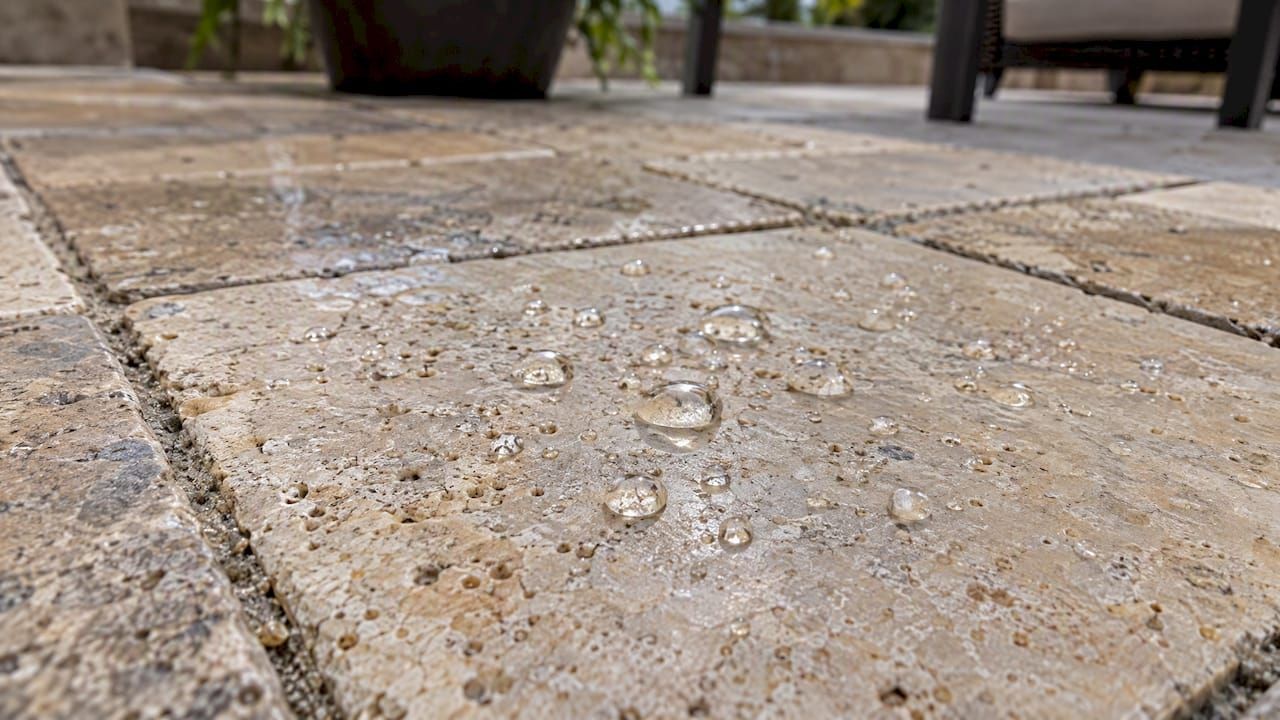
A simple test: sprinkle water on a clean, dry paver. If it beads, the sealer is working. If it darkens and soaks in within a few minutes, it is time to reseal. Always clean and fully dry the stone first, and never seal over dirt, because the sealer locks it in.
Whether a pool deck needs it is a common question, and we answer it in should you seal a travertine pool deck. For product choices, see our stone and grout sealers, including a high performance penetrating sealer, and our guide to common problems with stone sealers if a past job went wrong.
A note on flagstone and other patio stones
Many readers also ask about cleaning a flagstone patio. It depends on the stone. Flagstone is a loose term for flat cut stone: some is sandstone or slate (silica-based, less acid-sensitive), some is limestone (calcareous, treated like travertine). If you do not know which you have, use the neutral method above. It is safe on all of them, and you lose nothing by being careful.
Our perspective
We make cleaners and sealers for stone, tile and pool surfaces, and we see the same pattern in nearly every question about travertine: someone cleaned too hard, with the wrong thing, and the stone paid for it. The product that looks like it works (an acid that makes dirt vanish for an afternoon) is the one that dulls the finish for years.
Our approach is simple. Formulas should be pH-neutral or acid-free, plant-based and biodegradable, low in VOCs, and gentle enough for sensitive surfaces and for the family and pets who walk on them. Where a stone is porous, protect it so that cleaning stays routine. If you are choosing between a stronger product and a gentler one, choose the gentler one and repeat it. You can always do another pass. You cannot un-etch a paver at home.
If your pavers are already etched, dull or rough, be realistic: surface etching is physical damage to the stone, and the real fix is mechanical honing or polishing, usually by a stone restoration professional. Better cleaning will not bring it back.
Cleaning products for travertine from Oceancare
If you want the routine handled with products built for natural stone, start with our pH neutral tile and stone cleaner for regular washes, then protect the clean surface with a penetrating sealer from our stone and grout sealers. For a pool surround, our pool tile maintenance products cover waterline and tile-edge care. Prefer one product for upkeep? Clean & Seal is a biodegradable everyday cleaner with sealing protection.
A simple yearly routine
| When | What |
|---|---|
| Weekly (busy decks) | Sweep, rinse with the hose |
| Monthly to quarterly | Neutral cleaner wash on shaded or algae-prone areas |
| Spring | Full wash, check grout and joint sand, inspect for stains |
| Early fall | Water-bead test, then reseal if needed after a clean, dry stretch |
| After spills | Blot, do not wipe, flush with plain water and mild soap, then rinse |
That spill step follows the Natural Stone Institute's spill guidance: blot first, because wiping spreads it.
In freeze-thaw climates, avoid de-icing salts on travertine in winter where you can. Use sand for traction, and rinse residue in spring. Salt left in porous stone is what causes the flaking and pitting people mistake for age.
Common mistakes
- Scrubbing an etched spot harder. It is not dirt. More scrubbing only polishes the damage unevenly.
- Sealing too soon. A damp or dirty paver traps moisture and grime under the sealer.
- Mixing cleaners. Never combine bleach with ammonia or acids.
- Skipping the test patch. Always try a new product in a hidden spot and let it dry.
- Using runny cleaners on vertical edges. Thin liquids run off before they can work. A gel or clinging cleaner stays where you put it on steps and risers.
FAQ
What is the best cleaner for outdoor travertine?
A pH-neutral, stone-safe cleaner diluted in water, applied with a soft brush and rinsed well. Avoid anything acidic. For heavy algae or deep stains, add a targeted treatment such as a poultice rather than a stronger everyday cleaner.
What does vinegar do to travertine?
It etches it. Vinegar is an acid, and travertine is calcium carbonate, so the surface dissolves slightly and turns dull and rough. The Natural Stone Institute warns against acidic cleaners on calcareous stone, and the damage usually needs professional honing to correct.
Can I pressure wash travertine pavers?
Only gently. Use a wide fan tip, keep your distance, and test a hidden area. High pressure can strip sealer, erode joints and push water deeper into the pores, so a soft wash with a neutral cleaner is the safer default.
How often should I clean and seal travertine pavers?
Rinse busy areas weekly and wash the whole surface at least once a year. Reseal when water stops beading on a clean, dry paver, which varies with sun, pool chemistry and traffic.
How do I clean a flagstone patio?
Sweep, wet it, scrub with a pH-neutral stone cleaner and a soft brush, and rinse well. That is safe whether your flagstone is sandstone, slate or limestone. Treat stains with a poultice and avoid acids unless you are sure of the stone type.
Sources
- Natural Stone Institute: Learn About Cleaning Products for Natural Stone
- Natural Stone Institute: Remove Stains from Stone Applications
- Natural Stone Institute: Poultices
- Natural Stone Institute: Countertop Sanitation technical bulletin
- Preliminary Experimental Assessment of Acidic Weathering on Carbonate Building Stones: Travertine, Limestone, and Marble

