
Fix Vinegar Etching on Travertine Without Harsh Chemicals, Homeowners
No, vinegar is not safe on travertine. It chemically etches calcium carbonate stone the moment it makes contact, leaving dull, often permanent marks. If you've already spilled some, rinse the area and blot it dry right away. Don't scrub. Some etching can be fixed at home, but deeper damage usually needs professional honing.
TL;DR:
- Vinegar causes permanent etching on travertine by dissolving the calcium carbonate surface upon contact, especially with unsealed or lightly sealed stone.
- Immediate action after a spill includes blotting, rinsing thoroughly with water, and avoiding any abrasive or acidic cleaning methods to minimize damage.
- Detecting etching involves a wet test, feeling the surface, and photographing the mark to distinguish from stains or scratches; etching feels rough and stays visible when wet.
- Home repairs like poultices and mild cleaning cannot fix etching, which requires professional honing and polishing once damage is severe or widespread.
- Regularly using pH-neutral cleaners, sealing every one to two years, and avoiding acidic substances help prevent future etching on travertine surfaces.
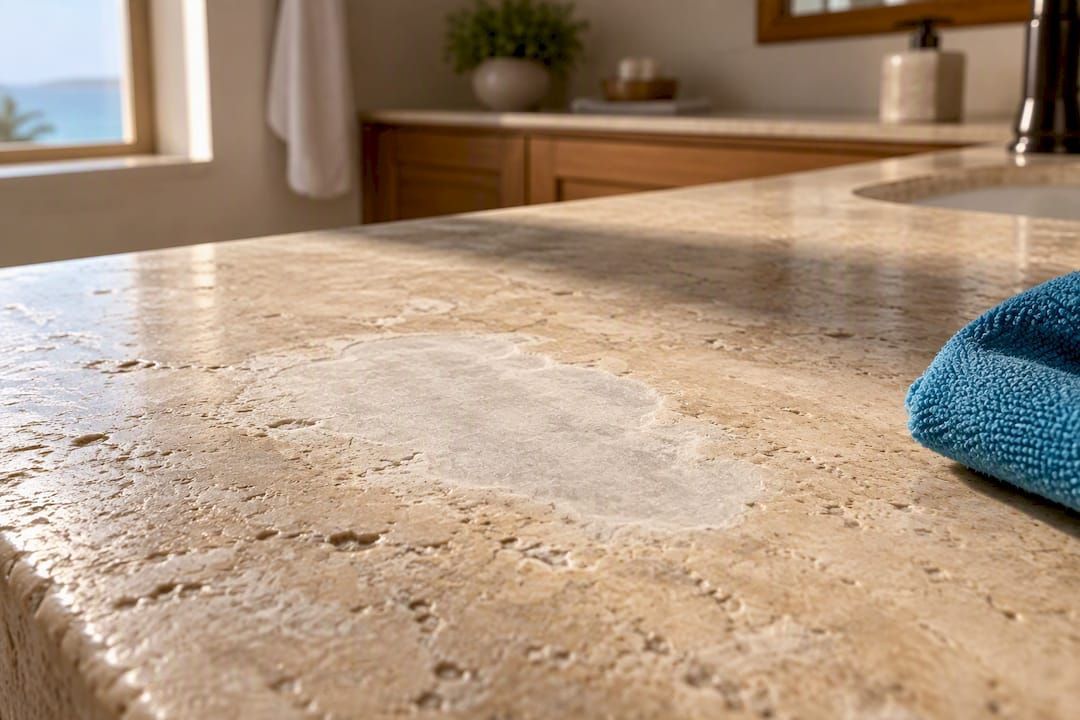
Table of Contents
- Why Vinegar and Other Acids Damage Travertine
- How to Tell an Etch From a Stain or Scratch
- Immediate Actions After a Vinegar Spill
- DIY Remediation Homeowners Can Try (and What They Shouldn't Expect)
- When Professional Restoration Makes Sense
- Prevention: Safe Cleaners, Habits, and Sealing
- What I'd Tell a Neighbor Panicking Over an Etch Mark
- Cleaning Products That Won't Fight Your Travertine
- Sources
- FAQ
Why Vinegar and Other Acids Damage Travertine
Travertine is a form of limestone, made almost entirely of calcium carbonate. Acids and calcium carbonate react on contact, and that reaction physically dissolves the mineral surface. Vinegar's acetic acid does this every time it touches unsealed or lightly sealed stone. The result isn't a stain sitting on top of the surface. It's the surface itself breaking down.
Travertine also forms with natural voids and channels from mineral deposition, which makes it porous and softer than granite, ranking about 3 to 4 on the Mohs hardness scale. That combination of porosity and softness means acid doesn't just sit on the surface, it works its way in.
A few things determine how bad the damage gets:
- Contact time: even a few minutes of vinegar sitting on the stone can etch it.
- Concentration: full-strength vinegar acts faster than a diluted spray, but repeated dilute exposure over months still dulls the finish.
- Finish type: polished travertine shows etching as a visible dull spot, while honed or textured finishes can hide light etching more easily.
Once the polish layer is gone, it doesn't grow back on its own.
How to Tell an Etch From a Stain or Scratch
Not every mark on travertine is acid damage, and figuring out which one you're dealing with changes what you should do next.
- Do the wet test. Wipe the spot with a damp cloth. An etch mark tends to stay visible, sometimes looking lighter or cloudier when wet, while a true stain usually darkens and appears to blend in.
- Run a fingernail over it. Etching feels rough or slightly gritty because the polished surface is actually gone. A stain from spilled coffee or oil usually feels smooth, sometimes with a faint raised residue if something dried on top.
- Photograph and measure it. Take a clear photo with a coin or ruler next to the mark. If you end up calling a restoration pro, this saves a visit and gives them a real sense of scope before they show up.
Immediate Actions After a Vinegar Spill
What you do in the first few minutes after a vinegar spill has more influence on the outcome than anything you do later.
- Blot the spill immediately with a clean, dry cloth. Do not scrub, it just spreads the acid over more surface area.
- Rinse thoroughly with plain water and blot dry again.
- Skip the instinct to "neutralize" it with baking soda or another kitchen fix. That just adds a second unknown reaction on top of the first.
- Avoid abrasive pads, scouring powders, or extra cleaning chemicals. They tend to worsen etched spots rather than fix them.
- Once dry, check a small, hidden section of the same slab with a drop of water to see if etching shows up there too, which tells you whether the damage is isolated or part of a bigger pattern.
Pro Tip: Keep a soft microfiber cloth and a spray bottle of plain water near any travertine surface where spills are common, like a kitchen island or bathroom counter. Speed matters more than technique here.
DIY Remediation Homeowners Can Try (and What They Shouldn't Expect)
Some travertine problems respond well to homeowner effort. Etching generally does not.
- Poultice for absorbed stains. Mix a poulticing powder (or baking soda) with water into a paste, spread it over the stain, cover with plastic wrap, and let it sit for 24 to 48 hours. This draws out oil, wine, or other absorbed residue. It has no effect on etching, because a poultice pulls out staining, it doesn't rebuild polish.
- Mild cleaning for surface grime. Use a pH-neutral stone cleaner, or a few drops of dish soap in warm water, on a soft cloth. Rinse with clean water and dry the surface completely to avoid new water spots.
- Skip anything acidic or abrasive. No vinegar, no lemon juice, no bathroom descalers, no scraping tools, and no sanding. These either cause new etching or remove more of the stone's surface than the damage actually required.
Acidic cleaners degrade calcium based stone noticeably faster than they affect ceramic or porcelain tile, which is exactly why a product marked safe for tile grout can still ruin a travertine floor. This is also why "natural" cleaning advice floating around online is often wrong for stone specifically. Vinegar is natural. It's also one of the fastest ways to etch a travertine countertop.
When Professional Restoration Makes Sense
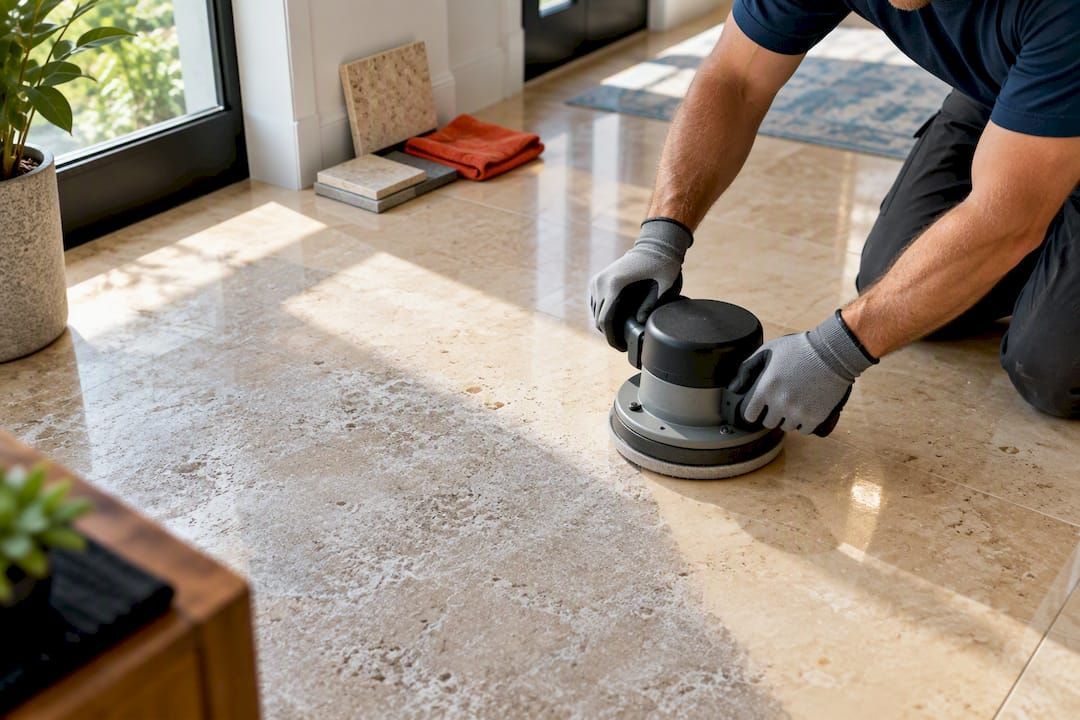
Once etching is visible and covers more than a small spot, honing and polishing become the realistic fix. Professional honing removes the etched layer of stone, then polishing restores shine to that fresh surface, and resealing locks it back down against future spills.
This process works reliably for the kind of etching a typical household produces. It's a surface level correction, not a structural repair, so it won't fix chips, deep gouges, or missing fill in travertine's natural holes.
A few things to check before hiring someone:
- Ask whether they specialize in natural stone specifically, not just general floor cleaning.
- Ask if they'll test a small area first to match sheen before doing the whole surface.
- Expect pricing to scale with square footage and the number of visits needed, since heavy etching sometimes takes more than one pass.
Prevention: Safe Cleaners, Habits, and Sealing
A simple weekly routine prevents almost every etching incident before it happens. Dust mop or vacuum first to clear grit that can scratch the surface, then damp mop with a pH-neutral stone cleaner, and dry the floor or counter immediately instead of letting water sit.
Keep these off your travertine entirely: vinegar, lemon or citrus based cleaners, bleach, ammonia, and any bathroom descaler. Each one either etches the stone directly or strips the sealer that's protecting it.
Sealing plays a supporting role here, not a starring one. A sealer reduces how much liquid the stone absorbs, which cuts down on staining, but it does not make travertine acid proof. Vinegar sitting on sealed travertine will still etch it, just maybe a little slower. Most residential travertine benefits from resealing every one to two years, depending on foot traffic and how often the surface gets wet.
Pro Tip: If you're not sure whether a cleaner is stone safe, check the label for "pH-neutral" specifically. "Natural" or "eco" on a bottle says nothing about whether it's acidic.
What I'd Tell a Neighbor Panicking Over an Etch Mark
Most etch marks look worse than they are. A dull spot from a vinegar splash on a countertop is almost always a surface issue, fixable with honing, not a reason to replace the slab. Stop contact immediately, document the mark, try a gentle pH-neutral cleaner if it might just be residue, and call a restoration pro once you confirm it's a real etch, especially if it covers more than a few inches.
Cleaning Products That Won't Fight Your Travertine
Most travertine damage isn't caused by neglect, it's caused by reaching for whatever's under the sink. Oceancarestore builds its Stone & Grout Sealers and Home Essential Cleaners specifically to skip the acid, bleach, and ammonia that etch calcium based stone, using plant based, low VOC formulas instead.
Look for stone cleaners and sealer product pages that list usage instructions and safety data sheets clearly, so you know exactly what's going on your floors before you apply it. If you're building a full maintenance routine for travertine counters, showers, or flooring, start at the Oceancarestore product catalog to compare cleaner and sealer options by surface type and get the specifics you need before you buy.
Sources
For more technical detail on stone composition, restoration methods, and acid damage, these sources go deeper than most product pages will:
For large areas, structural cracks, or extensive etching, a licensed stone restoration professional is worth the visit.
FAQ
Is Dawn Dish Soap Safe for Travertine?
A few drops of Dawn diluted in warm water is generally fine for occasional cleaning, since it's mild and not acidic. It shouldn't replace a dedicated pH-neutral stone cleaner for regular maintenance, since dish soap can leave residue behind over repeated use.
What Is the Best Thing to Clean Travertine With?
A pH-neutral stone cleaner is the safest and most effective option for routine cleaning, paired with regular dust mopping to remove grit before it scratches the surface. Oceancarestore's Home Essential Cleaners line is formulated specifically to avoid the acids that etch calcium based stone.
What Should You Not Use on Travertine Tile?
Skip vinegar, lemon or citrus cleaners, bleach, ammonia, and any bathroom descaler, since all of them etch or degrade the stone's surface. Abrasive pads and scouring powders cause similar damage by physically wearing down the polish.
How Can I Remove Stains From Travertine?
For absorbed stains like oil or wine, a poultice paste applied and covered for 24 to 48 hours will draw the residue out of the stone. This method works on staining, not etching, so a dull spot from an acid spill will still need honing rather than a poultice.
Can Vinegar Permanently Damage Travertine?
Yes, vinegar can cause permanent etching because it dissolves part of the stone's calcium carbonate surface on contact. Light etching sometimes buffs out with polishing compounds, but noticeable or widespread damage typically requires professional honing to fully correct.

