
Pool Owners: Six Acid Free Steps for Fresh Sunscreen on Stone
The right fix depends on whether you're dealing with fresh residue or a stain that has soaked in. For a fresh film, a mild, acid-free, oil-cutting detergent plus gentle brushing and a thorough rinse usually lifts it. If the mark has penetrated porous stone or grout, you'll need to escalate to a poultice, and you should always spot-test first, especially on limestone or marble.
TL;DR:
- For fresh residue, blot rather than rub, then use diluted acid free stone detergent and a soft brush; stop after two failed attempts.
- For absorbed stains, a poultice of kaolin clay or fuller's earth draws residue out; let it dry naturally, with guidance citing two to six hours.
- Marble, limestone, and travertine are acid sensitive; avoid vinegar, and spot test cleaners, stopping if the surface dulls or changes color.
- A compatible impregnating sealer limits oil absorption, but it does not replace care: clean pool waterlines weekly and reapply sealer on the product's schedule.
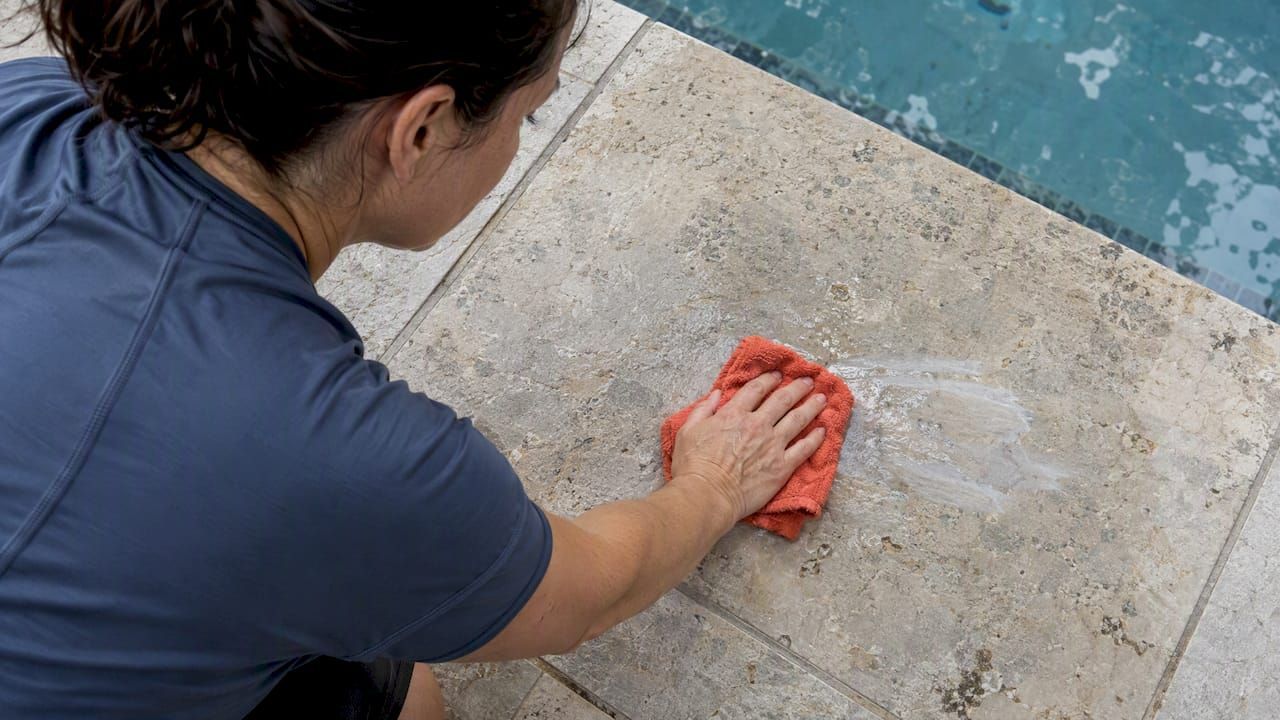
Table of Contents
- Removing Fresh Sunscreen Residue from Tile, Stone and Pavers
- Poulticing Sunscreen Stains That Have Soaked into Porous Stone
- Matching Cleaners to Stone Type Before You Scrub
- Sealing and Habits That Keep Sunscreen Stains from Coming Back
- What Conservation Research Says About Safe Stone Cleaning
- Setting Realistic Expectations for Stone Restoration
- Where to Find Eco-Friendly Cleaners, Sealers and Poultice Supplies
- FAQ
- Sources
Removing Fresh Sunscreen Residue from Tile, Stone and Pavers
Most sunscreen marks you catch early are just an oily film sitting on the surface, not a stain that has soaked into the stone. That distinction matters because it tells you how aggressive to get: fresh residue responds to gentle surface cleaning, while older, absorbed marks need a different approach covered in the next section.
Before you start, clear the area of towels, toys or furniture and sweep away loose debris so grit doesn't scratch the surface while you work. If the residue sits near a pool waterline, check that whatever you use is labeled pool-safe, since runoff can throw off water chemistry.
- Blot excess sunscreen with a clean cloth or paper towel. Don't rub it in further.
- Mix a diluted, acid-free, oil-targeting detergent or degreaser formulated for tile or stone.
- Apply the solution to the stained area and let it sit for a few minutes to break down the oil.
- Agitate gently with a soft nylon brush or a non-abrasive pad, working in small circles.
- Rinse thoroughly with clean water, checking that no soapy residue remains.
- Repeat once or twice if a faint mark persists, but stop and escalate if the stain doesn't fade after two attempts.
Avoid pumice stones, wire wool or metal scrapers on natural stone or glazed tile. These tools can scratch or dull the finish permanently, turning a removable stain into a permanent blemish. For calcareous stone especially, acid-free stone cleaners protect the surface while still breaking down oily residue.
Pro Tip: Work in the shade and keep the surface damp during cleaning; sunscreen oils set faster on hot, dry stone, making them harder to lift.
If you've gone through two or three rounds of surface cleaning and discoloration remains, the sunscreen has likely penetrated the stone or grout. At that point, surface cleaning alone won't finish the job, and poulticing becomes the right next step.
Poulticing Sunscreen Stains That Have Soaked into Porous Stone
A poultice works by drawing contaminants out of the stone rather than just wiping them off the top. It keeps an absorbent material and a cleaning agent in contact with the stain long enough to pull oil or mineral residue back to the surface as it dries, which is why it succeeds where scrubbing fails on penetrated stains.
Common poultice media include kaolin clay, fuller's earth and shredded paper pulp, each chosen based on how fine and absorbent you need the paste to be. The liquid carrier matters just as much as the medium: a water-based surfactant works for lighter oil films, while mineral deposits from zinc oxide or titanium dioxide sunscreens may need a different formulation matched to the residue's chemistry.
- Mix your chosen poultice medium with the liquid carrier until it forms a thick, spreadable paste, roughly the consistency of peanut butter.
- Spread the paste over the stain about a quarter-inch thick, extending slightly beyond the visible mark.
- Cover with plastic wrap and tape the edges down to slow evaporation and keep the poultice working longer.
- Let it dwell for the time your product label specifies. Oil-spill remediation guidance for masonry commonly cites dwell times of two to six hours for this kind of work.
- Remove the plastic and let the paste dry completely and naturally. Don't rush this step by peeling it off wet.
- Scrape away the dried poultice gently with a plastic scraper, then rinse the area thoroughly.
Pro Tip: Lift dried poultice from the edges inward rather than scraping across the stain, which can redeposit the material you just pulled out.
If one application doesn't fully clear the mark, repeat applications are normal and often more effective than one aggressive attempt. For deeply weathered or very porous stone, some discoloration may persist no matter how many times you try, and that's when it's worth calling in a restoration professional rather than risking further damage.
Matching Cleaners to Stone Type Before You Scrub
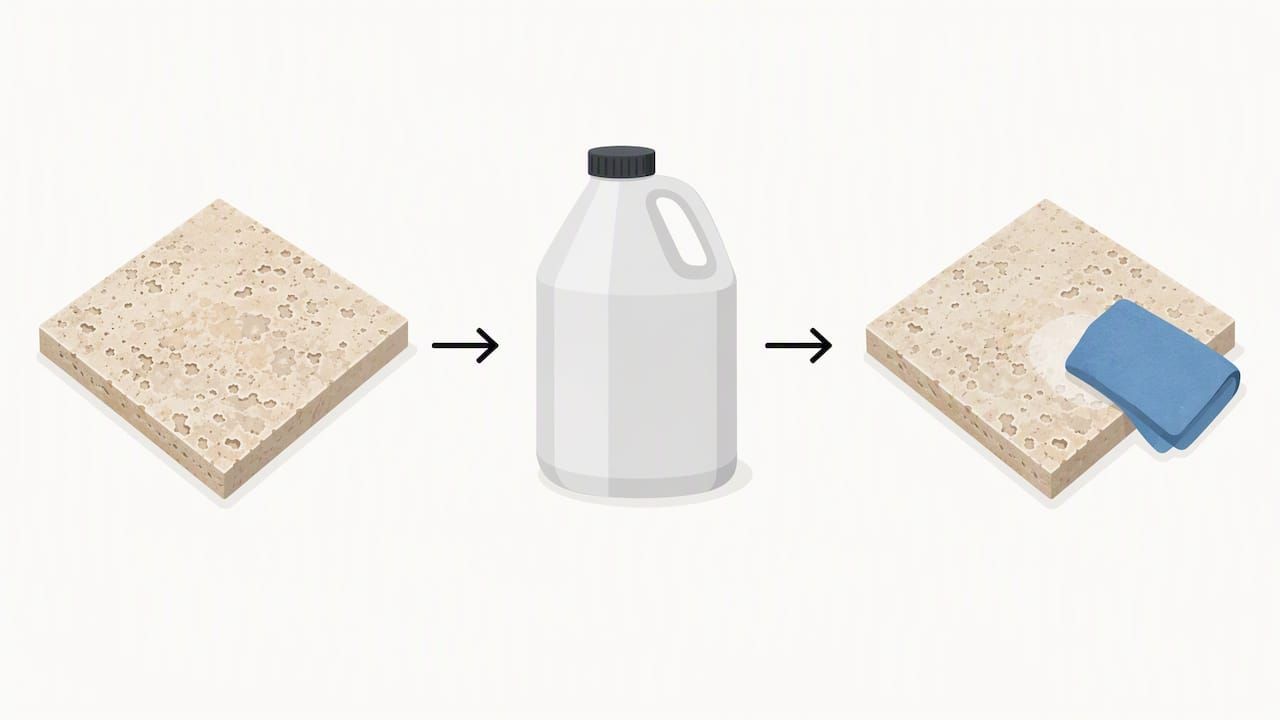
Not all stone reacts the same way to cleaning products, and getting this wrong can etch a surface permanently. The first thing to figure out is whether you're working with calcareous stone, limestone, marble and travertine, or siliceous stone like granite and sandstone. Calcareous stone contains calcium carbonate and reacts badly to acid, which is why preservation guidance from the National Park Service warns against acidic cleaners on these surfaces and recommends starting with the gentlest effective method.
Once you know your stone type, spot-test any product before full application:
- Pick an inconspicuous corner or an offcut piece if you have one.
- Apply the cleaner exactly as the label directs, including dilution and dwell time.
- Wait the recommended time, then check for color change, dulling or etching before treating the full area.
- Hold off on full application if you see any surface change at all.
Read labels for specific cues: acid-free formulations are safe for calcareous stone, pH-neutral products suit everyday cleaning, and mildly alkaline formulas handle organic soils like sunscreen oil without etching risk. Biodegradable and low-VOC claims signal a product that's gentler on both the surface and the person applying it, supporting the benefits of green cleaning over conventional methods. Our guide on acid-free descaling walks through why this distinction matters for long-term surface health.
Skip household acids like vinegar or lemon juice, and avoid abrasive powders entirely on polished or honed stone. A simple checklist before you buy: confirm your stone type, confirm the product is labeled acid-free or stone-safe, and confirm you've spot-tested.
Sealing and Habits That Keep Sunscreen Stains from Coming Back
A compatible impregnating sealer reduces how much oil and residue can soak into stone in the first place, since it fills the pores that would otherwise absorb sunscreen. Sealed surfaces still need regular care, but cleanup becomes faster because residue sits on top rather than working its way in.
- Reapply sealer on the schedule your product recommends, since UV exposure and foot traffic wear it down over time.
- Brush pool waterlines weekly to catch sunscreen and body oil before they build up.
- Spot-clean fresh marks as soon as you notice them rather than letting them dry and set.
- Skip pumice stones and wire brushes, which scratch sealed and unsealed stone alike.
Pro Tip: Rinse off sunscreen lotion with a quick shower before pool entry when possible; it cuts down residue at the source far more than any cleaning routine after the fact.
Behavioral habits matter too. Choosing lighter, faster-absorbing sunscreen formulas and giving lotion a few minutes to fully absorb before stepping onto stone or into water reduces transfer significantly. For a fuller maintenance routine, see our outdoor stone maintenance guide.
What Conservation Research Says About Safe Stone Cleaning
Conservation authorities consistently recommend starting with the gentlest effective method and escalating only when needed, a principle echoed in National Park Service preservation briefs and Getty stone conservation research. Spot-testing and acid-free products aren't optional extras; they're the standard that protects calcareous stone from irreversible etching. Some product lines on the market are built around that principle: plant-based, biodegradable, acid-free formulations designed to work with stone's chemistry rather than against it.
Setting Realistic Expectations for Stone Restoration
Some stains, especially on older, weathered or highly porous stone, may never fully disappear. That's not a failure of technique; it's the nature of a material that absorbs what touches it over years of exposure. Prevention and consistent, gentle maintenance matter more than any single aggressive cleaning attempt, and methods that respect the stone's structure protect it for decades rather than one afternoon.
Where to Find Eco-Friendly Cleaners, Sealers and Poultice Supplies
Once you know your stone type and whether you're dealing with surface residue or a penetrated stain, picking the right product is straightforward. We carry acid-free, plant-based formulations across a few focused categories so you're not guessing which bottle is safe for marble versus pool tile.
- Pool Tile Maintenance Products : oil-cutting, pool-safe cleaners for waterline sunscreen residue and routine tile care.
- Stone & Grout Sealers : impregnating, acid-free sealers that reduce future oil penetration on patios, pool surrounds and floors.
- Home Essential Cleaners : everyday, low-VOC cleaners for sealed surfaces, kitchens and bathrooms.
Spot-test first, match the sealer type to your stone, and reach out to our product support if you're unsure which formulation fits your surface. Browse the full range at Oceancare Store or go straight to stone and grout sealers if sealing is your next step.
FAQ
Will sunscreen stains on stone go away on their own?
Fresh sunscreen residue sometimes fades with normal rain and foot traffic, but penetrated oil or mineral deposits usually need active cleaning. Waiting rarely helps once the stain has soaked into porous stone, and it can make the mark harder to lift later.
Can I use vinegar to remove sunscreen stains from marble or limestone?
No. Vinegar and other household acids etch calcareous stone like marble and limestone, causing permanent dulling or pitting according to National Park Service preservation guidance. Use an acid-free, pH-neutral or mildly alkaline cleaner instead, and always spot-test first.
How long should a poultice sit on a sunscreen stain?
Dwell time depends on the product, but oil-spill remediation guidance for masonry commonly cites two to six hours for absorbed oil residue. Let the poultice dry naturally rather than removing it early, since a premature removal can leave the stain only partly lifted.
Does sealing stone actually prevent sunscreen stains?
A compatible impregnating sealer reduces how much oil soaks into the stone, which makes fresh residue easier to wipe away before it sets. It doesn't eliminate the need for routine cleaning, but it narrows the gap between a quick wipe-down and a full poultice treatment.
What's the difference between surface residue and a penetrated sunscreen stain?
Surface residue sits on top of the stone as an oily film and comes off with gentle detergent and brushing. A penetrated stain has soaked into the stone's pores or into grout, which means surface cleaning alone won't remove it and a poultice is needed to draw it back out.

