
Why Choose Acid-Free Stone Cleaners for Safe Surfaces
TL;DR:
- Acid-based cleaners quickly etch calcium carbonate stones like marble and limestone, causing lasting damage.
- pH-neutral, plant-based cleaners preserve surface shine, sealant integrity, and are safer for health and environment.
- Regular use of acid-free cleaners extends stone lifespan and avoids costly restorations or sealant replacements.
Most homeowners assume that if a cleaner works on their kitchen counters, it's safe everywhere. That assumption can cost you hundreds in stone restoration. A single wipe with vinegar on a marble vanity can permanently dull the surface before you've finished the stroke. Natural stone surfaces like marble, limestone, and travertine are chemically reactive, and the wrong cleaner doesn't just leave a residue. It destroys the surface itself. This guide breaks down exactly why acid-based cleaners are so risky, what acid-free alternatives actually do for your stone, and how to build a cleaning routine that keeps your surfaces looking new for years.
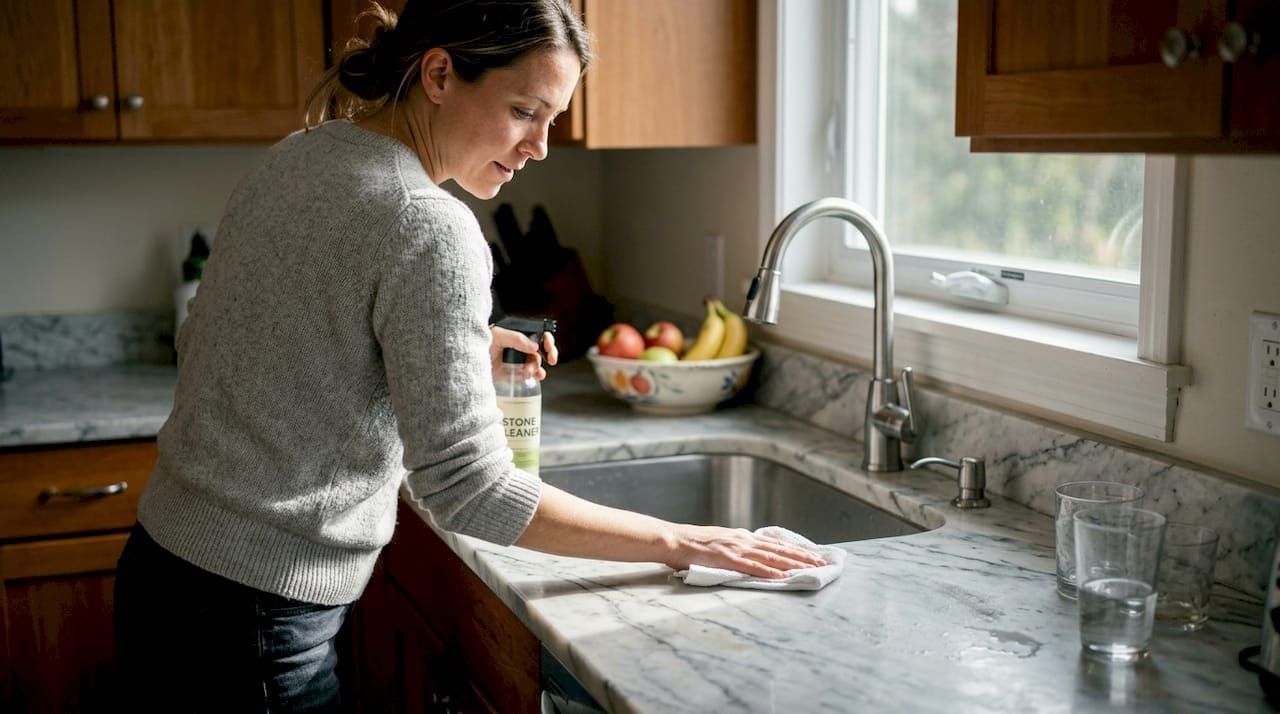
Table of Contents
- How acid-based cleaners harm natural stone surfaces
- Benefits of using acid-free or pH-neutral stone cleaners
- How acid-free cleaners preserve sealants and extend the life of stone
- Practical cleaning strategies: How to choose and use acid-free stone cleaners
- The hidden cost of shortcuts: Why acid-free cleaning is worth the investment
- Ready to protect your stone and tile surfaces?
- Frequently asked questions
Key Takeaways
| Point | Details |
|---|---|
| Acids rapidly damage stone | Even common acids like vinegar can permanently etch marble and limestone in seconds. |
| Acid-free cleaners are safer | pH-neutral products avoid harsh reactions, are safer for people and pets, and reduce environmental harm. |
| Sealants last longer | Using acid-free cleaners protects sealants, maintaining stone's gloss and preventing micro-cracks or stains. |
| Evidence-backed cleaning results | Long-term tests show acid-free cleaners provide high soil removal rates without surface degradation. |
| Smart routines prevent costly repairs | Choosing the right non-acidic cleaners now avoids expensive stone restoration later. |
How acid-based cleaners harm natural stone surfaces
To understand why acids are so damaging, you need to know what natural stone is made of. Marble, limestone, and travertine are all calcium carbonate (CaCO3) based stones. This mineral structure gives them their beautiful crystalline appearance, but it also makes them chemically vulnerable. When an acid contacts the surface, a reaction begins almost instantly. The acid dissolves the calcium carbonate, breaking down the stone's surface layer and leaving behind dull, rough patches called etch marks.
This isn't a slow process. Vinegar (pH 2.4) etches marble in 30 seconds or less per ASTM standards. That's faster than most people rinse a countertop. And it's not just vinegar. Lemon juice, orange-based cleaners, bathroom tile sprays, and even some "natural" DIY solutions are acidic enough to cause damage.
Here's a breakdown of which surfaces are most at risk:
- Bathroom vanities and shower walls (marble and limestone are common here)
- Pool tile surrounds (often travertine or limestone)
- Kitchen countertops (marble and granite edges)
- Entryway flooring (limestone and travertine slabs)
- Outdoor stone features (natural stone pavers and coping)
The short-term effect is visible etching: a cloudy, matte patch where the stone once had a polished finish. Long-term, repeated acid exposure creates micro-pitting across the entire surface. The stone becomes porous and rough, trapping dirt and bacteria, and eventually requiring professional honing or full resurfacing.
| Stone type | Acid sensitivity | Visible etching time |
|---|---|---|
| Marble | Very high | Under 30 seconds |
| Limestone | Very high | Under 30 seconds |
| Travertine | High | 30 to 60 seconds |
| Granite | Moderate | 2 to 5 minutes |
| Slate | Low to moderate | 5 or more minutes |
"Acidic cleaners trigger rapid dissolution, creating dull, rough patches within seconds on calcium-based stones."
Switching to a pH-neutral tile cleaner eliminates this risk entirely. And understanding why sealing natural stone matters gives you the full picture of how protection layers work together. For a broader look at safe stone cleaning methods, the evidence consistently points away from anything acidic.
Benefits of using acid-free or pH-neutral stone cleaners
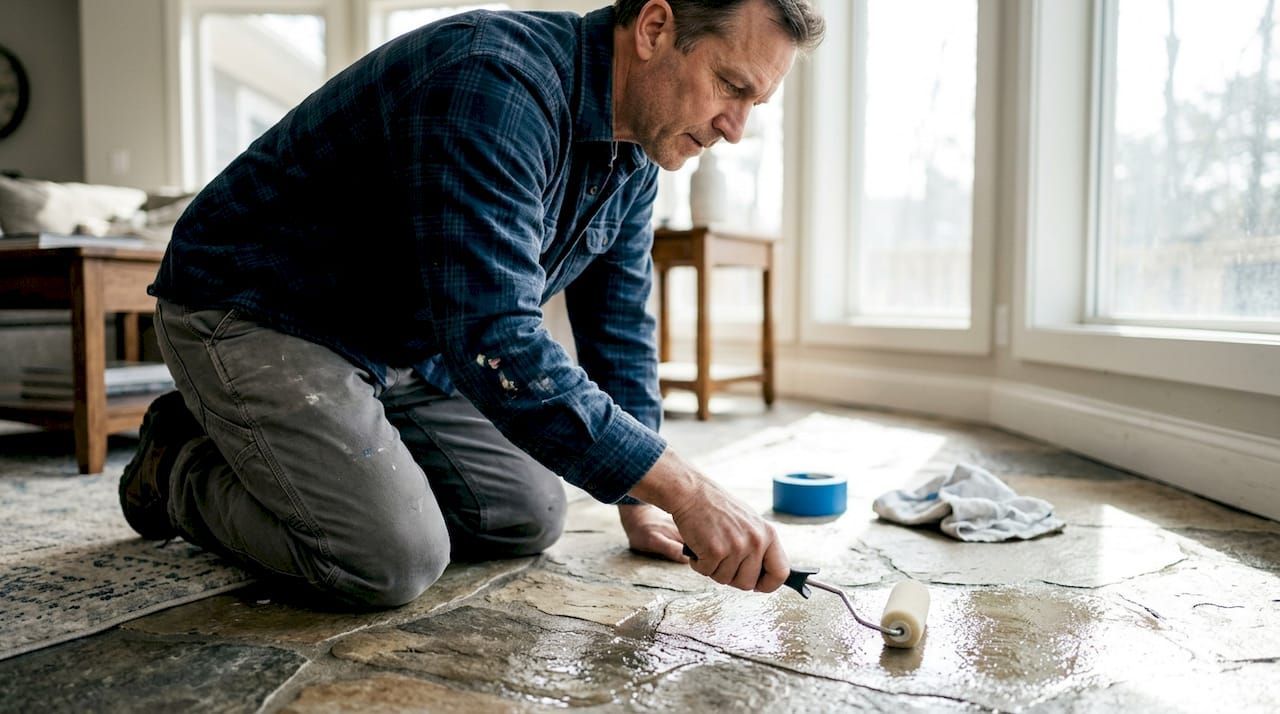
Acid-free cleaners aren't just a gentler version of the same thing. They work through an entirely different mechanism. Instead of reacting chemically with the stone, pH-neutral formulas use plant-derived surfactants and enzyme-based agents to lift and suspend dirt, oils, and mineral deposits without disturbing the stone surface itself.
In practical terms, a pH-neutral cleaner sits at or very close to pH 7, which is the neutral midpoint on the pH scale. It won't react with calcium carbonate, won't strip sealants, and won't release harmful fumes into your home.
Here's what you actually gain by making the switch:
- Zero etching or gloss loss on calcium-based stones, confirmed by ASTM empirical testing
- Non-toxic formulas made from plant-derived surfactants, safe around children and pets
- Fewer fumes and no harsh chemical odors during cleaning
- Biodegradable ingredients that break down safely without harming waterways or soil
- Reduced skin and eye irritation risk for anyone handling the product regularly
- No harmful residues left on surfaces after rinsing
The environmental benefit is real and measurable. Biodegradable, low-toxicity formulas reduce skin and eye irritation risk and cut environmental runoff compared to conventional cleaners. For pool owners especially, this matters. Chemicals that rinse off pool tiles go directly into the water and surrounding soil.
Pro Tip: When shopping for an acid-free cleaner, look for the EPA Safer Choice label. This certification confirms the product meets strict standards for ingredient safety, biodegradability, and environmental impact. It's one of the fastest ways to verify a cleaner is genuinely safe for stone and for your household.
You'll find a curated selection of eco-friendly stone cleaner options that meet these standards, along with guidance on eco home cleaning best practices for long-term surface care.
One statistic that stands out from long-term testing: pH-neutral enzyme-surfactant formulas achieved 99.2% soil removal over 18 years of use with zero sealant failure. That's not a marketing claim. That's empirical data showing these products actually clean better while protecting your investment.
How acid-free cleaners preserve sealants and extend the life of stone
Here's something most people don't think about: your stone's sealant is just as vulnerable as the stone itself. Sealants are typically siloxane-based compounds that fill the microscopic pores in natural stone, blocking stains and moisture. Acids and strong alkalines both degrade these compounds rapidly.
When a sealant breaks down, the stone underneath loses its protection. Stains penetrate deeper. Moisture causes micro-cracking. The surface starts to look worn and patchy, even if you're cleaning it regularly. The problem isn't dirt. It's the cleaner.
"Weekly vinegar use drops sealant life from 24 months to just 5.2 months, while pH-neutral cleaners show zero gloss loss over the same period."
Here's what happens step by step when you compare acid versus acid-free cleaning over time:
- Week 1 to 4: Acid-based cleaning begins stripping the outer sealant layer. Contact angle (a measure of water repellency) drops noticeably. pH-neutral cleaning shows no change.
- Month 2 to 3: Gloss readings on acid-cleaned stone begin declining. Micro-pitting becomes visible under magnification. pH-neutral surfaces retain original gloss.
- Month 5 to 6: Acid-cleaned stone requires resealing. Staining risk increases significantly. pH-neutral stone still performing at baseline.
- Month 12 and beyond: Acid-cleaned stone shows structural surface wear. pH-neutral stone maintains integrity with no additional intervention.
| Cleaning method | Average sealant lifespan | Gloss retention |
|---|---|---|
| Weekly vinegar use | 5.2 months | Significant loss |
| Weekly alkaline cleaner | 8 to 10 months | Moderate loss |
| Weekly pH-neutral cleaner | 24 months or more | Zero loss |
Acids and alkalines degrade sealants at the siloxane level, while pH-neutral formulas maintain gloss and prevent micro-cracking and staining. Understanding stone sealer issues with harsh cleaners helps you see why the cleaning product you choose is inseparable from your sealer's performance. For anyone starting fresh, the guide to selecting a stone sealer and the overview of stone and grout sealers are worth reading before you buy. For marble maintenance best practices, the consistent recommendation is pH-neutral cleaning paired with regular resealing on schedule.
Practical cleaning strategies: How to choose and use acid-free stone cleaners
Knowing acid-free is better is one thing. Knowing how to find a genuinely good product and use it correctly is what actually protects your surfaces. Here's a straightforward process for getting it right.
Steps to evaluate and select an acid-free cleaner:
- Check the pH label. A true acid-free cleaner should state pH 7 or pH-neutral clearly on the packaging. If there's no pH listed, that's a red flag.
- Read the ingredient list. Look for plant-derived surfactants, enzyme-based cleaners, and biodegradable agents. Avoid anything listing citric acid, acetic acid, or phosphoric acid.
- Look for certifications. EPA Safer Choice is the gold standard. NSF or Green Seal certifications are also reliable indicators of safety and performance.
- Match the product to your surface. Some pH-neutral cleaners are formulated specifically for polished stone, others for unpolished or textured surfaces. Check that the product suits your specific stone type.
- Verify dilution instructions. Many concentrated pH-neutral cleaners are designed to be diluted with water. Using them at full strength isn't more effective and wastes product.
Routine best practices for daily, weekly, and monthly cleaning:
- Daily: Wipe spills immediately with a damp cloth. Don't let liquids sit on stone, even water.
- Weekly: Clean surfaces with a diluted pH-neutral cleaner and a soft microfiber cloth or mop. Rinse thoroughly.
- Monthly: Inspect grout lines and sealant condition. Look for early signs of dullness or staining that could indicate sealant wear.
- Annually: Reseal stone surfaces according to your sealer manufacturer's schedule, especially in high-traffic or wet areas.
Pro Tip: Don't assume "natural" means acid-free. Vinegar is natural. Lemon juice is natural. Both will etch your stone. Always verify pH, not just marketing language. Baking soda is also a common DIY recommendation, but it's mildly alkaline and can degrade sealants over time with repeated use.
18-year empirical testing confirms that pH-neutral enzyme-surfactant formulas remove 99.2% of soil with zero sealant failure, making them the only cleaning approach with that kind of long-term track record.
The hidden cost of shortcuts: Why acid-free cleaning is worth the investment
Most people reach for vinegar or a generic bathroom spray because it's cheap, familiar, and seems to work. And it does work, in the short term. The surface looks clean. But the damage is accumulating invisibly beneath the surface, in the sealant layer, in the micro-texture of the stone, in the pores that are slowly opening up to stains.
We've seen property managers spend thousands on professional stone restoration after years of "just using what was under the sink." One permanent etch mark on a marble entryway floor can cost $400 to $800 to hone and re-polish professionally. Multiply that across a property, and the savings from cheap cleaners disappear fast.
There's also an environmental cost that rarely gets mentioned. Harsh chemical runoff from pool tile cleaning doesn't stay on the tile. It goes into the water, into the drainage system, into the soil. Switching to biodegradable, acid-free formulas is one of the simplest ways to reduce your household's chemical footprint without sacrificing results. For anyone managing multiple properties or a pool environment, sustainable protection for stone surfaces isn't just an ethical choice. It's a smarter operational one.
Ready to protect your stone and tile surfaces?
If you've been using generic cleaners on your pool tiles, marble vanity, or natural stone floors, now is the right time to make a change before the damage becomes visible or permanent.
At Oceancare Store, we carry acid-free, plant-based cleaners and sealers specifically formulated for natural stone and pool tile surfaces. Whether you're dealing with calcium buildup, general grime, or surface restoration, our pool tile restorer and pool tile maintenance products are designed to clean effectively without compromising your surfaces. For deeper cleaning needs, our stone cleaner concentrate delivers professional-grade results with a formula that's safe for your stone, your family, and the environment.
Frequently asked questions
What is etching and why does it happen on natural stone?
Etching is the dulling and roughening of stone caused by acids dissolving calcium carbonate in marble, limestone, and travertine. Acidic cleaners create dull, rough patches within seconds on calcium-based stones, making it one of the most common and preventable forms of stone damage.
Can I use vinegar or lemon juice on my stone surfaces?
No. Even mild household acids like vinegar cause lasting surface damage. Vinegar (pH 2.4) etches marble in 30 seconds or less per ASTM standards, making it one of the worst choices for natural stone cleaning.
Are acid-free stone cleaners really safer for health and the environment?
Yes. Biodegradable, low-toxicity formulas reduce skin and eye irritation risk and cut environmental runoff, making acid-free cleaners a genuinely safer choice for both your household and local waterways.
Will acid-free cleaners keep my stone sealant intact longer?
Yes. Weekly vinegar reduces sealant life from 24 months to just 5.2 months, while pH-neutral cleaners show zero gloss loss over the same period, protecting your investment significantly longer.
How do I know if a cleaner is truly acid-free?
Look for products labeled pH-neutral (pH 7), EPA Safer Choice certified, and avoid any containing vinegar, lemon, citric acid, or acetic acid. If the pH isn't listed on the label, contact the manufacturer before using it on natural stone.
Recommended

