
Prevent Salt Damage to Stone: 5 Homeowner Steps That Keep It Breathing
Stop salt damage by keeping salts out of stone pores: remove snow mechanically, use a gentler deicer than rock salt, rinse exposed surfaces promptly, and protect stone with a breathable penetrating sealer matched to the stone type. Add a simple seasonal inspection, and most homeowners can avoid the pitting, flaking, and powdery efflorescence that salt exposure causes.
TL;DR:
- Shovel snow early with a plastic or rubber edge, and choose calcium or magnesium chloride over rock salt for marble, limestone, or travertine.
- Rinse exposed stone before meltwater dries; wash monthly under moderate exposure, and rinse pool decks weekly or more often in hot climates.
- Choose a breathable penetrating sealer matched to the stone's mineral type; avoid surface films, test a hidden patch, and follow label drying and curing directions.
- White crust returning days after rinsing signals deeper salts; apply a poultice for 24 to 48 hours, repeat as needed, or call a professional.
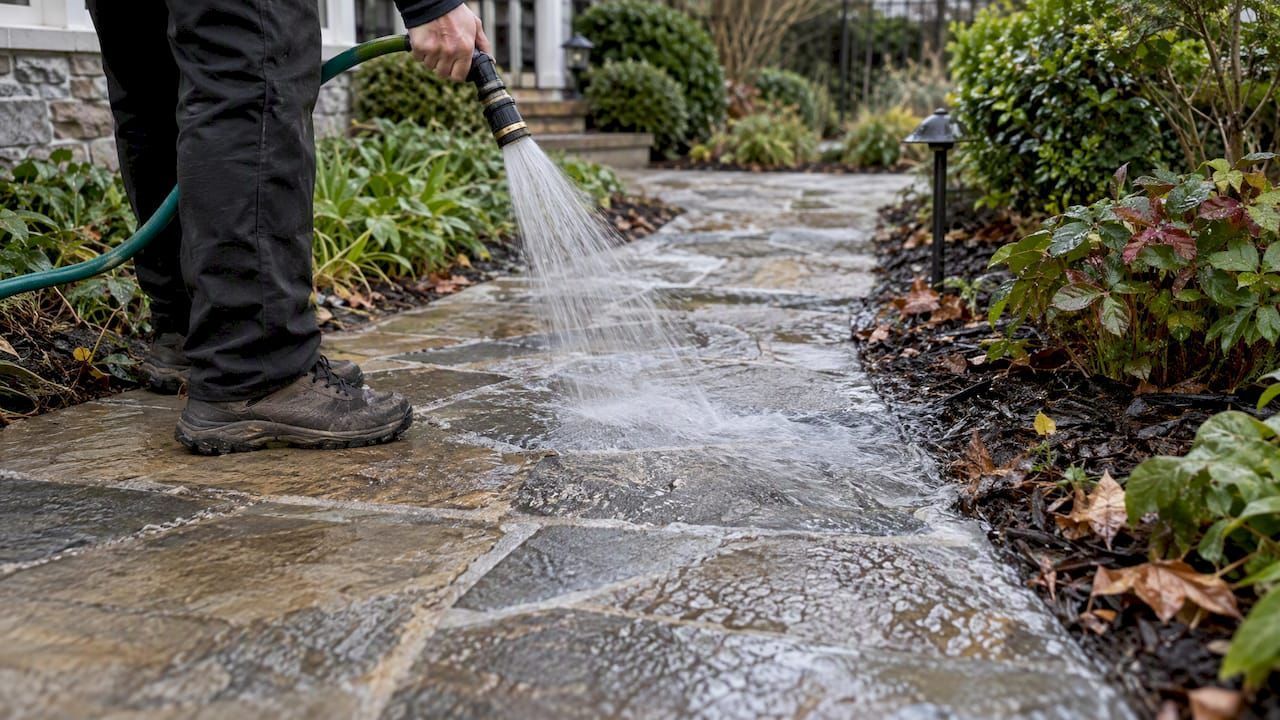
Table of Contents
- Winter and Exposure Prevention Checklist
- Cleaning and Maintenance That Remove Salts Before They Crystallize
- Choosing a Sealer That Blocks Salt Without Trapping Moisture
- Inspection Checklist and When to Call a Professional
- How Salt Actually Breaks Down Stone
- Restoring Stone That Already Shows Salt Damage
- Humidity, Freeze-Thaw Cycles, and Drainage That Protect Stone
- Ingredients and Formulations Worth Looking For
- How Salt Affects Marble, Limestone, Granite, and Slate Differently
- Protecting Pool-Area Stone From Saltwater and Chlorides
- Why We Prioritize Breathable, Acid-Free Stone Care
- Matching Oceancare Store Products to Your Stone Care Tasks
- FAQ
- Sources
Winter and Exposure Prevention Checklist
The order you tackle these matters almost as much as the tasks themselves. Handle snow and ice before they melt into standing saltwater, and you cut the amount of salt that ever reaches the stone.
- Shovel early, using a plastic or rubber-edged shovel rather than a metal one that can chip or scratch polished or honed finishes.
- Choose calcium chloride or magnesium chloride over sodium chloride (rock salt) on natural stone, especially calcareous types like marble, limestone, and travertine, which rock salt attacks more readily.
- Look for a non-chloride ice melter formulated for use around stone and concrete when you want the gentlest option available.
- Apply any deicer sparingly and keep it off decorative stone, tight steps, and thresholds where runoff pools instead of draining away.
- Rinse the treated area with fresh water once temperatures allow, rather than letting melt sit until the next freeze.
Beyond the deicer itself, a few site habits reduce how much salt ever reaches your stone:
- Place walk-off mats at entry points so shoes carry less salt onto interior stone floors.
- Reroute foot traffic temporarily away from freshly treated walkways when you have the option.
- Improve drainage and edging along driveways and patios so saltwater runs off instead of sitting against stone.
- Add a buffer strip of gravel or mulch between salted pavement and stone borders to intercept splash and tracking.
Pro Tip: Keep a bag of calcium chloride by the door next to your rock salt. Reach for it first on any stone walkway, step, or threshold, and save the rock salt for asphalt only.
Cleaning and Maintenance That Remove Salts Before They Crystallize
Salt does its damage while drying, not while wet, so the fastest way to limit harm is to rinse before that drying cycle finishes. A garden hose or a pressure washer on its lowest setting works for most exterior stone, flushing dissolved salts off the surface and out of surface pores before they recrystallize.
For routine cleaning, stick to pH-neutral, stone-safe cleaners. Avoid vinegar, muriatic acid, and other strong acidic or alkaline products, which etch calcareous stone and can accelerate the same pore damage you're trying to prevent. Our stone-safe cleaning methods cover acid-free ways to lift mineral deposits without that risk, and the same logic applies to salt film.
Persistent white crust that keeps returning after rinsing, known as subflorescence, usually means salts have migrated deep into the stone rather than sitting on the surface. That calls for a poultice treatment or professional desalination rather than repeated surface scrubbing.
Maintenance cadence depends on exposure:
- Rinse regularly during active winter deicing season or for stone near pools and coastlines.
- Rinse monthly for moderate exposure, such as a front walkway in a salted neighborhood.
- Inspect annually and reseal on a schedule matched to traffic and weather.
Routine washing is one of the most cost-effective ways to limit chloride buildup on exposed surfaces, according to industry maintenance guidance for chloride-exposed structures, which documents wash-downs as a standard preventative measure. The same principle carries over to stone around your home.
Choosing a Sealer That Blocks Salt Without Trapping Moisture
Not all sealers behave the same way once salt gets involved. Penetrating sealers, usually silane, siloxane, or silicate-based, soak into the stone and leave pores open enough for vapor to escape. Film-forming topical sealers sit on the surface and can trap moisture and salts underneath, which raises the risk of subflorescence rather than lowering it.
For salt-exposed stone, a breathable penetrating sealer is the safer default. Before buying one, work through a short compatibility checklist:
- Confirm whether your stone is calcitic (marble, limestone, travertine) or siliceous (granite, slate, sandstone), since chemistries vary by lithology.
- Check the sealer's expected lifespan under your climate and exposure level.
- Test a small, inconspicuous area first and let it cure fully before judging the result.
- Note the recommended surface temperature and drying window on the label, since cold, damp conditions slow curing.
Pro Tip: If a sealer leaves a glossy film rather than soaking in within a few minutes, it is likely film-forming. Wipe it off and look for a penetrating formula instead.
Conservation research on stone treatment notes that breathable, vapor-permeable sealers outperform impermeable films on salt-exposed porous stone in most residential scenarios, which is why we steer homeowners toward penetrating products rather than heavy surface coatings.
Inspection Checklist and When to Call a Professional
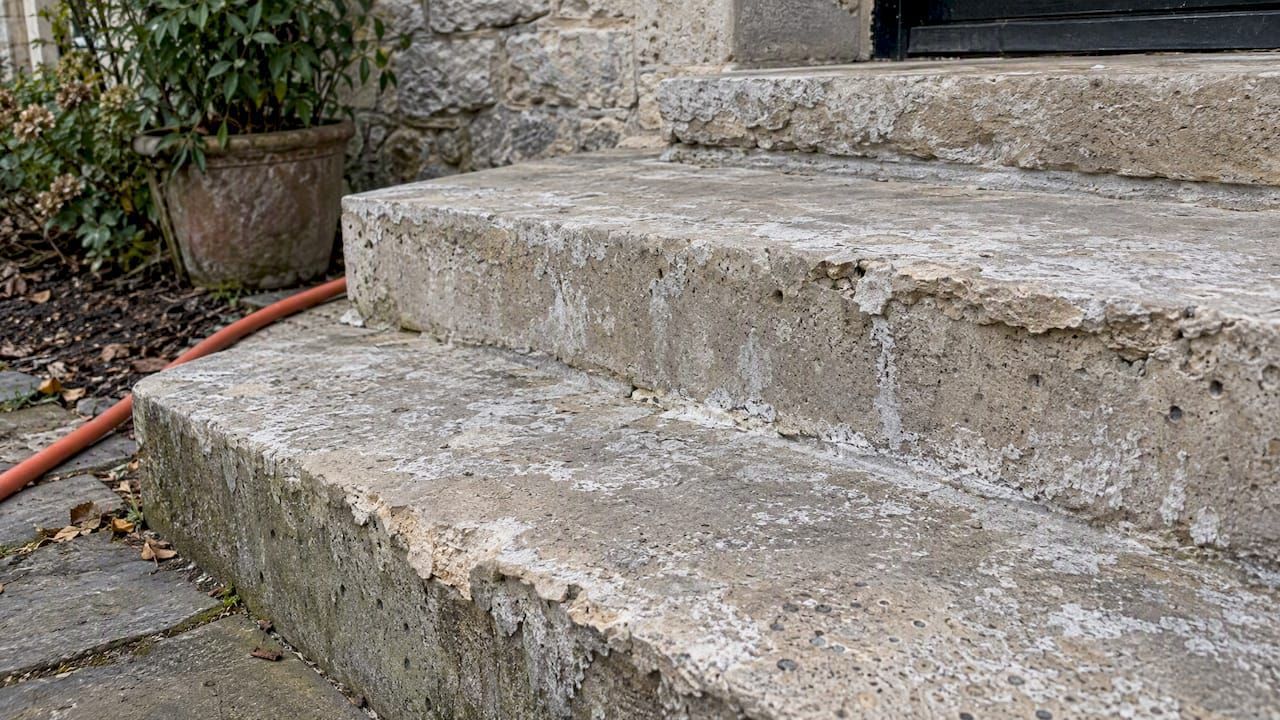
A five-minute walk-around each season catches problems while they're still cheap to fix. Look for white powdery efflorescence, flaking or spalling edges, small pits, or a surface that feels soft or crumbly compared to the surrounding stone.
- Photograph any new staining or texture change so you can track whether it's spreading.
- Run a simple moisture check by pressing a dry paper towel against the stone, which should come away dry on healthy surfaces.
- Pay closest attention to stone near pool decks, driveways, and anywhere salted runoff collects.
- Reseal or clean again if salt crust returns within days of a rinse, since that signals salts are migrating from deeper inside the stone.
Routine rinsing and resealing cost little beyond your own time and a bottle of cleaner. Professional desalination, by contrast, involves poultice applications over multiple sessions and runs higher, so catching efflorescence early is worth the five minutes it takes.
How Salt Actually Breaks Down Stone
Salt rarely damages stone by sitting on the surface. It travels inward dissolved in water, then crystallizes as that water evaporates, and the crystals forming inside the stone's pores expand with enough force to push the mineral structure apart from within.
Conservation literature identifies soluble salts as a major cause of stone decay and points to rising damp, air pollution, and deicing salts as common sources feeding that cycle.
Getty Conservation Institute
Not every salt behaves identically. Some, including certain sulfates, hydrate and expand more aggressively than others as humidity shifts, which is part of why experimental crystallization inhibitors remain substrate-dependent rather than universal fixes, according to research on salt crystallization control. The practical takeaway holds regardless of salt type: control how much moisture and salt reach the stone, and avoid sealing in whatever is already there.
Restoring Stone That Already Shows Salt Damage
If efflorescence, pitting, or flaking has already set in, dry brushing the white crust off first removes loose surface salt without smearing it deeper into the pores. A soft nylon brush works better than wire, which can scratch softer stones like marble and limestone.
For salts lodged deeper in the stone, a poultice draws them out. Mix an absorbent clay or cellulose poultice material with distilled water into a paste, spread it over the affected area, cover it to slow drying, and let it sit for 24 to 48 hours as it pulls moisture and dissolved salt to the surface. Scrape off the dried poultice and rinse the area clean. Repeat cycles are often necessary for deep subflorescence, since a single application rarely removes every salt deposit.
Once the surface tests dry and salt-free, let the stone fully cure before resealing, since sealing over residual moisture traps whatever salt remains. Spalled or pitted areas that have already lost material may need a stone repair compound or professional patching rather than cleaning alone, since cleaning cannot rebuild lost surface.
For widespread or recurring subflorescence, especially on load-bearing or historic stone, a conservation professional can assess whether deeper desalination or structural repair is warranted before you invest in repeated DIY poultice cycles.
Humidity, Freeze-Thaw Cycles, and Drainage That Protect Stone
Salt damage accelerates fastest where humidity swings and temperatures cross the freezing point repeatedly, since each wet-to-dry and freeze-to-thaw cycle gives dissolved salts another chance to crystallize and expand inside the stone. Stone in a climate with stable humidity and few freeze-thaw cycles faces far less risk than the same stone through a northern winter.
Good drainage matters as much as climate. Stone set in standing water, whether from poor grading, clogged gutters, or rising damp from the ground, stays wet longer and pulls in more dissolved salt with every cycle. Grading the ground away from stone walkways and foundations, keeping gutters clear, and adding a gravel drainage layer under pavers all reduce how long water sits against the stone.
Shaded, north-facing stone that stays damp longer after rain or snowmelt is often more vulnerable than sun-exposed stone that dries quickly, since slower drying gives salts more time to concentrate before crystallizing. Where you can't change the orientation, extra attention to drainage and more frequent rinsing offset the slower drying.
Ingredients and Formulations Worth Looking For
Not every cleaner or sealer labeled for stone actually protects against salt. A few formulation details matter more than marketing claims.
Acid-free, pH-neutral cleaners avoid etching calcitic stone the way vinegar or muriatic acid can, which matters because etched stone has more exposed surface area for salt to penetrate. Penetrating sealers built on silane or siloxane chemistry bond within the pore structure rather than forming a surface film, which keeps the stone breathable while still repelling water that would otherwise carry salt inward.
Experimental crystallization inhibitors, including chitosan-based treatments and iron-tartrate complexes, are being studied for their ability to shift salt crystallization toward harmless surface efflorescence instead of damaging subflorescence inside the pores, according to recent conservation studies on iron-tartrate inhibitors. These remain substrate-dependent and are not yet standard consumer products, so source control, rinsing, and breathable sealing stay the dependable foundation while that research matures.
Low-VOC and biodegradable formulations matter for a different reason: they protect the people applying them and the landscaping and waterways around the stone, without sacrificing cleaning or sealing performance.
How Salt Affects Marble, Limestone, Granite, and Slate Differently
Stone type changes both how much salt damage you'll see and how fast it appears. Calcareous stones, marble, limestone, and travertine, are especially vulnerable because their calcium carbonate structure reacts with acidic runoff and absorbs water readily, giving salts an easy path into the pores. These stones benefit most from calcium chloride or magnesium chloride deicers instead of rock salt, frequent rinsing, and a penetrating sealer rated specifically for calcitic stone.
Granite, a siliceous stone, resists chemical etching better than marble or limestone but still has pores that absorb water and dissolved salt, especially on honed or flamed finishes. Granite tolerates a wider range of deicers but still benefits from rinsing and a breathable sealer, particularly on driveways and steps.
Slate's layered structure makes it prone to delamination when salt crystals form between its natural layers, which shows up as flaking along the grain rather than surface pitting. Sealing slate with a penetrating product and keeping deicers off it entirely reduces that layered cracking.
Across all four, the same rule holds: match your cleaner and sealer to the stone's mineral makeup, and never assume a product safe for granite is automatically safe for marble.
Protecting Pool-Area Stone From Saltwater and Chlorides
Stone around a saltwater pool faces a double exposure: constant splash that carries dissolved salt onto coping and deck stone, plus chlorine or salt-system byproducts that behave similarly to deicing salts once they dry and crystallize. The crystallization mechanism is the same as winter salt damage, just delivered year-round instead of seasonally.
Rinse pool-deck stone with fresh water regularly, not just after storms, since splash exposure happens every time someone swims. A weekly rinse schedule suits most residential pools, more often for heavily used pools or in hot climates where splash evaporates quickly and concentrates salt.
A breathable penetrating sealer rated for pool environments protects coping and deck stone without trapping chlorides underneath the surface, which matters more here than almost anywhere else on the property given how constant the exposure is. Avoid acidic cleaners near pool stone entirely, since they can react with both the stone and residual pool chemicals.
Check coping and deck stone seasonally for the same efflorescence and pitting signs you'd watch for on a driveway, since pool chemistry makes this stone one of the highest-exposure surfaces around most homes.
Why We Prioritize Breathable, Acid-Free Stone Care
Salt damage research keeps pointing to the same two levers: cut the salt and moisture reaching the stone, and avoid sealing in whatever gets through. That shapes every recommendation here toward acid-free cleaners and breathable sealers rather than harsher, faster-acting products that trade long-term stone health for short-term shine.
Two routines cover most homes: a quick rinse after any salt exposure, and a seasonal check paired with resealing before winter or pool season ramps up.
Matching Oceancare Store Products to Your Stone Care Tasks
Once you know what your stone needs, picking the right product is mostly a matter of matching the task. We build our lineup around that same logic: acid-free, low-VOC, and plant-based formulas that clean and seal effectively without the harsh chemistry that accelerates salt damage in the first place.
- For post-exposure rinsing and routine cleaning, our Home Essential Cleaners line offers pH-neutral formulas safe for marble, limestone, granite, and slate alike.
- For sealing against salt intrusion, our Stone & Grout Sealers include breathable, penetrating options suited to the calcitic or siliceous stone you're protecting.
- For pool-deck and coping stone facing constant splash exposure, use suitable maintenance products to address the chloride and mineral buildup specific to that environment.
Before applying any sealer, test it on a small, hidden section of your stone, follow the label's prep and drying guidance, and give the surface the recommended cure time before foot traffic or water exposure resumes. For detailed guidance on best practices, see our tips for cleaning and sealing patio pavers. If you're not sure which formula fits your stone type, customer support can help you match a product to your surface before you buy.
Ready to protect your stone before the next salt exposure hits? Start browsing our stone and grout sealers or explore our full product lineup at Oceancare Store.
FAQ
How do I keep salt from ruining concrete?
Rinse concrete with fresh water after any salt exposure, switch from rock salt to calcium chloride or magnesium chloride deicers, and apply a breathable penetrating sealer before winter. Routine washing is one of the most cost-effective ways to reduce chloride buildup on exposed concrete, according to industry maintenance guidance.
What is the best concrete sealer for preventing salt damage?
A breathable, penetrating sealer, typically silane or siloxane-based, protects better against salt than a film-forming topical sealer, since it lets moisture escape instead of trapping it beneath a surface coating. Conservation research notes that impermeable films can worsen subflorescence in porous materials exposed to salt, as described in the Getty stone conservation overview.
Can you fix salt damaged concrete or stone?
Surface salt crust can often be brushed off and rinsed away, while deeper salt deposits usually require a poultice treatment or professional desalination over several cycles. Spalled or pitted areas that have already lost material typically need patching or professional repair rather than cleaning alone.
Why can't you use vinegar on natural stone?
Vinegar is acidic and etches calcareous stone such as marble, limestone, and travertine, dulling the finish and opening more surface area for salt to penetrate. A pH-neutral, stone-safe cleaner removes dirt and salt residue without that chemical reaction.
How often should I reseal stone exposed to salt?
Reseal annually for high-exposure areas like pool decks and salted driveways, and every one to two years for lower-exposure stone, checking sooner if water stops beading on the surface. A quick water-absorption test tells you when a sealer's protection has started to wear thin.
Sources

