
Test Weekly to Beat Hot Tub Tile Scale, Acid Free Fixes for Homeowners
Most hot tub tile scale is calcium carbonate. Try a wet pumice or a mild commercial descaler for light deposits, drain and use a controlled surface-safe acid treatment or hire a pro for heavy buildup, and stop it from returning by testing your water regularly and dosing a sequestering agent. Light scale comes off in minutes; old scale usually means a drain and a slower, more careful process.
TL;DR:
- Light calcium carbonate scale can be removed with a wet pumice stone or mild vinegar, but heavy deposits require draining and acid washing.
- Acid tests identifying calcium carbonate will fizz; non-reactive residues likely indicate calcium silicate, which resists acid and needs professional removal.
- Maintaining proper water chemistry, especially pH, alkalinity, and calcium hardness within recommended ranges, prevents rapid scale formation.
- Regular testing and dosing sequestering agents between drains help keep dissolved calcium in suspension and reduce buildup.
- For stubborn or underwater scale, professional bead-blasting or acid washing is often necessary, especially when deposits are gray, hard, or reappear quickly.
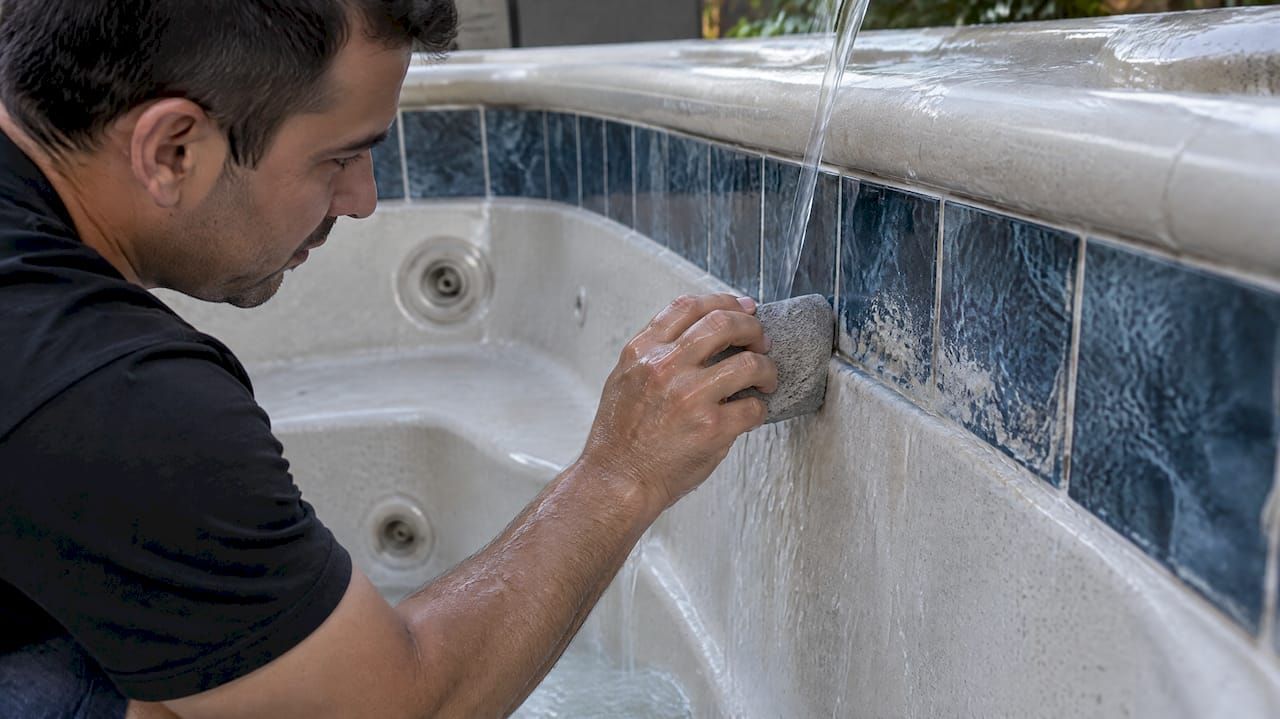
Table of Contents
- What does hot tub tile scale actually look like?
- Why does scale form in the first place?
- Step-by-step removal: from gentle cleaning to professional intervention
- Build a prevention routine that actually stops scale
- When should you drain the tub or call a professional?
- Oceancare Store recommendations for safer scale control
- Cee's quick rules for staying ahead of scale
- Where to find surface-safe cleaners and sequestering products
- FAQ
- Sources
What does hot tub tile scale actually look like?
Before you grab a cleaner, figure out what you're dealing with. Mineral scale and organic buildup respond to completely different treatments, and using the wrong one wastes time or damages the finish.
- Mineral scale looks white or chalky and feels gritty, almost like fine sandpaper, especially right at the waterline.
- Organic buildup (body oils, lotions, biofilm) looks greasy or filmy and feels slick rather than rough.
- Gray, rock-hard deposits that won't budge are often calcium silicate rather than calcium carbonate.
A quick way to confirm mineral scale is to dab a small, inconspicuous spot with white vinegar or a drop of commercial descaler. If it fizzes, you're looking at calcium carbonate, which dissolves with the right acid-based product. If it doesn't react, you may be dealing with calcium silicate, which typically resists acid and needs professional abrasive removal. Test on a hidden patch first since some sealed or natural stone surfaces can be sensitive to acid. Scale tends to concentrate at the waterline, around jets, near heater outlets, and at return fittings, because warm, aerated water pushes minerals out of solution exactly where they can cling to a surface.
Why does scale form in the first place?
Calcium carbonate stays dissolved in water up to a point. Once water gets warm and aerated, as it does constantly in a hot tub, that mineral becomes less soluble and starts settling onto the nearest surface, which is why heater elements and jet faces scale before flat tile does.
Water professionals use the Langelier Saturation Index (LSI) to describe this tendency. It weighs pH, alkalinity, calcium hardness, temperature, and dissolved solids together to predict whether water will deposit scale, stay balanced, or turn corrosive. According to King County public health guidance, keeping these three numbers in range holds the LSI near neutral or slightly negative, which limits scaling without tipping toward corrosive water:
- pH maintained in a narrow range around neutral
- Total alkalinity kept within a moderate range
- Calcium hardness kept within a balanced range suitable for hot tubs
If scale keeps forming within days of cleaning and the surface feels gritty again fast, that's a sign your LSI is running persistently positive. Test water at least weekly, and more often if you're refilling, adding chemicals, or noticing rapid reformation.
Step-by-step removal: from gentle cleaning to professional intervention
Work from the mildest effective method upward. Jumping straight to harsh acid risks etching a finish that a five-minute pumice session would have fixed.
- Light deposits: Use a wet pumice stone, keeping both the stone and the tile wet throughout, and work in small circular motions. Swim University and PoolChemTracker both note pumice works well on ceramic and porcelain but should never touch natural stone, vinyl, fiberglass, or glass tile, since it can scratch and dull those finishes permanently. A non-abrasive pad or a mild vinegar solution is a gentler first try on sensitive surfaces. Always patch test first.
- Moderate deposits: Above the waterline, a sulfamic acid or citric acid based descaler dissolves stubborn calcium carbonate without the hazard profile of stronger acids. Swim University points out that sulfamic and citric formulas are safer consumer options than muriatic acid, which is effective but risky for many finishes. Apply per label instructions, let it dwell, agitate gently with a soft brush, then rinse thoroughly and clean or replace your filter afterward since dissolved minerals pass through it.
- Heavy, old, or underwater scale: This calls for draining the tub. Acid washes need to be applied to a drained shell and rinsed completely, because applying acid to filled water throws off your chemistry and can damage equipment. For gray, hardened deposits that don't fizz with acid, professional bead-blasting or acid washing is often the only reliable option, and line flushing can clear scale hidden inside jets and heater passages that visible cleaning never reaches.
Before any of this, run through a safety and compatibility checklist: skip pumice on natural stone or glass, never use muriatic acid on sensitive or sealed finishes, work in ventilated spaces, wear gloves and eye protection, neutralize spent acid before disposal, and check your product label for surface warnings.
Pro Tip: Keep the surface and your pumice stone wet at all times. A dry pumice stone on dry tile is what causes the scratching homeowners usually blame on the method itself.
Build a prevention routine that actually stops scale
Removing scale without fixing the water that created it just buys you a few weeks. PoolPad is direct about this: correcting your LSI has to accompany cleaning, or deposits reform, often on hidden equipment like heaters where you can't see them building.
- Weekly: Test pH, total alkalinity, and calcium hardness regularly, keeping them within recommended balanced ranges to minimize scaling.
- Monthly: Deep-soak your filter and dose a sequestering agent to keep dissolved calcium from precipitating onto surfaces.
- Quarterly: Drain, clean the shell, and flush the lines to clear anything that's settled in plumbing and jets.
Refill water matters more than most people expect; following a detailed spa cleaning essentials list helps maintain water quality and prevent scale buildup. A hose pre-filter, or softened water where it's available, keeps a large share of incoming minerals from ever entering the tub in the first place, which is a low-effort step that pays off especially on hard water supplies. Sequestering agents work as ongoing insurance between drains, binding calcium so it can't deposit on tile or equipment. Watch your total dissolved solids too: as TDS climbs between drains, a partial drain-and-refill resets the water before chemistry becomes harder to manage.
When should you drain the tub or call a professional?
Some situations are beyond a DIY pumice session. Reach for professional help when you see any of these signs:
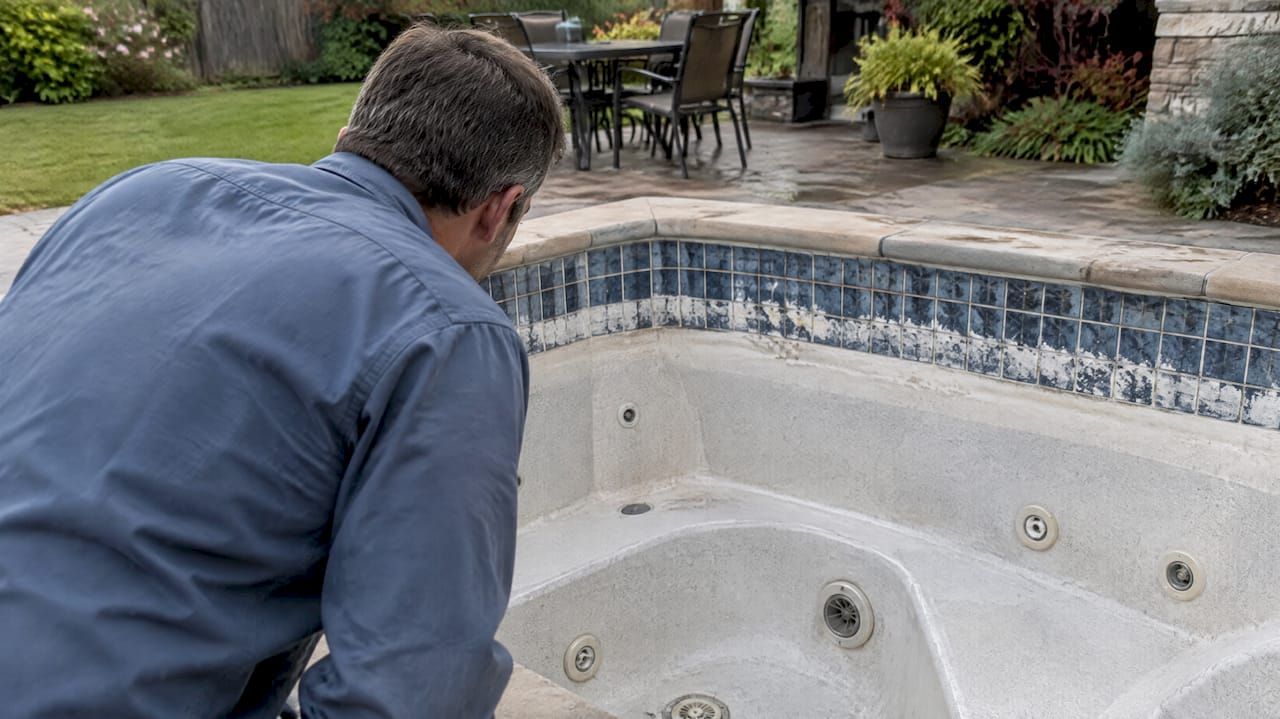
- Gray, rock-hard deposits that don't fizz when you test them with acid
- Noticeably reduced water flow or jet pressure
- A heater that seems to be running longer or less efficiently than before
- Scale that reforms within days of cleaning despite balanced water
Professionals typically perform an acid wash on a fully drained shell, use bead-blasting for hardened or silicate scale that resists chemical dissolution, and run line flushes to clear heaters and plumbing that visible surface cleaning can't reach. When you call a service, ask what method they'll use on your specific surface, whether they'll test and rebalance your water afterward, and what warranty or follow-up inspection comes with the work.
Oceancare Store recommendations for safer scale control
We built our product lineup around the surfaces that get damaged most often by the wrong cleaner: natural stone, glass tile, and sealed finishes that can't handle harsh acid or abrasive scrubbing. For prevention, a calcium releaser or sequestering product keeps dissolved minerals from settling back onto tile between cleanings. For active removal, we formulate acid-free calcium removers for situations where sensitive tile, glass, or sealed stone rules out a traditional acid wash.
- Choose an acid-free or plant-based releaser when your tile is natural stone, glass, or freshly sealed.
- Reach for a stronger acid-based approach only on hardy ceramic or porcelain with heavy, established deposits.
For a deeper walkthrough, see our guide on effective methods for pool tile calcium removal and our breakdown of acid-free calcium remover options.
Cee's quick rules for staying ahead of scale
Three habits cover most of what matters here. Test your water weekly and keep pH and alkalinity in range. Use a hose pre-filter and a sequestering agent every time you refill. Treat scale the moment you notice it, because light buildup takes minutes to clear while neglected scale can mean a drain, an acid wash, or a service call.
Where to find surface-safe cleaners and sequestering products
We carry Pool Tile Maintenance Products for routine prevention, a calcium releaser for ongoing sequestering between deep cleans, and Stone & Grout Sealers to protect a finish once scale is gone.
- Use the calcium releaser for prevention and maintenance dosing.
- Reach for an acid-free remover on sensitive tile, glass, or sealed stone.
- Apply a sealer after cleaning to make future buildup easier to wipe away.
Always patch test on a hidden spot and follow label directions for your specific surface. Browse the full lineup at Oceancarestore to find the right match for your tub.
FAQ
How do you get rid of scaling in a hot tub?
Start with the mildest method that works: a wet pumice stone for light calcium carbonate on ceramic or porcelain, or a mild vinegar solution. For moderate buildup, an above-waterline sulfamic or citric acid descaler dissolves deposits that pumice can't handle, and heavy or underwater scale usually requires draining the tub for a controlled acid wash.
How do you remove scale from pool tile?
The same tiered approach applies: pumice or a non-abrasive pad for light scale on hardy surfaces, a commercial descaler for moderate buildup, and a drained acid wash or professional bead-blasting for hardened or gray deposits that resist acid. Always patch test first since natural stone and glass tile need gentler, often acid-free, treatment.
What causes scale in a hot tub?
Scale forms when calcium carbonate drops out of warm, aerated water and deposits on nearby surfaces, which is why heaters, jets, and waterlines scale first. Water chemistry outside the recommended ranges, roughly pH 7.4 to 7.6, alkalinity 80 to 120 ppm, and calcium hardness 150 to 250 ppm, pushes the Langelier Saturation Index positive and accelerates buildup.
Can you descale a hot tub without draining it?
Yes, for light to moderate scale above the waterline: pumice, non-abrasive pads, or an above-waterline commercial descaler can clear deposits without draining. Heavy, old, or underwater scale needs a drained shell because acid treatments must be applied directly and rinsed completely to avoid disrupting your water chemistry.
Is acid-free scale removal as effective as acid-based cleaners?
Acid-free and plant-based removers work well on light to moderate calcium carbonate and are the safer choice for sensitive tile, glass, and sealed natural stone. For heavy or hardened deposits, a sulfamic or citric acid product, or professional remediation, is often necessary to fully dissolve the buildup.
Sources

