
Strip Stone Sealer Without Etching, Solvent Rub and Tack Test for Homeowners
Test a small, hidden area first to confirm whether the sealer is a surface film or a penetrating treatment, since that answer decides everything else. A peeling or cloudy film calls for a matched chemical stripper, while a worn penetrating sealer usually just needs a deep clean to reopen the pores. Either way, a quick solvent-rub test on that hidden spot tells you what you're dealing with before you touch the rest of the surface.
TL;DR:
- Use a water-drop test and solvent-rub test to confirm whether a sealant is film-forming or penetrating before stripping or cleaning.
- Never use acidic strippers on calcareous stones like marble or limestone, as they cause permanent etching, while granite tolerates a wider range of products.
- Mechanical methods such as low-pressure washing and soft scrubbing typically follow chemical stripping, but require care to avoid surface damage.
- Verify removal with multiple solvent-rub and water-drop tests after stripping to prevent resealing over leftover residue that causes future problems.
- Seek professional help for large-scale, delicate, or heavily built-up sealers, or when dealing with historic, soft, or polished surfaces likely to be damaged by DIY methods.
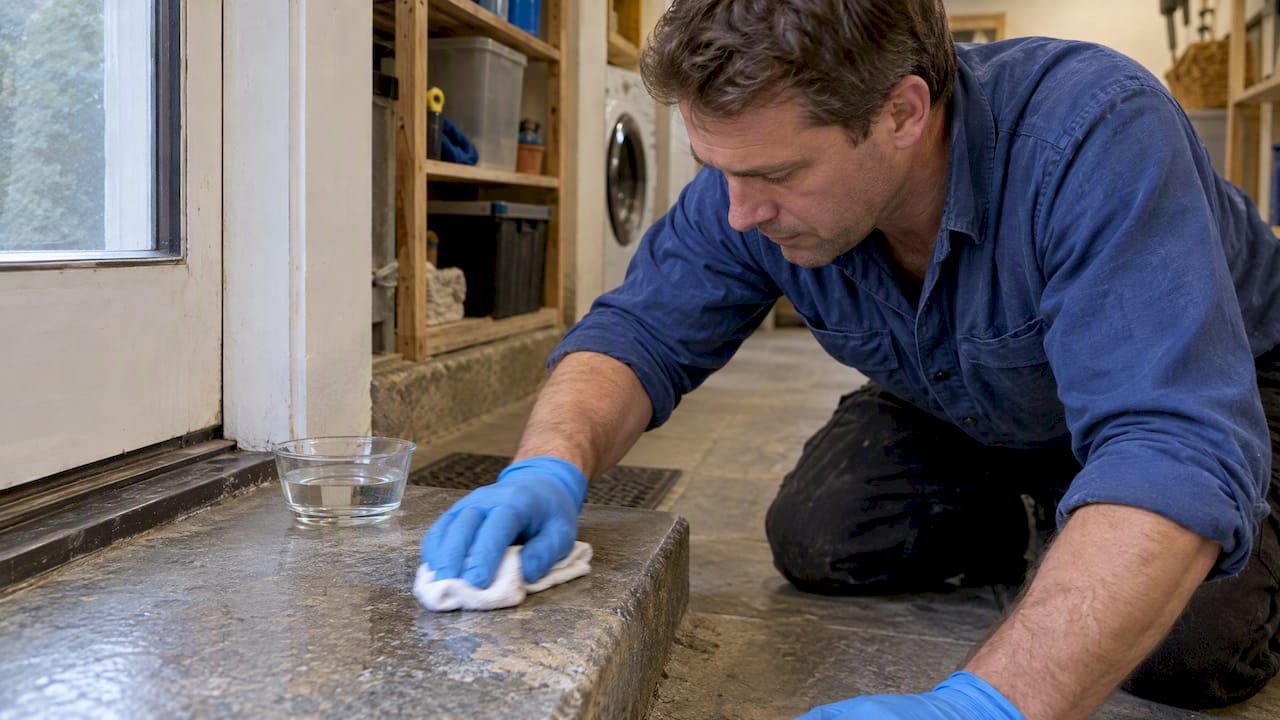
Table of Contents
- Identify your sealer type before you strip anything
- Choosing and using a chemical stripper step by step
- Mechanical and combined removal methods
- Confirm the sealer is gone and get ready to reseal
- Safety and environmental precautions during stripping
- When to hire a professional instead of DIY stripping
- What to use after stripping: cleaning and resealing options
- FAQ
- Sources
Identify your sealer type before you strip anything
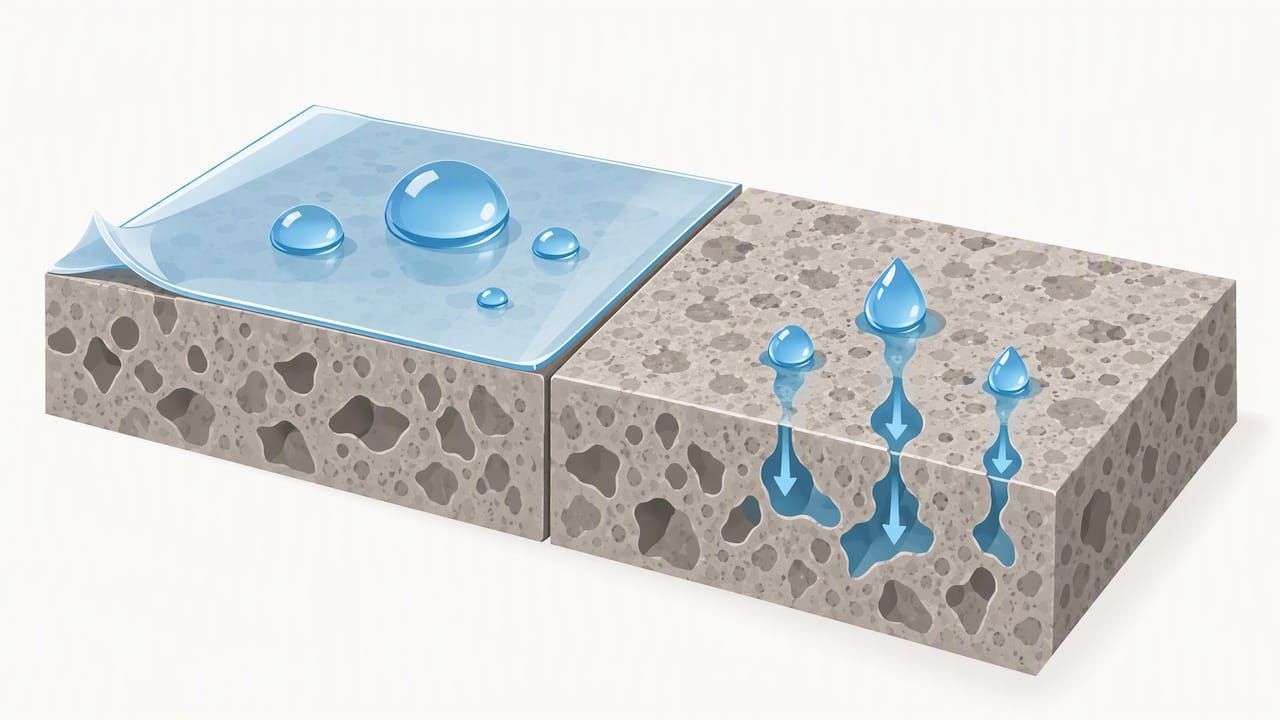
Not every dull or hazy stone surface needs a stripper. Film-forming (topical) sealers sit on top of the stone and show their age through gloss loss, peeling, white blotches, or a tacky feel underfoot. Penetrating sealers soak into the pores and rarely peel: instead, water stops beading and starts soaking in, which usually means the sealer has simply worn down rather than failed.
Stone type matters just as much as sealer type. Marble and limestone are calcareous and react badly to acidic products, etching on contact, while granite and sandstone tolerate a wider range of cleaners.
A few checks before you commit to stripping:
- Water-drop test: drops that bead mean sealer is still active; drops that soak in mean it has worn thin.
- Tack test: press a finger on the surface. Stickiness points to a failing topical coating.
- Visual check: flaking, whitening, or uneven sheen signals a topical film in distress.
- Solvent-rub test: wipe a cotton rag with the appropriate solvent on a hidden spot and check the rag for color transfer.
If the sealer is only worn and penetrating, skip stripping and go straight to a deep clean. If it's peeling, blotchy, or clearly a failing film, stripping is the right call.
Choosing and using a chemical stripper step by step
Strippers generally fall into four camps: solvent-based (for acrylic or urethane films), alkaline (for heavier builds), gel or viscous formulas (for vertical surfaces or porous stone where dwell time matters), and biodegradable, low-odor options built for homeowner use. Gel formulations tend to work best on porous or vertical stone because they cling instead of running off before the product can work.
Selection rules worth following: never use acidic strippers on calcareous stones like marble, travertine, or limestone, since etching is immediate and permanent. For indoor or occupied spaces, a low-toxicity, biodegradable stripper cuts down on fumes and handling risk without giving up effectiveness.
A straightforward application sequence:
- Clear the area and protect adjacent surfaces, plants, and drains with plastic sheeting or tape.
- Apply the stripper evenly per the label, usually undiluted on a small test patch first.
- Let it dwell for the time the label specifies, often up to an hour for stubborn coatings.
- Agitate with a nonmetallic pad or soft brush to lift the softened sealer.
- Remove the residue with a plastic scraper or wet-vac, then rinse thoroughly.
- Neutralize alkaline products with a mild solution before a final rinse, since leftover alkalinity can cause its own staining.
Pro Tip: Record the dwell time, product, and result of your small-area test on paper before scaling up: it saves guesswork if a second application is needed.
Biodegradable strippers reduce runoff concerns, but used solvent-based products and rinse water still count as hazardous waste in many areas, so check local disposal rules rather than pouring either down a storm drain.
Mechanical and combined removal methods
Chemicals aren't always enough on their own, and sometimes they're not even necessary. Pressure washing can finish the job after a stripper has softened a film, but it has to be done carefully; for guidance on stain removal and troubleshooting, see Expert Tips on How to Remove Oil Stains from Concrete Driveways.
- Keep pressure low, generally at a moderate setting suitable for delicate surfaces, with a wide fan nozzle held at least 12 inches from the surface.
- Avoid pressure washing on soft or polished stone, since it can etch or dull the finish in seconds.
- Hand scrubbing with a nonmetallic pad works for small areas; a rotary scrub machine with a soft pad speeds up larger jobs like patios or pool decks.
- Micro-abrasion, dry-ice blasting, and similar specialist methods exist but carry real risk of surface roughening or staining and are best left to trained operators, a point National Park Service preservation guidance also makes when describing low-pressure washing and micro-abrasion as effective but risky without proper training.
The usual sequence is chemical first, mechanical second: let the stripper soften the film, then scrub or rinse away what's left. Mechanical removal alone makes sense mainly for heavy, flaking build-up on pavers where there's no delicate finish to protect.
Confirm the sealer is gone and get ready to reseal
Verification keeps you from resealing over leftover coating, which traps moisture and causes problems later.
- Run the solvent-rub test again across several spots, not just the original test patch; a clean rag means the film is gone.
- Do a tack test and a water-drop test. Stickiness or stubborn beading means some sealer remains.
- If ghosting persists, a second stripping pass or a poultice treatment on the cloudy spot can pull out trapped residue; stop and reassess if the stone starts looking rougher, since over-stripping can roughen or dull the finish.
- Check for etching, which looks like dull or rough patches from acid contact, especially on marble or limestone. Etching from chemical reaction isn't something a second round of stripping fixes, and sanding or honing is usually a professional job.
- Once clean, let the stone dry fully, which can take a day or more depending on porosity, before testing for residual moisture and choosing a sealer suited to that stone type.
Safety and environmental precautions during stripping
Strippers and degreasers aren't gentle, so basic protection matters.
- Wear chemical-resistant gloves, eye protection, and a respirator rated for organic vapors when working with solvent-based products.
- Ventilate the area well, especially indoors, and take breaks if fumes build up.
- Neutralize and rinse thoroughly after any alkaline stripper, since the National Park Service notes that alkaline cleaners can damage sensitive stones like marble and limestone if left unneutralized.
- Never use acidic products on calcareous stone, and contain runoff with plastic sheeting to protect nearby plants and storm drains.
Pro Tip: Bag used rags and scraped residue separately from household trash and check your local hazardous waste program before disposal, since many solvent-based products don't belong in regular curbside pickup.
When to hire a professional instead of DIY stripping
Some jobs are worth handing off. Historic, soft, or highly polished stone, widespread film failure across a large area, persistent ghosting after repeated attempts, or simply not knowing what coating is on the surface are all signals to call a stone restoration specialist. Preservation Brief 1 notes that some water-repellent coatings are genuinely difficult or impossible to remove without professional equipment. Specialists bring lab testing, controlled micro-abrasion, and sometimes laser removal, tools that cost more upfront but cost less than a ruined floor.
What to use after stripping: cleaning and resealing options
Once stone is stripped and verified clean, the products you reach for next matter as much as the stripping itself. We formulate our pH Neutral Tile & Stone Cleaner to clean freshly stripped stone without the etching risk that comes with acidic or harsh alkaline cleaners, which makes it a reasonable first pass before resealing.
When the surface is dry and tested for moisture, our Stone & Grout Sealers line gives you a biodegradable, low-VOC option built for the stone types covered above, including marble, limestone, granite, and sandstone. Always test any new sealer on a small, hidden area first, the same habit that saved you from guesswork during stripping. Browse our full range at Oceancare Store to find the right fit for your surface.
FAQ
What removes sealer from stone?
A chemical stripper matched to the sealer type, solvent-based, alkaline, or a biodegradable gel formula, breaks down topical film sealers so they can be scrubbed and rinsed away. Worn penetrating sealers often respond to a deep clean instead, since there's no film to dissolve, only pores that need reopening.
How do I strip sealer from flagstone?
Flagstone's rough, porous texture holds sealer deeply, so a gel or viscous stripper that clings during the dwell time usually outperforms a thin liquid. Apply per the label, agitate with a stiff nonmetallic brush to work product into the texture, then rinse thoroughly and recheck with a solvent-rub test before resealing.
How do I strip old sealer off pavers?
Heavy, multi-layer sealer buildup on pavers often needs a biodegradable stripper with a longer dwell time, followed by mechanical removal such as low-pressure washing or scrubbing to lift the softened layers. Test a small area first, since repeated applications are common on older, heavily built-up paver sealer.
How do I strip sealer off granite?
Granite tolerates a broader range of strippers than calcareous stones, but it's still smart to avoid harsh alkaline products without a proper rinse and neutralization step afterward. A gel stripper applied per label instructions, agitated with a nonmetallic pad, and rinsed well typically clears topical film without damaging the polish.
How do I know if the sealer is fully removed?
The solvent-rub test is the most reliable check: wipe a clean rag with the appropriate solvent across the surface, and any color transfer or tackiness means sealer remains. A water-drop test backs this up, since water that beads instead of soaking in signals sealer is still present.
Sources

