
Why Pool Grout Stains Resist Cleaning: Real Causes
TL;DR:
- Pool grout stains resist cleaning because their porous cementitious structure embeds algae and minerals deep inside. Proper water chemistry and layered cleaning are essential to fully remove stains and prevent their return. Sealing grout after cleaning offers long-term protection against future staining.
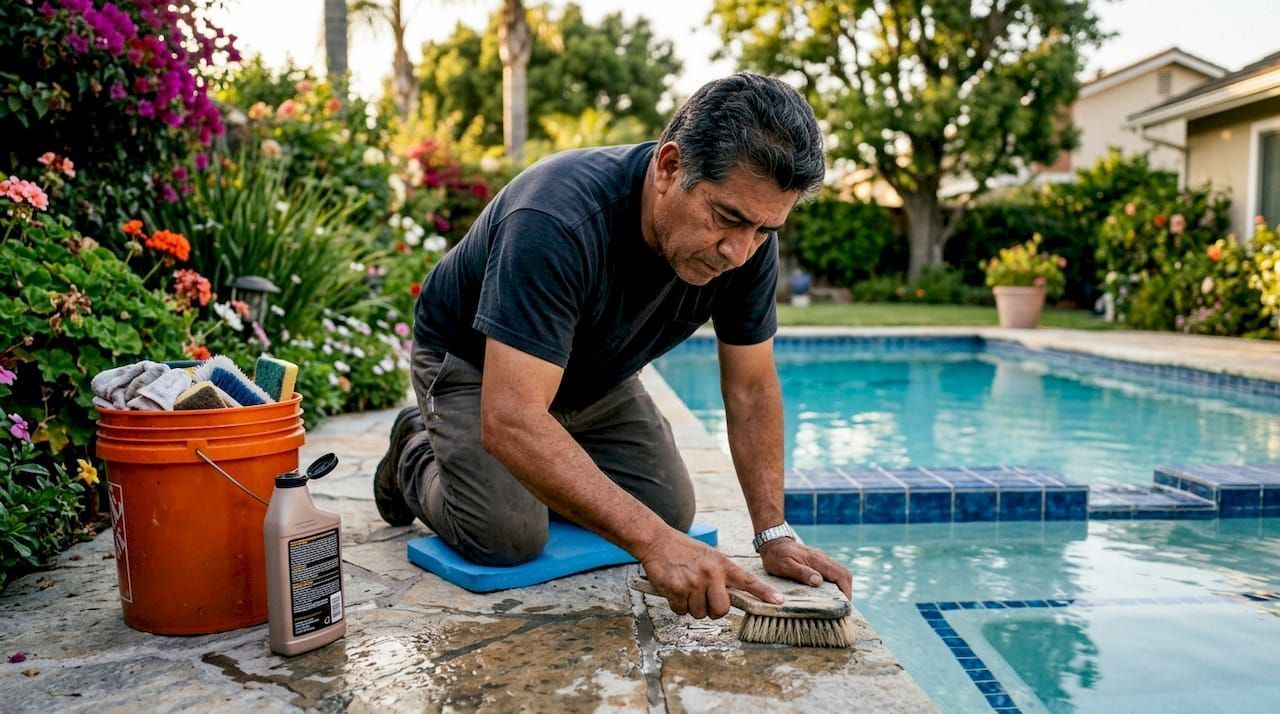
Pool grout stains resist cleaning because grout is a porous, cementitious material that absorbs algae, mineral deposits, and organic debris deep beneath its surface, far beyond where a brush or standard cleaner can reach. That porosity is the root of every pool grout cleaning challenge you face. Algae send root-like structures into grout pores, calcium scale bonds chemically to the surface, and poor water chemistry keeps feeding new deposits even after you clean. Stain prevention is 90% water chemistry and only 10% manual cleaning. That ratio alone should change how you approach your pool maintenance routine.
Why pool grout stains resist cleaning at a material level
Grout's texture and composition make it act like a sponge. Standard cementitious grout is riddled with microscopic pores that pull in whatever the pool water carries: algae spores, calcium particles, iron, manganese, and oils from sunscreen or body contact. Once those contaminants settle inside the pores, they are no longer sitting on the surface. They are embedded in the grout matrix itself.
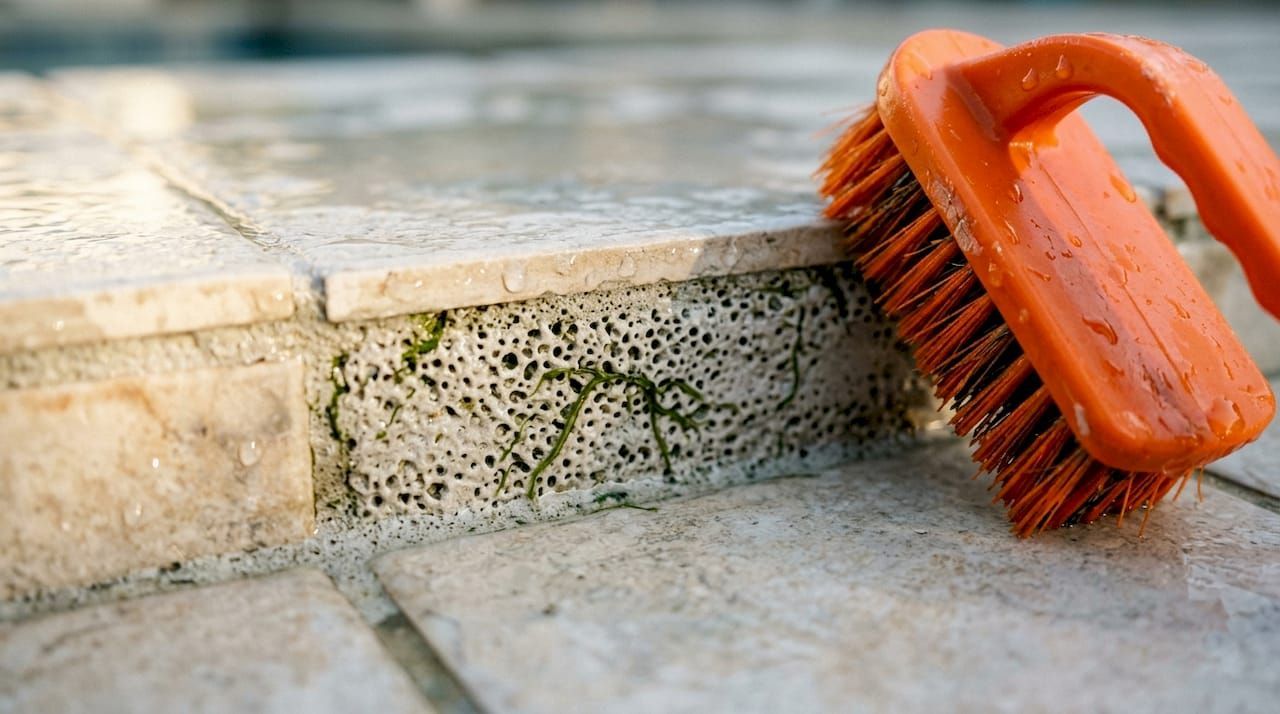
Algae are particularly aggressive. They do not just coat the grout surface; they grow root-like structures called rhizoids that anchor deep into pores. Algae penetrate grout pores and require dwell times of up to 24 hours for treatment to work. That means a quick scrub with a brush does almost nothing to the actual source of the stain.
Water chemistry compounds the problem. When pH drifts outside the 7.2–7.8 range or calcium hardness climbs too high, mineral deposits form faster than any cleaning routine can keep up with. Cleaning treatments last only 2–4 weeks without corrected water balance, meaning the stain returns before you have even put your brush away. Cracked or deteriorated grout makes this worse by opening larger channels for contaminants to enter.
Pro Tip: Test your pool water chemistry weekly, not monthly. pH and calcium hardness shifts happen fast, and catching them early is the single most effective way to stop stains before they embed.
What types of stains embed in pool grout and why they are tough to remove
Not all pool grout stains behave the same way, and treating the wrong stain type with the wrong product can make the problem permanent. Stains fall into two broad categories: organic and mineral.
Organic stains come from algae, pollen, leaves, and body oils. They tend to appear green, brown, or black and spread across grout lines in irregular patterns. Algae stains are the most stubborn because of their root structures. Oils from sunscreen leave a greasy residue that bonds with grout particles and resists water-based cleaners entirely.
Mineral stains come from calcium scale, iron, copper, and manganese. Stain color acts as a diagnostic map: brown or orange signals iron or manganese, while blue-green points to copper. This distinction matters enormously because the wrong treatment does not just fail. It makes things worse.
Applying chlorine or bleach to a metal stain is one of the most common and damaging mistakes pool owners make. Chlorine on metal stains oxidizes the metals, locking them deeper into the grout and making professional chemical intervention necessary. A simple test using vitamin C (ascorbic acid) rubbed on the stain can confirm whether metals are present before you commit to any treatment.
| Stain type | Color indicator | Correct treatment approach |
|---|---|---|
| Algae (organic) | Green, black, dark brown | Extended dwell time with algaecide or enzyme cleaner |
| Calcium scale (mineral) | White, gray, chalky | Pumice scrubbing or calcium releaser; avoid acid overuse |
| Iron/manganese (metal) | Orange, brown, rust | Ascorbic acid treatment; never use chlorine or bleach |
| Copper (metal) | Blue-green | Metal sequestrant; avoid oxidizing agents |
| Oil/organic residue | Yellowish, greasy | Degreaser or enzyme-based cleaner with dwell time |
Pro Tip: Before treating any stain, rub a vitamin C tablet directly on it. If the stain lightens within 30 seconds, you are dealing with a metal stain. That one test saves you from a costly mistake.
Why typical cleaning methods fail on pool grout stains
Surface brushing is the most common pool maintenance habit, and it is also the least effective tool against embedded stains. A brush removes loose debris sitting on top of the grout. It cannot reach the contaminants locked inside the pores. Scrubbing harder does not solve the problem. It often creates a new one.
The most damaging cleaning mistakes pool owners make include:
- Using wire or metal brushes. Wire brushes increase grout surface roughness by creating micro-grooves that trap future stains more aggressively than smooth grout ever would. The grout becomes exponentially harder to clean after each wire brush session.
- Pressure washing above 1,500 PSI. Pressure washing over 1,500 PSI damages grout integrity and creates the same micro-groove problem. A wide spray nozzle at or below 1,500 PSI is the safe limit.
- Applying acid incorrectly. Muriatic acid over-application causes grout erosion, a process called sanding, where the grout surface degrades into a permanently more absorbent state. Once that happens, regrouting is the only fix.
- Using bleach on unidentified stains. Bleach works on organic stains but permanently locks in metal stains. Identifying the stain type first is not optional.
- Skipping dwell time. Applying a cleaner and rinsing it off in two minutes defeats the purpose. Chemical treatments need contact time to penetrate pores and break down embedded contaminants.
Ignoring water chemistry between cleaning sessions guarantees that stains return. You can read more about common cleaning mistakes that accelerate grout damage and make future stain removal harder.
How to actually remove embedded pool grout stains
Effective stain removal requires a layered approach, not a single product applied once. Each layer targets a different depth and type of contamination.
- Remove surface grime first. Use a nylon brush and a pH-neutral cleaner to clear loose debris, algae film, and surface oils. This step prepares the grout for deeper treatment and prevents surface contaminants from blocking the next cleaner from penetrating.
- Degrease the grout. Apply an enzyme-based or plant-based degreaser and allow it to dwell for at least 15–20 minutes. This breaks down oil and organic residue that bonds to grout particles. Rinse thoroughly before moving to the next step.
- Treat mineral scale separately. For calcium deposits, use a dedicated calcium removal method rather than acid. Pumice stones work for waterline scale and require 1–3 hours of patient scrubbing for heavy buildup. Calcium releasers formulated for pool tile are safer and more controlled.
- Correct water chemistry before and after cleaning. Maintain pH at 7.2–7.8, keep alkalinity in the 80–120 ppm range, and balance calcium hardness. Circulation of 24–72 hours after chemical treatment helps distribute corrections evenly. Without this step, stains return within weeks.
- Allow full dwell time for each product. Algae treatments need up to 24 hours of contact. Rushing this step means the rhizoids survive and regrow. Follow product instructions precisely rather than guessing.
- Seal the grout after cleaning. A quality stone and grout sealer fills surface pores and creates a barrier against future absorption. Sealing is the step most pool owners skip, and it is the one that makes the biggest difference in how long the grout stays clean.
When grout is cracked, deeply eroded, or has been damaged by acid or wire brushes, professional regrouting becomes necessary. No cleaner can restore structurally compromised grout. In renovation situations, epoxy grout offers superior durability and water resistance because it is non-porous, eliminating the sponge effect that makes cementitious grout so vulnerable.
Pro Tip: Apply your sealer in two thin coats rather than one heavy coat. Thin coats penetrate more evenly and cure without streaking, giving you better long-term protection.
Key Takeaways
Pool grout stains resist cleaning because contaminants embed deep inside porous grout, and only a layered cleaning approach combined with corrected water chemistry can fully remove and prevent them.
| Point | Details |
|---|---|
| Grout porosity drives stain resistance | Cementitious grout absorbs algae, minerals, and oils deep into its pores, beyond surface cleaning reach. |
| Stain type determines treatment | Metal stains require ascorbic acid treatment; bleach or chlorine permanently locks them in. |
| Aggressive tools cause lasting damage | Wire brushes and pressure above 1,500 PSI create micro-grooves that trap future stains more aggressively. |
| Water chemistry is the real prevention | pH outside 7.2–7.8 causes stains to re-form within 2–4 weeks regardless of cleaning effort. |
| Sealing grout prevents reabsorption | Applying a grout sealer after cleaning blocks pores and significantly extends the time between deep cleans. |
What I have learned from watching pool owners fight the same stains twice
The most consistent pattern I see is pool owners treating grout as a static, sealed surface when it is actually one of the most reactive materials in a pool environment. They scrub harder, buy stronger chemicals, and repeat the cycle every few weeks. The stains always come back because the water chemistry never gets fixed.
The second mistake I see constantly is misidentifying stains. A brown stain near the waterline looks like algae to most people. They hit it with chlorine shock, and the iron in the grout oxidizes and turns darker. Now they have a worse stain and a confused homeowner who thinks the pool is broken. Residential cleaning standards differ significantly from professional protocols, and that gap shows up most clearly in how stains are diagnosed before treatment.
My honest recommendation: spend more time on water chemistry and less time scrubbing. A weekly water test and a monthly cleaning frequency check will do more for your grout than any aggressive cleaning session. If you are renovating, switch to epoxy grout. It costs more upfront but eliminates the sponge effect that makes cementitious grout such a recurring problem. The pool owners who maintain the cleanest grout are not the ones scrubbing the hardest. They are the ones who balanced their water and sealed their grout.
Oceancarestore products built for persistent pool grout stains
Pool grout stain removal works best when the products match the problem. Oceancarestore carries a focused range of pool tile and grout solutions designed for exactly the layered cleaning approach described here.
The Pool Tile Restorer revitalizes grout appearance and addresses discoloration caused by embedded organic and mineral stains. For ongoing care, the Pool Tile Maintenance range covers surface cleaning, protection, and renewal in one system. Every product in the Oceancarestore lineup is plant-based, low VOC, and formulated to clean without damaging grout integrity. That means no acid erosion, no micro-grooves, and no recurring damage from the cleaning process itself.
FAQ
Why do pool grout stains come back after cleaning?
Stains return because water chemistry is not corrected after cleaning. Without balanced pH (7.2–7.8) and controlled calcium hardness, mineral deposits and algae re-form within 2–4 weeks.
Can I use bleach to clean pool grout stains?
Bleach works on organic stains like algae but permanently locks in metal stains by oxidizing iron and manganese. Always identify the stain type before applying any chlorine-based product.
What is the safest tool for scrubbing pool grout?
A stiff nylon brush is the safest option. Wire or metal brushes create micro-grooves in grout that trap future stains and make removal progressively harder with each use.
How long should I let a cleaner sit on pool grout?
Algae treatments need up to 24 hours of dwell time to reach root structures inside grout pores. Calcium releasers typically need 15–60 minutes depending on buildup severity.
Does sealing pool grout actually prevent staining?
Yes. A quality grout sealer fills surface pores and creates a barrier that blocks algae, minerals, and oils from absorbing into the grout. Sealing after a deep clean significantly extends the time before stains return.

