
Why non-toxic sealers mean healthier, safer surfaces
TL;DR:
- Non-toxic sealers with low or zero VOC content protect surfaces while minimizing indoor air pollution from harmful chemicals. They are especially suited for porous natural stone and pool tiles, effectively preventing water and chemical penetration without off-gassing issues. Proper maintenance and surface-specific product selection ensure long-lasting protection and safer indoor environments.
Most homeowners applying sealer around their pool or on their natural stone floors are focused on one thing: protection. What they don't realize is that the product they're breathing in during application may be causing more harm than the water damage they're trying to prevent. The EPA notes VOC concentrations are often up to ten times higher indoors than outdoors, meaning a sealed bathroom or indoor pool area can trap a surprisingly heavy chemical load. This guide breaks down exactly why non-toxic sealers matter for pool tiles and natural stone, what real-world protection they deliver, and how to choose one that performs without putting your family, pets, or the environment at risk.
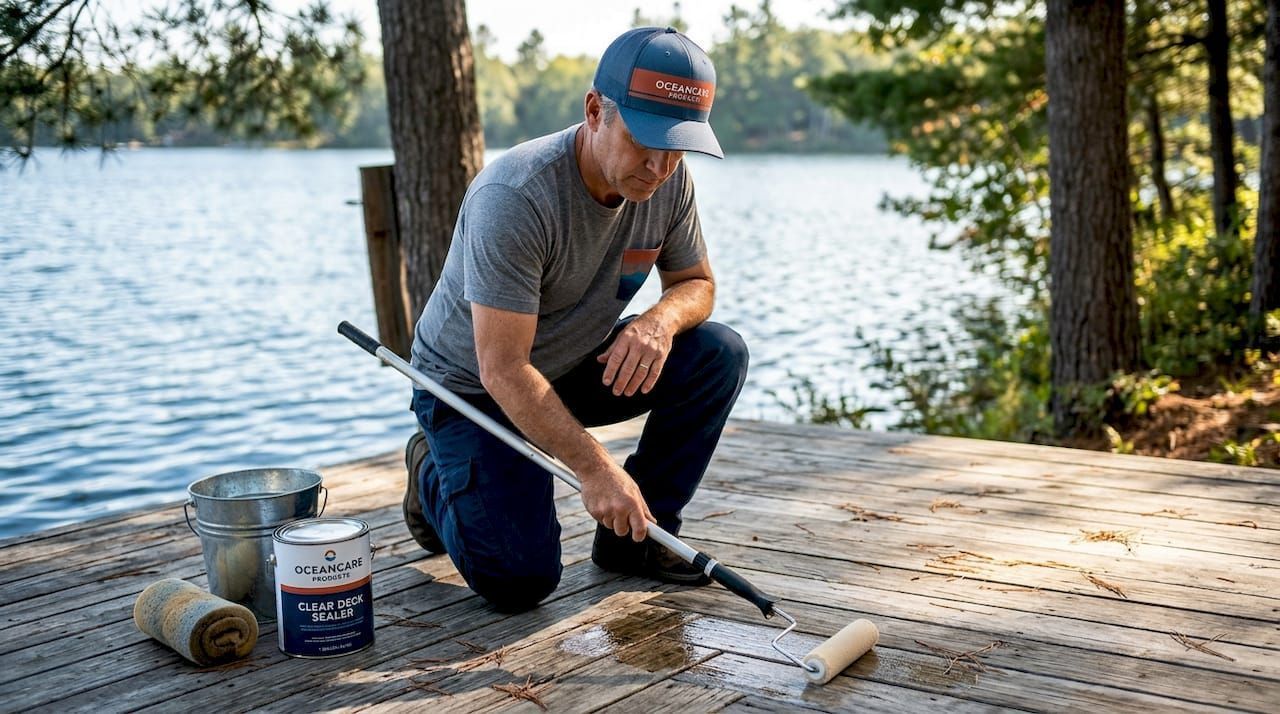
Table of Contents
- What are non-toxic sealers and why do they matter?
- Surface protection: How non-toxic sealers work on pools and natural stone
- Safety, performance, and limitations: Setting real-world expectations
- How to select and validate non-toxic sealer performance
- Non-toxic sealers: What most guides miss (and why practical tradeoffs matter)
- Explore eco-friendly sealer solutions for your property
- Frequently asked questions
Key Takeaways
| Point | Details |
|---|---|
| Improved indoor air quality | Non-toxic sealers greatly reduce harmful emissions, making home and pool environments safer for all occupants. |
| Effective surface protection | Quality non-toxic sealers prevent stains and water damage just as reliably as conventional options when well matched to the surface. |
| Easy, evidence-based selection | Homeowners and managers can confidently choose non-toxic sealers by checking VOC content, performance claims, and testing. |
| Maintenance still matters | Routine upkeep and timely resealing are key to maximizing the benefits of any sealer, even eco-friendly ones. |
What are non-toxic sealers and why do they matter?
Non-toxic sealers are formulated to provide surface protection with minimal or no volatile organic compounds, commonly called VOCs. Unlike conventional sealers that often rely on solvent-based chemistry to create a durable film, non-toxic options use water-based or plant-derived carriers that off-gas far less during and after application. That distinction has a direct impact on air quality in your home, particularly in enclosed areas like bathrooms, indoor pools, and kitchens where ventilation is limited.
Traditional sealers can contain a heavy chemical load. Some solvent-based products carry VOC concentrations high enough to trigger headaches and dizziness within minutes of application, with lingering effects lasting hours or even days. Low-VOC sealers reduce exposure to compounds linked to eye, nose, and throat irritation, headaches, and long-term organ stress. For children who play on sealed stone floors, pets who rest near treated surfaces, or elderly family members with respiratory sensitivity, the difference between a high-VOC and a low-VOC sealer is not trivial.
Here's what sets non-toxic sealers apart from conventional options:
- No or low VOC content , usually below 50 grams per liter compared to solvent-based products that can exceed 400 g/L
- Water-based or plant-based carriers that evaporate without leaving harmful residue
- Low odor during application , making them practical to use in occupied spaces
- Biodegradable formulas that reduce runoff risk near pools and drainage systems
- Safer for sensitive surfaces like limestone and marble that react badly to aggressive chemistry
"The risk from conventional sealers is not just during application. It's the off-gassing that continues for hours after the work is done, in rooms where children sit, sleep, and breathe." This is why product selection matters as much as application technique.
If you're exploring alternatives for your pool or stone areas, the range of eco-friendly sealers for stone and tile has expanded significantly, giving you genuine performance options that don't require compromising on safety. For a deeper look at material-specific options, sustainable natural stone sealer options offer guidance tailored to different stone types.
Surface protection: How non-toxic sealers work on pools and natural stone
A common misconception is that "non-toxic" is a marketing phrase for a watered-down product. In reality, the chemistry behind modern non-toxic sealers is sophisticated, and it directly addresses the physical vulnerabilities of pool tiles, travertine, slate, limestone, and other porous materials.
Natural stone and most pool tiles are porous at a microscopic level. Water, pool chemicals, oils, and mineral deposits find their way into those tiny channels and cause staining, discoloration, and long-term structural breakdown. Sealers prevent water and chemicals from penetrating those pores, blocking the pathways that cause surface damage. The question isn't whether to seal; it's which sealer type is right for your specific surface and environment.
There are two main categories you need to understand: film-forming sealers and penetrating (impregnating) sealers .
| Feature | Film-forming sealers | Penetrating sealers |
|---|---|---|
| How they work | Create a coating layer on the surface | Absorb into pores and repel from within |
| Breathability | Low (can trap moisture beneath) | High (allows vapor to escape) |
| Best for | Concrete pool decks, grout lines | Natural stone, pool tile faces |
| Slip resistance | Can be modified with additives | Generally maintains natural texture |
| Reapplication | Every 1 to 3 years depending on traffic | Every 3 to 5 years |
| Non-toxic options | Widely available | Most common category in eco-friendly lines |
Penetrating sealers are the workhorse for natural stone. They don't change the look of the surface, they don't create a film that can peel or yellow, and they let the stone breathe, which is critical in outdoor or poolside environments where temperature shifts cause expansion and contraction. Film-forming sealers are better suited to concrete decking where you want a visible sheen and enhanced water runoff.
Pro Tip: Before applying any sealer, clean the surface thoroughly. Sealing over existing calcium deposits, algae, or staining locks the problem in permanently. Use a dedicated tile or stone cleaner first, then allow the surface to dry completely before applying your chosen sealer.
Understanding how sealers protect pool tile and stone in practice helps you make smarter decisions about which type fits your specific situation. And if you're still weighing whether your stone even needs sealing, the case for why sealing natural stone matters comes down to one simple reality: unsealed stone is always one spill or season away from a problem you can't reverse.
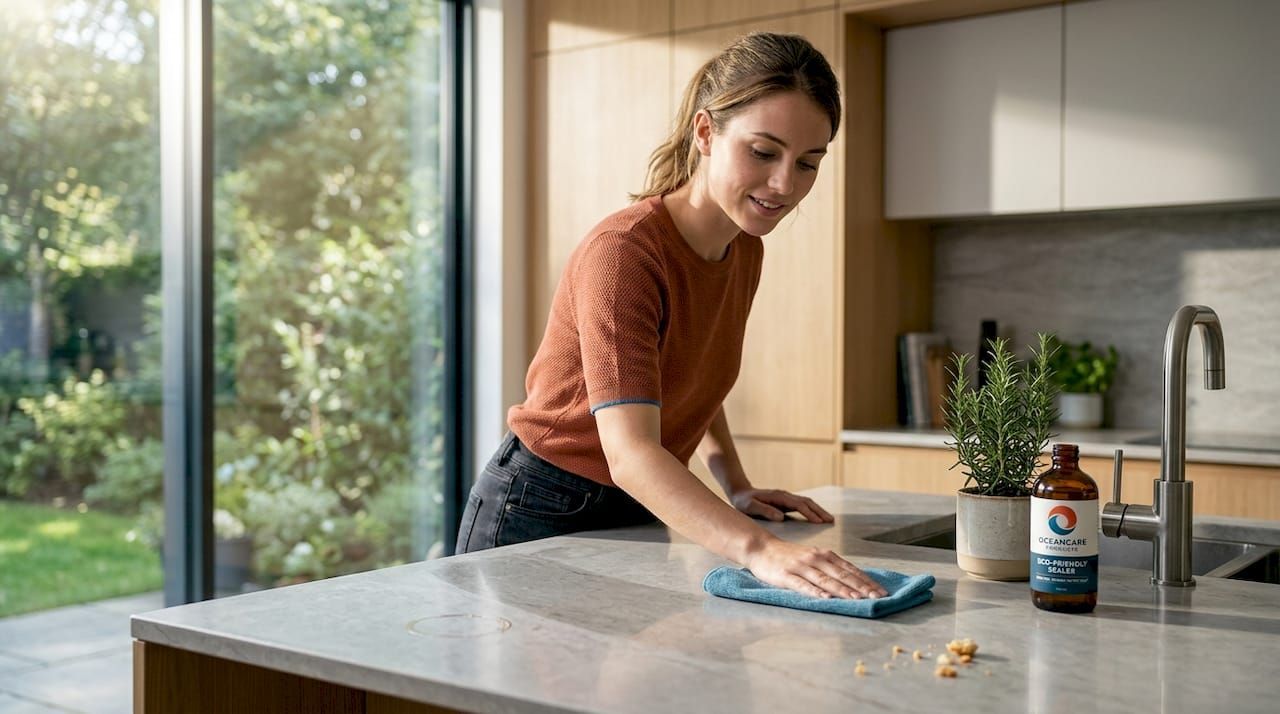
Safety, performance, and limitations: Setting real-world expectations
Non-toxic sealers genuinely reduce health risks. But they don't make maintenance optional, and they don't make your stone or pool tile invincible. Setting realistic expectations upfront saves you from the frustration of thinking a single application is a permanent fix.
Here's a comparison of the key performance factors between non-toxic and conventional sealers:
| Performance factor | Non-toxic (low/no-VOC) sealers | Conventional (solvent-based) sealers |
|---|---|---|
| Slip resistance | Comparable; additives available | Comparable; additives available |
| Stain protection | Excellent for most household spills | Excellent; slight edge in harsh chemical environments |
| Reapplication interval | 18 months to 5 years depending on type | 1 to 5 years depending on type |
| Application safety | Safe for occupied spaces | Requires ventilation; restrict access |
| Environmental impact | Low; biodegradable options available | Higher VOC and runoff risk |
| Performance in extreme conditions | Very good; may need professional grade for some commercial settings | Strong in high-traffic, high-chemical-exposure scenarios |
One limitation that catches homeowners off guard: breathable sealing doesn't make stone impervious to all damage. Acids from citrus, wine, or pool water pH imbalances can still etch marble or limestone surfaces even after sealing. The sealer buys you time; it doesn't eliminate risk. The longer a spill sits, the more likely it is to cause damage regardless of what product is protecting the surface.
For pool decks specifically, improved slip resistance and reseal intervals are two of the most practical considerations. Wet surfaces near pools are a safety concern, and some film-forming sealers can actually increase slipperiness if the wrong formula is used without a texture additive.
Here's a numbered maintenance checklist to keep non-toxic sealers performing at their best:
- Clean spills immediately, especially acidic substances like lemon juice, wine, or pool chemicals
- Wash sealed surfaces regularly with a pH-neutral, eco-friendly cleaner compatible with your sealer
- Inspect the surface every six months for signs of wear or water absorption
- Perform the water beading test: drop water on the surface and watch; if it absorbs instead of beading, it's time to reseal
- Reapply sealer on the manufacturer's recommended schedule, not just when visible damage appears
- Avoid pressure-washing sealed stone at high intensity, which can strip penetrating sealers prematurely
Pro Tip: The water beading test is your most reliable maintenance tool. You don't need lab equipment or a professional inspection. A cup of water tells you everything you need to know about whether your sealer is still doing its job.
For a broader look at what can go wrong when sealers fail or are misapplied, common problems with stone sealers covers the scenarios most homeowners encounter and how to address them without starting over.
Understanding eco-friendly pool tile sealing gives you a clearer picture of the full process, from surface prep to final inspection, in a way that's tailored to pool-specific conditions.
How to select and validate non-toxic sealer performance
Choosing a non-toxic sealer isn't complicated, but it does require matching the product to your specific surface, climate, and usage pattern. A penetrating sealer that works beautifully on honed marble in a dry interior may not deliver the same results on a textured travertine pool surround that sees constant moisture and UV exposure.
Structured stain-resistance testing can reveal major performance differences even among products marketed under the same "non-toxic" label. What this means practically is that the label alone isn't your guide. Look for documented performance data, not just certifications.
Here's a checklist of what to evaluate before purchasing:
- VOC level in grams per liter : Look for under 50 g/L for genuinely low-VOC products
- Breathability rating : Critical for natural stone; confirms the sealer won't trap moisture
- Stain resistance data : Actual test results against oil, water, acids, and pool chemicals
- Slip resistance : Especially important for pool decks and bathroom floors
- Third-party certifications : Green Seal, GREENGUARD Gold, or equivalent independent verification
- Surface compatibility : Confirmed safe for your specific stone type (granite, marble, travertine, slate, etc.)
- Reapplication requirements : How long does the protection actually last under your conditions?
Water-based sealers are user-friendly and low-odor with lower health risk during application, while oil-based formulas may offer stronger long-term resistance in outdoor or high-traffic areas but require better ventilation. For most residential pools and natural stone applications, water-based non-toxic sealers deliver excellent results without the tradeoffs.
Once you've applied your chosen product, validate performance with these steps: run the water beading test immediately after curing to confirm penetration, then retest at three, six, and twelve months to track how quickly the product is wearing under your specific conditions. This creates a real-world baseline for your reapplication schedule rather than relying solely on the manufacturer's general estimate.
Choosing the right stone sealer for your floors or pool areas is a decision that rewards careful research, and the payoff is a surface that looks better, lasts longer, and doesn't introduce health risks into your home.
Non-toxic sealers: What most guides miss (and why practical tradeoffs matter)
Here's something most product guides won't tell you: "non-toxic" is not a finish line. It's a starting point. Homeowners who seal their pool tile or stone floors with a quality low-VOC product and then forget about it for five years are going to end up with stained, degraded surfaces regardless of how eco-friendly the formula was.
The hidden tradeoff that almost nobody talks about is the relationship between surface vulnerability and user behavior. Even the best sealers work within a system: natural stone maintenance requires regular care, not just sealing. A penetrating sealer creates a window of protection, not a permanent shield. That window closes faster in high-UV pool environments, in bathrooms with daily cleaning product exposure, or on outdoor stone that experiences freeze-thaw cycles in winter.
The other overlooked reality is product matching. Not every non-toxic sealer is built for every surface. We've seen homeowners apply a sealer rated for indoor granite countertops to their outdoor limestone pool coping and wonder why it failed within a season. The chemistry that works brilliantly in one environment can be completely mismatched in another. Reading the product specifications carefully, especially the intended surface types and environmental conditions, is not optional.
Our perspective: prioritize safety, but never at the expense of doing the research. The best outcome is a sealer that protects your family from unnecessary chemical exposure AND protects your surfaces from damage. These goals are not in conflict if you make evidence-based choices. When in doubt about a high-traffic or high-exposure scenario, consult a surface care professional before committing to a product. And for day-to-day eco-friendly natural stone cleaning, pairing the right cleaner with your sealer is just as important as the sealer itself.
Explore eco-friendly sealer solutions for your property
Taking what you've learned about non-toxic sealers from research to real-world application is easier when you have access to products specifically designed for pool tiles, grout, and natural stone.
At Oceancare Store, we carry high-performing, low-VOC options built for exactly the environments this article covers. The Pool Tile Restorer is formulated for the unique chemical and moisture demands of pool environments, restoring and protecting tile surfaces without harsh solvents. For broader surface needs, our Stone & Grout Sealers range covers everything from indoor bathroom tile to outdoor travertine coping. If you've run into issues with an existing sealer, our troubleshooting resource on stone sealer problems walks you through diagnosis and solutions. Safer surfaces start with smarter product choices, and we're here to make that straightforward.
Frequently asked questions
What are the main health risks of traditional (high-VOC) sealers?
Traditional sealers emit VOCs linked to health problems including eye and throat irritation, headaches, dizziness, and potential long-term organ damage with repeated exposure, especially in enclosed spaces.
Do non-toxic sealers work as well as conventional ones for pools and stone?
Many non-toxic sealers match or exceed protective qualities of conventional products when the right formula is matched to the specific surface type and environmental conditions.
How often should non-toxic stone or pool sealers be reapplied?
Reseal intervals range from every 18 to 24 months for film-forming products to every 3 to 5 years for most penetrating sealers, or as soon as water stops beading on the surface.
Are there surfaces or scenarios where non-toxic sealers may not provide enough protection?
In very high-traffic or harsh chemical environments, some applications may push specifiers toward higher-durability or solvent-based systems for maximum protection, though non-toxic options continue to improve.

