
Identify and treat every type of pool surface stain
TL;DR:
- Using the wrong cleaner on pool stains can cause surface damage, chemical imbalance, and persistent marks. Identifying whether stains are organic, metal, or mineral allows for eco-friendly, targeted removal methods that protect surfaces and save costs. Proper diagnostics and treatment—such as vitamin C tests and environmentally safe products—are essential for effective long-term stain prevention and pool care.
Using the wrong cleaner on a pool stain is one of the most common and costly mistakes pool owners make. Grab an acid-based product for what turns out to be an organic stain, and you can etch the tile surface, throw off your water chemistry, and still end up with the same stubborn mark. Identifying your stain family first, whether it's organic, metal, or mineral, puts you in control. It saves money, protects your pool surfaces, and means you can choose eco-friendly treatments that actually work instead of reaching for the harshest chemical on the shelf.
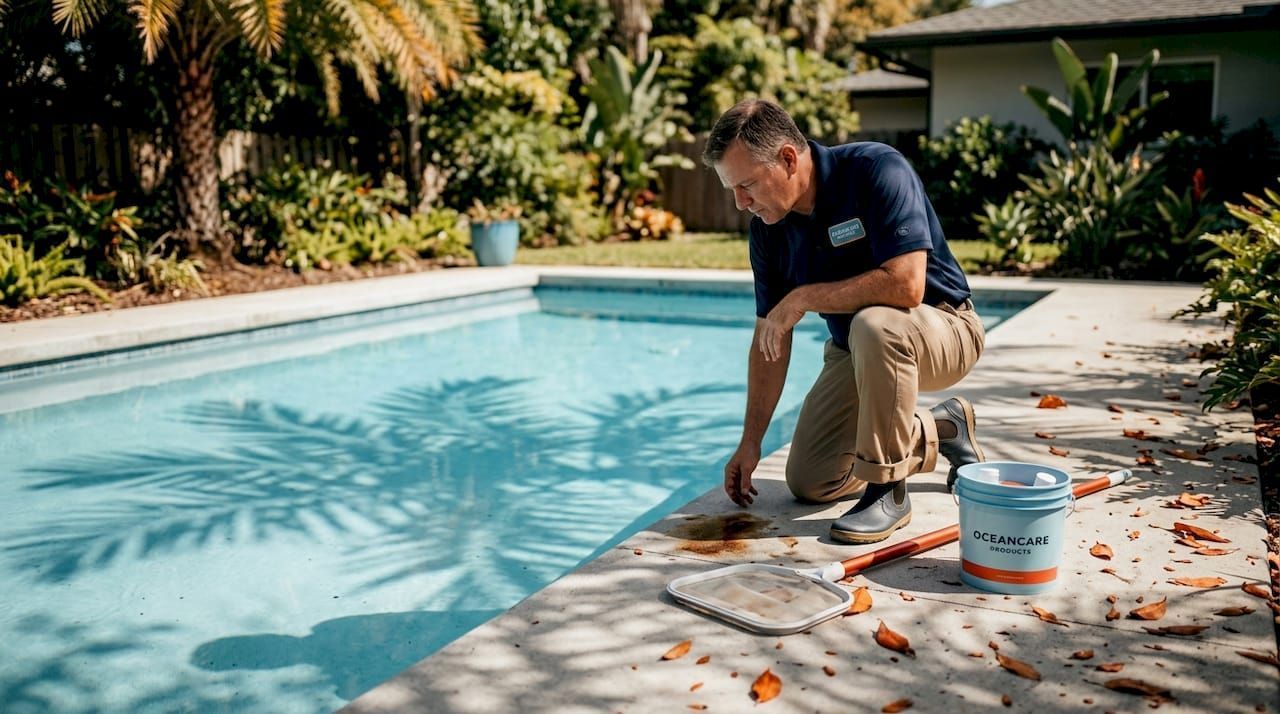
Table of Contents
- The three main types of pool surface stains
- How to identify each stain: Visuals and field tests
- Eco-friendly and effective treatment methods for every stain
- Prevention and long-term control: Stopping stains before they start
- Expert perspective: Why matching stain to method makes all the difference
- Eco-friendly pool tile care solutions
- Frequently asked questions
Key Takeaways
| Point | Details |
|---|---|
| Three stain families | Pool stains fall into organic, metal, or mineral/calcium categories, each requiring different treatment. |
| Correct ID is crucial | Properly identifying the stain type ensures effective, safe, and eco-friendly removal. |
| Match method to stain | Using the wrong treatment wastes chemicals and risks surface damage—always align removal methods with the stain family. |
| Prevention beats repair | Consistent water balance and routine eco-friendly maintenance can prevent most pool stains from forming. |
The three main types of pool surface stains
Nearly every stain you'll find in a pool belongs to one of three families. Once you know which family you're dealing with, the path to effective, eco-friendly removal becomes much clearer.
Pool surface stains are commonly grouped into three main families: organic stains, metal stains, and mineral or calcium scale. Each one forms differently, looks different, and responds to completely different treatments. Treating them all the same is where most pool owners go wrong.
Organic stains form when biological material breaks down on or near your pool surface. Organic stains are tied to debris like leaves, pollen, berries, worms, and algae film. They tend to show up as brown, green, or black marks, often following the shape of whatever left them. You'll find these most often on plaster and pebblecrete surfaces, though vinyl and fiberglass pools get them too, especially near steps and corners where debris sits.
Metal stains come from dissolved metals in the water, often introduced through source water, corroding fixtures, or even some algaecide products. Metal stains include iron presenting as rusty brown or yellow-brown, copper showing as blue-green, turquoise, or charcoal-black, and manganese appearing purple-black or dark. Metal stains tend to be flat and smooth to the touch, spreading across the surface rather than sitting on top of it.
Mineral and calcium scale is a buildup problem rather than a stain in the traditional sense. Calcium scale appears as white, gray, or chalky deposits that feel rough or crusty when you run your hand over them. You'll typically see them along the waterline tile band, around jets and fittings, and in areas with heavy evaporation. Pools with hard fill water or high pH are especially prone to calcium scale on tile and natural stone.
Here's a quick comparison to keep these three families straight:
| Stain family | Typical colors | Texture | Common surfaces | Main cause |
|---|---|---|---|---|
| Organic | Brown, green, black | Smooth, flat | Plaster, vinyl, fiberglass | Leaves, algae, debris |
| Metal | Rust, blue-green, purple-black | Smooth, slightly stained | Plaster, tile, fiberglass | Iron, copper, manganese |
| Mineral/calcium scale | White, gray, chalky | Rough, crusty | Tile, stone, waterline | Hard water, high pH |
Understanding which types of pool tile cleaners are formulated for which stain family is the next step. Using a cleaner designed for organic removal on mineral scale is like using dish soap on rust. It simply won't cut it.
Key things to remember about each family:
- Organic stains often appear after storms, heavy leaf fall, or when algae is allowed to establish
- Metal stains can spread quickly if dissolved metal levels in the water aren't addressed after removal
- Calcium scale can mask tile grout entirely if left untreated over multiple seasons
- Vinyl and fiberglass surfaces are especially sensitive and shouldn't be treated with abrasive methods intended for plaster

How to identify each stain: Visuals and field tests
Understanding each family is one thing. But what does it actually look like in your pool, and how do you tell them apart when you're standing at the edge squinting at a suspicious mark?
Start with color and location. A rusty-brown streak running from a metal fitting is almost certainly an iron stain. A green-blue shadow on the deep end floor after a season with an old copper-based algaecide is a classic copper stain. A brown halo under a pile of wet leaves on the steps? Almost always organic. A white, rough ring at the waterline? That's scale forming at the waterline where water evaporates and leaves minerals behind.
Here's a color reference table:
| Color | White/gray/chalky | Common source |
|---|---|---|
| Rusty brown/orange | Metal (iron) | Corroded pipes, well water |
| Blue-green/turquoise | Metal (copper) | Copper algaecide, old fittings |
| Purple-black | Metal (manganese) | Source water |
| Brown/black | Organic | Leaves, algae, worms |
| White/gray/chalky | Mineral scale | Hard water, high pH |
When color alone isn't enough, use the ascorbic acid field test. This is the most reliable DIY method available. A practical field test to distinguish metal from organic stains is whether the stain lightens or fades when treated with ascorbic acid (vitamin C).
Follow these steps:
- Dry your hands and get a plain vitamin C tablet or a small amount of ascorbic acid powder
- Rub the tablet or powder directly onto the stain for 30 to 60 seconds
- Watch closely. If the stain fades, lightens, or disappears, it's a metal stain
- If nothing changes, it's likely organic or calcium scale
- For suspected scale, try scratching gently with a plastic tool. Scale will flake or scrape off; stains will not
- Check location again. Waterline deposits that feel rough almost always confirm mineral scale
This simple test takes under two minutes and can save you from buying the wrong product entirely. It's also a helpful step before calling in a professional, especially if you're trying to describe the problem for a remote consultation.
Pro Tip: Take a clear photograph of the stain in natural daylight and note exactly where it appears in the pool before contacting any supplier. A photo documenting color, texture, and location helps narrow down the cause fast, and means better product recommendations from the start.
For a wider toolkit, DIY pool cleaning hacks that save both time and money pair well with proper stain identification. And if you're concerned about surface sensitivity, learning about acid-free cleaning for pool stains is worth reviewing before you start.
Eco-friendly and effective treatment methods for every stain
Once the stain is identified, what's next? A targeted, safe solution that works for your pool and aligns with your values around environmental responsibility.
Treatment methodology depends on the stain family: metals are reduced and dissolved with ascorbic acid, organics are oxidized using shock and brushing, and scale requires mineral removal approaches that break down calcium deposits without damaging tile or grout.
Treating the wrong stain family wastes chemicals and prolongs the problem.
For metal stains , ascorbic acid treatment is the go-to first step. You apply it directly or broadcast it across the pool depending on the severity. Once the metal is dissolved back into the water, it's critical to follow up. After metal-stain treatment, sequestrants and chelating agents are used to keep dissolved metals from re-depositing on pool surfaces. Without this step, the stain often returns within weeks. For ongoing calcium removal for pool tiles, targeted calcium removers work without the risks of strong acid treatments.
For organic stains , the approach is essentially the opposite. Oxidation breaks down the organic material. A dose of non-chlorine shock or a targeted enzyme-based cleaner, combined with thorough brushing, handles most organic stains effectively. Enzyme-based products are an excellent eco-friendly choice here because they break down biological material naturally without introducing harsh chemicals into the water.
For calcium and mineral scale , the key is using products that dissolve the scale safely. Harsh acid treatments like muriatic acid can etch tile and damage grout permanently, especially on natural stone. There are far better options available now. Eco-friendly calcium removal uses plant-based acid alternatives and specialized calcium releasers that are safer for tile surfaces and for swimmers.
Here are the key treatment rules by surface type:
- Plaster and pebblecrete : Can handle more robust treatment but benefit from eco-focused methods to preserve surface integrity over time
- Ceramic and porcelain tile : Respond well to targeted calcium releasers and gentle brushing; avoid abrasives
- Natural stone : Always use acid-free or low-acid products; stone is highly sensitive to pH fluctuations
- Vinyl and fiberglass : Require the most gentle approach; avoid abrasives entirely and stick to enzyme-based or gentle chemical treatments
Pro Tip: Always test any new cleaner on a small, inconspicuous area first, especially on natural stone or colored plaster. A five-minute spot test can prevent widespread surface damage.
The broader case for choosing eco-friendly treatments goes beyond just protecting your surfaces. Products that are biodegradable and low in VOCs (volatile organic compounds) mean less chemical burden in your backyard water, safer conditions for swimmers especially children, and less risk to surrounding landscaping or drainage. Explore eco-friendly pool tile care to understand why the shift toward sustainable cleaning products isn't just a trend, it's the smarter long-term choice.
Prevention and long-term control: Stopping stains before they start
Solving stains is smart. But preventing them is the ultimate eco-friendly move for pool owners and managers, because prevention means fewer chemicals, less labor, and better-looking water all season.
Reducing metals entering the pool and maintaining balanced water chemistry are the core preventive controls. Metals and minerals in the water, combined with pH or calcium imbalances, are the main drivers of recurring stain problems.
Practical prevention strategies include:
- Test and balance water chemistry weekly : Keep pH between 7.4 and 7.6, and calcium hardness between 200 and 400 ppm (parts per million). Water outside these ranges dramatically increases staining risk
- Use a pre-fill metal filter : If your source water is from a well or has elevated iron and copper levels, filter it before it enters the pool
- Brush and skim regularly : Organic debris left sitting on the floor or steps begins breaking down within hours, often staining the surface beneath it
- Use a sequestrant after metal stain treatment : Dosing weekly after treatment keeps dissolved metals locked in solution so they can't re-deposit on surfaces
- Inspect fittings, ladders, and light fixtures annually : Corroding metal hardware is one of the most overlooked sources of iron and copper staining
- Rinse deck runoff away from the pool : Fertilizers, soil, and plant material from landscaping runoff introduce both organic material and metals into the water
For tile and stone surfaces specifically, keeping a spotless pool tile maintenance routine means addressing light buildup before it becomes a restoration project. A light clean every four to six weeks prevents the need for heavy-duty treatment every season, and it keeps eco-friendly products working at their best rather than playing catch-up against months of buildup.
Expert perspective: Why matching stain to method makes all the difference
Here's the pattern we see most often: a homeowner spots a blue-green mark on their plaster, assumes it's algae, hits it with shock, brushes hard, and finds the stain unmoved three days later. Then they try a stronger chlorine treatment. Then an abrasive pad. By the time they realize it's a copper stain from an old algaecide, the plaster surface is rougher, the water chemistry is a mess, and they've spent more on products than the correct treatment would have cost in the first place.
Treating the wrong stain family doesn't just waste chemicals. It actively prolongs the problem and, in many cases, physically damages the surface. Strong acids applied to what turns out to be an organic stain on natural stone can etch the surface permanently. High-dose shock treatments applied repeatedly to a metal stain can actually cause the metal to oxidize further, deepening the discoloration.
What professionals consistently get right is diagnostics before treatment. They don't assume. They test the stain, assess the surface type, consider the water chemistry, and then select a method that matches all three variables. That's not a complicated process, it's just a disciplined one.
Modern eco-friendly products are genuinely closing the gap between safety and effectiveness. Plant-based calcium releasers now rival muriatic acid for scale removal on tile without the surface damage or the chemical risk to swimmers. Enzyme-based organics removers have become standard in commercial pool care for good reason. You don't have to choose between doing the job well and doing it responsibly.
If you want to avoid the most expensive mistakes in stain removal, reviewing pool calcium releaser errors is time well spent. Many of the most damaging pool tile mistakes come from using the wrong calcium treatment on the wrong surface, not from the stain itself.
Eco-friendly pool tile care solutions
Whether you're tackling stubborn stains or planning your next preventive routine, eco-friendly options have never been more accessible for pool owners.
At OceanCare, our product line is built specifically for pool tile, natural stone, grout, and other hard surfaces where conventional chemicals cause as many problems as they solve. Our formulas are biodegradable, plant-based, and low VOC, which means they're safe for your family, your pool finish, and the environment around your backyard.
For restoring tile that's seen better days, our Pool Tile Restorer is designed to lift staining, scale, and discoloration from ceramic, porcelain, and natural stone without etching or bleaching. If you're building out a complete routine, our Pool Tile Maintenance solutions cover everything from weekly upkeep to seasonal deep cleaning. And for calcium-heavy pools, our targeted pool calcium stain removal approach gives you the results of acid-based products without the risks that come with them.
Frequently asked questions
How do I tell if a pool stain is organic or metal?
Try rubbing a vitamin C tablet directly on the stain for 30 to 60 seconds. If it fades quickly, it's likely a metal stain rather than organic, which won't respond to ascorbic acid the same way.
Can I use the same stain remover for every type of pool stain?
No. Each stain type requires a specific treatment approach, and using the wrong method can make the stain worse, damage your pool surface, or create water chemistry problems that take weeks to resolve.
Are there eco-friendly ways to remove mineral or calcium scale?
Yes. Eco-friendly calcium removers formulated from plant-based acids are available for tile and stone surfaces, delivering effective scale removal without the damage or safety risks of traditional acid treatments.
How do I keep stains from coming back after removal?
Maintain balanced pool water chemistry, and use a metal sequestrant after treatment to prevent dissolved metals from re-depositing on your pool surfaces. Also remove debris from the pool floor and steps within 24 hours of it landing there.

