
Impact of cleaning on indoor air quality: a guide for homeowners
TL;DR:
- Proper source control through routine cleaning of biological contaminants protects indoor air quality more effectively than filtration or ventilation alone. Using damp cleaning methods with low-VOC, plant-based products and increasing ventilation during cleaning reduces airborne pollutants and surface residues. Overly aggressive cleaning and chemical use can damage surfaces and worsen indoor air quality, making restraint and technique essential.
Most homeowners assume that more cleaning equals better air. That belief is understandable, but it's also one of the most common ways indoor air quality gets worse, not better. The impact of cleaning on indoor air quality cuts both ways: done right, it removes the contaminants that trigger allergies, asthma, and respiratory irritation. Done wrong, with harsh chemicals, dry dusting, or aerosol sprays, it introduces new pollutants while stirring up old ones. This guide cuts through the confusion and gives you a practical framework for cleaning that actually protects the air inside your home or property.
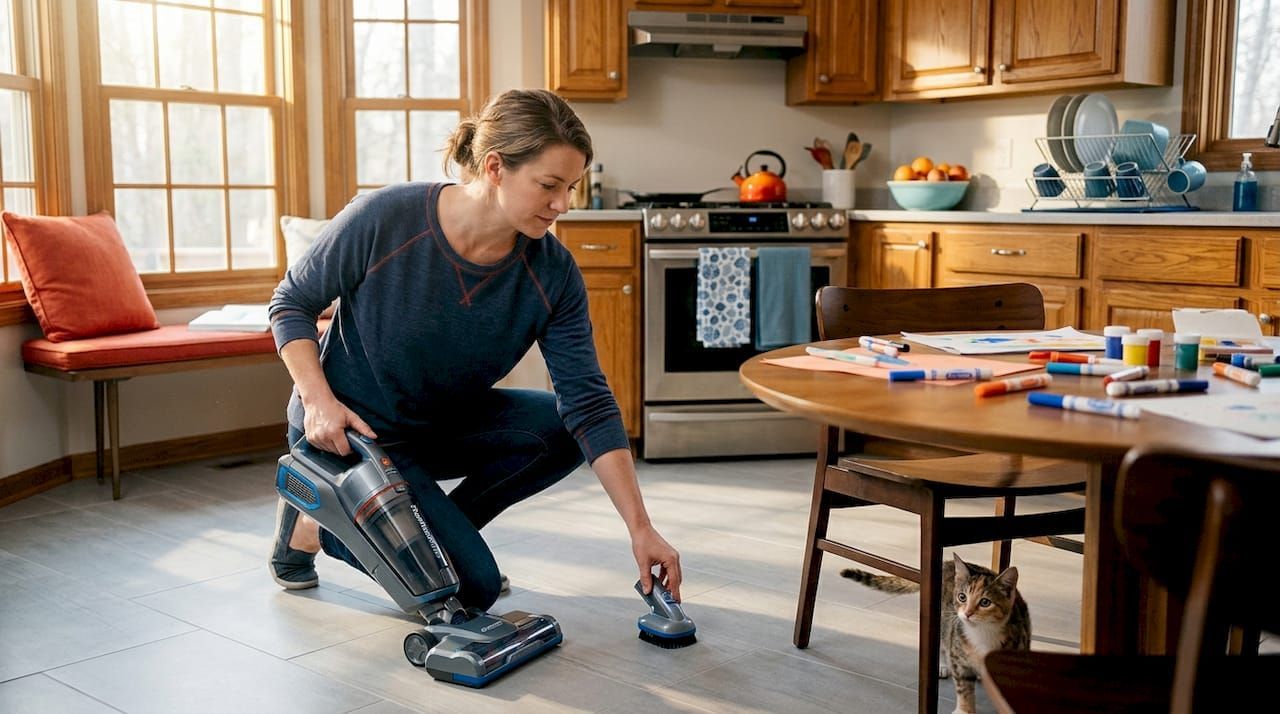
Table of Contents
- How cleaning influences indoor air quality and its core strategies
- Choosing cleaning methods and products to protect indoor air and surfaces
- Filtration and duct cleaning: benefits, limitations, and risks to indoor air quality
- Practical eco-friendly cleaning strategies for healthy indoor air and durable surfaces
- Challenging cleaning myths: expert insights for balancing effective cleaning and indoor air quality
- Protect your indoor air and surfaces with eco-friendly solutions from Oceancare
- Frequently asked questions
Key Takeaways
| Point | Details |
|---|---|
| Source control is key | Regular cleaning that prevents contaminant buildup is the most effective way to improve indoor air quality. |
| Choose damp methods | Damp dusting and mopping reduce dust re-aerosolization and protect fragile surfaces like natural stone. |
| Avoid harsh chemicals | Frequent use of multiple harsh cleaning products raises risks of asthma and lung function decline. |
| Filtration supports cleaning | Air purifiers help but cannot replace ventilation or source control for air quality. |
| Use qualified duct cleaners | Improper air duct cleaning can worsen indoor air quality; only clean when visibly contaminated and with proper technique. |
How cleaning influences indoor air quality and its core strategies
The single most important concept in managing indoor air quality is source control. That means eliminating contaminants at their origin rather than trying to filter or dilute them after they're already airborne. The EPA confirms that regular cleaning is the most effective source control strategy available. Vacuuming, damp dusting, and mopping consistently remove biological contaminants, dust mites, pet dander, and mold spores before they accumulate to levels that affect your health.
Filtration and ventilation absolutely have a role to play. But they are secondary. Running an air purifier in a room you never vacuum is like bailing water from a boat with the plug still out. The role of cleaning in indoor air begins with reducing what's already present, not managing what's already floating.
Without routine cleaning, biological contaminants multiply fast. Dust mites thrive in carpets and upholstered surfaces. Mold colonizes grout lines, pool tile edges, and any porous surface exposed to moisture. Pests leave allergens behind. Each of these worsens indoor hygiene and air quality in ways that no amount of HVAC filtration can fully compensate for.
Core cleaning practices that protect indoor air quality:
- Vacuum with a HEPA-filter vacuum at least weekly, especially on carpets and fabric furniture
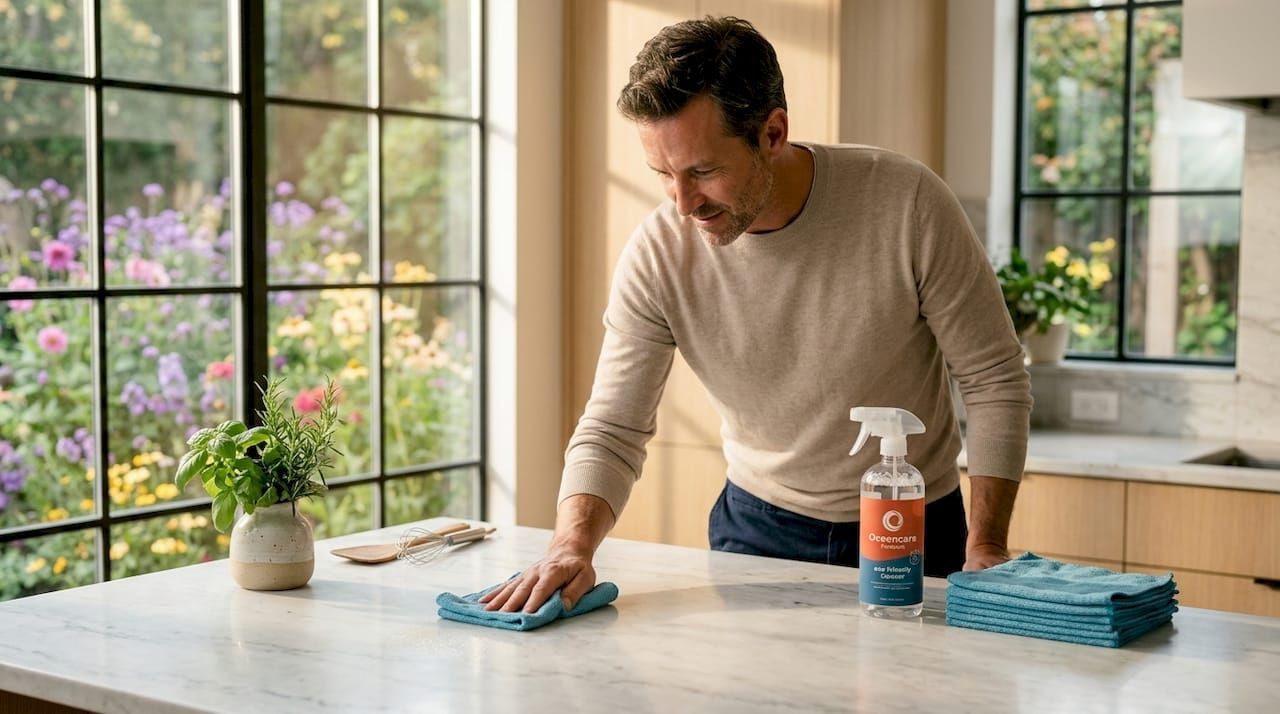
- Damp dust hard surfaces rather than using dry cloths that redistribute particles into the air
- Mop hard floors after vacuuming to capture fine particles that the vacuum misses
- Address moisture sources immediately, since dampness accelerates mold and biological growth
- Keep clutter minimal, since it collects dust and makes thorough cleaning harder
- Use low VOC cleaning products to avoid adding chemical pollutants during the process
Cleaning frequency and air quality are directly linked. Weekly cleaning prevents accumulation. Letting things go for weeks or months means contaminants reach concentrations where a single cleaning session can actually worsen air quality temporarily by kicking particles into suspension.
Choosing cleaning methods and products to protect indoor air and surfaces
The method matters as much as the frequency. Dry dusting is the most common mistake made on hard surfaces, including natural stone counters, tile, and pool surrounds. It moves particles off surfaces and straight into the air you breathe. Using a damp cloth or mop, as damp cleaning methods confirm, traps particles and removes them rather than redistributing them. For porous surfaces like travertine, marble, or textured pool tile, this distinction is especially important because dry particles settle deep into the surface texture and get dislodged again later.
Chemical choice is where the effects of cleaning on air become most consequential. Many standard household cleaners contain chlorine bleach, ammonia, or synthetic fragrances. When used in enclosed spaces, they release volatile organic compounds (VOCs), which are airborne chemicals that irritate the respiratory tract. Research published in Environmental Science and Pollution Research found that aerosol cleaning products and frequent use of multiple cleaning product types are associated with airway irritation and reduced lung function. The risk compounds when products are combined. Mixing bleach with ammonia, for example, produces chloramine gases that cause immediate respiratory harm.
Safer product and method choices that protect air quality:
- Choose plant-based, biodegradable cleaners with low or no VOC content
- Avoid aerosol spray formats; use pump sprays or pour-on application instead
- Never mix cleaning products, even if both seem mild
- Apply products to the cloth or mop first, rather than spraying directly onto surfaces
- Read ingredient labels and avoid products containing quaternary ammonium compounds (QACs) for routine use
- Follow hard surface cleaning best practices when working on natural stone, grout, or pool tile
The connection between indoor hygiene and air quality is particularly visible on hard surfaces. Natural stone is porous and absorbs chemical residues. If you use an acid-based cleaner on unsealed marble and then walk through that room, residual vapors continue off-gassing for hours. Sealed surfaces cleaned with biodegradable products dramatically reduce this issue.
Pro Tip: Open windows, run bathroom or kitchen exhaust fans, and turn on a HEPA air purifier both during and immediately after cleaning. This flushes out the particulates you disturb and the chemical vapors from products, which is especially important in bathrooms and enclosed utility rooms where ventilation is naturally limited.
For reference on eco-friendly cleaning for surface care, the combination of low-chemical products and proper application technique produces cleaner surfaces and measurably better air quality after cleaning compared to using conventional products with high chemical loads.
Filtration and duct cleaning: benefits, limitations, and risks to indoor air quality
Air filtration is a useful tool but not a substitute for good cleaning. HEPA filters capture particles as small as 0.3 microns, which includes most dust, mold spores, and pet dander. The EPA's guidance on air cleaners makes clear that filtration supplements source control and ventilation but cannot replace them. A HEPA unit running in a poorly maintained home will saturate quickly and lose effectiveness. It also does nothing for gaseous pollutants like VOCs, formaldehyde, or carbon monoxide.
Filtration strategies that work and ones that don't:
| Strategy | When it helps | When it falls short |
|---|---|---|
| HEPA portable air purifier | Post-cleaning particle removal | Cannot remove VOCs or gases |
| High-MERV HVAC filter | Continuous whole-home filtration | Restricts airflow if too dense for system |
| Activated carbon filter | Absorbs VOCs and odors | Requires frequent replacement |
| Ionizing air purifier | Some particle reduction | Can produce ozone, a lung irritant |
| Duct cleaning | Visibly contaminated ducts | Unnecessary when ducts are clean |
Duct cleaning is one of the most misunderstood services in home maintenance. Many homeowners assume it should be done regularly. In reality, the EPA cautions that improper duct cleaning can actually worsen indoor air quality if the vacuum collection equipment is inadequate. Disturbing debris in ducts without proper containment sends decades of accumulated dust and mold spores directly into your living space.
"Duct cleaning has never been shown to actually prevent health problems. Neither do studies conclusively demonstrate that particle levels in homes increase because of dirty air ducts. Much of the dirt in air ducts adheres to duct surfaces and may not necessarily enter the living space." — U.S. EPA
Duct cleaning is worth pursuing only when ducts show visible mold growth, are infested with rodents or insects, or are clogged with visible debris that demonstrably restricts airflow. Avoid home cleaner mistakes that apply equally here: assuming more intervention always helps.
Pro Tip: If you do hire a duct cleaning service, confirm they use HEPA-equipped negative pressure vacuum systems and seal off supply and return registers during the process. Any provider who cannot describe their containment method in detail is a risk, not a solution.
Practical eco-friendly cleaning strategies for healthy indoor air and durable surfaces
Now that you understand the risks and mechanisms, here is how to put it all together. These steps prioritize what actually moves the needle on air quality after cleaning while protecting the hard surfaces in your home.
Prioritized eco-friendly cleaning steps:
- Fix moisture problems first. No cleaning routine overcomes active mold growth. Repair leaks, improve bathroom ventilation, and address pool area drainage before focusing on surface cleaning.
- Practice damp source control weekly. Routine damp cleaning of hard surfaces prevents dust re-aerosolization and microbial buildup. Vacuum, then damp mop all hard floors. Wipe down natural stone, tile, and pool surrounds with a damp microfiber cloth.
- Select low-impact products deliberately. Look for plant-based, biodegradable formulas with no synthetic fragrance and no chlorine or ammonia. Check eco-friendly cleaning essentials for product standards to match your surfaces.
- Ventilate before, during, and after. Open windows and run exhaust fans throughout your cleaning session. Keep them running for 30 minutes after you finish.
- Run HEPA filtration during active cleaning. Position a portable HEPA unit in the room you are cleaning to capture disturbed particles in real time.
- Limit harsh chemical use to genuine problem situations. Reserve strong disinfectants for times when illness has occurred or mold has been confirmed. Routine cleaning rarely requires them.
Key safety habits during cleaning:
- Never spray aerosols in enclosed bathrooms or rooms without airflow
- Keep children and pets out of spaces being actively cleaned until surfaces are dry and air has cleared
- Do not mix products, even between sessions on the same surface
- Store cleaning products sealed and away from living areas to prevent passive off-gassing
- Review cleaning hacks for homeowners to get more from less product
Pro Tip: For natural stone counters, pool tile, and grout, use biodegradable sealers after cleaning. A sealed surface repels stains and biological growth, meaning you clean less often and with milder products. This directly reduces your household's total chemical exposure over time and extends the life of expensive surfaces.
Challenging cleaning myths: expert insights for balancing effective cleaning and indoor air quality
Here is an uncomfortable truth most cleaning guides skip: cleaning too aggressively is a genuine indoor air quality hazard. Not a theoretical one. A practical, measurable one that affects homes where the owners take cleanliness seriously.
The myth that a cleaner-smelling home is a healthier one drives a lot of the problem. That pine or citrus scent from your all-purpose spray? It is almost always synthetic fragrance, which releases VOCs. The more you spray, the more you inhale. Ironically, the homeowner who cleans every surface twice a week with conventional products may have worse respiratory health outcomes than the one who cleans weekly with plant-based alternatives.
Quaternary ammonium compounds (QACs) sit at the center of this issue. They are found in most major disinfectant sprays and wipes and are genuinely effective at killing surface pathogens. But inhaled repeatedly, they are associated with occupational asthma and respiratory sensitization. Many "green" labeled products still contain QACs, which means the label does not tell you what you actually need to know.
The other myth worth confronting is that professional-grade products are always better for hard surfaces. Aggressive acidic or alkaline cleaners strip sealers, etch natural stone, and degrade grout. Once that protective layer is gone, the surface becomes more porous and harder to clean without harsh chemistry. You end up in a cycle of stronger products and more frequent cleaning, which compounds both surface damage and air quality risk.
Avoiding cleaner mistakes to avoid requires reconsidering the premise that effective cleaning means powerful cleaning. Technique, product selection, and restraint produce better outcomes than intensity. Keep people out during cleaning. Ventilate thoroughly. Use less product than you think you need. Seal porous surfaces so cleaning them stays easy and low-chemical.
Protect your indoor air and surfaces with eco-friendly solutions from Oceancare
If you are ready to apply what this guide covers, the products you use next matter as much as the methods.
Oceancare's plant-based, biodegradable surface cleaners are built around the principles covered here: low chemical load, effective on hard surfaces, and safe for enclosed indoor environments. Their stone and grout sealers reduce how often you need to clean by keeping surfaces protected, which directly supports source control with fewer harsh chemicals over time. The biodegradable cleaner and sealer range handles both steps in one routine, minimizing exposure for your household while preserving the integrity of pool tile, natural stone, and grout. For longer-term surface protection, choosing the right stone sealer is a smart first investment.
Key benefits of Oceancare's eco-friendly product range:
- Non-toxic and safe for use around children, pets, and sensitive individuals
- Plant-based formulas with low VOC content that won't compromise air quality after cleaning
- Effective on pool tile, natural stone, grout, and other hard surfaces without acid or harsh solvents
- Designed for routine use, so you maintain protection without overloading your indoor environment with chemicals
Frequently asked questions
How often should I perform cleaning to improve indoor air quality?
Weekly vacuuming and damp dusting prevents contaminant buildup for most households. Allergy sufferers or homes with pets may need to increase to twice weekly, particularly on carpets and upholstered surfaces.
Are air purifiers enough to ensure good indoor air quality?
No. Air purifiers reduce airborne particles, but filtration supplements rather than replaces source control and ventilation. You still need routine cleaning to address contaminants at their origin.
Is duct cleaning necessary for maintaining indoor air quality?
Only when ducts are visibly contaminated with mold, pests, or heavy debris. Improper duct cleaning can release more dust and contaminants into your living space than leaving ducts alone.
What cleaning products are safest for sensitive respiratory systems?
Low-VOC, plant-based, and biodegradable products are the safest choice. Frequent use of irritants found in conventional cleaners is linked to increased asthma risk, so also avoid aerosol formats and ensure strong ventilation during any cleaning session.

