
How sealers protect surfaces: pool tile & stone guide
TL;DR:
- Porous surfaces like natural stone and pool tiles are vulnerable to water damage, stains, mold, and efflorescence.
- Using breathable penetrating sealers, especially eco-friendly water-based options, prevents moisture buildup and surface deterioration.
- Proper application and routine testing ensure long-lasting protection, avoiding common mistakes like over-application or using non-breathable coatings.
Pool tiles and natural stone look tough. Granite, travertine, slate, ceramic — these materials feel solid and permanent. But here's what most homeowners don't realize: nearly every one of these surfaces is porous, and without the right sealer, they quietly absorb water, oils, chemicals, and biological growth every single day. The damage is invisible at first, then suddenly it's not. Stains set in, grout crumbles, and stone loses its color. This guide breaks down exactly how sealers work, which types suit pool tiles and natural stone, and how to maintain your surfaces the eco-friendly way without sacrificing performance.
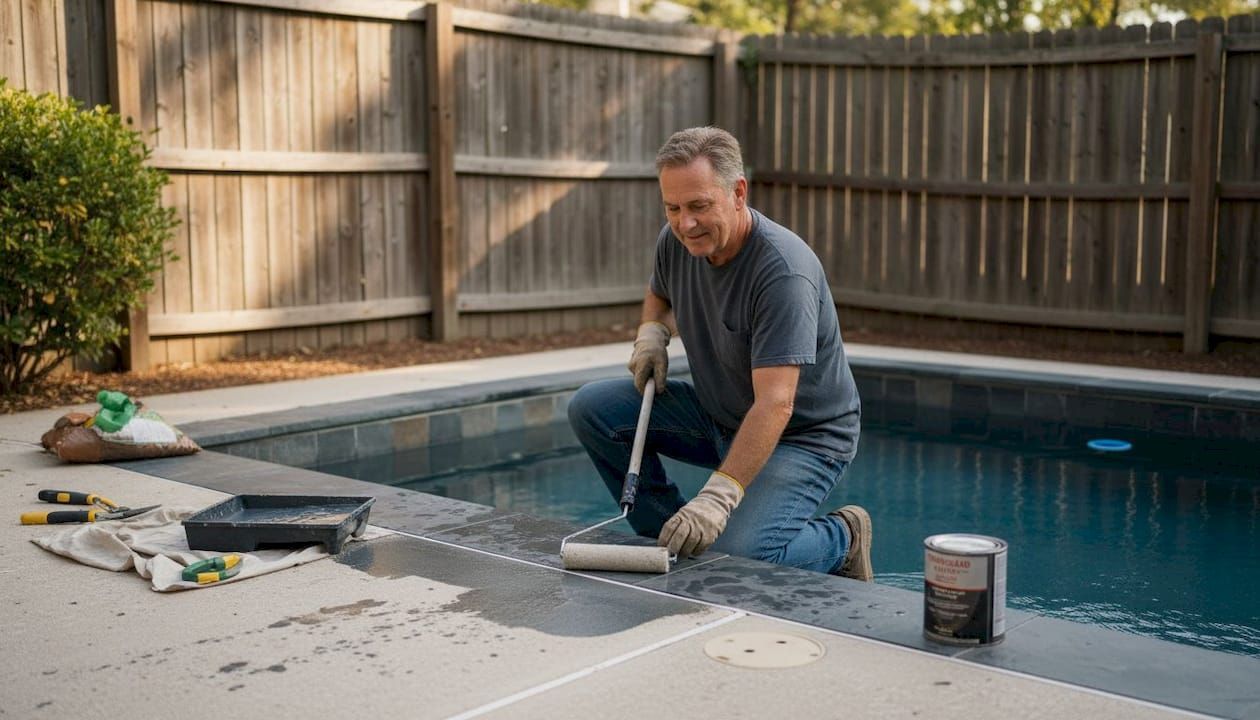
Table of Contents
- Why sealing matters for pool tiles and natural stone
- Types of sealers: Penetrating vs. topical explained
- Eco-friendly sealer options for home and pool use
- Best practices for applying and maintaining sealers
- Our experience: What most guides miss about surface sealers
- Find the perfect eco-friendly sealer for your surfaces
- Frequently asked questions
Key Takeaways
| Point | Details |
|---|---|
| Sealers block damage | A quality sealer helps prevent stains, mold, and costly repairs by creating an invisible barrier. |
| Penetrating types are best | Penetrating, breathable sealers work best for natural stone and pool tile because they repel liquids without trapping moisture. |
| Eco-friendly sealers protect and care | You don't have to sacrifice performance for safety—many eco-friendly options are highly effective. |
| Regular maintenance is key | Check sealer condition and reapply every 1–3 years to keep surfaces looking their best. |
Why sealing matters for pool tiles and natural stone
It's easy to look at a polished stone surface and assume it's waterproof. It isn't. Even dense materials like granite and porcelain have microscopic pores that allow liquids to seep in over time. Pool tiles face an especially harsh environment: constant exposure to chlorine, saltwater, sunlight, and temperature swings. Natural stone used in outdoor patios, pool surrounds, and bathroom floors faces similar pressure. Without protection, these surfaces absorb whatever they're exposed to.
The consequences go beyond cosmetic issues. Here's what unprotected pool tiles and stone surfaces are vulnerable to:
- Staining from oils, minerals, and organic matter that penetrate the surface and can't be scrubbed out
- Efflorescence , the white, powdery mineral deposits that rise through porous stone when water moves through it
- Mold and mildew growth in grout lines and surface pores, especially in wet pool environments
- Spalling , where the surface layer flakes or chips away due to freeze-thaw cycles or trapped moisture
- Calcification , the buildup of calcium carbonate from hard water that bonds to unprotected tile
- Discoloration from UV exposure and chemical reactions with pool treatments
As the Tile Sealing Guide confirms, sealers reduce water, oil, stain, and chemical absorption, preventing surface damage, mold, and efflorescence. That's not a small benefit. That's the difference between a surface that lasts 20 years and one that needs costly restoration in five.
Skipping sealer isn't just a maintenance oversight — it's an open invitation for permanent damage that no amount of cleaning can reverse.
Understanding why sealing is essential for porous surfaces is the first step toward smarter surface care. And if you're managing a pool, consistent pool tile maintenance that includes sealing is one of the most cost-effective decisions you can make for your property.
Types of sealers: Penetrating vs. topical explained
Now that you've seen why sealing is critical, let's look at the two main types of sealers you can choose from.
Not all sealers work the same way, and choosing the wrong type for your surface can create more problems than it solves. The two primary categories are penetrating sealers (also called impregnating sealers) and topical sealers (also called film-forming sealers).
Penetrating sealers are absorbed directly into the surface. They fill the pores from within, using active ingredients like silane, siloxane, or fluoropolymer. Once cured, they repel liquids while still allowing the surface to breathe. That breathability is critical for outdoor stone and pool tiles, where moisture needs to escape rather than get trapped beneath a coating.
Topical sealers sit on top of the surface and form a visible film. They can add gloss or a wet-look finish, which appeals to some homeowners. But that coating comes with real trade-offs.
| Feature | Penetrating sealer | Topical sealer |
|---|---|---|
| How it works | Absorbed into pores | Sits on surface |
| Breathability | Yes | No |
| Appearance change | Minimal | Can add gloss |
| Slip resistance | Maintained | Can be reduced |
| Risk of peeling | No | Yes |
| Best for pools/wet areas | Yes | No |
| Lifespan | 1-5 years | 1-3 years |
As the Tile Sealing Guide explains, penetrating sealers absorb into pores and repel liquids while staying breathable, while topical sealers create a surface coating that can trap moisture. In a pool environment, trapped moisture accelerates exactly the kind of damage you're trying to prevent.
For a deeper look at how different stone sealers perform on specific surfaces, it's worth reviewing the formulations before you buy. And if you've had issues with previous products, reviewing common problems with stone sealers can help you avoid repeating them.
Pro Tip: For any wet area, outdoor surface, or pool tile application, always choose a breathable penetrating sealer. A glossy topical finish might look appealing in the store, but it can become a slipping hazard and a moisture trap within a single season.
Eco-friendly sealer options for home and pool use
Choosing the right type is one step, but how do you ensure your selection is safe for people and the planet?
The term "eco-friendly" gets used loosely in the cleaning and sealing industry. For sealers, it has a specific meaning worth understanding. A genuinely eco-friendly sealer is water-based rather than solvent-based, uses plant-derived or low-impact active ingredients, and carries a low or zero VOC (volatile organic compound) rating. VOCs are the chemicals that evaporate into the air during and after application, contributing to indoor air pollution and health issues.
Here's why that matters for your home and pool:
- Family and pet safety : Low-VOC formulas reduce exposure to airborne chemicals during and after application
- Pool water compatibility : Eco-friendly sealers are less likely to leach harmful compounds into pool water
- Regulatory compliance : Many municipalities have restrictions on VOC levels for products used near water sources
- Surface compatibility : Water-based formulas are gentler on sensitive stone like limestone and travertine
| Feature | Traditional sealer | Eco-friendly sealer |
|---|---|---|
| Base | Solvent | Water or plant-based |
| VOC level | High | Low or zero |
| Safe near pools | Often not | Yes |
| Odor during application | Strong | Mild or none |
| Environmental impact | Higher | Lower |
| Performance | High | Comparable |
As What Is Tile Sealer & How It Works confirms, eco-friendly, water-based, low/zero-VOC sealers offer high-performance protection without harsh solvents. You're not trading effectiveness for safety. You're getting both.
If you're unsure where to start, exploring eco-friendly sealers designed for pool and stone surfaces is a practical first step toward safer, smarter surface care.
Pro Tip: Look for sealers with independent third-party certifications for VOC content and toxicity. Manufacturer claims are a starting point, but verified certifications give you real confidence in what you're applying around your family and pool.
Best practices for applying and maintaining sealers
With your ideal eco-friendly sealer in hand, here's how to apply and keep it working its best.
Even the best sealer underperforms if it's applied incorrectly or neglected over time. Timing, surface preparation, and routine testing are what separate surfaces that stay beautiful for years from ones that need constant repair.
The Tile Sealing Guide recommends sealing after grout cures for 48 to 72 hours on new installations, reapplying every 1 to 3 years, and always cleaning and drying surfaces thoroughly before application. These aren't optional steps — they're the foundation of effective sealing.
Here's a practical maintenance routine to follow:
- Clean the surface thoroughly using an appropriate stone or tile cleaner to remove all dirt, oils, and mineral deposits
- Allow the surface to dry completely — moisture trapped beneath a sealer causes adhesion failure
- Apply sealer evenly in thin coats using a brush, roller, or sprayer, working in small sections
- Allow proper cure time before exposing the surface to water or foot traffic (check the product label)
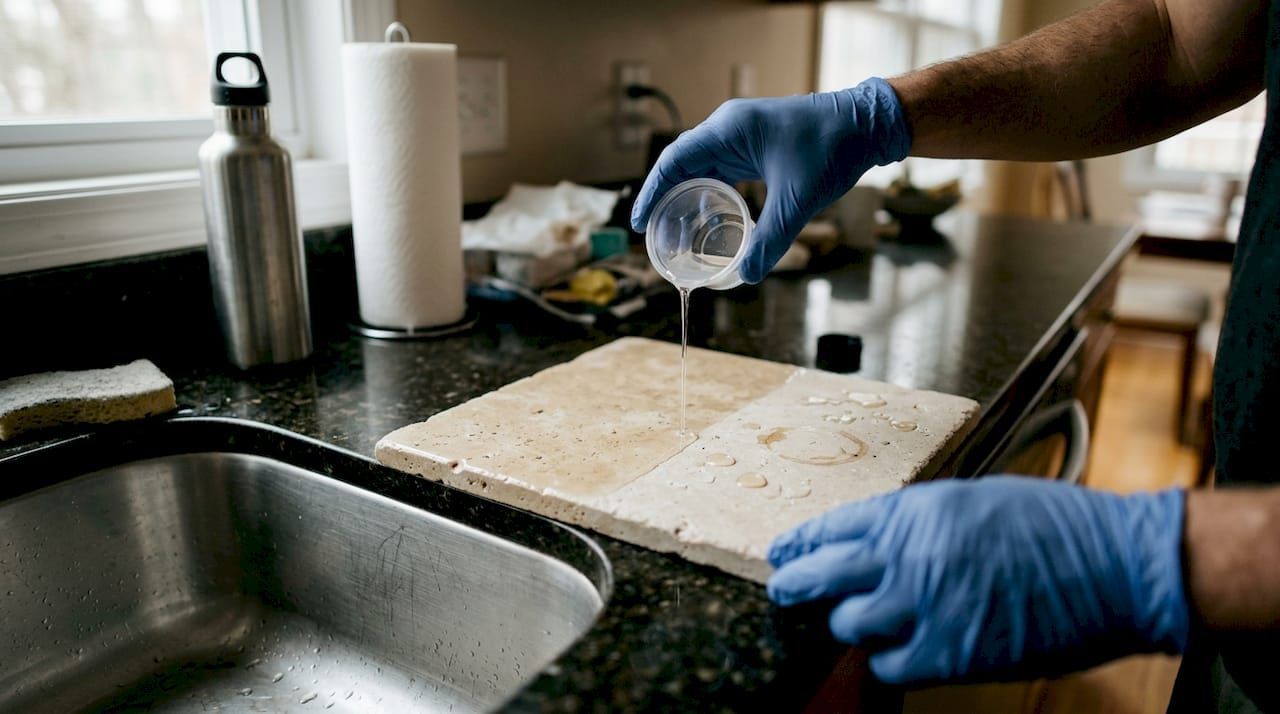
- Test sealer effectiveness every 6 to 12 months by sprinkling water on the surface — if it soaks in rather than beading up, it's time to reseal
- Spot-apply sealer to high-traffic or high-exposure areas more frequently than the full surface
Knowing how often to reseal your specific surface type makes a real difference in long-term protection. And if you've had issues with previous applications, reviewing application mistakes is a smart move before your next project. For a surface-specific breakdown, the guide to choosing a stone sealer for your floors covers the nuances in detail.
A sealer applied over a dirty or damp surface will fail — not because the product is bad, but because the prep work wasn't done.
Pro Tip: Never over-apply sealer. More product doesn't mean more protection. Excess sealer sits on the surface, turns cloudy, and can actually reduce slip resistance. Thin, even coats applied correctly outperform heavy applications every time.
Our experience: What most guides miss about surface sealers
Most sealing guides focus on product selection and application steps. Those things matter. But after years of working with pool tiles, natural stone, and outdoor surfaces, we've found that the single most overlooked factor is surface breathability.
The most common mistake we see isn't skipping sealer — it's using the wrong type. Homeowners apply topical coatings to outdoor stone because they look great at first. Then moisture gets trapped beneath the film, the coating peels, and the stone underneath is in worse shape than if it had never been sealed at all. We've seen this pattern repeatedly, and it's almost always the result of prioritizing appearance over function.
Routine testing matters far more than product strength. A mid-range penetrating sealer that you test and reapply on schedule will outperform a premium topical coating every time. Checking real-world sealer issues before choosing a product gives you a much clearer picture of what actually fails in the field.
Sustainable surface beauty isn't about finding the strongest formula. It's about consistent, targeted care that works with your surface rather than against it.
Find the perfect eco-friendly sealer for your surfaces
Ready to protect your tile and stone surfaces for years to come? Here's where to start.
At
Oceancare Store, we've built our product range around one principle: high performance should never come at the cost of safety. Whether you're protecting pool tiles from chlorine and calcium buildup or sealing a natural stone patio against the elements, we carry proven solutions that are water-based, low-VOC, and built to last.
Explore our high-performance penetrating sealer for breathable, long-lasting protection on pool tiles and stone. Browse our full range of eco-friendly cleaning essentials to build a complete surface care routine. And when you're ready to seal and protect, our curated collection of stone and grout sealers makes it easy to find the right product for your specific surface and environment.
Frequently asked questions
How can I tell if my surface needs resealing?
Sprinkle water on the surface — if it soaks in instead of beading up, the sealer has worn down and it's time to reapply.
Are eco-friendly sealers as effective as traditional ones?
Yes. Water-based, low-VOC sealers provide comparable stain and moisture protection to solvent-based products, without the harsh chemicals or strong fumes.
What is the main risk of using topical sealers on pool and stone surfaces?
Topical sealers can trap moisture, peel, and yellow over time, and they reduce slip resistance — a serious safety concern in wet or outdoor areas.
When should I apply a sealer to new stone or tile surfaces?
Wait until the grout has fully cured, which takes 48 to 72 hours for most new installations, before applying your first coat of sealer.
How long does a sealer application last?
Most penetrating sealers need reapplication every 1 to 3 years, depending on foot traffic, sun exposure, and how frequently the surface contacts water or chemicals.
Recommended

