
Surface Staining: What It Is and How to Remove It
TL;DR:
- Surface staining is discoloration sitting on or near a surface's finish that can often be removed with prompt, gentle cleaning.
- Using the wrong chemicals or abrasive tools can cause permanent etching or damage, especially on natural stone.
Surface staining is discoloration that sits on or very near a material's finish and has not deeply penetrated the structure beneath. The Cambridge Dictionary defines a stain as a mark that is difficult to remove, but most surface stains on hard materials respond well to prompt, gentle treatment. The key word is prompt.
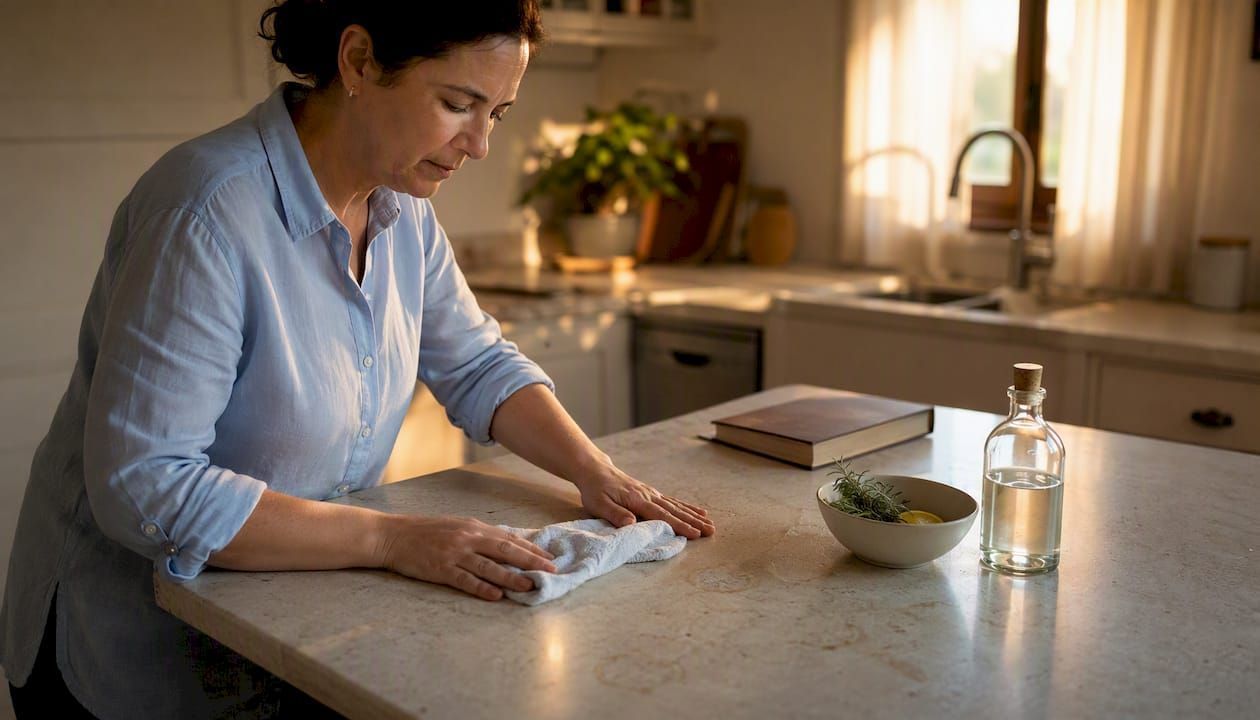
If you're looking at a mark right now, here's what to do before anything else:
- Blot, don't rub. Press a clean white cloth onto the stain to lift the discoloring agent upward. Rubbing spreads it and drives it deeper into pores.
- Work from the edge inward. Starting at the outer ring and moving toward the center contains the spill and prevents it from spreading.
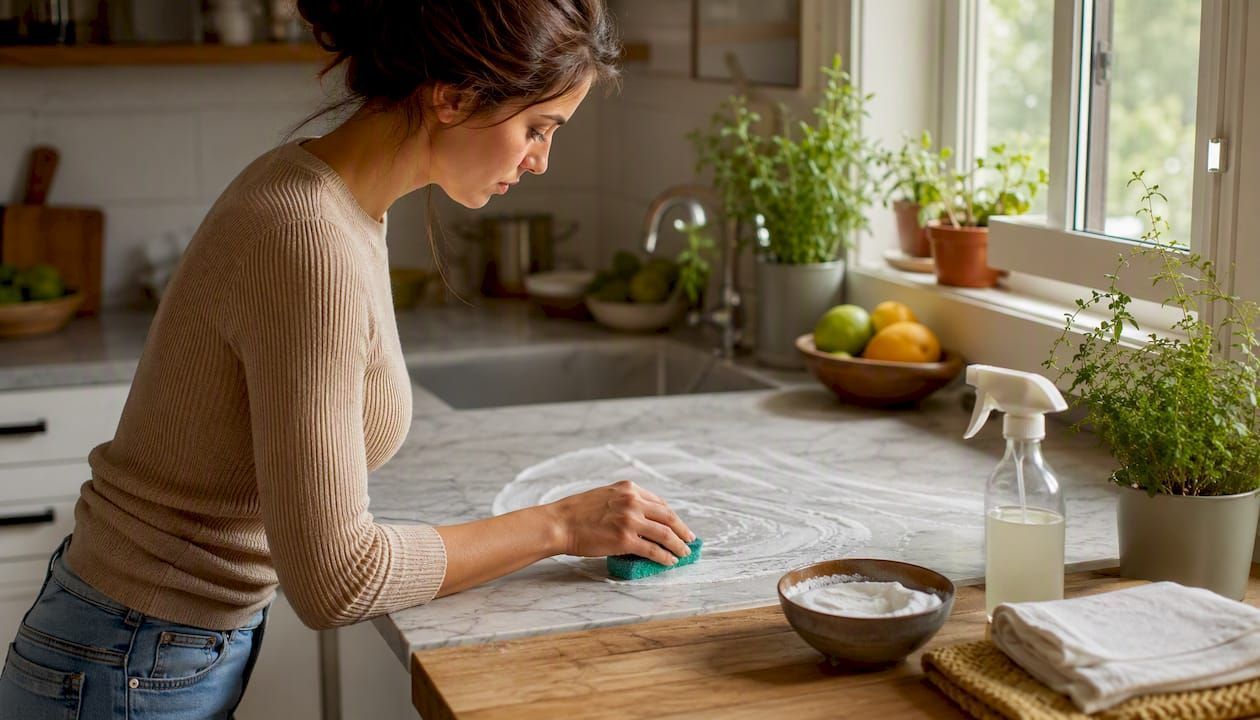
- Try a mild baking soda paste on compatible surfaces: mix baking soda with water to form a paste, apply gently, and rinse after a few minutes.
Table of Contents
- What is surface staining and why does it happen?
- How can you tell if a stain is only on the surface?
- Eco-friendly ways to treat surface stains step by step
- What cleaners and tools should you avoid on hard surfaces?
- How do you prevent surface staining from coming back?
- When should you stop DIY and call a professional?
- Key Takeaways
- The case for treating your surfaces gently from the start
- Eco-friendly surface care products from Oceancarestore
What is surface staining and why does it happen?
Surface staining is what occurs when residue, pigments, minerals, or oils settle onto a hard surface and either sit on top of the finish or get trapped in shallow pores. The material itself is structurally intact. That's the critical distinction between a surface stain and a penetrating stain, which has migrated deeper into the substrate.
On hard surfaces, the most common culprits are:
| Stain Type | Typical Surface | What You See |
|---|---|---|
| Coffee or tea rings | Stone counters, ceramic tile | Brown ring, often with a dry residue edge |
| Hard-water mineral clouding | Sinks, faucets, pool tile | White or gray haze, chalky film |
| Dye or pigment rings | Unsealed grout, concrete | Colored shadow that follows the spill shape |
| Algae or organic biofilm | Pool tile, outdoor pavers | Green, black, or brown slick film |
| Rust from metal objects | Concrete, natural stone | Orange-brown spot, often circular |
Understanding the difference between a surface stain, an etch, and a penetrating stain saves you from using the wrong treatment. An etch is a chemical reaction that dulls or roughens the surface finish, most often caused by acid on calcite-based stone. A penetrating stain has moved below the surface layer and won't lift with topical cleaning alone. A surface stain, by contrast, usually shows residue on top, a color that partially lifts when blotted, and no change in the surface texture underneath.
How can you tell if a stain is only on the surface?
Three quick checks give you a reliable read before you commit to any treatment.
| Test | How to Do It | What It Tells You |
|---|---|---|
| Visual check | Look at the stain under good light at an angle | Residue on top or a sheen change = likely surface-level |
| Blot test | Press a clean white cloth firmly for 10 seconds | Color transfers to cloth = surface stain; no transfer = may be deeper |
| Patch test | Apply cleaner to a hidden area first | Confirms the cleaner is safe before you treat the visible stain |
If color lifts onto the cloth during the blot test, you're almost certainly dealing with a surface stain. If the cloth stays clean but the mark is still visible, the discoloration may have penetrated the pores or the finish may be etched. The patch test isn't just a precaution: even gentle cleaners can unpredictably alter certain finishes, so testing in an inconspicuous spot first is non-negotiable for natural stone and grout.
Eco-friendly ways to treat surface stains step by step
Start with the gentlest method and escalate only if needed. This protects the surface and avoids introducing harsh chemistry unnecessarily.
- Blot fresh spills immediately. Warm water and a few drops of mild, pH-neutral dish soap on a soft microfiber cloth handle most fresh surface stains on ceramic, porcelain, and sealed stone. Blot, rinse with clean water, and dry thoroughly.
- Apply a baking soda paste for tougher marks. Professional cleaners consistently recommend a 3:1 baking soda-to-water paste: three parts baking soda to one part water. Apply to the stain, rub gently in small circular motions for 2–3 minutes, or let it sit for 5–10 minutes on stubborn marks. Rinse completely and dry.
- Use a poultice for small areas on natural stone. A poultice draws staining agents out of shallow pores. Mix an absorbent powder (such as diatomaceous earth or baking soda) with a small amount of water or a compatible cleaner to form a thick paste. Spread it over the stain, cover with plastic wrap, and let it sit for several hours before removing and rinsing. Always patch-test first.
- Choose a pH-neutral, acid-free cleaner for sensitive stone. Marble, travertine, and limestone require pH-neutral products. Quartz and soapstone are more forgiving but still benefit from gentle chemistry. An eco-friendly hard surface restoration approach prioritizes plant-based, biodegradable formulas that won't compromise the finish.
- Dry the surface completely after treatment. Residual moisture is one of the most common causes of recurring mineral stains, particularly near sinks and faucets. A final wipe with a dry microfiber cloth closes the job properly.
Pro Tip: Always use soft microfiber cloths rather than paper towels or sponges with scrubbing pads. Microfiber lifts residue without creating the micro-scratches that make surfaces more stain-prone over time.
What cleaners and tools should you avoid on hard surfaces?
The wrong product can turn a removable surface stain into permanent damage. These are the highest-risk mistakes.
Acid on calcite-based stone is irreversible. Vinegar, citric acid, lemon juice, and many commercial bathroom cleaners are acidic. On marble, travertine, and limestone, they cause etching: a dull, rough patch that no amount of cleaning will fix. The damage is chemical, not cosmetic. Even products marketed as "natural" can contain citric acid, so always check the pH before applying anything to natural stone.
Products like Bar Keepers Friend contain oxalic acid and work well on durable surfaces like stainless steel, but should never go on unsealed natural stone. The acid damage to stone and tile is often immediate and permanent.
Beyond acids, avoid steel wool, stiff-bristled brushes, and abrasive scouring pads on any finished hard surface. These create micro-abrasions that trap dirt and make every future stain harder to remove. Consumer Reports specifically flags stiff brushes and steel wool as tools that spread stains and leave lasting marks. For strong oxidizers or specialty rust removers, always consult the surface manufacturer before applying.
How do you prevent surface staining from coming back?
Prevention is mostly about routine and a few protective habits. None of it is complicated.
- Wipe high-use counters daily with warm water and a mild soap. Grout lines and shower walls benefit from a targeted clean once a week.
- Dry faucets, sinks, and pool tile surrounds after use. Mineral deposits form when water evaporates and leaves dissolved calcium and magnesium behind. A quick dry wipe after each use stops mineral deposits from reforming before they become a cleaning problem.
- Seal porous stone and grout on a schedule. Stone sealants typically need reapplication every 1–3 years depending on use and exposure. A sealer fills surface pores and dramatically reduces how much a spill can penetrate. Check with the sealer manufacturer for the specific reapplication interval for your surface. Oceancarestore's stone and grout sealers are formulated to be biodegradable and low-VOC.
- Use coasters, mats, and trivets on stone counters and outdoor pavers. Avoid letting water pool on concrete or paver surfaces for extended periods.
For tile-specific prevention tactics, the eco-friendly tile stain prevention guide covers additional natural approaches worth bookmarking.
When should you stop DIY and call a professional?
Most surface stains respond to the steps above. A few situations call for a professional.
If a stain doesn't lift after a baking soda paste and a gentle cleaner, and the surface shows dull or rough spots, stop. Continuing to scrub an etched or penetrating stain won't help and may worsen the damage. A restoration professional can diagnose whether you're dealing with a penetrating stain, an etch, or a finish failure, and recommend the right intervention.
Specific red flags: the stain reappears after drying, the surface texture has changed (rough or dull where it was smooth and glossy), or the mark has been present for weeks without responding to conservative treatment. When you call a pro, ask what diagnostic tests they'll run, whether they recommend a poultice or resurfacing, and whether their products are compatible with eco-friendly sealers you plan to apply afterward.
Key Takeaways
Surface staining is discoloration that sits on or near a material's finish and is usually removable with prompt, gentle treatment using the right method for the surface type.
| Point | Details |
|---|---|
| Blot test first | If color transfers to a white cloth, the stain is likely surface-level and treatable at home. |
| 3:1 baking soda paste | Mix three parts baking soda to one part water; rub gently for a few minutes or let sit briefly. |
| Avoid acid on stone | Vinegar and citric acid etch marble, travertine, and limestone permanently; use pH-neutral cleaners only. |
| Seal on a schedule | Stone and grout sealants need reapplication every 1–3 years to keep pores protected. |
| Oceancarestore | Offers acid-free, biodegradable stone cleaners, grout cleaners, and sealers for eco-conscious surface care. |
The case for treating your surfaces gently from the start
Most of the surface damage I see discussed in homeowner forums wasn't caused by the original stain. It was caused by the fix: the wrong acid cleaner, the abrasive pad grabbed in a hurry, the "natural" citrus spray that turned out to be pH 3. The stain was removable. The etching that followed wasn't.
There's a tendency to reach for the strongest thing available when a stain appears, especially on expensive stone or pool tile. The counterintuitive truth is that gentler chemistry, applied correctly and promptly, outperforms aggressive products on most surface stains. Plant-based, biodegradable cleaners aren't a compromise for people who care about the environment. They're often the smarter technical choice for the surface itself.
Oceancarestore's philosophy is built on that premise: protect the finish, protect the household, and protect the environment, in that order. The products are acid-free and low-VOC not just because it's the right thing for the planet, but because that chemistry is genuinely safer for the surfaces you're trying to preserve.
Eco-friendly surface care products from Oceancarestore
When a baking soda paste isn't enough and you need a purpose-built solution, the product class matters as much as the brand. For mineral deposits and calcium buildup on pool tile, a dedicated calcium removal product works where general cleaners stall. For grout haze and surface discoloration, a biodegradable grout haze remover handles the job without acid. For long-term protection after cleaning, a stone and grout sealer closes pores and reduces how often you'll need to treat stains at all.
Oceancarestore carries acid-free stone cleaners, plant-based grout cleaners, calcium removers, and low-VOC sealers for pool tile, natural stone, and grout. Every product is formulated to be safe for sensitive surfaces and compatible with eco-friendly maintenance routines. Patch-test any new product on a hidden area first, then browse the full range and get matched to the right solution at oceancarestore.com.

