
What Is Stain Resistance for Stone, Tile, and Grout?
Stain resistance, as it applies to sealed hard surfaces, is a treated surface's ability to repel or delay the absorption of liquids, oils, and pigments into its pores so spills can be wiped away before they become permanent. A sealer does not make stone or tile bulletproof. What it does is buy you time. According to Stone World, a sealed surface can extend that reaction window from seconds on bare stone to minutes or even hours, depending on the product and the contaminant.
One distinction matters above everything else: stain resistance is not the same as etch resistance. Sealers slow absorption, but they cannot stop acidic liquids from chemically reacting with calcite-based stones like marble, limestone, and travertine. A lemon wedge left on sealed marble will still etch the surface. The sealer had nothing to do with it.
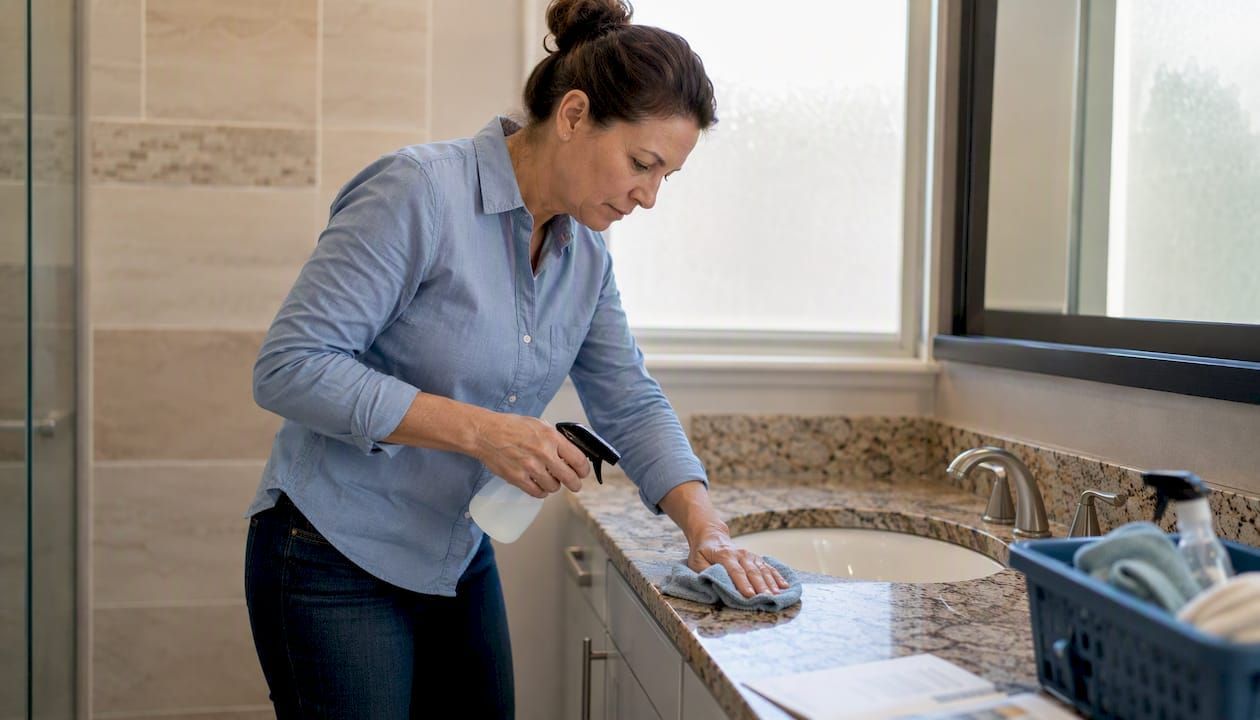
Table of Contents
- What is stain resistance, and how does it work at the pore level?
- Penetrating vs. topical sealers: which one do you need?
- Which sealer chemistry actually protects against oil?
- What stain resistance will not do
- How to test whether your surface is still protected
- How to apply sealers so they actually perform
- Choosing the right sealer for kitchens, pools, and outdoor surfaces
- Maintenance that keeps stain resistance working
- How long does stain resistance last, and when should you reseal?
- Eco-friendly and pool-safe: what to look for on the label
- How Oceancarestore evaluates stain resistance
- Key Takeaways
- The case for honest chemistry over marketing claims
- Oceancarestore's eco-friendly sealers and cleaners for every surface
- Useful sources and further reading
What is stain resistance, and how does it work at the pore level?
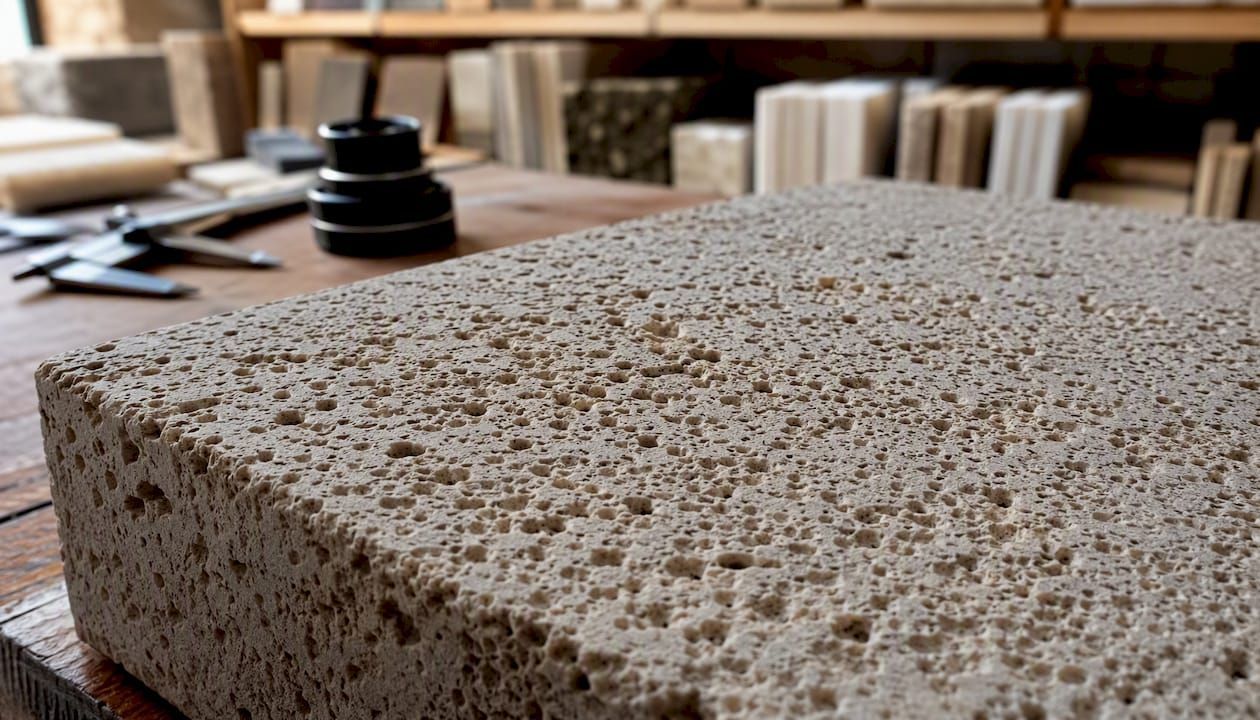
Stone, tile, and grout are porous. Under a microscope, the surface looks less like a smooth wall and more like a sponge. Without treatment, liquids rush into those pores within seconds. A sealer changes that dynamic in one of two ways.
Impregnating (penetrating) sealers deposit hydrophobic and oleophobic chemistry inside the pore network itself. The surface looks identical to raw stone because nothing sits on top. Topical sealers form a physical film over the surface, which is why they can add gloss or a satin sheen. Both approaches slow absorption, but through completely different mechanisms.
That reaction-time concept is the most practical way to think about stain resistance. A well-sealed granite countertop might give you several minutes to blot a red wine spill. The same spill on unsealed stone could stain in under 30 seconds.
Penetrating vs. topical sealers: which one do you need?
The Ceramic Tile Foundation explains that topical sealers form a visible film, require routine maintenance, and can peel, scratch, or yellow over time. Penetrating sealers typically do not change the surface appearance and need less frequent reapplication.
| Feature | Penetrating sealer | Topical sealer |
|---|---|---|
| Appearance change | None | Gloss or satin sheen |
| Oil resistance | Moderate to high (fluoropolymer) | High (fresh film) |
| Typical lifespan | 3–7 years | 1–2 years |
| Maintenance frequency | Low | Higher |
| Wet/pool environments | Excellent | Poor (film degrades) |
Penetrating sealers are the standard choice for natural stone countertops, pool tile, and exterior pavers. They stay invisible, tolerate moisture, and protect surfaces sustainably over a longer service interval.
Topical sealers suit decorative concrete floors or commercial installs where a glossy finish is part of the design. The tradeoff is real: the film wears, and when it fails, it fails visibly.
- Use penetrating sealers for kitchens, bathrooms, pool tile, and any exterior stone
- Use topical sealers only where appearance enhancement and traffic patterns justify the extra maintenance
- For grout, penetrating sealers prevent pigment absorption without trapping moisture underneath
Which sealer chemistry actually protects against oil?
Three chemistries dominate the market: silane/siloxane, silicone-based, and fluoropolymer (fluorocarbon).
Silane/siloxane products are the workhorses. They bond well inside porous substrates and deliver solid water resistance. Most general-purpose stone sealers use some version of this chemistry.
Silicone-based sealers are common and affordable but tend to offer weaker oleophobic performance. They handle water well and are fine for low-oil-risk surfaces like bathroom tile.
Fluoropolymer products add a second layer of protection. Dynamic Stone Tools notes that fluoropolymer-based sealers repel both water and oils more effectively and often deliver longer service intervals. That performance comes at a higher price, but in a kitchen where olive oil, butter, and sauces are daily risks, the chemistry earns its cost.
For sealer compatibility with your specific stone type, the stone's density and porosity matter as much as the chemistry. Dense porcelain needs a solvent-based carrier to penetrate; softer limestone absorbs water-based products readily.
What stain resistance will not do
This is where most homeowner frustration originates. Three common misconceptions:
"Stain resistant" means "stain proof." It does not. The sealer extends reaction time. A spill left for hours will still stain most surfaces.
Sealers prevent etching. They do not. Acids react with calcium carbonate at the mineral surface. A sealer blocks pathways into the stone but cannot neutralize that chemical reaction. Marble, travertine, and limestone will etch from vinegar, citrus, and many common cleaners regardless of sealing.
Sealers add scratch or heat resistance. They add neither.
Before resealing, strip old topical coatings completely and poultice any existing stains. Applying fresh sealer over contamination locks the problem in rather than solving it. If you are unsure about compatibility, contact the manufacturer's technical line before you start.
How to test whether your surface is still protected
Two tests, no special equipment needed. Always test in an inconspicuous spot first and check the product's SDS/TDS for any surface-specific precautions.
Water-drop test:
- Place a few drops of water on the surface in a low-traffic area.
- Watch for 2–3 minutes.
- If the water beads and sits on the surface, the hydrophobic component is active.
- If the water darkens the stone within that window, the sealer has degraded and reapplication is due.
Mineral-oil test:
- Apply a small amount of mineral oil to the surface.
- Wait approximately 10 minutes.
- If the oil beads without penetrating, the oleophobic component is working.
- If the stone darkens under the oil, the oleophobic protection has failed and the surface is vulnerable to cooking oils and similar contaminants.
Run both tests before purchasing a sealer and again after application to confirm coverage.
How to apply sealers so they actually perform
Application quality is the leading cause of real-world sealer failure, more than product choice. The Ceramic Tile Foundation confirms that stains must be poulticed and old topical coatings stripped before applying a penetrating sealer, and the surface must be clean and dry.
Pre-application checklist:
- Remove all old topical coatings
- Poultice existing stains (do not seal over them)
- Clean with a pH-neutral cleaner and rinse thoroughly
- Allow the surface to dry completely (24–48 hours for porous stone after wet cleaning)
- Check ambient temperature and humidity against manufacturer specs
Application steps:
- Apply in thin, even coats per the manufacturer's TDS
- Observe the specified dwell time before buffing
- Wipe or buff excess before it dries to avoid haze
- Apply a second coat if the first absorbs fully within minutes (indicates high porosity)
Pro Tip: Check coverage by watching how quickly the first coat absorbs. If it disappears in under two minutes, the stone is highly porous and needs a second coat. If it sits on the surface immediately, the stone may already be sealed or too dense for that product.
For grout prep before sealing, a professional grout cleaning step removes embedded grime that would otherwise block sealer penetration.
Choosing the right sealer for kitchens, pools, and outdoor surfaces
Kitchen countertops: Fluoropolymer penetrating sealer. Oil resistance is the priority. Reapply every 3–5 years or when the mineral-oil test shows darkening. See kitchen stone protection steps for a full application walkthrough.
Bathroom tile and grout: Silane/siloxane penetrating sealer. Water resistance is the main need; oil risk is low. Grout lines need their own sealer application, not just overflow from the tile coat.
Pool tile: Low-VOC, pool-safe penetrating sealer rated for chlorinated and saltwater exposure. Standard sealers fail fast in pool chemistry. Learn more about how sealers protect pool tile.
Exterior pavers: Penetrating sealer with UV stability. Topical sealers peel outdoors under freeze-thaw cycles.
When to hire a pro: Large surface areas (over 200 sq ft), heavily stained or etched stone, commercial food-prep surfaces, and any surface where a failed application would be costly to fix.
Maintenance that keeps stain resistance working
Spill response matters as much as the sealer itself.
- Blot the spill immediately. Do not wipe or spread it.
- Rinse the area with clean water.
- Clean with a pH-neutral cleaner and a soft cloth or mop.
- Repeat if any residue remains.
- Never scrub with abrasive pads. They wear the surface-adjacent sealer chemistry faster than almost anything else.
High-pH cleaners progressively degrade siloxane/silane sealer networks through cumulative hydrolysis. Avoid strong alkaline cleaners, bleach mixtures, and acidic products like vinegar-based sprays. For routine hard surface care, pH-neutral, biodegradable cleaners are the right daily choice.
For grout, a post-cleaning sealing routine after professional cleaning extends protection significantly in high-traffic areas.
How long does stain resistance last, and when should you reseal?
| Sealer type | Typical lifespan | Key driver |
|---|---|---|
| Penetrating (standard) | 3–7 years | Traffic, cleaner compatibility |
| Topical | 1–2 years | Surface wear, UV exposure |
| Fluoropolymer impregnator | 5–10+ years (protected indoor) | Chemistry quality, application prep |
Calendar-based resealing is less accurate than performance-based testing. The water-drop absorption rule is straightforward: if a water drop darkens the stone within 2–3 minutes, reseal. If it still beads, the protection is adequate.
Reseal when:
- Water absorbs within 2–3 minutes (water-drop test)
- Oil darkens the surface within 10 minutes (mineral-oil test)
- Cleaning frequency has increased noticeably
- Visible wear or dullness appears on a topical sealer
Sealers degrade from the surface zone inward, so impregnating products can be refreshed with a new coat without stripping first, as long as the surface is clean.
Eco-friendly and pool-safe: what to look for on the label
Low-VOC, biodegradable sealers are not a compromise. Many premium fluoropolymer impregnators now meet strict VOC limits while delivering longer service intervals, which means fewer reapplications and less total chemical use over time.
- Low-VOC: Look for products under 100 g/L VOC content, or zero-VOC water-based formulas
- Biodegradable carrier: Plant-derived or water-based carriers break down without bioaccumulation
- Pool-safe: Explicitly rated for chlorinated and saltwater environments; check the SDS for aquatic toxicity data
- Non-bioaccumulative chemistry: Avoid PFAS-containing fluoropolymers; newer short-chain alternatives deliver oleophobic performance without the persistence concerns
- pH-neutral cleaners: Required for maintenance; confirm on the TDS that the recommended cleaner won't degrade the sealer
Reading the SDS takes five minutes and tells you the active chemistry, application temperature range, required PPE, and which cleaners are compatible. It is the most useful document most homeowners never open.
How Oceancarestore evaluates stain resistance
Oceancarestore assesses stain resistance using the same water-drop and mineral-oil tests described above, combined with accelerated wear simulation and exposure to common household cleaners. Products that pass both absorption tests after cleaner exposure and simulated traffic are the ones that make it into the product range.
The Oceancarestore catalog covers the main categories this guide recommends:
- Eco-friendly penetrating sealers for stone, tile, and grout
- Pool-safe, low-VOC sealers rated for chlorinated and saltwater environments
- pH-neutral, biodegradable cleaners safe for sealed surfaces
- Calcium removers and haze removers for restoration before resealing
For surface-specific questions, Oceancarestore's technical support team can advise on chemistry compatibility, application conditions, and reapplication timing.
Key Takeaways
A sealed surface resists staining by extending the reaction time between a spill and permanent absorption, but no sealer prevents etching on calcite stones or eliminates the need for prompt spill response.
| Point | Details |
|---|---|
| Stain resistance defined | Sealers extend spill reaction time from seconds to minutes or hours, not to infinity. |
| Etch vs. stain distinction | Acids etch marble, limestone, and travertine regardless of sealing; these are separate problems. |
| Test before you reseal | Use the water-drop (2–3 min) and mineral-oil (10 min) tests, not a calendar, to decide when to reapply. |
| Eco-friendly choices | Low-VOC, biodegradable, pool-safe sealers reduce lifetime chemical use without sacrificing performance. |
| Oceancarestore | Offers penetrating sealers, pool-safe formulas, and pH-neutral cleaners evaluated against real use-case conditions. |
The case for honest chemistry over marketing claims
Most sealer marketing leans on the word "protection" without specifying what it protects against. That gap is where homeowners get burned. Someone seals their marble countertop, sees the water bead beautifully, and assumes the surface is now invincible. Then a splash of lemon juice leaves a dull ring, and they blame the sealer.
The sealer did its job. The etch was always a separate problem, and no product in this category solves it. What I find more interesting is the eco side of this equation. The instinct is to assume that biodegradable and low-VOC products are the compromise option, the ones you choose when you care more about the environment than performance. That is not accurate anymore. Longer-lasting fluoropolymer impregnators with low-VOC water-based carriers now exist, and because they extend reapplication intervals, the total chemical load over five years is often lower than cheaper products that need annual reapplication.
The real trade-off is upfront cost versus lifetime cost, not performance versus safety. Choosing a premium eco-friendly sealer and maintaining it with pH-neutral cleaners is genuinely the lower-impact path over time. That is worth knowing before you reach for the cheapest option on the shelf.
Oceancarestore's eco-friendly sealers and cleaners for every surface
Sealed surfaces stay protected longer when the sealer and the cleaner work together. Oceancarestore's range covers penetrating sealers for natural stone, grout, and pool tile, alongside pH-neutral, biodegradable cleaners that maintain protection without degrading the sealer chemistry underneath.
Every product is selected for real-world performance in kitchens, bathrooms, pool surrounds, and exterior stone, with low-VOC and pool-safe formulas for homeowners who want results without the environmental trade-off. Browse the full stone and grout sealer range to find the right product for your surface, or check the eco-friendly cleaner guide for maintenance products that protect your sealer investment. For specific surface questions, Oceancarestore's technical team is available to help you choose the right chemistry before you buy.
Useful sources and further reading
Before applying any sealer or cleaner, download the product's SDS and TDS. The SDS covers safety precautions, PPE requirements, and disposal. The TDS covers application conditions, dwell times, compatible cleaners, and reapplication intervals. These two documents answer most application questions before they become problems.
For product-specific technical questions, contact Oceancarestore directly. The right sealer for your surface depends on stone type, porosity, use environment, and your maintenance routine, and a five-minute conversation can prevent a costly application mistake.

