
Facility Surface Preservation Methods: 2026 Eco Guide
TL;DR:
- The best way to preserve hard surfaces is by thoroughly removing contaminants and applying a compatible, biodegradable sealer. Acting early with low-VOC, plant-based products greatly extends surface lifespan and reduces environmental impact. Proper surface prep, sealing, and routine maintenance prevent costly damage and ensure long-term protection.
The most effective approach to preserving any hard surface is two steps: remove contaminants completely, then apply a compatible barrier protection using biodegradable, low-VOC products. That sequence, done at the right time, prevents the kind of damage that costs ten times more to fix than to prevent.
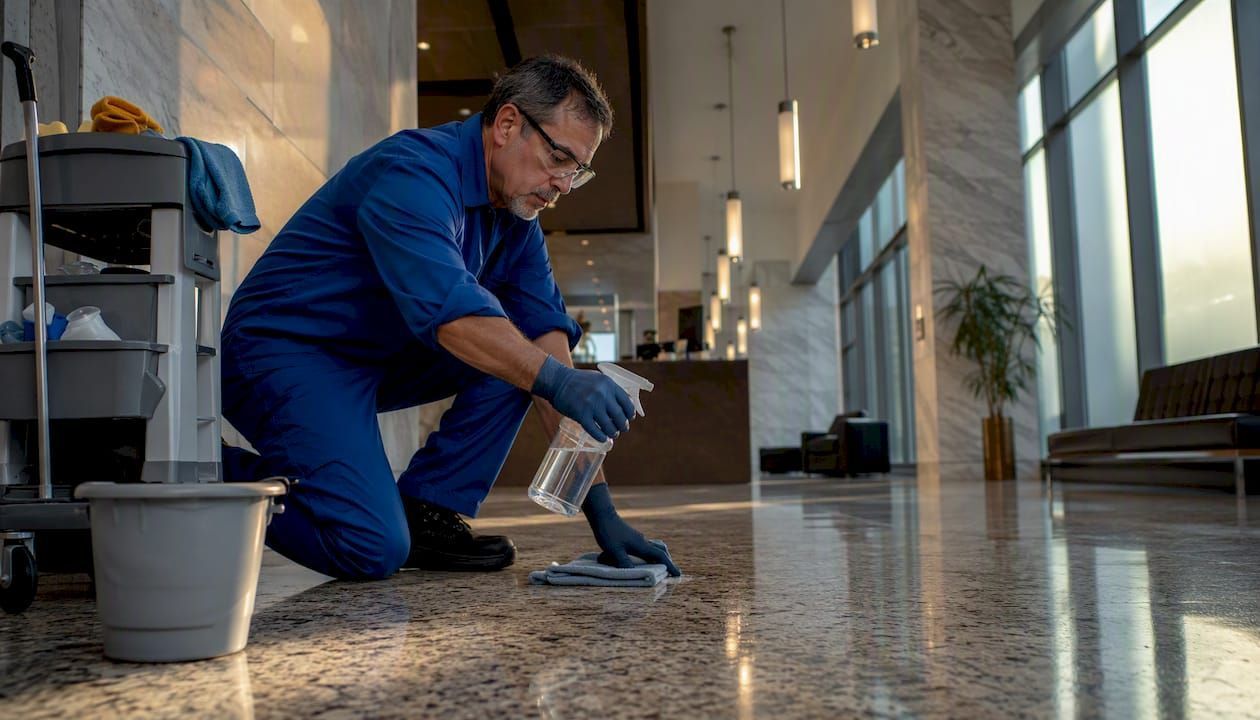
Here's what to do today:
- Inspect high-touch surfaces for staining, efflorescence, or sealer wear
- Clean with a pH-neutral or plant-based cleaner; let it dwell before wiping
- Remove calcium deposits, rust, or organic stains before any sealer goes down
- Test patch a small area before full application
- Apply the correct sealer (penetrating or topical) per substrate type
- Schedule follow-up checks regularly throughout the year
Oceancarestore's product line covers every step of this workflow, from plant-based calcium removers to stone and grout sealers formulated for residential and commercial hard surfaces.
Table of Contents
- Why preserving surfaces early saves you money and the environment
- What does a step-by-step preservation workflow look like?
- How do you choose eco-friendly cleaners and sealers that actually work?
- What mistakes damage surfaces most, and how do you fix them?
- How often should you maintain and reseal different surfaces?
- Safety, label reading, and disposal for eco-friendly products
- When should you hire a contractor instead of doing it yourself?
- Oceancarestore product categories mapped to your workflow
- Key Takeaways
- A note on sustainable surface care
- Useful sources and further reading
- Get the right products from Oceancarestore
Why preserving surfaces early saves you money and the environment
The 2026 Field Handbook for Maintenance is direct on this: preservation treatments applied during the early service life, when surfaces are still in fair-to-good condition, are the most cost-effective way to extend asset lifespan. Waiting until a surface is visibly degraded means you're paying for restoration, not maintenance.
Early-life preservation also reduces environmental impact. Low-cost, low-impact treatments improve condition, increase safety, and cut the need for aggressive chemical interventions later. A simple vinegar-water solution handles routine maintenance on many hard surfaces more cost-effectively than most commercial alternatives, with a fraction of the environmental load.
Key reasons to act early:
- Sealers bond better to sound, clean substrates than to degraded ones
- Stains that penetrate deeply into porous stone or grout are far harder to remove
- Replacing a surface costs significantly more than maintaining it
- Plant-based cleaners used regularly reduce the need for harsh acid treatments
What does a step-by-step preservation workflow look like?
Facility surface preservation methods work best when followed in order. Skipping steps, especially surface prep, is the leading cause of sealer failure.
- Inspect the surface. Look for cracks, staining, efflorescence, loose grout, or existing sealer wear. Note substrate type: natural stone, ceramic tile, concrete, grout, pool tile, or metal.
- Clean with a low-impact product. Use a pH-neutral or plant-based cleaner diluted per label instructions. Routine damp dusting with microfiber before wet cleaning prevents abrasive particles from scratching the surface during the wash step.
- Remove specific deposits. Calcium scale on pool tile needs a dedicated calcium remover. Rust stains require a targeted treatment. Organic stains (algae, mildew) respond to enzyme-based plant formulas.
- Prep the surface passively. Rinse thoroughly and allow to dry completely. Most high-performance sealers require a neutral, residue-free surface; even a thin soap film prevents proper bonding and causes hazy finishes.
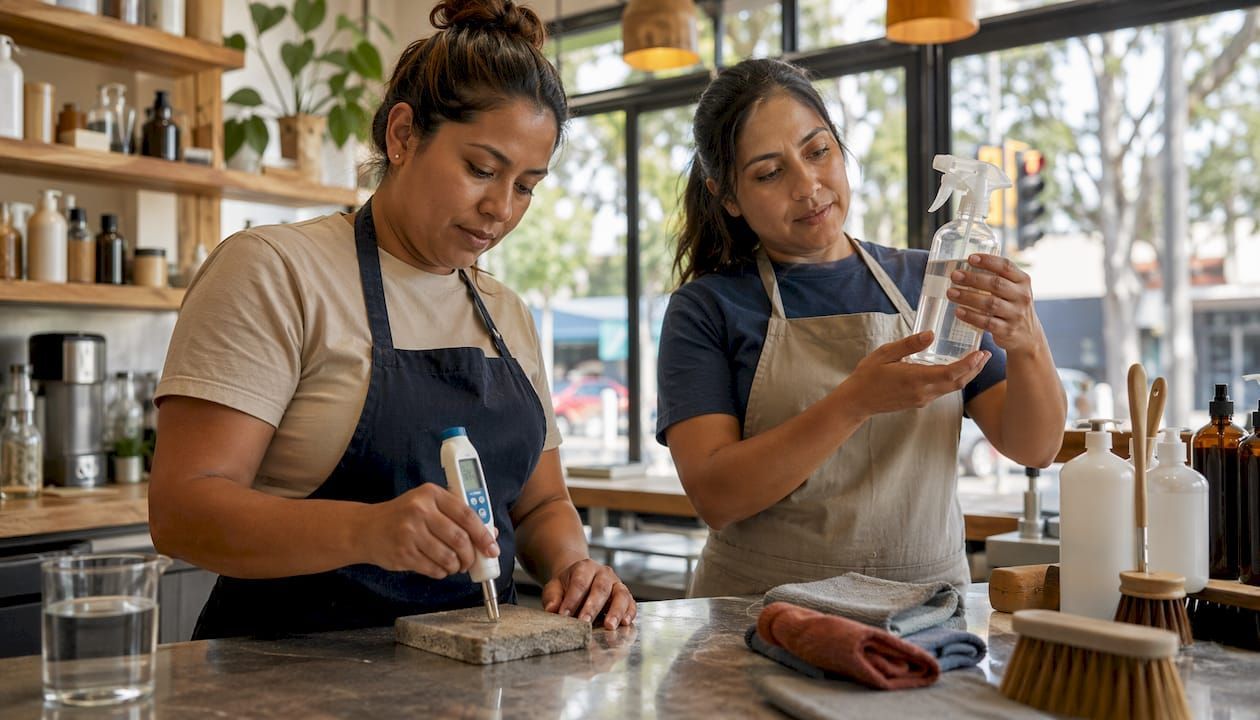
- Test patch. Apply sealer to a 12-inch square in an inconspicuous area. Check adhesion and appearance after the recommended cure time before proceeding.
- Apply the sealer. Use the correct product for the substrate. Work in sections; avoid puddling.
- Cure and verify. Follow label cure times. Check for even coverage and no white haze.
- Schedule maintenance. Log the date, product used, and next inspection window.
Surface-specific notes:
- Natural stone: Always use pH-neutral cleaners. Acidic products etch marble, travertine, and limestone permanently.
- Ceramic and glazed tile/grout: Grout is porous; tile face is not. Focus sealer application on grout lines.
- Pool tile: Calcium deposits at the waterline require a dedicated pool tile calcium remover before any protective treatment. Oceancarestore's Pool Tile Restorer category addresses this directly.
- Concrete and pavers: These are highly porous. A penetrating silane/siloxane sealer protects against moisture and salt intrusion without changing appearance.
- Metals: Wipe stainless steel parallel to the grain to avoid micro-scratches. An impermeable barrier coating is the core corrosion-prevention strategy for steel surfaces.
Pro Tip: Plant-based and low-VOC cleaners need more dwell time than harsh chemical strippers. Apply, wait the full contact time on the label (often 5–10 minutes), then wipe. Rushing leads to unnecessary scrubbing that damages the finish.
How do you choose eco-friendly cleaners and sealers that actually work?
The attributes that matter most, in order:
- Biodegradable and plant-based formula — breaks down safely in the environment
- Low VOC — safer for indoor use and enclosed spaces like bathrooms and pool enclosures
- pH-neutral when needed — mandatory for marble, limestone, and travertine
- Penetrating vs. topical — penetrating sealers (silane, siloxane, siliconate) absorb into the substrate and protect from within; topical films sit on the surface and protect against stains and abrasion but can peel
- Breathability — porous stone and concrete need sealers that allow moisture vapor to escape; trapping moisture causes spalling
- Ingredient transparency — a reputable product lists its active ingredients and provides a Safety Data Sheet (SDS)
Multifunctional silane/siloxane formulas that combine water repellency with UV resistance and breathability are the current standard for porous stone. They minimize visual change while providing durable protection.
Checklist for validating eco claims:
- Confirm the product lists ingredients or provides an SDS
- Check for a VOC content statement (look for under 100 g/L for low-VOC classification)
- Look for third-party certifications (EPA Safer Choice, Green Seal) when available
- Read coverage rates: a product that covers 50 sq ft per quart is not comparable to one covering 200 sq ft
- Confirm cure time and compatibility with any previous coating on the surface
Manufacturer prep specifications typically state required surface profile, moisture level, and pH. Failing to meet these can void the product warranty.
What mistakes damage surfaces most, and how do you fix them?
The six most common errors:
- Abrasive scrubbing on sensitive finishes — steel wool or stiff brushes scratch glazed tile, polished stone, and stainless steel permanently. Use soft microfiber or nylon pads.
- Using harsh acids on natural stone — vinegar, muriatic acid, and many grout cleaners etch marble and limestone. Switch to a pH-neutral or alkaline plant-based cleaner.
- Sealing over residue — any soap film, calcium deposit, or cleaning product left on the surface prevents sealer adhesion. Always rinse and dry completely first. See common sealer problems for a full breakdown.
- Over-sealing — applying too many coats traps moisture and causes delamination. Follow coverage rate instructions precisely.
- Skipping the test patch — incompatible sealers can discolor or cloud a surface. A test patch costs 10 minutes; fixing a clouded floor costs much more.
- Ignoring home cleaner damage — everyday household cleaners with bleach or ammonia degrade sealers over time.
| Symptom | Likely cause | Fix |
|---|---|---|
| Hazy white finish | Sealer applied over moisture or residue | Strip sealer, re-prep surface, reapply |
| Delamination/peeling | Over-application or incompatible topcoat | Remove old sealer mechanically; reapply correct product |
| Streaking | Uneven application or pooling | Buff out while wet; apply thinner coats |
| White mineral haze (pool tile) | Calcium carbonate buildup | Apply calcium remover; let dwell; rinse before resealing |
When to stop and call a professional: deep structural cracking, active corrosion on metal substrates, or staining that has penetrated more than a few millimeters into stone. These require assessment beyond DIY scope.
How often should you maintain and reseal different surfaces?
The short answer: more traffic and harsher conditions require more frequent maintenance.
| Surface type | Traffic/exposure | Inspect | Clean | Reseal |
|---|---|---|---|---|
| Pool tile | High/chemical | Weekly | Monthly | 1–2 years |
| Natural stone (interior) | Moderate | Monthly | Weekly | 2–3 years |
| Concrete/pavers (exterior) | High/weather | Quarterly | Monthly | 2–4 years |
| Grout lines | Moderate | Monthly | Weekly | 1–2 years |
| Stainless steel | Daily use | Weekly | Weekly | As needed |
Early preservation consistently outperforms reactive repair on cost. A routine maintenance program using plant-based cleaners and a quality sealer costs a fraction of surface replacement. Coastal properties, freeze-thaw climates, and areas with heavy chemical exposure (pool chemicals, road salt) should shorten every interval by roughly half. For a broader view of long-term stone and pool tile care, cadence planning is covered in detail.
Safety, label reading, and disposal for eco-friendly products
Basic rules before you open any product:
- Ventilate the work area; open windows and doors or use a fan
- Wear nitrile gloves and eye protection
- Read the SDS and product label before mixing or applying anything
- Never mix cleaners, even "natural" ones — combining acids and bases creates hazardous reactions
Outdoor application note: Prevent runoff from entering storm drains, pools, or landscaped areas. Even biodegradable products can harm aquatic life in concentrated form. Wet down surrounding plants before applying any cleaner near garden beds, and rinse the area thoroughly after use.
For disposal, small household volumes of water-based, biodegradable cleaners can typically go down the drain with plenty of water in most U.S. municipalities. Solvent-based sealers and products with hazardous components require disposal at a local household hazardous waste (HHW) facility. The EPA's hazardous waste guidance and your local waste authority are the definitive sources for your jurisdiction.
When should you hire a contractor instead of doing it yourself?
DIY works well for routine cleaning, resealing sound surfaces, and calcium removal on pool tile. Hire a professional when:
- The substrate shows structural damage (cracking, spalling, active corrosion)
- Staining has penetrated deeply and resists standard treatment
- The surface requires mechanical prep (grinding, shot blasting) before sealing
- Warranty coverage on a new installation requires certified application
Questions to ask any contractor:
- What substrate types have you worked with, and can you provide references?
- What surface prep method do you use, and will you provide prep specs in writing?
- Do you accept the product SDS and follow manufacturer application requirements?
- What warranty do you offer on labor and materials?
- Will you perform a test patch before full application?
Red flags: any contractor who immediately proposes aggressive grinding on a delicate surface, refuses to do a test patch, or cannot provide written prep specifications. Document the job with photos before, during, and after work for warranty and future maintenance records. Good surface preparation is the single biggest predictor of how long any protective treatment lasts.
Oceancarestore product categories mapped to your workflow
Each step in the preservation workflow maps to a specific Oceancarestore product category:
- Clean: All-purpose plant-based tile and stone cleaners for routine maintenance
- Calcium removal: Dedicated calcium removers for pool tile waterline deposits and mineral scale on stone
- Pool tile restoration: The Pool Tile Restorer category handles both calcium removal and surface restoration for pool tile, with formulas safe for surrounding pool water
- Seal: Stone and grout sealers in penetrating and topical options, covering natural stone, ceramic, grout, pavers, and glass
- Protect: Surface protectors for ongoing repellency between full reseal cycles
For pool tile specifically: apply a calcium remover, let it dwell per label instructions, rinse completely, allow to dry, then apply Pool Tile Restorer. For natural stone indoors, a pH-neutral cleaner followed by a penetrating silane/siloxane sealer from the stone and grout line covers most residential applications. For sustainable pool tile and stone cleaning, Oceancarestore's blog covers the full plant-based workflow in detail.
Pro Tip: Always test patch any Oceancarestore sealer on a hidden section of your surface first. Coverage rates and cure times vary by substrate porosity — a more porous surface absorbs more product and may need a second coat.
Key Takeaways
Effective facility surface preservation requires removing contaminants first, then applying the right barrier protection early, using biodegradable and low-VOC products to protect both the surface and the environment.
| Point | Details |
|---|---|
| Two-step principle | Remove all contaminants before sealing; residue under a sealer causes hazy finishes and early failure. |
| Preserve early | The Field Handbook confirms early-life preservation is the most cost-effective strategy for extending surface lifespan. |
| Match sealer to substrate | Use penetrating sealers for porous stone and concrete; topical films for stain resistance on tile and grout. |
| Shorten intervals in harsh conditions | Coastal, freeze-thaw, and chemical-heavy environments require substantially more frequent maintenance. |
| Oceancarestore | Covers every workflow step with biodegradable, plant-based cleaners, calcium removers, Pool Tile Restorer, and stone and grout sealers. |
A note on sustainable surface care
Sustainable surface care is not a trend. It's the only approach that makes sense when you're working in and around homes, pools, and spaces where people and pets spend time daily. The products that protect surfaces most reliably are also the ones that do the least collateral damage: plant-based, low-VOC, pH-appropriate, and biodegradable. At Oceancarestore, that's the only kind of product we stock. If you're unsure which product fits your substrate or situation, reach out directly for product selection guidance. The right match on the first try saves time, money, and surfaces.
Useful sources and further reading
- Field Handbook for Maintenance and Preservation Treatments of Concrete Pavements (SPR-4601) — Purdue/JTRP. Supports timing and cost-effectiveness claims for early-life preservation.
- ACI 515.3R-20: Guide for Assessment and Surface Preparation — American Concrete Institute. Covers surface prep requirements, moisture/pH acceptance criteria, and why inadequate prep causes protection system failure.
- Functional surface engineering for cultural heritage protection (Beilstein Journal of Nanotechnology) — Supports sealer selection guidance, particularly silane/siloxane systems for porous stone.
- Maintaining Different Surfaces in Your Property (FSM.How) — Practical guidance on low-impact cleaners and daily maintenance routines.
- Corrosion Protection of Steel (Total Materia) — Supports barrier coating guidance for metal surfaces.
- Weiman stainless steel care guidance — Source for grain-direction wiping technique on stainless steel.
Always consult the manufacturer's prep specifications and SDS before applying any sealer. Requirements for surface profile, moisture content, and pH vary by product and substrate.
Get the right products from Oceancarestore
Most homeowners and property managers spend more time researching surface care than they need to. The real gap is not information. It's having the right product for the specific surface in front of you.
Oceancarestore stocks biodegradable, plant-based cleaners, calcium removers, and sealers matched to the surfaces you actually have: pool tile, natural stone, grout, ceramic, pavers, and glass. Every product ships with clear application guidance, and the Pool Tile Restorer and stone and grout sealers lines cover the two most common preservation needs in one place. No harsh acids, no high-VOC formulas, no guessing about substrate compatibility. Browse the full range at Oceancarestore and pick the product that fits your surface today.

