
Sealers vs Protectors: What's the Real Difference?
The core difference between sealers and protectors comes down to where the chemistry works. Film-forming sealers sit on top of the surface, creating a continuous barrier that blocks liquids, stains, and contaminants. Penetrating protectors (also called protective treatments) soak into the substrate, bond inside the pores, and repel water and oil while letting the material breathe. That single distinction drives almost every other choice you'll make.
Here's the practical decision rule: if your surface is exposed to moisture from below or behind (exterior masonry, pool surrounds, outdoor stone), a penetrating protector is usually the safer call. If you need visible sheen, a wet-look finish, or a sacrificial topcoat on a controlled interior surface, a film-forming sealer can deliver that. Getting this wrong doesn't just waste money. On masonry, trapping moisture under a non-breathable film can cause spalling and salt damage that's expensive to fix.
- Film-forming sealer: creates a surface layer; blocks contaminants; adds sheen; can restrict vapor movement
- Penetrating protector: migrates into pores; repels water and oil; preserves natural look and breathability
- Decision shortcut: breathability needed = penetrating protector; gloss or heavy surface film required = film-forming sealer
Pro Tip: Before buying anything, check whether your surface has active moisture coming from below. Press plastic sheeting flat against it and tape the edges. If condensation forms underneath after 24 hours, a non-breathable film-forming sealer will trap that moisture and fail.
Table of Contents
- What do manufacturers actually mean by "sealer" and "protector"?
- How film-forming and penetrating chemistries actually protect surfaces
- How each option changes the way your surface looks and feels
- Which product works best for your specific surface?
- Pros and cons of each approach
- How to apply, what to expect, and what maintenance looks like
- How Oceancare products align with eco-friendly performance needs
- Key Takeaways
- The case for defaulting to penetrating protectors
- Oceancarestore has the right product for your surface
- Useful sources and further reading
What do manufacturers actually mean by "sealer" and "protector"?
The terminology is genuinely messy, and that's not your fault. No ASTM specification defines the word "sealer", so manufacturers use it however they like. One brand's "penetrating sealer" is another brand's "protective treatment." The label alone tells you almost nothing about how the product works.
Here's how to cut through the noise:
Film-forming sealers form a continuous layer on the surface. Common chemistries include acrylic, polyurethane, and epoxy. Marketed claims typically emphasize gloss, stain resistance, and easy cleaning. These are the products that give concrete a wet-look finish or make tile pop with color.
Penetrating protectors (also marketed as penetrating sealers, water repellents, or protective treatments) work differently. Silane, siloxane, silane-siloxane blends, silicates, and fluoropolymers are the typical active chemistries. These molecules are small enough to migrate into the substrate's pores, where they either chemically bond to the material or physically block capillaries. The result: water beads off, oils don't soak in, but vapor can still move through the material.
The naming confusion runs deep. Industry voices have pushed for moving away from the vague label "sealer" toward the more precise term "protective treatment" to better reflect what a product actually does. Until that shift takes hold across the whole industry, your best move is to skip the product name entirely and go straight to the technical datasheet.
Read the datasheet, not the label. Look for vapor permeance (perm rating), contact-angle or water beading test results, and water absorption reduction data. Those numbers tell you whether a product breathes, how well it repels water, and how long it's likely to last — none of which the product name will tell you.
- Acrylic sealers: film-forming; good UV resistance; common on concrete and pavers
- Polyurethane sealers: film-forming; durable, flexible topcoat; used on wood floors and countertops
- Epoxy sealers: film-forming; very hard surface; common in garages and commercial floors
- Silane/siloxane protectors: penetrating; excellent water repellency; standard for masonry and stone
- Fluoropolymer protectors: penetrating; oil and water repellency; used on porous stone and grout
Pro Tip: When comparing products, search for the technical datasheet (TDS) or safety data sheet (SDS) rather than the product page. The TDS will list the active chemistry, coverage rate, and any test data — the product page usually won't.
One more category worth flagging: sanding sealers. These are process-aid finishes used in woodworking to improve sanding between coats. They are not durable protective topcoats. Using one as a final finish on a wood project is a common and costly mistake.
How film-forming and penetrating chemistries actually protect surfaces
The mechanism matters because it determines what can go wrong, not just what goes right.
A film-forming sealer works by creating a physical barrier above the substrate. Liquids, oils, and most contaminants can't reach the surface because the film intercepts them first. That's effective — until the film is scratched, peeled, or compromised. Once the barrier breaks, contaminants can get under it, and now you have a harder remediation job than if you'd never sealed at all.
Penetrating protectors work from the inside out. The active molecules are drawn into the pores by capillary action, then either react with the substrate (silanes bond chemically to silica in concrete and stone) or deposit a hydrophobic lining inside the pore structure. Water molecules can't get in, but water vapor molecules are small enough to pass through. That's the breathability advantage.
Film-forming sealers can trap moisture in substrates; in masonry this can cause subflorescence and spalling. Salt crystals form just below the surface as trapped moisture cycles through the material, and eventually the surface delaminates. Professionals working on exterior masonry, retaining walls, and pool surrounds generally prefer breathable penetrating treatments for exactly this reason.
The breathability test: a product with a high perm rating (vapor permeance) allows moisture vapor to escape. A low or near-zero perm rating means the product is essentially a vapor barrier. For exterior substrates that see rain, humidity, or ground moisture, low-perm film-formers carry real risk.
Key performance dimensions to check on any datasheet:
- Vapor permeance (perm rating): higher = more breathable; critical for exterior and below-grade applications
- Contact angle / water beading: measures how well the surface repels liquid water; 90°+ is good, 120°+ is excellent
- Water absorption reduction: percentage drop in water uptake after treatment; look for 80%+ on masonry
- Abrasion resistance: relevant for floors, pool decks, and high-traffic areas
- UV resistance: important for any exterior application or south-facing surface
For a deeper look at how these properties apply specifically to pool tile and stone, Oceancarestore's guide on sealers for pool tile and stone walks through the selection criteria in practical terms.
How each option changes the way your surface looks and feels
This is where a lot of homeowners get surprised — usually after the product is already applied.
Film-forming sealers change the surface visibly. Gloss formulas produce a high-shine, wet-look finish that deepens color noticeably. Satin formulas are subtler but still add sheen. Some enhancement sealers are specifically formulated to deepen color and add gloss, which is exactly what you want on pavers or slate you want to make pop. The trade-off: film-forming products can make surfaces slippery when wet, which is a real safety issue on pool decks, outdoor stairs, and wet-room floors. Some manufacturers add anti-slip aggregates to address this, but it's worth checking before you buy.
Penetrating protectors are designed to be invisible. The surface looks essentially the same after treatment — same color, same texture, same sheen level. Some formulations offer a slight color enhancement without adding gloss, which works well on natural stone where you want a little depth without a plastic-looking finish. Because the treatment lives inside the pores rather than on top, the texture stays the same, which matters on non-slip surfaces.
- High-gloss film-forming sealer: strong color deepening; high sheen; can be slippery when wet
- Satin film-forming sealer: moderate sheen; less color change than gloss; still some slip risk
- Enhancement penetrating protector: slight color deepening; no gloss; texture preserved
- Natural-look penetrating protector: no visible change; texture and sheen unchanged
When appearance is the priority — showroom stone, decorative concrete, furniture-grade wood — a film-forming sealer or enhancement sealer gives you the most control over the final look. When maintaining texture is critical (pool decks, non-slip pavers, outdoor stairs), a penetrating protector is the right call.
Pro Tip: Always test on a small, inconspicuous patch and let it cure fully before committing to the whole surface. Sealers and protectors can look different on different stone colors and porosities, and some color-enhancement effects are permanent.
Which product works best for your specific surface?
The substrate matters as much as the chemistry. Here's how to match them.
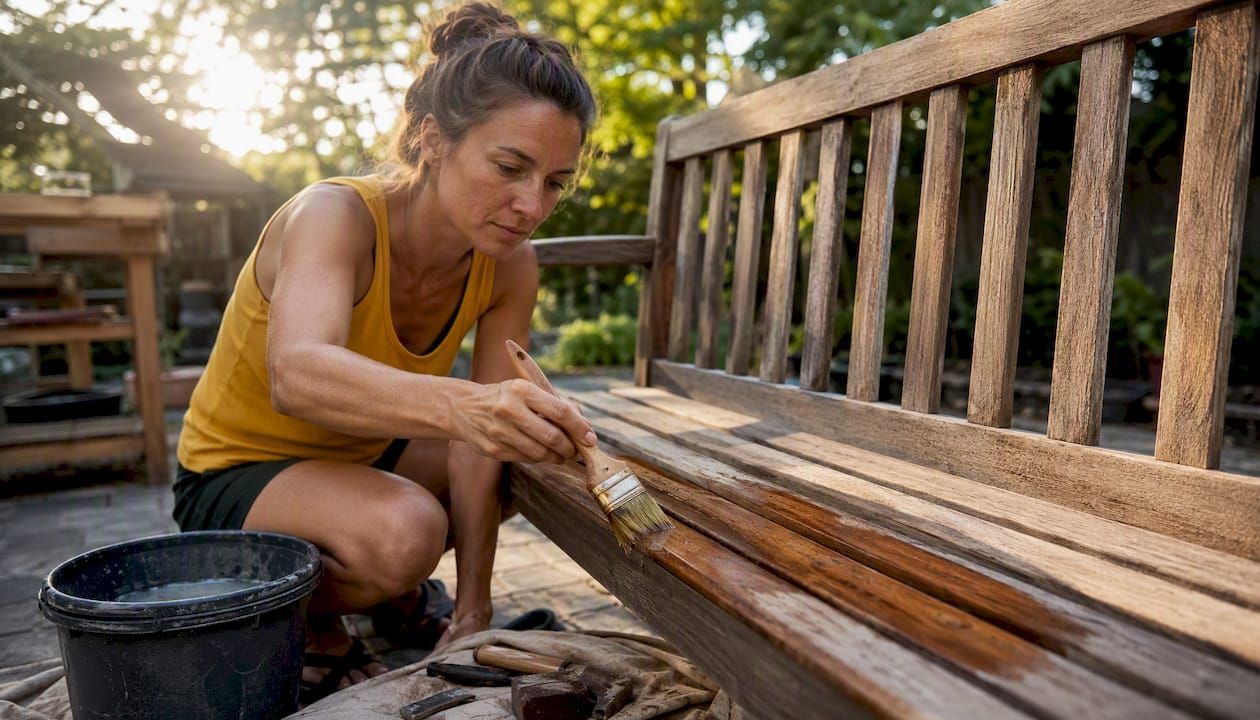
Wood and teak respond well to penetrating oil-based or water-based protectors that preserve the grain and allow the wood to expand and contract with humidity changes. A film-forming sealer on exterior wood can peel and crack as the wood moves, trapping moisture underneath. For interior wood floors or countertops where you want a durable, cleanable surface, a film-forming polyurethane or hardwax oil finish makes more sense. For wood specifically, sealers often include UV inhibitors and deeper pore protection, while waterproofers mainly cause water beading — so for exterior wood exposed to sun, look for a product that addresses both.
Natural stone and grout almost always benefit from penetrating protectors. Marble, travertine, limestone, and sandstone are porous and breathable by nature. Trapping moisture under a film-forming sealer on these materials risks staining, efflorescence, and surface damage. Grout lines in particular absorb stains fast and benefit from a soak-in silane or fluoropolymer protector. The exception: if you need a high-gloss finish on interior stone that's fully dry and vapor-controlled, a film-forming enhancement sealer can work. For substrate-specific stone guidance, Oceancarestore's stone sealer selection guide covers the key decision points.
Concrete and pavers present the most nuanced trade-offs. Exterior concrete exposed to freeze-thaw cycles needs breathability — penetrating silane-siloxane repellents are the standard professional choice here because they reduce water absorption without trapping vapor. Color enhancement or strong stain resistance on a patio or driveway may call for a film-forming acrylic sealer, but only if the concrete is fully cured and dry. Applying a film-former to green or damp concrete is a common failure point.
Tile and grout work best with a two-track approach: penetrating protectors for the grout lines (where absorption and staining are the main risks) and either a penetrating or light film-forming product for the tile face depending on the finish you want.
| Substrate | Preferred approach | Key reason |
|---|---|---|
| Exterior masonry / stone | Penetrating protector | Breathability; prevents moisture trapping |
| Interior stone (dry, controlled) | Film-forming or penetrating | Aesthetic flexibility; vapor not a concern |
| Wood / teak (exterior) | Penetrating oil or water-based protector | Allows wood movement; prevents peeling |
| Wood floors (interior) | Film-forming (polyurethane, hardwax) | Durability; cleanable surface |
| Concrete / pavers (exterior) | Penetrating silane-siloxane | Freeze-thaw protection; breathability |
| Grout lines | Penetrating protector | Stain resistance without blocking vapor |
| Pool decks | Penetrating protector | Non-slip texture preserved |
Pro Tip: For stone and grout around pools, use a pH-neutral cleaner to prep the surface before applying any protector. Acidic or alkaline residues can interfere with the bonding of silane-based products and reduce their effectiveness.
Pros and cons of each approach
Neither class of product is universally better. The right one depends on your substrate, your environment, and what you're willing to maintain.
Film-forming sealers
Pros: strong surface barrier against most stains and liquids; visible sheen and color enhancement; easy to clean the surface (contaminants sit on the film, not in the pores); good UV protection in quality formulations.
Cons: can trap moisture in porous substrates, leading to spalling, blistering, or subflorescence; may need recoating more frequently as the film wears, scratches, or peels; can make surfaces slippery when wet; higher VOC content in solvent-based formulas; remediation when the film fails requires stripping, which is labor-intensive.
Penetrating protectors
Pros: maintain breathability and vapor permeability; long-lasting protection that doesn't peel or flake; preserve natural texture and non-slip properties; typically lower VOC, especially water-based silane-siloxane formulas; easier reapplication (no stripping required).
Cons: offer less resistance to solvent-based stains and heavy surface abrasion compared to hard film-formers; no visible sheen (which is a con if you want color enhancement); may need reapplication on very porous substrates after a few years.
On the environmental side, water-based penetrating protectors and low-VOC film-formers have both improved significantly. Solvent-heavy film-forming sealers still carry higher VOC loads, which matters for indoor air quality and for applicators working in enclosed spaces. The trend among homeowners and property managers is toward low-VOC, hydrophobic penetrating products for better indoor air quality and a more natural surface feel.
Pro Tip: If a film-forming sealer starts to show white haze, bubbling, or peeling, don't recoat over it. Strip the old film first, identify and address the moisture source, then reapply. Coating over a failing film just delays the same failure.
How to apply, what to expect, and what maintenance looks like
Getting the application right matters as much as picking the right product. A good protector applied to a dirty or damp surface will underperform every time.
Surface prep checklist
- Clean the surface thoroughly. Remove dirt, grease, efflorescence, and biological growth. For heavy soiling, an intensive cleaner or calcium remover may be needed before a pH-neutral wash.
- Neutralize the pH. Acidic or alkaline residues from cleaning products interfere with penetrating treatments. Rinse well and confirm the surface is pH-neutral before proceeding.
- Check for moisture. Use a moisture meter on masonry and concrete. Most manufacturers specify a maximum moisture content (often 4–6%) before applying non-breathable film-formers. For penetrating products, the threshold is more forgiving, but very wet substrates still reduce penetration depth.
- Repair cracks and damage. Sealers and protectors are not crack fillers. Apply them to a structurally sound surface.
- Allow adequate drying time. New concrete typically needs 28 days to cure before sealing. Freshly cleaned stone needs 24–48 hours to dry.
For a full prep walkthrough, Oceancarestore's surface restoration guide covers the steps in detail.
Application basics
- Film-forming sealers: apply by roller or brush in thin, even coats. Two thin coats outperform one thick coat. Follow manufacturer dry times between coats (typically 2–4 hours). Avoid application in direct sun or temperatures below 50°F or above 90°F.
- Penetrating protectors: apply by brush, roller, or low-pressure sprayer. Flood the surface to saturation, then back-brush to work the product into the pores. Wipe off excess before it dries to avoid surface residue. One coat is often sufficient on dense substrates; porous materials may need two.
Maintenance and lifespan
Film-forming sealers on exterior concrete typically require recoating within a few years, depending on traffic and UV exposure. Interior film-formers on low-traffic surfaces can last several years. When wear appears as dull patches or loss of water beading, clean the surface and recoat.
Penetrating protectors generally last longer before reapplication is needed, often 3–7 years on masonry, because there's no film to wear away. Reapplication is straightforward: clean, dry, and reapply. No stripping required.
Timeline: prep (1–2 days including drying) → apply (half a day for most residential projects) → cure (24–72 hours before light foot traffic; 7 days before heavy use or furniture placement) → first maintenance check (12 months).
Cost ranges vary widely by product type, coverage area, and whether you hire a professional. DIY penetrating protectors for a typical patio cost a low price per square foot, while film-forming sealers are somewhat more expensive per square foot. Professional application adds labor on top of that.
Pro Tip: Always test for substrate moisture with a moisture meter before applying any non-breathable film-forming sealer. This is the single step most DIYers skip, and it's the most common cause of sealer failure on exterior masonry.
How Oceancare products align with eco-friendly performance needs
Oceancarestore's product line is built around the penetrating and low-VOC end of the market, which aligns directly with the performance priorities outlined above for exterior stone, pool surrounds, tile, and grout.
The Oceancare high-performance penetrating sealer is designed for natural stone, concrete, and masonry where breathability is non-negotiable. It repels water and oil while preserving the substrate's vapor permeability, which makes it a practical fit for pool tile surrounds, outdoor pavers, and natural stone in wet areas. The formulation is low-VOC, which matters for enclosed spaces like bathrooms and indoor kitchens where solvent-heavy products create air quality problems.
The Oceancare surface protector addresses tile and grout applications, where the goal is stain resistance without altering the surface texture or appearance. For grout lines especially, a penetrating approach prevents the color-staining and biological growth that film-forming products can't always stop once moisture gets underneath them.
For prep and ongoing maintenance, the Oceancare pH-neutral tile and stone cleaner removes residues without leaving acidic or alkaline deposits that would interfere with protector bonding. Using a pH-neutral cleaner before any sealing or protection treatment is standard professional practice, and it's the step that most DIY failures trace back to skipping.
- Penetrating sealer: — exterior stone, pool surrounds, masonry, concrete — breathability required
- pH-neutral cleaner: — prep and routine maintenance for all hard surfaces before and after treatment
Pro Tip: For eco-conscious projects, check the SDS for VOC content (grams per liter) before buying any sealer or protector. Low-VOC water-based penetrating products typically run under 50 g/L; solvent-based film-formers can exceed 400 g/L. That gap matters for indoor air quality and disposal.
Key Takeaways
Penetrating protectors are the right default for exterior, moisture-exposed, and breathability-critical substrates; film-forming sealers earn their place where gloss, color enhancement, or a hard surface barrier is the priority on controlled, dry surfaces.
| Point | Details |
|---|---|
| Core mechanism difference | Film-formers sit on the surface; penetrating protectors bond inside the pores and preserve breathability. |
| Moisture risk with film-formers | Applying a non-breathable sealer over damp masonry can cause spalling and subflorescence. |
| Substrate rule of thumb | Exterior stone, masonry, and pool surrounds favor penetrating protectors; interior gloss finishes may suit film-formers. |
| Prep is non-negotiable | Clean to pH-neutral, check moisture content, and repair cracks before applying either product type. |
| Oceancarestore's fit | Oceancarestore's penetrating sealer and surface protector cover the most common exterior and tile/grout scenarios with low-VOC formulations. |
The case for defaulting to penetrating protectors
Most homeowners reach for a film-forming sealer first because the results are visible and immediate. The surface looks sealed. It shines. That's satisfying in a way that an invisible penetrating treatment never quite is.
But the visible result is also the risk. A film on the surface can fail, peel, trap moisture, and create a remediation problem that's harder than the original staining would have been. Penetrating protectors don't give you that visual confirmation, but they also don't give you those failure modes.
The conventional wisdom that "sealers are stronger" misses the point. Strength isn't the right metric. Fit is. A breathable penetrating treatment on exterior limestone is doing more protective work than a high-gloss acrylic sealer on the same stone, even though the acrylic looks more impressive. The acrylic is fighting the substrate's natural behavior; the penetrating product is working with it.
Where film-forming sealers genuinely earn their place: interior surfaces with controlled moisture, decorative concrete where color enhancement is the goal, and high-traffic floors where a hard, cleanable topcoat is worth the recoating schedule. For those applications, the trade-offs are manageable. For everything else exposed to weather, ground moisture, or freeze-thaw cycles, a penetrating protector is the lower-risk, lower-maintenance choice.
One more thing worth saying plainly: the eco-friendly case for low-VOC penetrating products isn't just marketing. Solvent-based film-formers in enclosed spaces produce real air quality problems during and after application. For bathrooms, kitchens, and indoor stone, the VOC difference between a water-based penetrating protector and a solvent-based film-former is significant enough to be a deciding factor on its own.
Oceancarestore has the right product for your surface
Picking the right treatment is straightforward once you know your substrate and your priorities. Oceancarestore's product range covers the two most common scenarios: penetrating protection for exterior stone, pool tile, and masonry where breathability matters, and surface protectors for tile and grout where stain resistance is the goal.
The Oceancare penetrating sealer is the practical starting point for most outdoor and wet-area projects. It's low-VOC, water-based, and formulated to work with natural stone and concrete rather than against them. Pair it with the pH-neutral tile and stone cleaner for prep, and you have a complete system that won't leave acidic residues to undermine the bond.
For grout and tile, the surface protector handles stain resistance without altering texture or creating slip hazards. If you're not sure which product fits your specific surface, contact Oceancarestore directly for product guidance before you buy. Getting the right match the first time is faster and cheaper than stripping a failed sealer.
Useful sources and further reading
These references are worth consulting when you need technical data to back a product choice or verify a manufacturer's claims:
- Flexner on Finishing: What Are "Sealers"? — Popular Woodworking: essential reading for anyone working with wood; clarifies the sanding sealer vs protective sealer distinction.
- What Is the Difference Between a Waterproofer and a Sealer? — Optus Resin: useful for understanding the narrower waterproofer category versus broader sealer formulations.
- Epoxy Floor Coatings — All Day Power Washing: for readers considering film-forming epoxy coatings on garage or commercial floors, this covers the residential and commercial application context.

