
What is biodegradable sealer? Your eco-friendly guide
TL;DR:
- Most homeowners assume biodegradable sealers will harmlessly decompose after use, but this is often false. These sealers typically contain plant-based ingredients that break down faster than synthetics, reducing air pollution and chemical exposure. However, their environmental benefits depend on proper application, environmental conditions, and verified biobased content, not just marketing claims.
Most homeowners who reach for a product labeled "biodegradable sealer" assume it will simply dissolve harmlessly into the earth after use. That assumption is mostly wrong, and it catches well-meaning property owners off guard. Understanding what is biodegradable sealer in real, practical terms means looking past the marketing copy and knowing what the chemistry actually delivers. This guide cuts through the label confusion, explains what these products genuinely offer, and helps you choose the right eco-friendly sealer for your pool tiles, natural stone, and other hard surfaces.
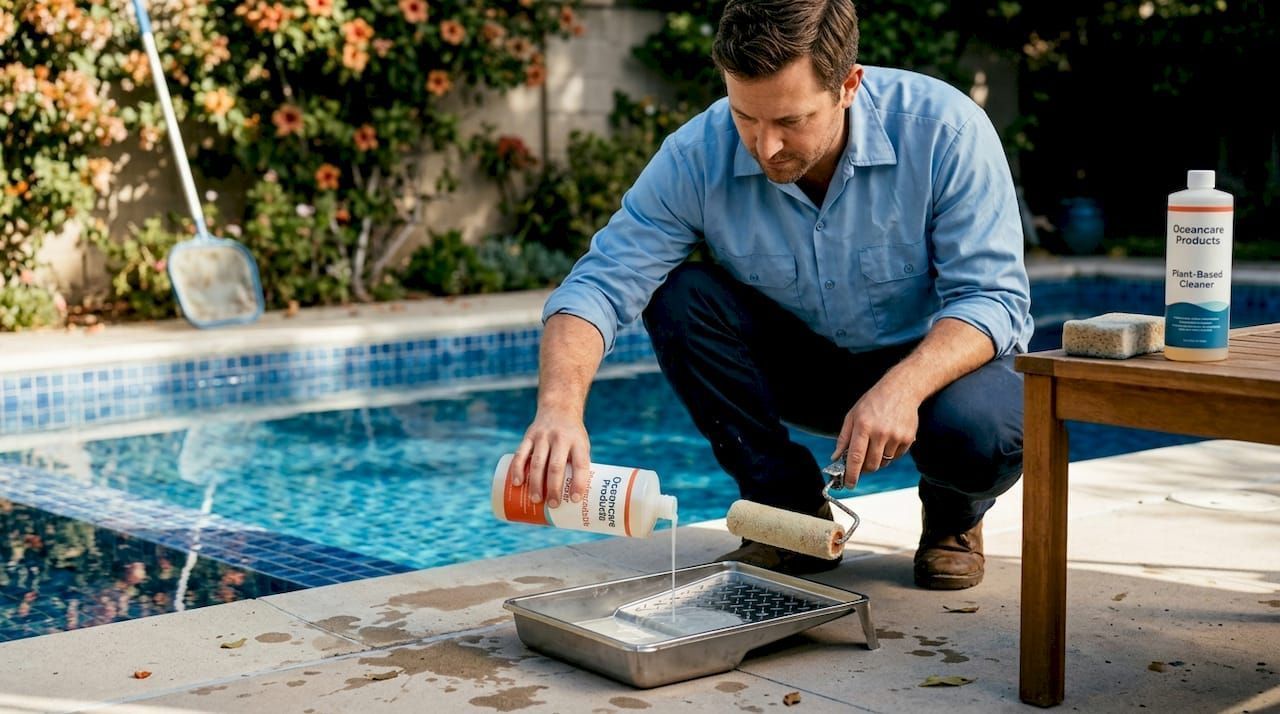
Table of Contents
- Understanding biodegradable sealers and their true meaning
- How biodegradability claims translate to real-world use and limitations
- Comparing biodegradable and conventional sealers: performance and environmental tradeoffs
- Practical tips for selecting and using biodegradable sealers on pool tiles and natural stone
- Decoding labeling and certifications: how to identify genuine biodegradable sealers
- Our take: "biodegradable" should be the floor, not the selling point
- Protect your surfaces with the right eco-friendly sealer
- Frequently asked questions
Key Takeaways
| Point | Details |
|---|---|
| Biodegradable vs biobased | Biodegradable sealers often contain biobased ingredients but may not fully break down in all environments. |
| Tradeoffs in durability | Water-based eco-friendly sealers have lower VOCs but shorter protection life than oil-based sealers. |
| Certification matters | Look for third-party ecolabels and compositional data to verify genuine biodegradability claims. |
| Proper application key | Surface prep and adherence to curing and reapplication schedules ensure best performance with eco sealers. |
Understanding biodegradable sealers and their true meaning
Now that we've introduced what biodegradable sealers imply, let's unpack what the term really means in practice.
The phrase "biodegradable sealer" sounds straightforward, but it covers a wide range of products with very different compositions. According to the science, a biodegradable sealer formulation contains organic or biobased components that break down more readily than conventional petroleum or synthetic sealants. The critical word there is components. The whole product is not necessarily going to disappear into the soil after a rainstorm. It means specific ingredients, often plant-derived oils, resins, or water-based carriers, degrade faster than their synthetic counterparts under the right conditions.
This distinction matters enormously when you are shopping for a sealer to protect your travertine patio, pool coping, or kitchen backsplash. Many products lumped under the biodegradable label are more accurately described as biobased, meaning they source a percentage of their raw materials from renewable plant matter rather than crude oil. That is genuinely better for the environment in terms of carbon footprint. But it is not the same as a product that fully decomposes on your driveway after application.
Here is what eco-friendly and biodegradable sealers typically share:
- Plant-derived or biobased ingredients , such as soy esters, citrus-based solvents, or linseed oil derivatives
- Water-based carriers instead of petroleum solvents, which dramatically reduces chemical off-gassing
- Low or zero VOC formulations (VOCs are volatile organic compounds, the airborne chemicals that create that sharp sealer smell and contribute to air pollution)
- Easier water cleanup , meaning you rinse tools with water rather than mineral spirits or harsh solvents
- Reduced skin and respiratory irritation during application compared to solvent-based products
For a deeper look at how these eco-friendly sealers explained stack up across stone and tile applications, the differences between product categories become clearer once you see them compared side by side.
How biodegradability claims translate to real-world use and limitations
Understanding these nuances helps you set realistic expectations about how biodegradable sealers function in your home environment.
Here is something product packaging rarely tells you: biodegradable products for surfaces are often biobased or plant-based and may clean up with water, but true biodegradability is always application and disposal-environment dependent. A sealer cured onto your pool tile is not in the same environment as a compost pile. Once bonded to a porous surface, it is doing its job, which is resisting water and stains. Biodegradation requires active moisture, microbial activity, oxygen, and sometimes UV light. A cured film on sealed stone has none of those conditions in abundance.
This is not a flaw in the product. It is simply how sealers work. The environmental benefit of choosing a biobased, low-VOC sealer comes primarily from:
- Reduced air pollution during application , because low-VOC formulas release far fewer harmful vapors into your home or outdoor air
- Safer handling and cleanup with water instead of chemical solvents poured down drains
- Smaller manufacturing footprint , since plant-derived feedstocks require less energy-intensive refining than petroleum-based alternatives
- Lower risk to pool water and surrounding soil if excess product or rinse water enters the environment during application
Pro Tip: When reading labels, look for a specific biobased content percentage rather than just the word "biodegradable." A product disclosing 60% biobased carbon content is giving you verifiable data. A product that just says "eco-friendly" on the front label is giving you nothing measurable.
For anyone sealing pool tile specifically, understanding the full picture behind pool tile sealing basics helps you choose a product that genuinely protects that wet, chemically active environment without contributing unnecessary pollutants to your pool water or yard.
Comparing biodegradable and conventional sealers: performance and environmental tradeoffs
With this context, let's see how choosing between biodegradable and traditional sealers affects your property maintenance strategy.
The most practical way to think about biodegradable vs traditional sealers is as a tradeoff between environmental responsibility and raw durability. Neither category wins on every single metric, and a property manager sealing 5,000 square feet of commercial stone is going to weigh these factors differently than a homeowner sealing a pool surround once every few years.
| Feature | Water-based biodegradable sealer | Oil/solvent-based traditional sealer |
|---|---|---|
| Typical lifespan | About 2 years | Up to 6 years |
| VOC emissions | Low to zero | Moderate to high |
| Application odor | Minimal | Strong, ventilation required |
| Cleanup | Water only | Mineral spirits or solvent |
| Drying time | Often under 4 hours | Up to 24 hours or more |
| Environmental impact | Lower | Higher |
| Ideal for | Pool tiles, stone, indoor use | High-traffic driveways, commercial asphalt |
The durability gap between sealers is real: oil-based products can last up to six years while water-based alternatives average around two years, and oil-based options typically carry higher VOC levels. For pool coping, natural stone, or grout, that reapplication schedule is entirely manageable. For a high-traffic commercial driveway, a two-year cycle may not be worth it.
Key considerations when comparing your options:
- Surface type matters : Porous stone like travertine or limestone responds well to water-based penetrating sealers, which soak in rather than coat the surface
- Indoor vs. outdoor use : Low-VOC biodegradable sealers are the only responsible choice for enclosed indoor spaces like bathrooms and kitchens
- Pool chemistry : Chlorinated water environments demand sealers that won't cloud or peel under chemical exposure. Many water-based formulas are specifically engineered for this.
Pro Tip: If you are sealing both indoor stone and an outdoor pool surround in the same project, a single water-based eco-friendly sealer often handles both surfaces, eliminating the need to purchase and store two separate products.
Understanding low VOC cleaner benefits goes beyond just avoiding smell. Prolonged VOC exposure during application has documented effects on respiratory health, particularly in poorly ventilated spaces like enclosed pool areas or indoor stone kitchens.
Practical tips for selecting and using biodegradable sealers on pool tiles and natural stone
Now that you know how these sealers compare, here's how to put that knowledge into practice to protect your surfaces sustainably.
Choosing the best biodegradable sealers for your specific surface is not one-size-fits-all. Pool tile, natural travertine, slate, and sandstone all have different porosity levels and exposure environments. Matching the sealer to the surface is what separates a protection that lasts from one that flakes off within months.
Surface selection checklist:
- High-porosity surfaces (travertine, limestone, unglazed ceramic): Need a deep-penetrating impregnating sealer that bonds within the stone rather than sitting on top
- Low-porosity surfaces (polished granite, dense porcelain): May need only a light topical treatment or no sealer at all
- Pool tile and coping : Must tolerate constant moisture, UV exposure, and chlorine or salt chemistry without degrading or discoloring
- Outdoor stone in freeze-thaw climates : Look for sealers rated for thermal cycling, since water trapped in pores expands and can crack the stone during winter
Many water-based penetrating sealers marketed as eco-friendly are low-odor, low-VOC, and cure in under four hours, making same-day application practical for most homeowners.
Step-by-step application process:
- Clean the surface thoroughly before sealing. Any existing calcium deposits, algae, or grime will prevent the sealer from bonding properly. Use an appropriate surface cleaner and let it dry completely.
- Test in an inconspicuous area first to confirm the sealer does not alter the appearance or sheen of your stone or tile in a way you dislike.
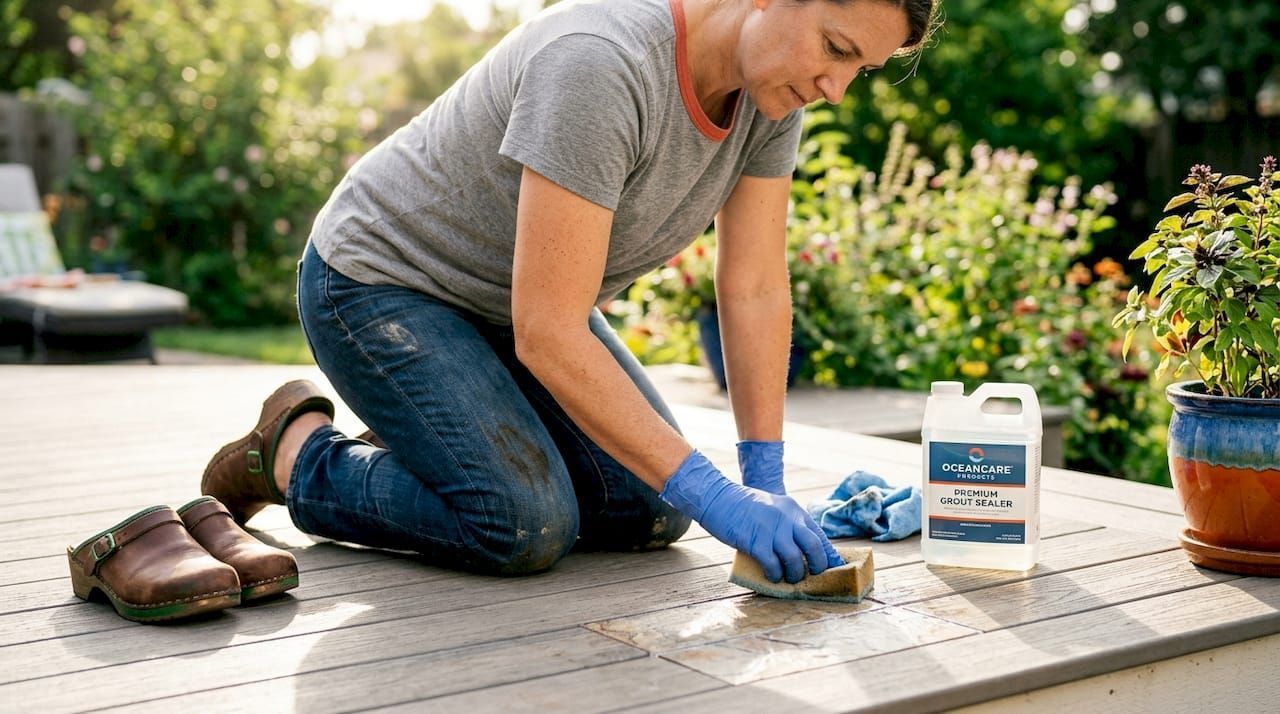
- Apply in thin, even coats with a brush, roller, or low-pressure sprayer, working the sealer into the surface rather than pooling it on top.
- Wipe off excess sealer within the manufacturer's recommended window, typically 5 to 15 minutes, before it hazes on the surface.
- Allow full cure time before exposing the surface to water or foot traffic. Even fast-curing water-based sealers need several hours to reach full performance.
- Schedule reapplication on a calendar reminder. Water-based sealers need reapplication more often, typically every 1 to 2 years for wet areas like pool surrounds.
Pro Tip: Do the water bead test before reapplying: drop a few teaspoons of water on the sealed surface. If it beads into a sphere, the sealer is still active. If it soaks in within 60 seconds, it is time to reseal.
For a complete maintenance approach, the eco-friendly pool tile maintenance checklist walks through seasonal care tasks that keep your sealer working longer between applications.
Decoding labeling and certifications: how to identify genuine biodegradable sealers
Knowing what authentic eco-labels and data to look for empowers you to select sealers you can trust.
Greenwashing is real in the sealer market. A product with a green leaf graphic and the word "natural" on the label could contain 90% petroleum-derived ingredients and still make those claims legally. Genuine biodegradable sealant types back their claims with third-party data, not just marketing language.
The certifications worth looking for:
- USDA BioPreferred Program : Certifies a verified minimum percentage of biobased content, tested by an independent lab. The percentage is disclosed on the label.
- EN 16640:2017 : A European standard for measuring biobased carbon content using radiocarbon analysis. Products meeting this standard, like some biobased hybrid sealants, disclose verifiable biobased carbon percentages and include environmental product declarations.
- Environmental Product Declarations (EPDs) : Independently verified documents showing a product's life cycle environmental impact, from raw material sourcing through manufacturing and disposal.
- GreenSeal or EcoLogo : North American third-party certifications that evaluate overall environmental and health performance.
| Certification | What it verifies | Region |
|---|---|---|
| USDA BioPreferred | Biobased content percentage | USA |
| EN 16640:2017 | Biobased carbon via radiocarbon testing | Europe/International |
| Environmental Product Declaration | Full life cycle environmental impact | Global |
| GreenSeal | Health and environmental performance | North America |
Red flags to watch for on labels:
- "Eco-friendly" with no supporting data or certification
- "Natural ingredients" without disclosing what percentage
- "Biodegradable formula" with no mention of testing standards or conditions
- No VOC disclosure on a product claiming to be environmentally safe
The sealer certifications explained resource digs further into how these standards apply specifically to stone and tile products for home use.
Our take: "biodegradable" should be the floor, not the selling point
After working closely with homeowners and property managers who maintain pools, outdoor stone, and natural tile, we have seen one mistake repeated more than any other: treating a biodegradable label as the finish line rather than the starting point. Choosing a sealer because it says "biodegradable" on the front is like buying food because the package says "contains no arsenic." It is a baseline, not a distinction.
The more useful question is this: does this sealer protect my surface effectively, keep my family and pool water safe during application, and minimize unnecessary chemical load in my home environment? A water-based, low-VOC, plant-derived sealer that is properly certified and matched to your surface porosity will almost always outperform a vaguely "eco" product chosen on marketing alone.
We also want to push back gently on the idea that biodegradable products always underperform conventional ones. This was true a decade ago. Today's best biodegradable sealers, properly applied to the right surfaces, deliver protection comparable to traditional sealers for most residential applications including pool tiles and natural stone. The reapplication timeline is shorter. That is a real trade-off. But for most homeowners sealing a pool surround or a kitchen stone countertop, resealing every one to two years as part of routine maintenance is not a burden. It is good practice regardless of which product category you choose.
Protect your surfaces with the right eco-friendly sealer
Choosing a genuinely effective, eco-responsible sealer should not require a chemistry degree.
At Oceancare Store, we specialize in plant-based surface sealers built for pool tiles, natural stone, grout, and outdoor hard surfaces. Every product in our catalog is selected for verified environmental credentials and real-world performance. Whether you are sealing travertine pool coping, a slate bathroom floor, or outdoor limestone pavers, we can match you to a water-based, low-VOC sealer that protects your surfaces and your household. Explore our full range of biodegradable cleaners, protectors, and sealers to find exactly what your surfaces need.
Frequently asked questions
Is biodegradable the same as non-toxic for sealers?
No. Biodegradable means a sealer's components break down under specific environmental conditions, but the product may still contain chemicals that irritate skin or airways during use. Experts focus more on VOC emissions and application behavior than biodegradability alone when assessing health safety.
Do biodegradable sealers decompose in landfills?
Often not fully. Biodegradability is disposal-environment-dependent and requires moisture, oxygen, and microbial activity that many landfills cannot reliably provide, so breakdown may be incomplete or very slow.
How often should I reapply water-based biodegradable sealers?
Plan on reapplying water-based sealers every two years for most surfaces, compared to oil-based sealers that can last up to six years. High-traffic or wet areas like pool coping may need attention closer to the one-year mark.
Are biodegradable sealers effective on pool tiles and natural stone?
Yes. Water-based penetrating sealers designed for eco-friendly performance reduce water absorption and staining on pool tile and natural stone when surface prep is done correctly and reapplication intervals are respected.

