
Avoid Overbuying Sealer: Coverage, Coats and Low VOC Tests for Homeowners
Most sealers cover somewhere between 100 and 1,500 square feet per gallon, and the gap between those numbers comes down almost entirely to porosity. Dense granite or polished porcelain sits at the high end; porous travertine, sandstone, or unglazed grout eats sealer fast and sits at the low end. The coat rule is simpler than most labels make it sound: penetrating sealers usually need one coat on dense stone and more coats on porous stone, while topical, film-forming sealers often require several thin layers regardless of density. If you want eco-friendly, low-VOC options built around this exact logic, sealer lines from specialized suppliers are a solid place to start comparing.
TL;DR:
- Dense, non-porous stone typically requires only one coat of penetrating sealer, while porous stone like sandstone or travertine often needs two coats applied wet-on-wet.
- Coverage per gallon varies widely, from 100 square feet for porous surfaces to 400 square feet for dense stone, influenced by surface texture, application method, and humidity.
- Proper surface preparation, including thorough cleaning and testing with water drops, is crucial to achieve even coverage and avoid uneven sealing.
- Water-based, low-VOC sealers are safest for indoor use, especially in kitchens and bathrooms, while solvent-based formulas are better for dense, heavily used stone.
- Resealing intervals depend on surface type, ranging from every 6 months for porous stone to up to five years for dense granite floors.
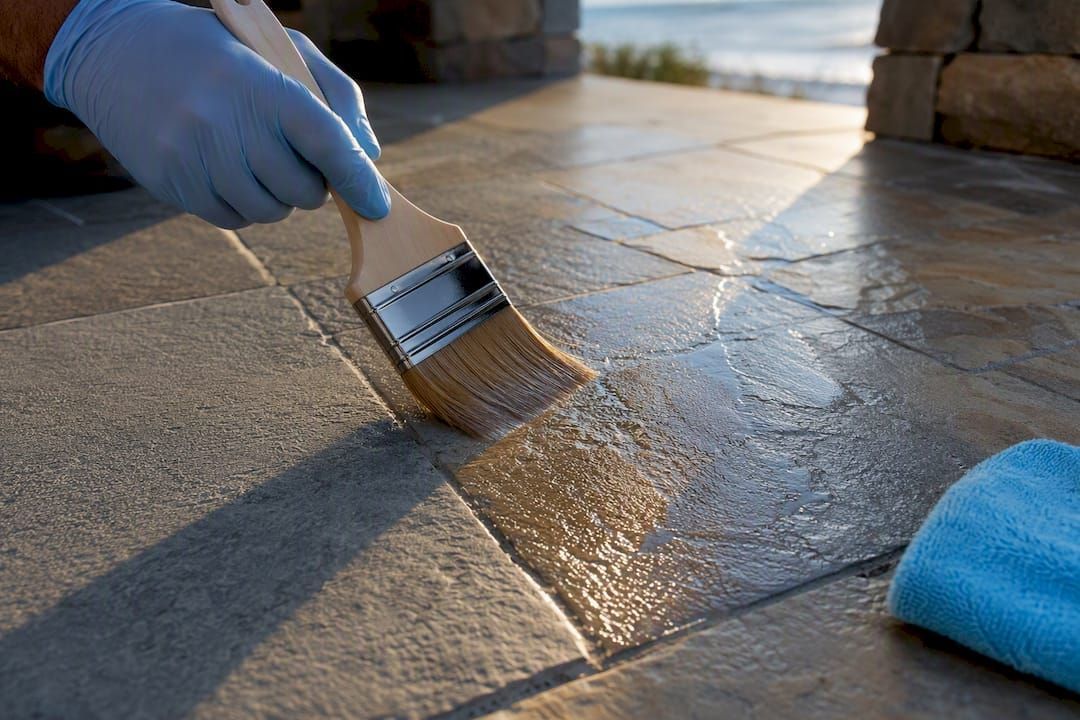
Table of Contents
- What's the Difference Between Penetrating and Topical Sealers?
- How Much Sealer Do You Need Per Gallon?
- How Many Coats of Sealer Do You Actually Need?
- How Do You Prep and Apply Sealer for Even Coverage?
- How Long Does Sealer Take to Cure, and When Should You Reseal?
- What Does "Eco-Friendly Sealer" Actually Mean?
- What I've Learned Watching Homeowners Get This Wrong
- Get a Penetrating Sealer Built for This Exact Job
- Sources
- FAQ
What's the Difference Between Penetrating and Topical Sealers?
Penetrating sealers, sometimes called impregnating sealers, soak into the pores of stone, tile, or grout and block water and oil without changing how the surface looks. Topical sealers sit on top and form a film, which can add sheen and depth of color but wears down faster under foot traffic or pool chemicals, according to Defusco Industrial Supply's application guide.
Carrier chemistry matters just as much as the sealer type. Water-based formulas run lower in VOCs and are easier to work with indoors, while solvent-based versions tend to penetrate deeper into dense stone but demand more ventilation, per DG Floors' sealer guide.
At the molecular level, silane and siloxane behave differently. Silane penetrates dense substrates more deeply, while siloxane handles porous, cementitious materials better, and many manufacturers blend the two for mixed-material facades, according to BuildMat Insight's technical review.
- Penetrating sealers : best for countertops, floors, and pool copings where you want zero appearance change.
- Topical sealers : better suited to decorative surfaces where a slight sheen is welcome.
- Water-based, low-VOC formulas : the safer default for kitchens, bathrooms, and pool-adjacent areas.
- Solvent-based formulas : reserved for very dense or heavily used stone that needs maximum penetration.
If you're unsure which chemistry matches your surface, a homeowner's guide to sealer compatibility walks through matching product type to stone type before you buy anything.
How Much Sealer Do You Need Per Gallon?
Coverage numbers on sealer labels look precise, but they're really a range that depends on how thirsty your surface is. Dense natural stone typically covers 250 to 400 square feet per gallon, manufactured stone veneer runs 150 to 250 square feet per gallon, and porous limestone or sandstone drops to 100 to 150 square feet per gallon, based on BuildMat Insight's coverage data. Some products, like Aqua Mix's Enrich 'N' Seal, list a coverage window as wide as 500 to 1,500 square feet per gallon on their own technical data sheet, which tells you just how much surface texture and application method swing the real number.
| Substrate | Typical coverage (sq ft/gal) |
|---|---|
| Dense granite or polished stone | 250–400 |
| Manufactured stone veneer | 150–250 |
| Grout and standard tile | 150–250 |
| Porous limestone, sandstone, travertine | 100–150 |
Three variables push actual coverage up or down: surface texture (honed vs. polished), applicator choice (sprayer vs. brush vs. lambswool pad), and ambient temperature or humidity during application.
Here's a quick way to estimate before you order:
- Measure your square footage. A 200 square foot floor with medium porosity (think honed travertine) lands in the 150 to 250 sq ft/gal range.
- Divide the total area by the low end of that range to find your minimum gallons needed, and buy slightly more to cover a second coat if the surface tests porous.
- Before committing the whole job, apply sealer to a 10 square foot mock-up area and time how long it takes to use one measured cup. That gives you a real coverage rate for your surface, not the label's best-case number, a step BuildMat Insight's specs recommend specifically because published ranges vary so much by texture.
For a deeper breakdown of the math, Oceancarestore's guide to sealer coverage per gallon covers a few more edge cases, including irregular stone shapes and heavily grouted tile fields.
How Many Coats of Sealer Do You Actually Need?
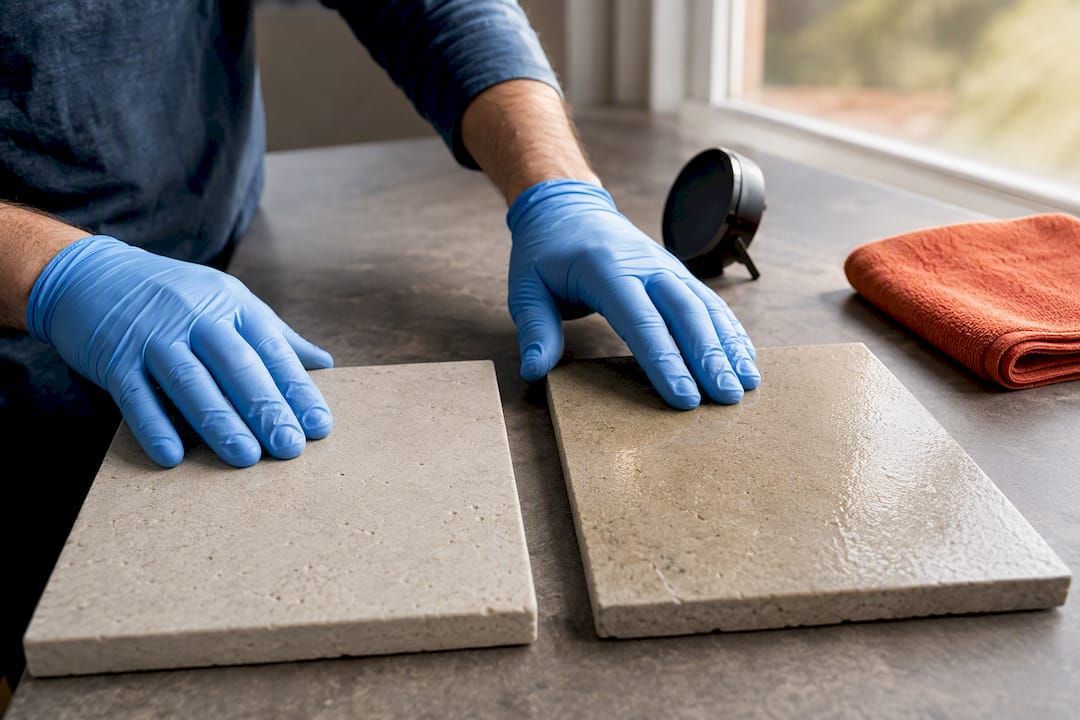
Coat count tracks porosity more than anything else. Dense, tight-grained stone often needs just one coat of a penetrating sealer, while porous stone, unglazed tile, or grout usually needs two.
- Dense granite, marble, or polished porcelain : one coat of penetrating sealer is typically enough.
- Porous travertine, sandstone, or textured grout : plan for two coats, applied wet-on-wet if the first coat absorbs fully within the dwell window.
- Topical, film-forming sealers : often go on in two or three thin coats no matter the substrate, since each layer builds the film gradually.
- Wet-on-wet timing : if the surface is still visibly absorbing sealer after the manufacturer's dwell time (commonly 5 to 20 minutes), apply the second coat immediately rather than waiting for a full cure, per Dynamic Stone Tools' application guide.
Once the final coat cures, confirm it worked with a water-drop test: a few drops that bead up and sit for five minutes without darkening the stone mean the seal is doing its job.
Pro Tip: If you're not sure whether your second coat actually needs to go on wet-on-wet, check the surface 10 minutes after your first pass. If it still looks matte and thirsty instead of glossy, that's your cue to recoat before it dries.
How Do You Prep and Apply Sealer for Even Coverage?
Uneven coats almost always trace back to two things: dirty surfaces or rushed drying. Fix those two variables and most application problems disappear.
- Clean thoroughly with a stone-safe, pH-neutral cleaner, then let the surface dry completely. Even slight residual moisture from wet polishing or humid weather blocks penetration, according to Defusco's application guide, so give it at least 24 hours where possible.
- Choose an applicator suited to the job. A lambswool pad or sprayer works well for large floors; a brush gives better control on grout lines and vertical surfaces.
- Work in small sections and keep the surface visibly wet for the manufacturer's full dwell time, rather than spreading a thin coat and moving on too fast.
- Buff or wipe away excess sealer before it starts to haze on the surface. This step matters more than people expect, since sealer that can't penetrate just cures into a film that's harder to remove than an extra coat would have been.
- If the surface still looks dry or absorbs quickly, apply a second thin coat while the first is still workable.
- Hand off large jobs, heavily porous stone, or tricky vertical surfaces (like a pool coping edge) to a professional applicator rather than risking an uneven finish across an expensive floor.
Pro Tip: Set a kitchen timer the moment you start each section. Guessing at dwell time is the single most common reason coats end up uneven.
For the complete walkthrough with photos and troubleshooting notes, see Oceancarestore's step-by-step surface sealing guide.
How Long Does Sealer Take to Cure, and When Should You Reseal?
Most sealers need 24 to 72 hours to cure fully, and you should keep foot traffic and standing water off the surface during that window. Check your work with low-angle lighting to spot any hazy patches, then run the water-drop test again: consistent beading means the seal succeeded.
- Countertops and grout : reseal every 1 to 2 years depending on use.
- Dense granite floors : can go 1 to 5 years between resealing.
- Marble : closer to every 6 to 12 months.
- Porous limestone or travertine, including pool copings : often needs resealing every 6 months, based on porosity data from Dynamic Stone Tools.
If haze does appear, a dedicated haze remover formulated for sealed stone will lift it without stripping the sealer underneath. Oceancarestore's pool tile and stone protection guide covers the specific inspection routine for pool-adjacent surfaces, where chlorine and constant moisture shorten reseal windows further.
What Does "Eco-Friendly Sealer" Actually Mean?
Labels like low-VOC, biodegradable, plant-based, and acid-free describe real formulation differences, not just marketing language. Low-VOC means fewer airborne solvents released during application and cure, which matters most in enclosed kitchens, bathrooms, or covered pool areas. Biodegradable and plant-based formulas break down without leaving persistent residues in soil or water, a real advantage around pool decks that drain into landscaping.
Solvent-based sealers still make sense for very dense stone that needs maximum penetration, but they call for open windows, fans, and a respirator rated for organic vapors. Water-based formulas carry lower VOCs and are generally easier to use safely indoors, a trade-off confirmed by DG Floors' sealer comparison.
- Ventilate the space and wear gloves and eye protection regardless of which chemistry you choose.
- Dispose of excess sealer and rags according to local hazardous waste rules, not down a drain.
- Once sealed, clean with pH-neutral products only. Harsh acidic cleaners strip sealer prematurely and shorten your reseal interval.
What I've Learned Watching Homeowners Get This Wrong
The mistake I see most often isn't choosing the wrong sealer. It's skipping the water-drop test and the 10 square foot mock-up, then discovering halfway through a job that coverage is nowhere near what the label promised. Eco-friendly, low-VOC formulas perform just as well as harsher alternatives when you respect dwell time and porosity, but they punish guesswork the same way any sealer does. Test first, coat second.
Get a Penetrating Sealer Built for This Exact Job
If porosity is the variable that decides coverage and coat count, a penetrating, low-VOC sealer gives you the most predictable results across stone, tile, and grout without changing how the surface looks or off-gassing indoors. That's the gap Oceancarestore's High Performance Penetrating Sealer is built to close: plant-based, low-VOC chemistry designed to soak in rather than sit on top, so you get consistent coverage whether you're sealing a kitchen counter or a pool coping edge.
Browse the full Stone & Grout Sealers lineup to match a formula to your surface, or check the Pool Tile Maintenance Products collection if your project includes pool-adjacent stone or tile. Pair either with a pH-neutral cleaner to protect your reseal investment, and place your order before your next weekend project.
Sources
FAQ
How Many Coats of Sealer Should I Apply?
Dense stone typically needs one coat of penetrating sealer, while porous stone, grout, and travertine usually need two, applied wet-on-wet if the first coat is still absorbing. Topical, film-forming sealers often require multiple thin coats regardless of porosity.
How Much Sealer Do I Need for 200 Square Feet?
For medium porosity stone in the 150 to 250 sq ft/gal range, one gallon covers close to your entire 200 square foot area, but running a 10 square foot mock-up first confirms the real rate for your specific surface before you buy.
How Do I Know If My Sealer Coat Was Uneven?
Check with low-angle lighting for shiny or hazy patches, then run a water-drop test across several spots. Consistent beading everywhere means an even seal; inconsistent darkening points to spots that need a touch-up coat.
What's the Best Sealer for Coverage on Porous Stone?
A penetrating, low-VOC sealer generally gives the most reliable coverage on porous stone like travertine or sandstone, since it soaks in rather than sitting on the surface. Oceancarestore's Stone & Grout Sealers line is built specifically for this kind of porous, moisture-prone application.
Does Oceancarestore List Sealer Prices Online?
Current pricing for Oceancarestore's sealer and cleaner lines is available directly on the Stone & Grout Sealers page rather than published separately.

