
Homeowners: Keep Travertine Showers Pristine With pH Neutral Care
The safest way to clean a travertine shower is with a pH-neutral stone cleaner, or a tiny drop of mild dish soap, applied with a soft cloth or nylon brush and followed by a thorough rinse and a full dry. Never reach for vinegar, bleach, or ammonia. Stubborn mineral buildup calls for a poultice or an acid-free calcium releaser instead of a standard descaler.
TL;DR:
- Use only pH-neutral stone cleaners, mild dish soap, and soft tools to avoid etching the travertine surface, and never apply acids like vinegar or lemon juice.
- Reseal the travertine every 12 to 24 months and test the seal regularly by droplet water tests to prevent moisture and stain penetration.
- Deep-clean weekly by rinsing and drying thoroughly after applying a neutral cleaner to prevent mineral buildup and mold growth.
- Address stubborn stains with gentle, repeated treatments rather than stronger, damaging chemicals or scrubbing pressure.
- Maintain good daily habits like squeegeeing and venting to extend the life of the seal and keep the surface looking fresh.

Table of Contents
- Which Cleaners and Tools Are Safe for a Travertine Shower?
- How Do You Deep-Clean a Travertine Shower Each Week?
- How Do You Remove Soap Scum, Hard Water Stains, and Mold Safely?
- Caring for Grout, Pits, and Tumbled Travertine
- Sealing a Travertine Shower: Sealer Type, Testing, and Timing
- Small Daily Habits That Keep a Travertine Shower Looking New
- Building a Safe Travertine Care Kit
- What Most Advice Gets Backwards About Travertine Care
- Where to Find Safe Products for Your Travertine Shower
- Sources
Which Cleaners and Tools Are Safe for a Travertine Shower?
Travertine is a form of limestone, built from calcium carbonate. Any acid that touches it starts a chemical reaction that eats into the surface, leaving dull, etched patches that no amount of polishing fixes. That's the whole reason product selection matters more here than on ceramic tile or porcelain.
Stick to products designed for natural stone, and keep the rest of your cabinet away from the shower entirely.
Safe to use:
- A pH-neutral stone cleaner made for travertine or marble
- An impregnating sealer for routine reapplication
- A small amount of mild dish soap diluted in warm water, for occasional light cleaning
Never use:
- Vinegar, lemon juice, or any citrus-based cleaner
- Bleach or ammonia
- Descalers or bathroom cleaners containing acids
- Green scrub pads, steel wool, or metal scrubbers
- Melamine foam pads (the kind sold as "magic" erasers), since repeated use micro-abrades the sealer and dulls the finish over time
Keep a small kit on hand: microfiber cloths, a squeegee, a soft nylon brush, a white nylon scrub pad (never green or black), and an old soft toothbrush for grout lines. None of these will scratch the stone even when you're scrubbing at full effort.
How Do You Deep-Clean a Travertine Shower Each Week?
A weekly routine keeps buildup from ever getting the chance to set. Here's the order that works without stressing the stone:
- Clear the shower. Remove bottles, razors, and bath mats so you can see every surface, including the corners where soap scum hides.
- Test first. Dab your cleaner on a hidden spot, like behind a shelf bracket, and wait a few minutes to confirm it doesn't discolor the finish.
- Ventilate. Crack a window or run the exhaust fan before you start. Some stone cleaners have a mild scent that lingers in an unventilated bathroom.
- Apply and let it sit. Spray a pH-neutral cleaner or diluted dish soap over the surface and give it two to three minutes of dwell time. Don't let it dry on the stone.
- Agitate gently. Work the soft nylon brush in small circles over soap scum or grime. No hard pressure needed. Travertine's texture does most of the work once the cleaner has loosened the residue.
- Rinse completely. Any leftover soap film attracts dirt fast, so rinse until the water runs completely clear.
- Dry it. Squeegee the walls and floor, then wipe corners and the shower door track with a microfiber towel.
Rinsing and drying aren't optional steps you can skip when you're in a hurry. Leftover moisture is what lets mineral deposits crystallize on the surface, and leftover soap film is what turns hazy over months of use.
Pro Tip: Keep a squeegee hanging inside the shower. If it takes ten extra seconds, you'll actually do it every time. If it's stored under the sink, you won't.
If you notice cloudy patches that won't lift no matter how long you dwell the cleaner, or dull spots that look etched rather than dirty, stop treating it yourself. That's a job for a stone restoration professional, not another round of scrubbing.
How Do You Remove Soap Scum, Hard Water Stains, and Mold Safely?
Each of these problems has a specific, stone-safe fix, and none of them involve acid.
Soap scum responds well to a pH-neutral cleaner with a few minutes of dwell time and a soft brush. If it doesn't fully clear on the first pass, repeat the process rather than scrubbing harder. Travertine's surface is softer than ceramic tile, so persistence beats pressure every time.
Hard water and calcium deposits are trickier because the instinct is to reach for a descaler, and that instinct is wrong here. Standard descalers are acid-based and will etch the stone on contact. Instead:
- Try an acid-free calcium releaser formulated for natural stone
- For thicker buildup, apply a poultice and let it draw the deposit out over 24 to 48 hours, per BuildDirect's stone care guidance
- Test a small area first, then repeat the treatment if the deposit is heavy rather than escalating to something stronger
Mold usually shows up in grout lines before it touches the stone itself. A stone-safe mold cleaner is the first choice. If mold keeps coming back across a large area, that points to a ventilation problem, and it's worth calling in a professional rather than fighting it monthly.
Caring for Grout, Pits, and Tumbled Travertine
Grout and textured travertine need a different touch than smooth, honed tile. A baking-soda paste worked into grout lines with an old toothbrush lifts grime without introducing anything acidic. Move in short strokes along the line rather than scrubbing across it.
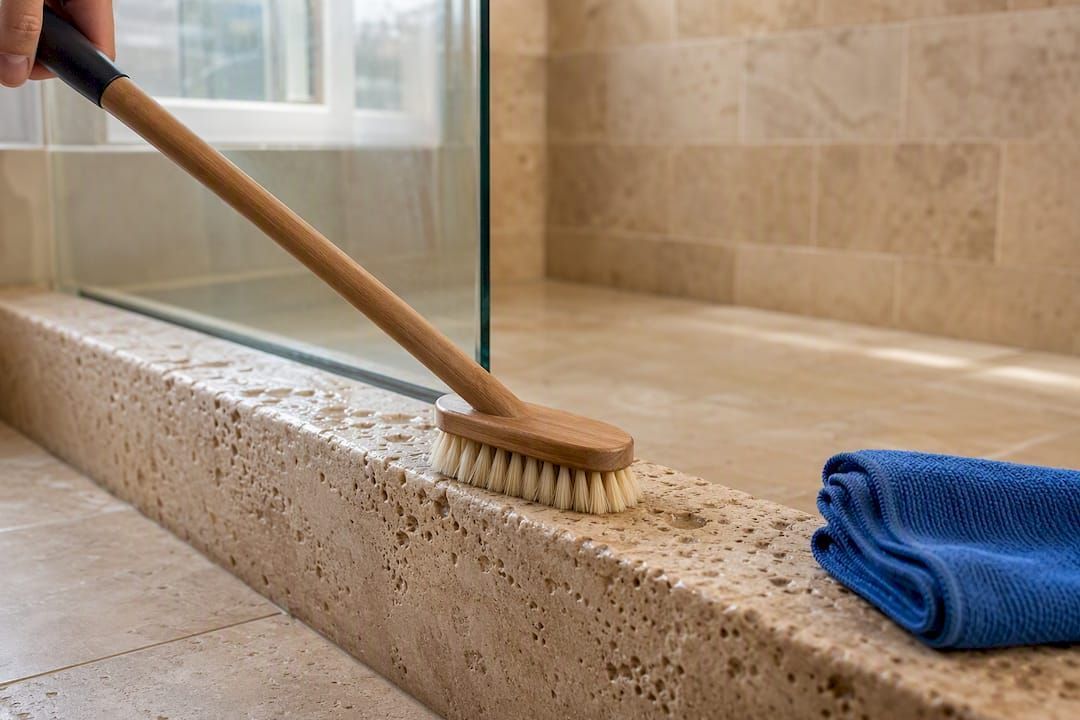
Tumbled travertine, with its rougher, pitted texture, traps dirt in ways honed tile never does. A soft, long-handled brush reaches into those low spots better than a cloth. If pits have grown noticeably deeper or are collecting standing water, filling them during your next reseal is worth discussing with a stone specialist.
Steam cleaners can help occasionally, but use them sparingly. Heat and moisture can force their way into grout and pitting filler with repeated exposure, so keep the nozzle moving and never let it sit in one spot.
Sealing a Travertine Shower: Sealer Type, Testing, and Timing
An impregnating, or penetrating, sealer is the right call for a shower environment. Unlike a topical sealer that sits on top of the stone, an impregnating sealer soaks into the pores and repels water from within, which lets the stone breathe while still resisting moisture. That matters in a wet room where trapped moisture behind a topical coating can cause its own problems.
Checking whether your seal is still doing its job takes thirty seconds: drip a few drops of water onto a dry section of stone and watch what happens.
| What you see | What it means |
|---|---|
| Water beads up and sits on the surface | Seal is intact, no action needed |
| Water darkens the stone or absorbs within a minute | Seal has worn thin, reseal soon |
| Water absorbs almost instantly | Stone is unprotected, reseal now |
Most travertine showers need resealing every 12 to 24 months, though heavy daily use, hard water, or a history of harsh chemical cleaners can shorten that window considerably. If you've ever used bleach or an acidic cleaner on the stone, check your seal more often than the standard interval suggests.
Small Daily Habits That Keep a Travertine Shower Looking New
The pros treat squeegeeing as more effective at preventing buildup than any chemical cleaner, and the logic holds up: minerals can't crystallize on a surface that's already dry. A few habits, done consistently, cut your weekly cleaning time way down.
- Squeegee the walls and floor after every shower, not just the ones you remember to do
- Towel-dry corners, niches, and the shower door track where water pools
- Run the exhaust fan for 20 to 30 minutes after showering to clear humidity
- Store bottles on a tray instead of directly on the stone to avoid rust rings or staining
- Switch to a liquid body wash if you're using bar soap, since bar soap is the bigger contributor to scum buildup
- Give the shower a quick wipe with a pH-neutral spray once a week to stay ahead of buildup
Pro Tip: Set your exhaust fan on a timer switch. It's a five-minute fix that guarantees the fan runs long enough to matter, even if you forget to turn it off.
Building a Safe Travertine Care Kit
Matching the right product to the job keeps you from reaching for something too aggressive out of frustration. A daily pH-neutral cleaner handles routine soap scum and light grime. Save an intensive cleaner or an acid-free calcium releaser for buildup that the daily product can't touch, and use it only as often as needed rather than as a default.
Sealer application matters as much as the product itself. Clean the surface first, let it dry completely for 24 hours, then apply the sealer evenly and wipe away any excess before it cures. Skipping the dry time is one of the most common reasons a fresh seal fails early.
A practical kit covers four bases:
- Daily pH-neutral cleaner for weekly maintenance
- Intensive stone cleaner for periodic deep cleans
- Poultice material or acid-free calcium releaser for mineral stains
- Impregnating sealer for the 12 to 24 month reseal cycle
Squeegeeing after every shower remains the single habit stone-care professionals point to most often when asked what actually prevents damage before it starts.
What Most Advice Gets Backwards About Travertine Care
Most travertine advice treats cleaning and sealing as two separate chores. They're not. A worn seal makes every cleaning mistake worse, because unprotected stone absorbs whatever you put on it, including cleaners that are otherwise mild. A well-sealed shower forgives a lot more.
The bigger blind spot is that homeowners tend to escalate when a stain doesn't lift right away. Reach for something stronger, scrub harder, try a descaler "just this once." That instinct is exactly backwards with a stone this reactive. The right response to a stubborn stain is to repeat the gentle method, not upgrade to a harsher one.
If you take one thing from this: sealing isn't a chore you do once during installation and forget about. It's the maintenance step that makes every other habit, squeegeeing, rinsing, weekly wiping, actually pay off. A cleaning routine without a maintained seal is fighting an uphill battle it can't win long term.
Where to Find Safe Products for Your Travertine Shower
Most of the acid-free, pH-neutral products this kind of routine calls for are hard to find on a standard hardware store shelf. There are eco-friendly, low-VOC cleaners and sealers formulated specifically for natural stone that help you avoid choosing between a harsh generic bathroom cleaner and something too weak to work.
For daily upkeep, the pH Neutral Tile & Stone Cleaner handles routine soap scum without any risk to the stone's finish. When hard water deposits build up, the Calcium Releaser removes them without the acid found in standard descalers. And when it's time to reseal, the Stone & Grout Sealers line covers the impregnating sealer type this article recommends for wet rooms.
If you're starting from scratch, browse the stone and grout sealer options and pick the daily cleaner that matches how often your shower gets used. That's the whole kit, built once, refilled as needed.

