
Avoid Etching When Cleaning Glass Pool Tile, Pool Owners: Low VOC Care
The safest way to clean glass pool tile is to start with nonabrasive, glass-safe cleaners and soft tools, working from a quick weekly wipe up through progressively stronger treatments only as needed. Bonded gray scale that resists two gentle attempts should go to a professional for salt or soda blasting rather than harsher acid or scrubbing. Your first move: do a small spot test with a mild cleaner on one tile before treating the whole waterline.
TL;DR:
- Regularly inspecting and gently cleaning waterline deposits prevent the need for aggressive chemical treatments or professional blasting.
- Using soft, non-abrasive tools like microfiber cloths and non-scratch pads is essential to avoid damaging or dulling glass tile surfaces.
- Spot-testing mild, glass-safe cleaners before full application helps prevent etching or discoloration on delicate glass tiles.
- Professional restoration with controlled blasting or acid washes is necessary only for stubborn, widespread, or deeply etched deposits that resist DIY methods.
- Maintaining stable water chemistry through regular testing of pH, alkalinity, and calcium levels significantly reduces the frequency of scale buildup on glass pool tiles.
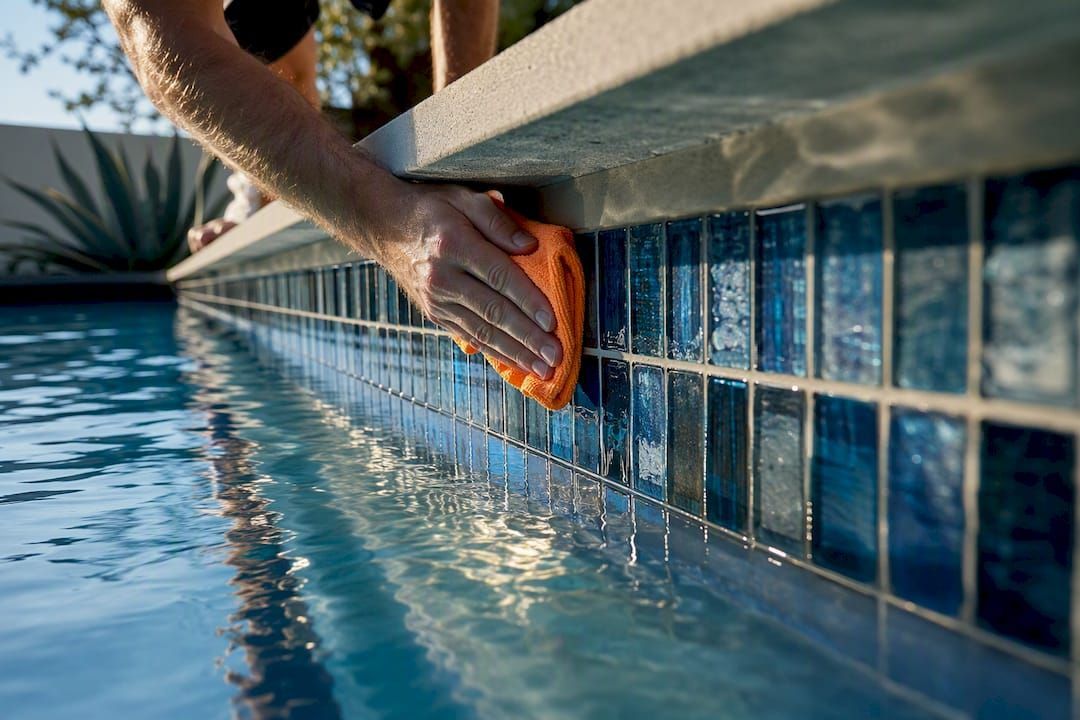
Table of Contents
- Quick Action Checklist for Cleaning Glass Pool Tile
- Which Tools and Cleaners Are Safe for Glass Tile?
- How Do You Clean Glass Pool Tile at Every Stage of Buildup?
- When Do You Need Professional Glass Tile Restoration?
- Which Water Chemistry Ranges Prevent Glass Tile Scale?
- Handling Cleaning Chemicals Safely and Eco-Consciously
- What Consistent Tile Care Actually Prevents
- How Oceancarestore Products Fit Into Your Cleaning Routine
- Sources
- FAQ
Quick Action Checklist for Cleaning Glass Pool Tile
Most glass tile problems start small: a thin waterline film, a little cloudiness from sunscreen, maybe a faint white ring. Catch it early and you almost never need harsh chemistry or a contractor. Here's the sequence worth running through before you reach for anything stronger.
- Skim and rinse first. Clear debris and give the tile a plain water rinse. Half of what looks like "scale" is just surface grime that rinses right off.
- Wipe with a soft cloth. A microfiber cloth or non-scratch pad handles oily films and light dust without touching the glass surface itself.
- Spot-test a mild cleaner. Try a small, inconspicuous area with a diluted, glass-safe solution before treating the full waterline.
- Rinse and inspect. Look closely under good light. Glass tile hides both dirt and damage differently than ceramic, so a quick post-rinse check tells you whether to stop or escalate.
- Repeat weekly at the waterline , since that band takes the brunt of oils, sunscreen, and mineral deposits.
Build a small kit and keep it by the pool: soft cotton or microfiber cloths, a non-scratch scrub pad, a soft nylon brush for grout lines, and a bottle of glass-safe tile cleaner. A telescoping pole extends your reach for deeper sections without you climbing in with a bucket.
The habit that actually prevents most buildup isn't a product at all. It's removing body oils and sunscreen residue from the waterline before it has a chance to bond with mineral deposits and turn into a real cleaning project. Pro Tip: Wipe the waterline right after a pool party or a heavy swim day, while oils are still fresh. Once they bake into the glass surface under sun and heat, they're far harder to lift.
Which Tools and Cleaners Are Safe for Glass Tile?
Glass tile behaves nothing like ceramic or stone, and treating it with the same tools you'd use on grout or plaster is the single most common way homeowners scratch or dull the finish. Glass is a smooth, nonporous surface, but it's also softer than people assume when it comes to resisting abrasion.
Safe tools:
- Microfiber cloths for everyday wiping
- Non-scratch scrub pads (the kind rated safe for nonstick cookware)
- Soft nylon-bristle brushes for grout lines and textured trim
- A telescoping pole for waterline and deep-end reach
Safe cleaners:
- Glass-specific tile gels formulated for pool use
- Citric-acid-based descalers for light mineral film
- Enzyme degreasers for oily or sunscreen residue
- Diluted white vinegar and dish soap for very light staining only
What to avoid entirely:
- Pumice stones, which are designed for ceramic and will scratch glass
- Wire brushes or metal scouring pads of any kind
- Steel wool
- Muriatic acid left to sit for extended periods, even diluted
That last one deserves emphasis. Full-strength or long-dwell acid treatments are a common cause of permanent glass etching, and etched glass tile cannot be restored by cleaning. Once the surface is dulled at a microscopic level, only replacement fixes it.
Before applying any cleaner to a visible area, test it on one hidden tile, ideally below the waterline or in a corner behind a ladder. Apply a small amount, wait the manufacturer's suggested time, wipe, and check for any dulling, discoloration, or texture change. Coatings and finishes vary by manufacturer, so what's safe on one glass tile line isn't automatically safe on another.
How Do You Clean Glass Pool Tile at Every Stage of Buildup?
Not all buildup is created equal, and treating light haze the same way you'd treat rock-hard scale wastes effort at best and damages tile at worst. The right approach depends on what you're actually looking at.
Identify what you're dealing with first
Before picking a method, look closely at the deposit. White, crusty buildup that reacts to acid with light fizzing is usually calcium carbonate, which responds well to mild treatments. Gray, rock-hard deposits that don't fizz at all are typically calcium silicate, and household acids barely touch it. Oily, hazy films are usually sunscreen and body-oil residue rather than mineral scale at all, and they need a degreaser more than an acid.
Level 1: Light film or haze
- Rinse the area with plain water.
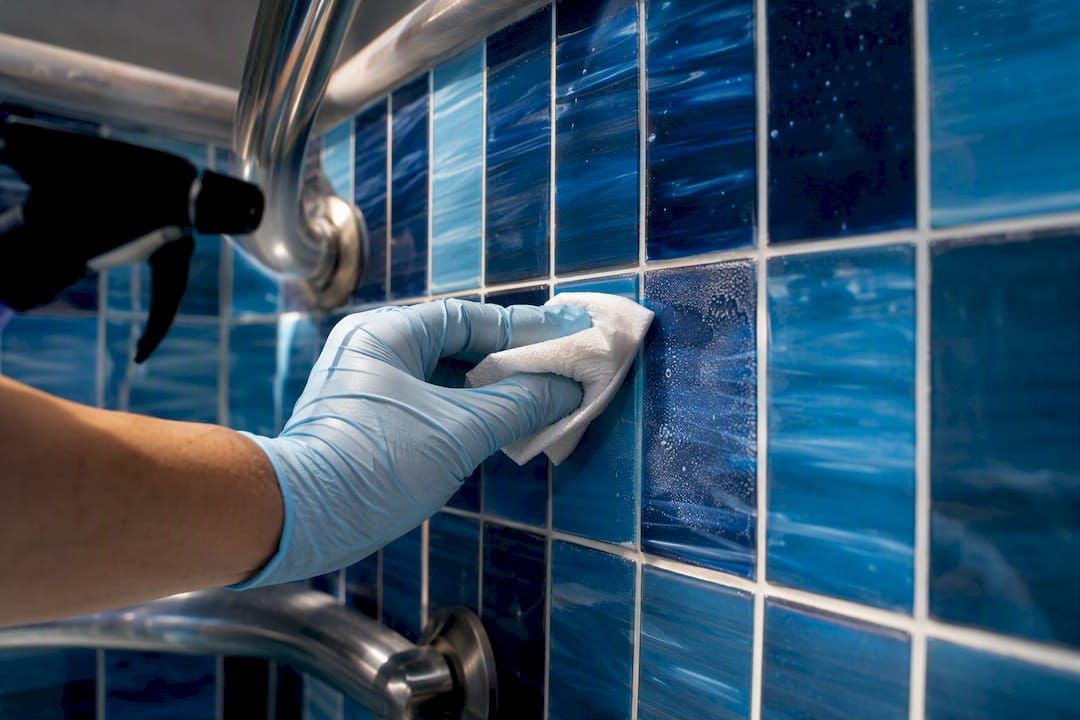
- Apply an enzyme cleaner or mild glass-tile cleaner directly to a soft cloth.
- Wipe in gentle, overlapping strokes rather than scrubbing hard in one spot.
- Rinse thoroughly and let dry to check results before deciding whether to repeat.
This handles the vast majority of routine waterline grime. If the tile looks clear and consistent afterward, you're done.
Level 2: Mild mineral film
- Mix a baking-soda paste (roughly three parts baking soda to one part water) or a diluted vinegar-and-dish-soap solution.
- Apply to the affected tile and let it sit for one to three minutes. No longer.
- Scrub gently with a soft nylon brush or non-scratch pad.
- Rinse well.
Keep that dwell time short. Progressive, patient cycles, apply, wait briefly, scrub gently, rinse, and repeat if necessary, consistently outperform a single aggressive treatment because they minimize the risk of etching while still lifting mineral film in stages.
Level 3: Moderate scale
- Switch to a glass-safe commercial calcium remover formulated specifically for pool tile.
- Apply according to the product's directions, then agitate gently with a nylon brush.
- Rinse, inspect, and repeat only if the label allows repeat applications the same day.
- If two careful attempts at this level don't shift the deposit, stop.
That last point matters more than it sounds. Lowering pool alkalinity and pH into a treatment range, then applying a liquid scale remover before brushing and running the filter, is a standard step for stubborn calcium, but it's a pool-wide chemistry adjustment, not a spot fix. If you're not comfortable managing that balance temporarily, or if the deposit is gray and hard rather than white and crusty, this is the point to call a professional instead of reaching for stronger acid.
Submerged tile vs. above-waterline tile
Above-waterline tile dries between swims, which means deposits there are usually oil and light mineral film you can treat with a cloth and spray cleaner in place. Submerged tile stays wet and often needs the pool partially drained or a wet vacuum and localized treatment, since commercial descalers diluted by pool water lose most of their effectiveness. Grout lines between glass tiles are more porous than the glass itself and can hold onto algae and mineral deposits longer. Treat grout with a slightly stronger dwell time than you'd use on the glass, but keep your brush soft. A stiff-bristle grout brush can still scuff the glass tiles bordering it.
When Do You Need Professional Glass Tile Restoration?
Some buildup simply isn't a DIY job, and pretending otherwise is how people end up with permanently dulled tile. Professional blasting, using salt, soda, or fine glass beads at controlled low pressure, is widely regarded as the safest restoration method for scale that won't respond to acid or scrubbing, because the media is soft enough not to scratch glass while still breaking the mechanical bond between the deposit and the tile surface.
Here's roughly how the main professional methods work:
- Salt or soda blasting uses a pressurized stream of soft, water-soluble media to lift bonded scale without abrading the glass underneath.
- Gentle professional acid washes use controlled-strength descalers (often sulfamic-acid-based) with strict, short dwell times, applied by someone trained to stop before etching starts.
- Bead or fine glass blasting works on very stubborn or underwater deposits where blasting equipment can be run below the waterline in a drained or partially drained pool.
You've likely crossed into pro territory if you're seeing gray, rock-hard calcium silicate that doesn't fizz with acid, scale covering large stretches of tile rather than isolated spots, deposits that persist underwater and not just at the waterline, or any tile that already looks hazy or etched from a previous DIY attempt.
Pro Tip: Ask any contractor you're considering three direct questions: how many pool-specific glass tile jobs have they done, are they insured for pool work specifically, and can they provide references you can actually call. A general pressure-washing company is not the same as a pool restoration specialist, and glass tile punishes that gap fast.
Get a written scope of work and, if offered, a warranty on the result before anyone starts blasting or acid-washing your tile.
Which Water Chemistry Ranges Prevent Glass Tile Scale?
Cleaning is reactive. Water chemistry is the part that actually stops you from needing to clean as often, and it's the piece most homeowners skip until scale is already visible.
- Test pH, total alkalinity, and calcium hardness on a regular basis rather than only when the water looks off.
- Keep calcium hardness in check monthly , since specialist guidance consistently links stable calcium levels to reduced scale formation on tile.
- Use a scale inhibitor as part of your routine chemical program, especially if your fill water is naturally hard.
- Filter fill water through a hose filter when topping off, since untreated tap water is often where excess calcium enters the pool in the first place.
- Choose shock products carefully. Some calcium hypochlorite shocks add calcium directly to the water with every dose.
- Rinse off before swimming to cut down on the sunscreen and body oil that bind with minerals at the waterline.
- Keep the water level consistent so the same narrow band of tile isn't repeatedly exposed and dried.
None of this is a big overhaul. It's closer to a fifteen-minute monthly habit that pays for itself the first time it saves you from a scale removal weekend. For a fuller breakdown of testing schedules and dosing, routine calcium-buildup prevention is worth reading alongside your regular maintenance checklist.
Handling Cleaning Chemicals Safely and Eco-Consciously
Even mild descalers deserve basic caution. Wear gloves and eye protection when mixing or applying anything beyond plain soap and water, and keep swimmers, kids, and pets out of the treatment area until you've rinsed thoroughly.
- Rinse runoff away from landscaping and don't let concentrated cleaner drain straight into planting beds.
- Store leftover product away from pool equipment, since some descalers can be corrosive to pumps and filters if splashed or spilled.
- Favor enzyme cleaners and plant-based descalers for routine work; they handle oils and light mineral film without the fumes or runoff concerns of harsher acids.
- Reserve stronger chemistry for genuine moderate-to-heavy scale, not as a default first step.
Plant-based, low-VOC options won't outmuscle bonded calcium silicate. For that tier, gentler chemistry paired with patience, or a professional blasting service, remains the better route.
What Consistent Tile Care Actually Prevents
Watching homeowners go through this cycle repeatedly, one pattern is impossible to miss: it's rarely the cleaning method that determines whether glass tile stays pristine for a decade or looks tired after three summers. It's whether water chemistry stayed stable in between cleanings. A pool that swings between low alkalinity one month and high calcium hardness the next will scale its tile no matter how gentle the cleaning product is.
The bigger mistake, though, isn't skipping maintenance. It's overcorrecting once scale finally shows up, reaching for muriatic acid or a wire brush because a milder cleaner "didn't work fast enough." Glass tile doesn't give you a warning stage between clean and etched. Once the finish dulls at a microscopic level, no amount of cleaning brings back the shine. Every escalation in this article exists precisely to keep you on the safe side of that line for as long as possible, and some plant-based, low-VOC formulas follow that same logic: protect the surface first, restore it gently second, and treat professional blasting as a last resort rather than a first instinct.
How Oceancarestore Products Fit Into Your Cleaning Routine
Once your tile is clean, keeping it that way is a different job than getting it there. Oceancarestore's Pool Tile Restorer is built for that moderate-scale stage this guide covers, a plant-based formula strong enough to lift bonded mineral film without the harsh acid dwell times that risk etching glass. Pair it with Glass & Tile Shield afterward to leave a protective layer that slows how fast oils and calcium re-bond to the surface, which means fewer weekends spent scrubbing the waterline all over again.
Work both into the rhythm already outlined above: the restorer during your moderate-scale treatment, the shield as a seasonal step once the tile is fully clean. If you're setting up a longer-term maintenance plan rather than a one-time fix, the Pool Tile Maintenance page lays out how to sequence cleaning, protection, and reapplication across a full season. Start there to figure out which products your specific tile and water conditions actually call for.
Sources
For deeper detail on descaling chemistry and professional restoration, see Swim University's calcium removal guide and M&M Pools & Spas' expert breakdown of glass tile cleaning. For ongoing routines, explore Oceancarestore's pool tile cleaning tips.
FAQ
What Is the Best Way to Clean Glass Pool Tiles?
Start with the gentlest effective method: rinse, wipe with a soft cloth and mild cleaner, then escalate only if needed to a short-dwell baking-soda paste or glass-safe commercial descaler. Reserve professional blasting for bonded gray scale that resists two careful attempts.
What Is the Best Cleaner for Glass Tile?
Glass-specific tile gels and citric-acid-based descalers are the safest reliable choices, with enzyme degreasers handling oily residue well. Avoid anything marketed for heavy-duty grout or ceramic use, since those formulas are often too abrasive for glass.
Does Glass Pool Tile Last?
Glass tile is durable and holds its color well for decades when cared for properly, but its finish is more scratch-sensitive than ceramic. Consistent water chemistry and gentle cleaning tools are what keep it looking new rather than the tile material itself.
Will a Magic Eraser Clean Pool Tile?
A magic eraser can lift light surface grime on some non-porous tile, but it isn't a substitute for a pool-specific descaler and can cause micro-abrasion on delicate glass finishes with repeated use. It's better treated as an occasional spot tool than a routine cleaning method.

