
Pool Owners: Reseal Coping Every 2–3 Years With Penetrating Eco Sealer
Yes, seal your pool coping, but the surface and the joint need two different products. Apply a penetrating silane/siloxane sealer to the stone or concrete surface itself, and use a flexible, pool-grade elastomeric sealant on the coping-to-deck joint. Never use one product for both jobs, and always let each cure fully before the pool sees traffic or water.
TL;DR:
- Use penetrating silane or siloxane sealers on the coping surface to effectively reduce water absorption without peeling or yellowing.
- Seal now if mineral staining or chalky, rough surfaces appear, but repair before sealing if cracks are wider than a coin or coping shifts underfoot.
- Reapply penetrating sealers every 2 to 3 years, monitoring bead tests to determine when resealing is necessary, especially in high UV or chlorine exposure.
- Always seal the coping-to-deck joint with flexible pool-grade polyurethane or polysulfide sealants, not rigid mortar or grout, to prevent cracking and ensure safety.
- Avoid using film-forming sealers outdoors, as trapped moisture causes peeling and hazing; switching to penetrating formulas offers a long-lasting, damage-resistant solution.
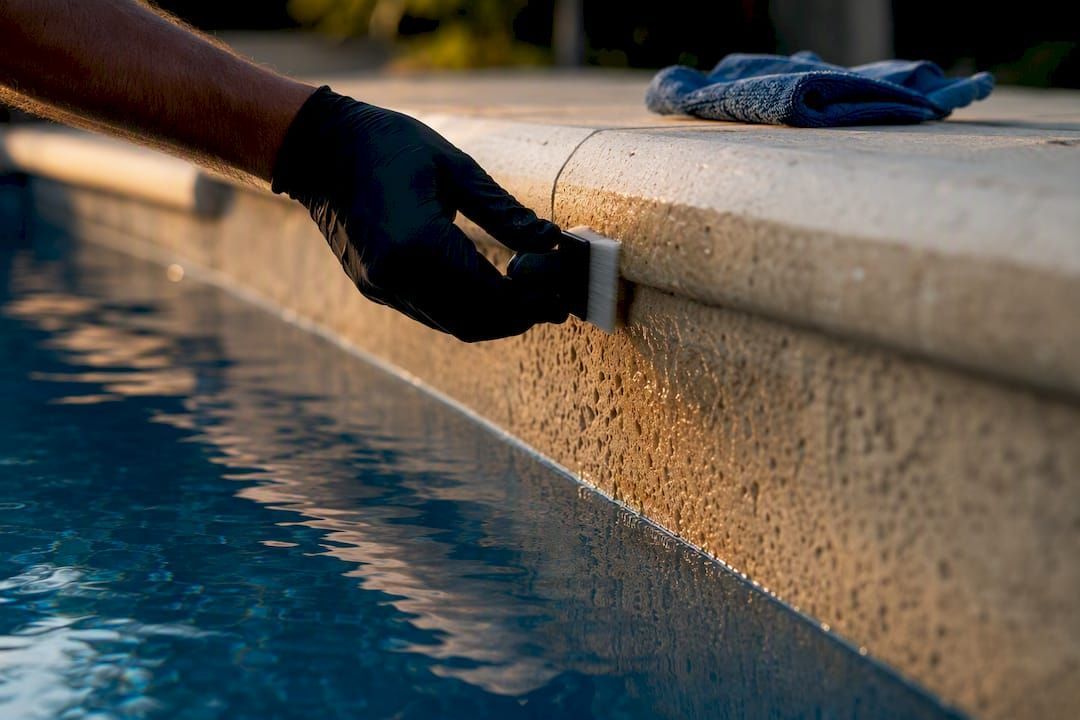
Table of Contents
- Quick Decision Checklist: When to Seal vs When to Repair First
- Which Sealer Type Actually Belongs on Pool Coping?
- How to Seal Pool Coping the Right Way
- Surface Sealer or Joint Caulk: Why the Difference Matters
- When Should You Reseal, and How Do You Know It's Failing?
- Why Sealed Coping Sometimes Fails Anyway
- Eco-Friendly Sealing Done Right
- DIY or Call a Pro? An Honest Take
- Get Your Coping Sealing Right the First Time
- Sources
Quick Decision Checklist: When to Seal vs When to Repair First
Sealing solves a moisture problem. It doesn't fix a structural one. Run through this before buying anything:
- Seal now if: water darkens the stone quickly, you see mineral staining, or the surface feels rough and chalky from years of sun and chlorine exposure.
- Repair first if: any coping piece rocks underfoot, you spot cracks wider than a coin edge, or efflorescence (that white, powdery mineral bloom) covers a wide stretch rather than one isolated spot.
- Test it yourself: splash a few drops of water on the coping. If it beads up, the surface still has protection. If it soaks in within seconds, it's time to reseal.
- Call a contractor if: the coping has visible movement, since loose or shifted pieces need to be reset before any sealer will hold. Professionals typically reset or replace failed coping rather than sealing over it.
Which Sealer Type Actually Belongs on Pool Coping?
Penetrating silane/siloxane sealers are the right call for most concrete and natural stone coping. They soak into the pores of the material and chemically bond there, cutting water absorption without leaving a film on the surface. That distinction matters more than most product labels let on.
Penetrating sealer performance is well documented. These formulas cut water absorption by roughly 90 to 95 percent when freshly applied, and because nothing sits on top of the stone, they don't peel, flake, or yellow the way surface coatings can.
Film-forming acrylics sit on the opposite end. They're easier to brush on and give an immediate wet look, but that same film is the problem outdoors. Acrylics tend to be less durable in exterior, pool-side exposure than silicone or polyurethane systems, and trapped moisture underneath them is a common cause of hazing and peeling.
Where the material matters:
- Travertine and marble: stick with penetrating sealers rated for natural stone. Film-formers can trap moisture inside the stone's natural voids and darken it permanently.
- Poured concrete coping: penetrating sealers work well and preserve the broom-finish texture pool builders rely on for slip resistance.
- Pavers: penetrating formulas keep the matte, textured look intact, while glossy topical sealers make wet pavers noticeably more slippery.
How to Seal Pool Coping the Right Way
- Clean thoroughly. Remove calcium deposits, algae, and efflorescence with a cleaner suited to the material. Rinse and let the surface dry completely, typically 24 to 48 hours depending on humidity.
- Strip old sealant if needed. Sticky or hazy residue from a prior film-forming product has to come off before a penetrator can bond. A stripper matched to that sealer chemistry works better than sanding.
- Prep the joints separately. Cut out any failed or rigid caulk from the coping-to-deck joint with a utility knife, and clean the channel of debris.
- Apply the surface sealer. Use a low-pressure sprayer or roller for large runs; a brush works for tight corners around skimmers and steps. Most penetrating sealers need two coats applied wet-on-wet, and any pooled excess should be wiped off within the timeframe printed on the label.
- Let it cure before reopening the pool area. Cure windows vary by product and weather, generally 24 to 72 hours, and manufacturers like Sika note that some substrates need a primer or activator before the sealant goes on.
- Seal the joint last, once the surface sealer has cured. Apply the elastomeric caulk in dry, moderate temperatures. Applying it in direct midday heat can cause skinning before the sealant fully sets.
Pro Tip: Test the water-drop check on a small hidden section before committing to a full reseal. If water still beads there, you may only need to touch up high-traffic zones instead of resealing the whole perimeter.
For a fuller walkthrough of tools and technique, Oceancarestore's step-by-step surface sealing guide covers application in more depth.
Surface Sealer or Joint Caulk: Why the Difference Matters
The coping-to-deck joint isn't decorative. It's a movement joint that lets the deck and the pool shell expand and contract independently without cracking. Filling it with rigid mortar or grout is one of the most common mistakes homeowners make, and it usually backfires within a season or two.
- Use pool-grade polyurethane or polysulfide sealants for most joints; both flex with seasonal movement and resist pool chemicals.
- Silicone sealants approved for pool use work well too, particularly around fixtures, though manufacturer specs should confirm chlorine resistance for the specific product.
- Choose a self-leveling formula for horizontal deck joints where a smooth, flush traffic surface matters, and a gun-grade elastomer for vertical or narrow joints.
- Match the sealant's rated movement capability to your joint width. Manufacturer joint-width tables exist for a reason.
Widespread joint failure, especially paired with cracking along the bond beam, isn't a caulking job — it's a serious safety concern discussed in Drowning in Swimming Pools: Legal Risks, Safety Norms, and Your Remedies. That's a call to a pool professional.
When Should You Reseal, and How Do You Know It's Failing?
Penetrating sealers on coping typically hold up for 2 to 3 years before reapplication, though intense sun exposure, heavy chlorine use, or a north-facing pool in constant shade will shift that window in either direction.
- Run the water-drop test every few months: beading means the seal is active, fast absorption means it's time to reapply.
- Note the date you last sealed somewhere you'll actually check it, a phone note works fine, since "a couple of years ago" is rarely accurate.
- Film-forming sealers, when used, tend to need touch-ups more often than penetrators because their surface film wears unevenly with foot traffic.
Why Sealed Coping Sometimes Fails Anyway
Most coping problems trace back to trapped moisture, not a bad product. Film-forming sealers used outdoors are especially prone to this because they seal moisture in rather than letting it breathe out, which often leads to peeling and hazing within a season or two.
- Hazing or a sticky film: usually means a topical sealer was applied over damp stone or in high humidity. Strip it and reapply once the surface is fully dry.
- Peeling in sheets: almost always a film-former reacting to trapped moisture underneath. Switching to a penetrating sealer on reapplication solves this permanently.
- Dark spots that won't dry: can indicate moisture migrating up from below, which sometimes points to a bond beam or plumbing issue rather than a surface problem.
Pro Tip: If a dark, damp patch keeps returning to the same spot no matter how many times you reseal, stop treating it as a sealing issue and get the bond beam checked.
Eco-Friendly Sealing Done Right
There are eco-friendly, biodegradable, plant-based, and low-VOC formulations suitable for pool tile, natural stone, and grout, which also apply to coping care. A low-VOC penetrating sealer gives you the same water-repelling chemistry as a traditional product with far less fume exposure during application, provided the label specifically states it's rated for exterior and pool-side use.
Before buying any sealer, check the label for:
- "Penetrating" or "impregnating" in the product description, not "topical" or "acrylic film."
- Explicit pool or exterior-exposure rating, since interior-only formulas won't hold up to chlorine and UV.
- Low-VOC or plant-based labeling if fume exposure around a backyard pool matters to your household.
- Compatibility with your specific coping material, listed clearly on the datasheet.
Oceancarestore's guide to how sealers protect pool tile and stone breaks down the chemistry further for readers who want the technical side.
DIY or Call a Pro? An Honest Take
Coping sealing is a reasonable weekend project when the coping is stable, the job covers a normal-sized patio, and the weather forecast gives you a dry 48-hour window. It stops being a DIY project the moment you see movement, cracking that spans multiple stones, or efflorescence covering more than a small patch.
Budget a full day for prep and application on an average backyard pool, plus real cure time before anyone swims. If a contractor quotes you without mentioning the joint separately from the surface, ask why. Those are two different scopes of work, and treating a movement joint and a porous surface as one job is exactly how coping fails early.
Get Your Coping Sealing Right the First Time
Most sealing failures homeowners deal with trace back to one thing: a topical product used where a penetrating one belonged. Oceancarestore's High Performance Penetrating Sealer is built around the exact chemistry this article recommends for coping, low-VOC, plant-based where possible, and formulated to soak into stone and concrete rather than sit on top of it.
Before you buy anything, check the label for a pool-rated exterior exposure claim and confirm it matches your coping material, whether that's travertine, marble, poured concrete, or pavers. If you're unsure whether your coping needs a cleaner first or is ready for sealer, Oceancarestore's cleaner versus sealer guide walks through that decision in under five minutes. When you're ready, head to the penetrating sealer page and check current stock for your square footage.
Sources
For readers who want the technical backing behind these recommendations:
- Concrete Coping: Complete Guide for Pool Owners and Builders - D and G Flooring
- Sealing Pool Coping - What to Use (and What to Avoid) for Travertine and Marble | Luvohome
- Sikasil® Pool | Product data and usage guidance - Sika
- How to Repair Pool Coping | DIY vs. Professional Solutions - Sink or Swim Pools

