
The Role of Safe Pool Chemicals for Pool Owners
TL;DR:
- Safe pool chemicals disinfect water and maintain proper chemistry to protect swimmers and equipment. Proper handling, precise water balancing, and environmental practices reduce health risks and chemical costs. Proper testing and procedures ensure safe, eco-friendly pool operation year-round.
Safe pool chemicals are compounds used to disinfect and balance pool water, protecting swimmers from harmful pathogens while preserving pool equipment and surfaces. The role of safe pool chemicals goes beyond simply adding chlorine to a tank. Sanitizers, pH balancers, and stabilizers each serve a distinct function, and getting any one of them wrong creates real health and safety consequences. Pool owners and facility managers who understand how these chemicals work together make better decisions, spend less on reactive treatments, and keep their pools genuinely safe year-round.
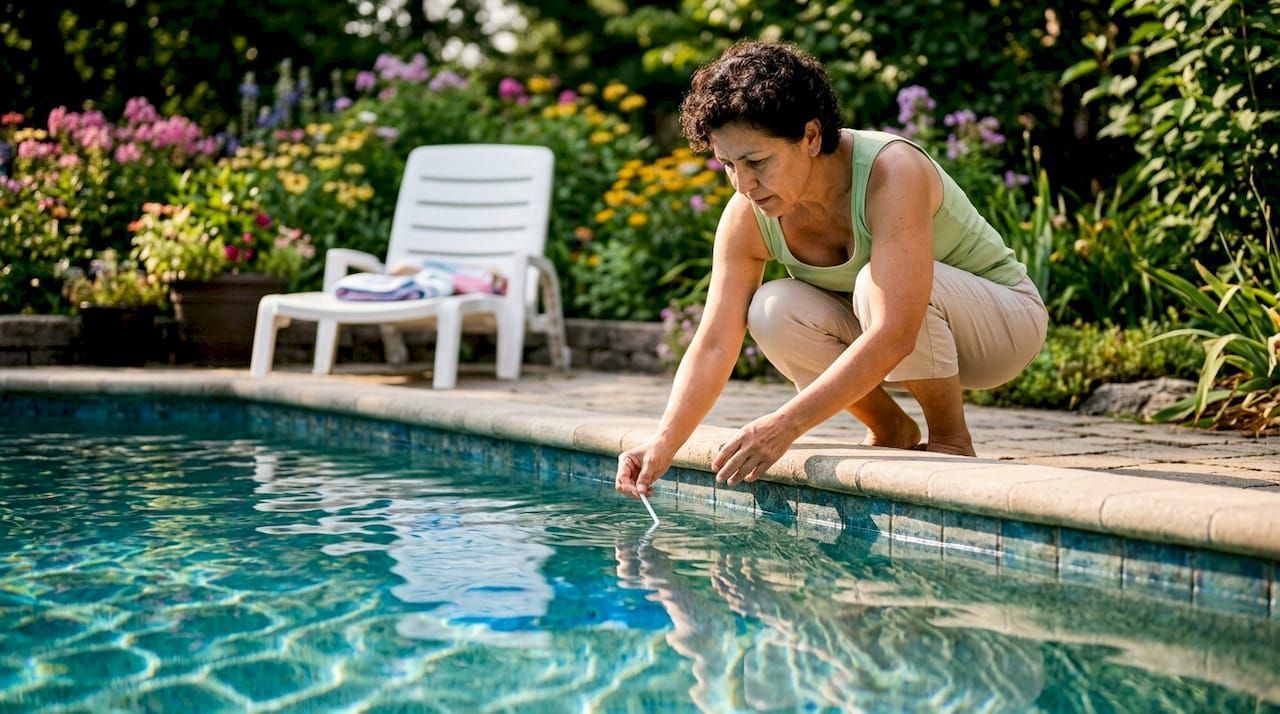
How do safe pool chemicals sanitize and protect swimmers?
Pool chemicals disinfect water by killing bacteria, viruses, and algae before they reach swimmers. Chlorine is the most widely used sanitizer in residential and commercial pools. Bromine is a common alternative, particularly in hot tubs and indoor pools, because it stays stable at higher temperatures. Both work by oxidizing the cell walls of microorganisms, rendering them harmless within seconds of contact.
The CDC sets minimum free chlorine levels at 1 ppm without cyanuric acid and 2 ppm when cyanuric acid is present. Cyanuric acid is a stabilizer that protects chlorine from UV degradation in outdoor pools. Without it, sunlight destroys free chlorine rapidly, leaving the water under-sanitized within hours of treatment.
Chlorine shock treatments play a specific role in this system. Shock dosing eliminates organic contaminants and chloramines that build up after heavy swimmer loads or contamination events. Chloramines are the compounds responsible for the sharp "pool smell" and eye irritation that swimmers often mistakenly attribute to too much chlorine. The actual cause is too little active chlorine relative to the organic load.
- Chlorine: the standard sanitizer for most outdoor pools
- Bromine: preferred for indoor pools and hot tubs due to temperature stability
- Cyanuric acid: stabilizes chlorine against UV breakdown in outdoor settings
- Shock treatments: restore sanitizer effectiveness after heavy use or contamination
Pro Tip: Test free chlorine levels at least twice a week during peak swim season. A test strip reading takes under a minute and prevents the buildup of chloramines that cause swimmer discomfort.
Why is water balancing essential for safe pool chemical function?
Water balancing is the practice of maintaining pH, total alkalinity, and stabilizer levels within ranges that allow sanitizers to work correctly. pH is the single most influential variable in sanitizer performance. At pH 7.2, about 63% of free chlorine exists as hypochlorous acid, the active disinfectant form. At pH 8.0, that drops to about 21%. That is a dramatic loss of sanitizing power with no change in chlorine dose.
Total alkalinity acts as a buffer for pH. When alkalinity is too low, pH swings wildly with each chemical addition or rainfall. When it is too high, pH locks in place and resists correction. The target range for total alkalinity in most pools is 80–120 ppm. Keeping alkalinity stable is one of the most cost-effective safe pool maintenance tips a pool owner can follow, because it reduces the frequency of pH correction.
| Parameter | Target Range | Consequence of Imbalance |
|---|---|---|
| pH | 7.2–7.6 | Below 7.2: corrosion and eye irritation. Above 7.8: reduced sanitizer activity |
| Total alkalinity | 80–120 ppm | Low: pH instability. High: pH lock and scale buildup |
| Free chlorine | 1–3 ppm | Below minimum: pathogen risk. Above 3 ppm: swimmer irritation |
| Cyanuric acid | 30–50 ppm | Below 30: chlorine degrades in sunlight. Above 90: chlorine becomes less effective |
Stabilizers protect chlorine from UV degradation, but they require careful management. Cyanuric acid accumulates over time and does not break down naturally. High cyanuric acid levels reduce chlorine's effectiveness even when free chlorine readings look acceptable. This effect, sometimes called "chlorine lock," is a common reason pools fail to stay clear despite regular chemical additions.
Pro Tip: Drain and refill 10–20% of pool water seasonally to dilute accumulated cyanuric acid and other dissolved solids that resist chemical correction.
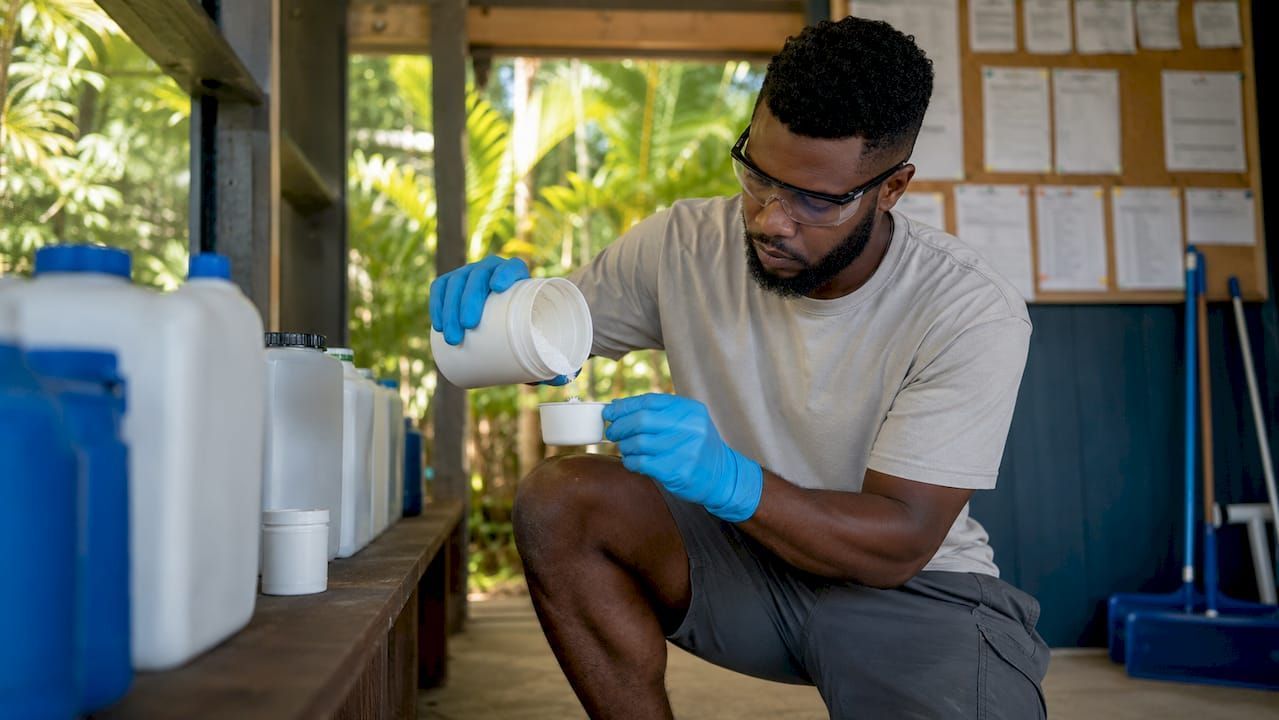
What are the key safety considerations when handling pool chemicals?
Pool chemicals disinfect water to protect swimmers, but they can cause serious injury to skin, eyes, the respiratory system, and the digestive system when mishandled. The Virginia Department of Health identifies improper mixing and skipping personal protective equipment as the leading causes of chemical injuries at pool facilities. These are procedural failures, not product failures.
The most dangerous mistake is mixing incompatible chemicals. Combining chlorine with acid, for example, releases toxic chlorine gas. Mixing oxidizers with organic materials can cause fires or explosions. Many chemical injuries stem from exactly these procedural failures, and strict adherence to label instructions eliminates most of the risk.
Safe handling requires following a specific set of practices every time:
- Wear chemical-resistant gloves, safety goggles, and a face shield when handling concentrated pool chemicals
- Always add chemicals to water, never water to chemicals. Adding water to a concentrated chemical can cause violent splashing or a heat reaction
- Store oxidizers and acids in separate, clearly labeled locations away from heat sources and direct sunlight
- Never mix chemicals from different containers, even if they appear to be the same product
- Keep a written log of all chemical additions, including date, time, amount, and water test results
- Train all staff who handle pool chemicals and document that training
Operators should maintain written procedures and train staff before allowing them to handle any pool chemical. Verbal instruction is not sufficient for a facility setting. Written protocols create accountability and provide a reference when something goes wrong.
Proper labeling and storage extend beyond the chemicals themselves. Original containers must be kept intact. Transferring chemicals to unlabeled containers is a common cause of accidental mixing. Pool owners managing residential pools face the same risks as facility operators, just at smaller volumes.
How can facility managers minimize environmental impact while using pool chemicals?
Disinfection by-products, or DBPs, form when sanitizers react with organic matter in pool water. Bather-introduced contaminants such as sweat, sunscreen, and urine are the primary organic load in most pools. DBPs pose health risks that increase with excess chemical dosing or poor water management. Reducing the organic load entering the pool reduces DBP formation without sacrificing sanitation.
Facility managers can apply several practices to reduce environmental impact:
- Pre-swim hygiene protocols. Require swimmers to shower before entering the pool. This single step removes a significant portion of the organic load that would otherwise react with chlorine to form DBPs.
- Accurate chemical monitoring. Test water chemistry daily in commercial settings and at least twice weekly in residential pools. Dosing based on actual test results prevents the overuse that drives excess DBP formation.
- Balanced dosing practices. Minimizing chemical overuse reduces DBPs, improves swimmer comfort, and lowers the environmental footprint of pool operations. Automated chemical dosing systems maintain tighter control than manual addition.
- Organic load management. Use pool covers when the pool is not in use to reduce debris, algae growth, and evaporation. Less organic matter means less chemical demand.
- Eco-friendly surface cleaners. Pool tile and surface cleaners that are biodegradable and low in volatile organic compounds reduce the chemical burden on pool water. Oceancarestore's green cleaning approach for pool surfaces pairs well with balanced water chemistry programs.
Reducing reactive chemistry swings through balanced dosing and regular monitoring also lowers shock treatment frequency. Every shock treatment adds a concentrated chemical load to the water. Preventing the conditions that require shock is more effective than treating them after the fact.
Key Takeaways
Safe pool chemical management requires combining correct sanitizer levels, precise water balancing, strict handling procedures, and proactive environmental controls to protect both swimmers and pool infrastructure.
| Point | Details |
|---|---|
| Sanitizer levels matter | Maintain 1 ppm free chlorine without cyanuric acid and 2 ppm with it, per CDC guidance. |
| pH controls sanitizer power | At pH 7.2, chlorine is three times more active than at pH 8.0. Keep pH between 7.2 and 7.6. |
| Handling errors cause most injuries | Always add chemicals to water, wear PPE, and store incompatible chemicals separately. |
| DBPs increase with overuse | Accurate testing and balanced dosing reduce disinfection by-products and swimmer irritation. |
| Written procedures protect everyone | Documented protocols and staff training prevent the procedural failures behind most chemical accidents. |
What I've learned from watching pools go wrong
Most pool problems I've seen trace back to one of two habits: guessing at chemical doses or skipping the test kit when the water "looks fine." Clear water is not the same as safe water. A pool can look pristine and still carry inadequate free chlorine or a pH so high that the sanitizer is barely functioning.
The pH-to-chlorine relationship is the insight that changes how most pool owners think about their water. You can double your chlorine dose and still have poor sanitation if pH is sitting at 8.0. That is not a product failure. It is a chemistry failure that a $10 pH test would have caught. The importance of pool chemicals lies not just in what you add, but in the conditions you create for them to work.
The environmental side of pool management gets underestimated. DBPs are not a fringe concern. They form in every pool that uses chlorine, and the volume depends directly on how well you control the organic load and how accurately you dose. Pre-swim showers, pool covers, and precise testing are not optional extras for eco-conscious operators. They are the difference between a pool that needs monthly shock treatments and one that runs cleanly on routine maintenance.
My honest recommendation: invest in a reliable digital test kit, write down your procedures, and treat every chemical addition as a deliberate decision rather than a routine task. That mindset shift produces better water, fewer incidents, and lower chemical costs over a full season.
Trusted products for safe pool and tile maintenance
Keeping pool water balanced is only part of the picture. Pool tiles, grout, and surrounding surfaces accumulate calcium deposits, algae stains, and chemical residue that standard pool chemicals cannot address.
Oceancarestore specializes in eco-friendly, biodegradable cleaners and sealers designed specifically for pool tiles and hard surfaces. Products like the Pool Tile Restorer restore tile surfaces without harsh acids that disrupt water chemistry or damage grout. For ongoing care, the pool tile maintenance range covers routine cleaning, protection, and calcium removal using low-VOC, plant-based formulas safe for swimmers and the environment. Clean surfaces also reduce the organic load in pool water, which means less chemical demand and fewer DBPs.
FAQ
What is the role of safe pool chemicals?
Safe pool chemicals sanitize water by killing bacteria, viruses, and algae, and balance water chemistry to protect swimmers and preserve pool equipment. They include sanitizers, pH balancers, stabilizers, and oxidizers, each serving a specific function.
What free chlorine level is safe for swimming?
The CDC recommends a minimum of 1 ppm free chlorine in pools without cyanuric acid and 2 ppm in stabilized pools. Levels above 3 ppm can cause swimmer irritation.
Why does pH affect how well chlorine works?
At pH 7.2, about 63% of free chlorine exists as hypochlorous acid, the active disinfectant. At pH 8.0, that drops to about 21%, meaning the same chlorine dose delivers far less sanitizing power.
How should pool chemicals be stored safely?
Store oxidizers and acids in separate, clearly labeled locations away from heat and sunlight. Keep chemicals in their original containers and never mix products from different packages.
What are disinfection by-products and why do they matter?
Disinfection by-products form when pool sanitizers react with organic matter from bathers. They pose health risks that increase with excess chemical dosing, making accurate testing and balanced dosing critical for swimmer safety.

