
Traits of High-Quality Grout Cleaner for Homeowners
TL;DR:
- A high-quality grout cleaner effectively removes grime without damaging tiles or grout health.
- It should have chemical safety certifications, proper dwell time, and be paired with mechanical scrubbing for lasting results.
A high-quality grout cleaner is defined by its ability to remove grime effectively without damaging tile, grout, or the health of the people nearby. The traits of high-quality grout cleaner go beyond raw cleaning power. They include chemical safety, substrate compatibility, eco-friendly certification, and the right balance of surfactants to lift soil without stripping grout integrity. Products like EPA Safer Choice-certified formulas and oxygen-based cleaners represent the standard that homeowners and property managers should measure every purchase against.
1. What chemical and safety features define the best grout cleaners?
The chemistry inside a grout cleaner determines what surfaces it can safely touch and how well it performs. Three main formula types dominate the market: acid-based, bleach-based, and oxygen-based cleaners. Each works differently, and choosing the wrong one causes lasting damage.
Acid-based cleaners dissolve mineral deposits fast, but acid cleaners damage calcium-based stones like marble and travertine. Oxygen-based cleaners release hydrogen peroxide to lift stains and are safe for routine use on all tile types. Bleach-based cleaners whiten fast but damage grout matrix over time, weakening the surface with repeated use.
EPA Safer Choice certification is the clearest signal that a formula avoids harmful solvents, carcinogens, ammonia, and phosphates. Products carrying this label have passed ingredient-level safety reviews. That matters for households with children, pets, or anyone with chemical sensitivities.
- Oxygen-based formulas: Safe for ceramic, porcelain, and most natural stone; effective on organic stains like mold and mildew
- pH-neutral cleaners: Protect colored grout and delicate tile finishes from fading or etching
- Surfactant-balanced formulas: Suspend soil in solution so it rinses away cleanly without leaving residue
- EPA Safer Choice-certified products: Verified free of harmful chemicals; safe for indoor use without heavy ventilation
- Acid-free options: Protect calcium-based stones and epoxy grout from chemical erosion
Pro Tip: Always check the pH range listed on the label. A pH between 7 and 10 covers most household grout cleaning needs without risking tile damage.
2. How mechanical factors and application technique impact effectiveness
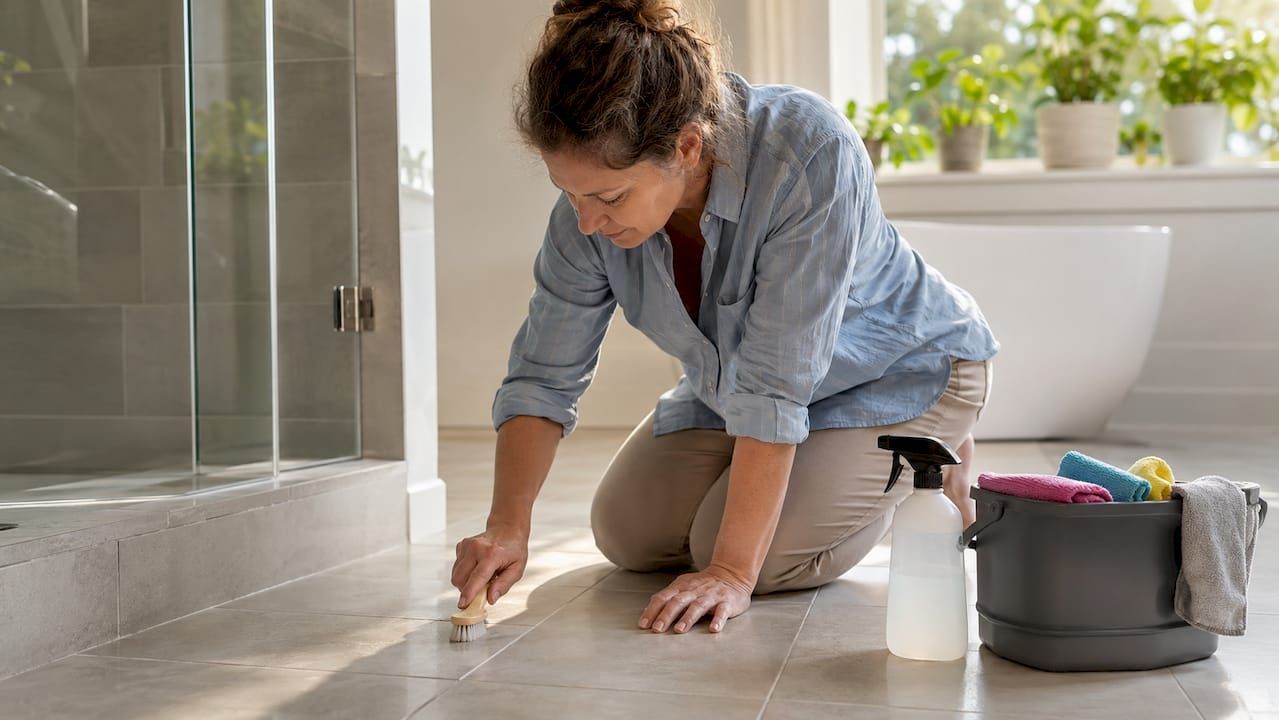
Chemistry loosens soil. Brushing removes it. Physical brushing is the primary soil removal method, and no cleaner formula replaces that mechanical step. This is one of the most overlooked grout cleaner performance factors among homeowners.
Brush stiffness must match grout texture. Narrow, recessed grout lines need a stiff-bristled grout brush to reach the base of the joint. Wide, flat grout lines tolerate softer brushes. Using a soft brush on deep grout lines leaves grime at the bottom, which re-stains within days.
ATP bioluminescence testing, used by professional cleaners, differentiates cleaning from disinfecting by detecting organic residue invisible to the eye. The finding is clear: chemicals loosen soil, but brushing is what actually removes it. Homeowners who skip scrubbing and rely on spray-and-wipe methods consistently get poor results.
- Apply cleaner evenly across the grout line, covering the full length of the joint
- Allow the product to dwell before scrubbing (see dwell time guidance below)
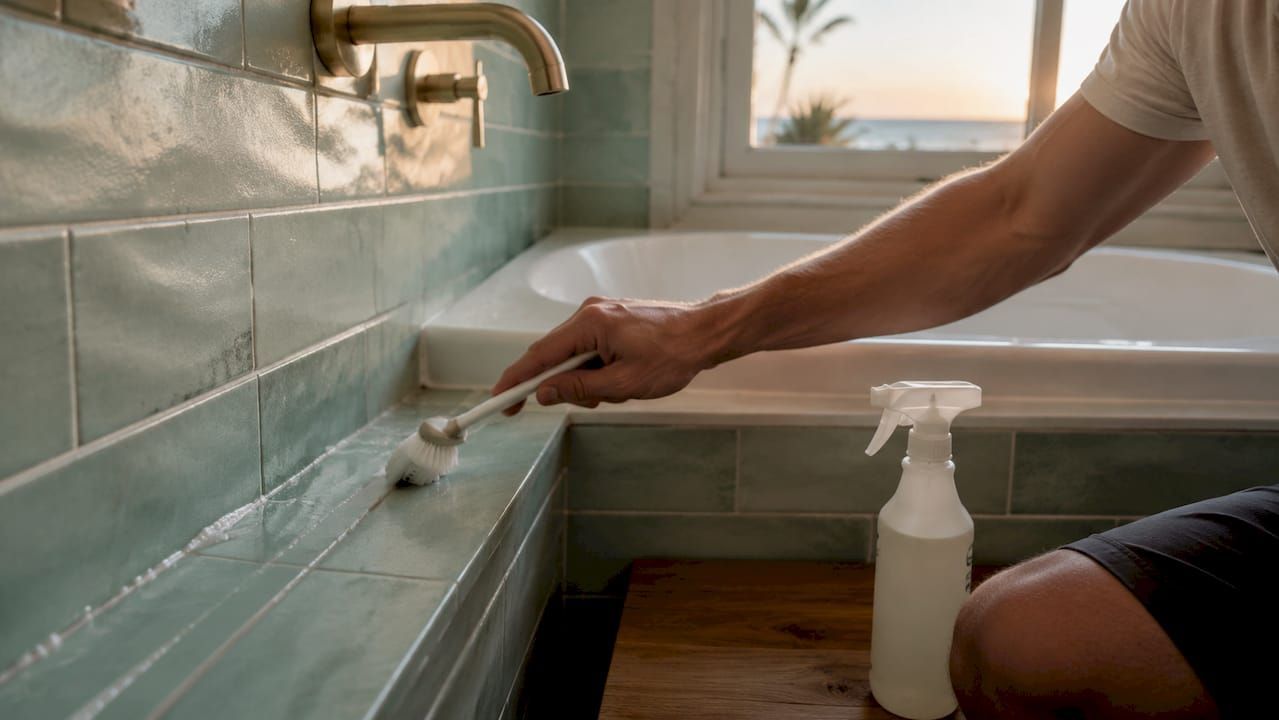
- Scrub with a stiff-bristled brush using short, firm strokes along the grout line
- Rinse thoroughly with clean water to remove all loosened soil and cleaner residue
- Inspect coverage; fluorescent marker testing reveals missed areas that look clean but still carry residue
Pro Tip: Use a dedicated grout brush, not a general tile scrubber. The narrow head concentrates pressure directly into the grout joint where grime hides.
3. Which eco-friendly and non-toxic qualities should homeowners prioritize?
Eco-friendly grout cleaners are not a compromise on performance. The best formulas use hydrogen peroxide and natural orange oil to break down grime without releasing volatile organic compounds (VOCs) into indoor air. VOC exposure in enclosed bathrooms and kitchens accumulates quickly, making low-VOC or VOC-free formulas a practical health choice, not just an environmental one.
Green Seal and EPA Safer Choice are the two certifications worth recognizing. Green Seal verifies biodegradability and reduced environmental impact across the product's full lifecycle. Safer Choice focuses on ingredient-level safety for human health. A product carrying both labels meets the highest standard for eco-friendly grout cleaning available to residential buyers.
Ingredients to avoid include chlorine bleach, ammonia, phosphates, and synthetic fragrances. These chemicals do not improve cleaning performance on grout. They add fumes, accelerate grout color fading, and create runoff that harms aquatic ecosystems when washed down drains.
- Hydrogen peroxide-based formulas: Whiten grout naturally without bleach; safe for colored grout
- Orange oil or citrus-derived surfactants: Cut through grease and soap scum without harsh solvents
- Biodegradable formulas: Break down safely after use without leaving toxic residue in water systems
- Phosphate-free products: Prevent algae growth in waterways caused by cleaning product runoff
- No synthetic fragrance: Reduces indoor air irritants, especially important in bathrooms with limited ventilation
4. How to choose a grout cleaner based on tile type and grout color
Tile material and grout color are the two variables that narrow your cleaner choice fastest. Getting this match wrong causes permanent damage that no amount of re-cleaning fixes.
| Tile or Grout Type | Recommended Cleaner | What to Avoid |
|---|---|---|
| Marble, travertine, limestone | pH-neutral or oxygen-based | Acid-based cleaners |
| Ceramic and porcelain | Oxygen-based or mild alkaline | Strong bleach formulas |
| Colored grout | Hydrogen peroxide-based, pH-neutral | Chlorine bleach |
| White or light grout | Oxygen-based brighteners | Acid cleaners that yellow over time |
| Epoxy grout | Mild surfactant-based cleaner | Solvent-based or highly alkaline products |
Routine grout cleaning every 4–6 months prevents buildup that requires aggressive chemicals to remove. Sticking to that schedule with a mild oxygen-based or pH-neutral cleaner keeps grout looking fresh without the risk of surface damage. Property managers maintaining multiple bathrooms or commercial kitchens benefit most from this preventive approach because it reduces the need for costly restoration work.
Chlorine bleach is the most common mistake on colored grout. It strips pigment from the grout surface over time, leaving patchy, faded lines that look worse than the original staining. Hydrogen peroxide-based formulas achieve comparable whitening on light grout without that risk. For deep cleaning without acids, oxygen-based products remain the most reliable choice across tile types.
5. Why dwell time is a defining trait of effective grout cleaners
Dwell time is the period a cleaner sits on the surface before scrubbing begins. It is one of the most misunderstood grout cleaner performance factors. Skipping or shortening it directly reduces results.
Non-acidic and enzyme-based cleaners require 15–20 minutes of dwell time to fully emulsify grime before removal. Wiping too early reduces effectiveness significantly. The chemistry needs time to penetrate the porous grout surface and break the bond between soil and the substrate.
Longer is not always better, though. Reducing dwell time to 90 seconds applies to disinfectant products where extended contact harms the grout sealer rather than improving microbial kill. The right dwell time depends on the formula type. Oxygen-based and enzyme cleaners need longer contact. Disinfectants need shorter, controlled contact. Reading the label for the manufacturer's specified dwell time is not optional. It is the single most important instruction on the bottle.
6. What post-cleaning steps protect grout long-term
Cleaning grout without sealing it afterward is like washing a car and leaving it in the rain. The pores in grout absorb moisture, oil, and pigment from daily use within hours of cleaning.
Applying a penetrating sealer within 48 hours after cleaning prevents rapid re-staining by sealing grout pores before they absorb new contaminants. This step extends the results of any cleaning session by months. Skipping it means the grout returns to its pre-cleaned state faster than expected.
- Penetrating sealers: Absorb into grout pores to block moisture and oil from below the surface
- Topical sealers: Form a protective film on the surface; better for high-traffic areas but require more frequent reapplication
- Color-enhancing sealers: Deepen grout color while sealing; useful for aged or faded grout lines
- Frequency: Reseal grout every 1–2 years in bathrooms; more often in kitchens or outdoor areas with heavy exposure
Oceancarestore offers stone and grout sealers designed to work with both natural stone and ceramic tile surfaces, covering the range of substrates most homeowners encounter. Pairing the right sealer with a quality cleaner is the full maintenance cycle that keeps grout looking new.
Key takeaways
A high-quality grout cleaner combines an oxygen-based or pH-neutral formula, EPA Safer Choice certification, proper dwell time, and mechanical scrubbing to deliver results that last.
| Point | Details |
|---|---|
| Formula type matters most | Oxygen-based and pH-neutral cleaners work safely on all common tile types. |
| Certification signals safety | EPA Safer Choice and Green Seal labels confirm the formula avoids harmful chemicals. |
| Dwell time drives results | Non-acidic cleaners need 15–20 minutes of contact before scrubbing for full effectiveness. |
| Brushing is non-negotiable | Chemistry loosens soil, but mechanical scrubbing with the right brush removes it. |
| Seal within 48 hours | Applying a penetrating sealer after cleaning prevents rapid re-staining of grout pores. |
What I've learned from years of watching homeowners get grout cleaning wrong
Most people buy a cleaner, spray it on, wipe it off in 30 seconds, and wonder why the grout still looks gray. The chemistry never had a chance to work. The brush never touched the bottom of the joint. The sealer never went on afterward. The result looks the same a week later, and the cleaner gets blamed.
The real issue is that grout cleaning is a three-part process: the right formula, the right mechanical technique, and a sealer applied before the pores reopen to new staining. Skipping any one of those steps cuts the result in half. I've seen property managers spend money on expensive cleaners and get worse results than a homeowner using a basic oxygen-based formula with a stiff brush and a 15-minute dwell time.
Mild oxygen-based cleaners offer the best long-term value. They are safe on every tile type I've encountered, they don't fade colored grout, and they don't accelerate grout breakdown the way bleach does. The step-by-step grout cleaning process matters more than the price of the product. Get the technique right first, then choose a certified, eco-friendly formula, and the results will hold.
Eco-friendly grout cleaning products from Oceancarestore
Oceancarestore carries a range of EPA Safer Choice-certified and plant-based tile and grout cleaners built for exactly the surfaces discussed here. Whether you're maintaining bathroom tile, kitchen backsplash, or outdoor stone, the product line covers acid-free formulas safe for marble, travertine, and colored grout. The pool tile restorer is a strong starting point for anyone dealing with calcium deposits or stubborn surface staining on tile. For long-term protection, pair your cleaner with a sealer from the pool tile maintenance collection, designed to lock in cleanliness and reduce how often you need to deep clean.
FAQ
What makes a grout cleaner safe for natural stone?
A grout cleaner is safe for natural stone when it is acid-free and pH-neutral, since acid-based formulas etch and damage calcium-based stones like marble and travertine.
How often should grout be cleaned?
Grout should be cleaned every 4–6 months to prevent buildup that requires aggressive chemicals to remove and to maintain surface integrity over time.
Does dwell time really affect cleaning results?
Yes. Non-acidic and enzyme-based cleaners need 15–20 minutes of dwell time to fully break down grime. Wiping too early significantly reduces how much soil is actually removed.
Is bleach a good grout cleaner?
Bleach whitens grout quickly but damages the grout matrix with repeated use. Oxygen-based or hydrogen peroxide-based cleaners deliver comparable whitening without degrading the grout surface.
When should grout be sealed after cleaning?
Grout should be sealed within 48 hours of cleaning. Waiting longer allows pores to absorb new contaminants before the sealer can form a protective barrier.

