
Build a sustainable surface cleaning workflow: pool tiles & stone
TL;DR:
- Eco-friendly, plant-based cleaners are safe, effective, and reduce environmental impact.
- Proper surface assessment and gentle cleaning techniques preserve natural stone and tile durability.
- Regular, targeted maintenance extends surface lifespan and minimizes need for harmful chemicals.
Conventional pool and stone cleaners often contain acids, synthetic solvents, and harsh surfactants that rinse directly into surrounding soil and waterways. That chemical runoff doesn't just disappear. It disrupts aquatic ecosystems, degrades grout and stone over time, and leaves residue that's unsafe for pets and children. The good news is that a plant-based, sustainable cleaning workflow delivers results that are just as strong, without the environmental toll. This guide walks you through every stage, from surface assessment to long-term maintenance, so you can protect your surfaces and the planet at the same time.
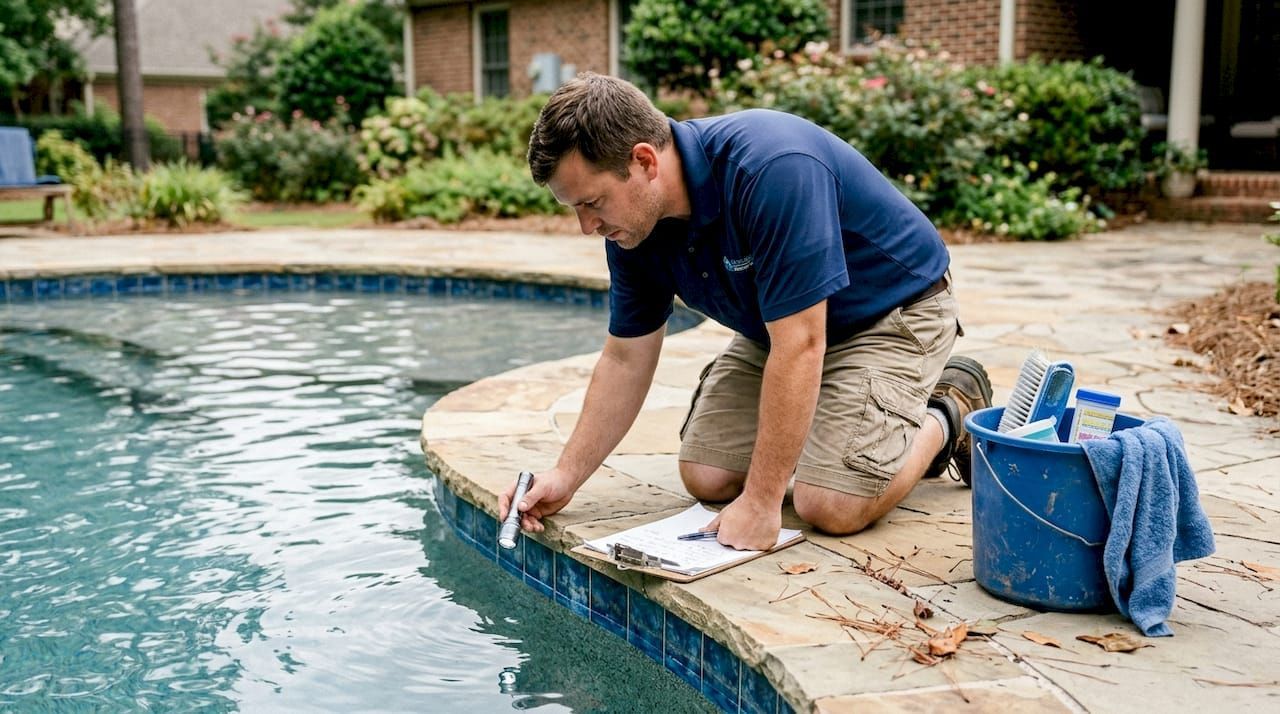
Table of Contents
Key Takeaways
| Point | Details |
|---|---|
| Surface assessment matters | Carefully identify each surface and compile eco-friendly materials before cleaning. |
| Plant-based products protect | Choosing biodegradable cleaners keeps surfaces safe and reduces environmental impact. |
| Avoid common mistakes | Using improper techniques or harsh materials can damage surfaces and ecosystems. |
| Routine maintenance extends life | Eco-friendly spot cleaning and sealing preserves pool tiles and natural stone longer. |
| Less is more | Mindful, targeted cleaning reduces waste and improves sustainability outcomes. |
Assessing surfaces and preparation
Before you pick up a brush or open a bottle, you need to know exactly what you're working with. Pool tiles and natural stone are not interchangeable surfaces. Ceramic and porcelain pool tiles are dense and relatively forgiving, while natural stone such as travertine, limestone, slate, or marble is porous and sensitive to pH extremes. Treating them the same way is one of the most common mistakes homeowners make.
Start by identifying your surface type. Run your hand across the tile or stone. If it feels smooth and uniform, it's likely ceramic or porcelain. If it feels grainy, slightly uneven, or has visible pores, you're dealing with natural stone. Check for existing sealant by dripping a few drops of water onto the surface. If the water beads up, the sealant is intact. If it soaks in, the surface needs resealing after cleaning.
Next, assess the condition of the surface. Look for these common issues:
- Calcium or mineral deposits: White, chalky buildup along the waterline or grout lines
- Algae or organic staining: Green, brown, or black discoloration, especially in shaded areas
- Efflorescence: A powdery white residue that forms when water carries salts to the surface
- Grout deterioration: Cracked, crumbling, or discolored grout lines
- Sealant failure: Dull patches or areas where water no longer beads
Once you've mapped out the problem areas, gather your tools. For a sustainable workflow, you'll want soft-bristle brushes, microfiber cloths, a low-pressure sprayer, and plant-based cleaners suited to your surface type. Following eco best cleaning practices means choosing biodegradable, low-VOC formulas that won't leach toxins into pool water or soil. A surface cleaning checklist can help you stay organized and avoid skipping critical steps.
The table below summarizes which tools and products work best for each surface type:
| Surface type | Recommended tool | Cleaner type |
|---|---|---|
| Ceramic/porcelain tile | Stiff nylon brush | Plant-based tile cleaner |
| Natural stone (marble, travertine) | Soft microfiber cloth | pH-neutral, plant-based cleaner |
| Grout lines | Narrow grout brush | Biodegradable grout cleaner |
| Outdoor stone pavers | Low-pressure sprayer | Plant-based degreaser |
Proper surface assessment prevents accidental damage and improves cleaning results, especially when working with porous or previously sealed stone.
Pro Tip: Before applying any cleaner to the full surface, test it on a small, inconspicuous area first. Wait 5 minutes and check for discoloration, etching, or unusual residue. This 5-minute test can save you hours of damage control.
You might also find that eco laundry tips offer useful parallels for how plant-based formulas perform across different surface challenges.
Step-by-step sustainable cleaning workflow
With surfaces prepared, let's walk through the sustainable cleaning workflow. The sequence matters. Skipping steps or rushing through them is what leads to streaking, residue, and repeat cleaning.
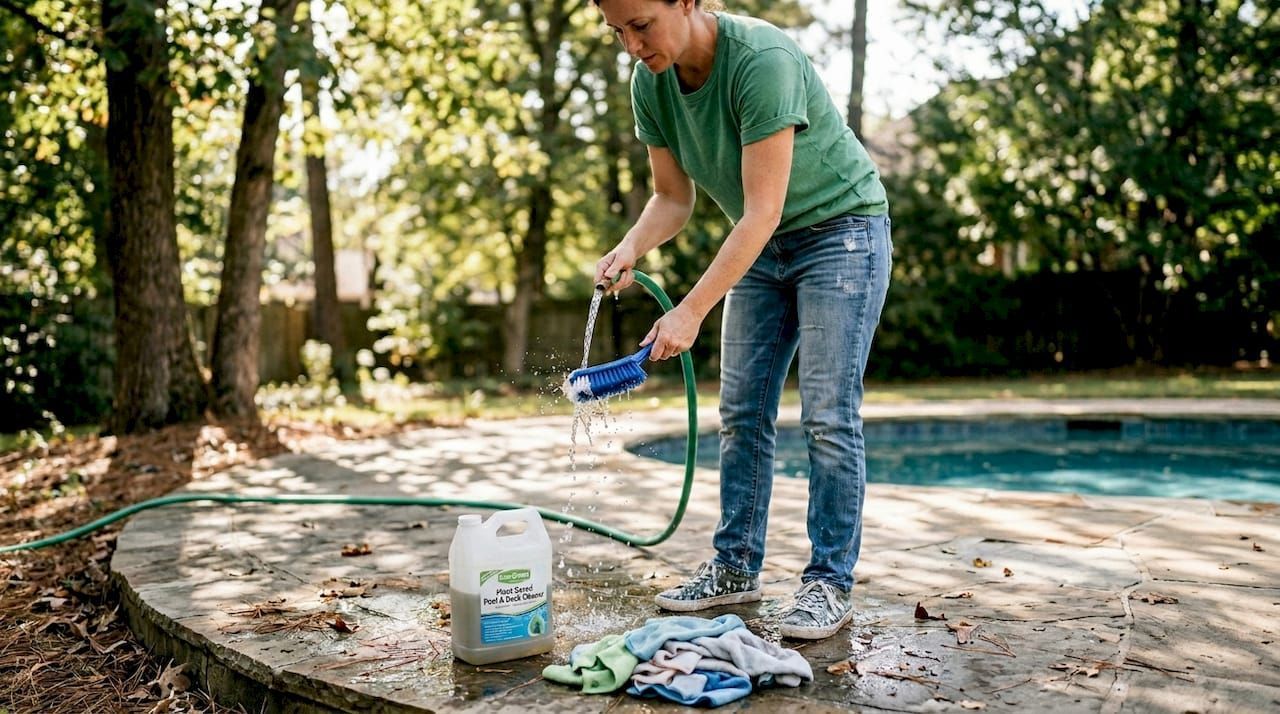
- Rinse the surface with clean water to remove loose debris, dust, and dry organic matter. Use a garden hose or low-pressure sprayer. Avoid high-pressure washing on natural stone, which can erode the surface.
- Apply your plant-based cleaner according to the product instructions. For pool tiles, spray directly onto the waterline buildup. For natural stone, apply with a damp microfiber cloth rather than spraying directly.
- Allow dwell time. Most plant-based cleaners need 3 to 5 minutes to break down calcium, grease, or organic staining. Don't scrub immediately. Let the formula do the work.
- Scrub gently using the appropriate brush or cloth for your surface. Work in small sections. Use circular motions on tile and straight, grain-following strokes on natural stone.
- Rinse thoroughly with clean water. Make sure no cleaner residue remains, especially in grout lines or porous stone.
- Inspect and repeat on stubborn areas if needed. A second application is always safer than aggressive scrubbing.
- Allow the surface to dry completely before applying any sealant or protector.
Plant-based cleaners are effective and safe for both surfaces and the environment, making them the right call for any surface near water or soil.
Here's a quick comparison of plant-based versus conventional cleaners:
| Feature | Plant-based cleaner | Conventional cleaner |
|---|---|---|
| Biodegradable | Yes | Often no |
| Safe for natural stone | Yes | Often no |
| VOC level | Low | High |
| Safe near pool water | Yes | Rarely |
| Effective on calcium | Yes | Yes |
"Only use products proven to biodegrade safely. Anything else is just transferring the problem from your tile to the environment." This principle guides every product choice we recommend at Oceancare.
For a deeper look at safer eco cleaning techniques, and to find the best eco-friendly cleaners for your specific surface, explore our curated guides. You can also draw inspiration from a sustainable laundry routine to see how small product swaps create lasting environmental impact.
Troubleshooting and common mistakes
Once you've completed the cleaning, it's crucial to know how to handle common mistakes and challenges. Even experienced homeowners run into issues, and the fix is usually simpler than you'd expect.
The most frequent problems include:
- Streaking on tile: Usually caused by not rinsing thoroughly enough or using too much product. Rewipe with a damp microfiber cloth and rinse again.
- White residue on stone: Often efflorescence or cleaner residue. A second rinse with clean water resolves this in most cases.
- Dull patches on polished stone: Caused by using a cleaner that's too acidic. Switch to a strictly pH-neutral, plant-based formula.
- Grout discoloration after cleaning: May indicate the grout needs resealing. Clean, dry, then apply an eco-friendly grout sealer.
- Persistent calcium deposits: Require a plant-based calcium releaser, not aggressive scrubbing. Scrubbing alone won't dissolve mineral bonds.
For stubborn calcium or mineral buildup along pool waterlines, apply a targeted plant-based calcium releaser and allow it to sit for 10 minutes before gently agitating with a nylon brush. Never use steel wool or abrasive pads on tile or stone surfaces.
Safety warning: Never use acid-based cleaners on natural stone. Acids etch and permanently damage marble, limestone, and travertine. Even diluted vinegar can cause irreversible surface damage.
Avoiding harsh chemicals protects both the surface and the surrounding environment, especially in outdoor settings where runoff reaches soil and water quickly.
To prevent tile stains from forming in the first place, consistent light cleaning beats infrequent deep cleaning every time. And if grout is your main challenge, our eco grout cleaning guide covers the full process from start to finish.
Pro Tip: Always rinse surfaces thoroughly with clean water after every cleaning session. Residual cleaner left on tile or stone, even plant-based formulas, can attract dirt faster and dull the surface over time.
Maintaining surfaces for long-term sustainability
To preserve your cleaned surfaces, let's explore sustainable maintenance practices. Cleaning is only half the equation. What you do between deep cleans determines how long your surfaces stay in good shape.
A consistent routine built around light, targeted care is far more effective and sustainable than waiting for buildup to become a problem. Here are the core habits to build into your schedule:
- Spot clean weekly using a damp microfiber cloth and a small amount of plant-based cleaner. Focus on waterline tiles and high-contact stone areas.
- Rinse pool tile surrounds after heavy use or rain to prevent mineral deposits from drying onto the surface.
- Reseal natural stone every 6 to 12 months, depending on foot traffic and exposure. Sealing locks out stains and reduces how often deep cleaning is needed.
- Adjust cleaning frequency seasonally. In summer, higher pool usage and heat accelerate buildup. In winter, organic matter like leaves and algae spores are the bigger concern.
- Store eco-friendly products properly in a cool, dry place to preserve their effectiveness and extend shelf life.
Using cleaning product hacks to stretch your products further also reduces waste and cost over time. Stocking your maintenance kit with home essential cleaners designed for ongoing surface care keeps you prepared without overbuying.
Statistic callout: Plant-based cleaning products reduce surface runoff contamination by up to 80% compared to conventional chemical cleaners. That's a meaningful difference for any property near a garden, lawn, or natural waterway.
Consistent eco-friendly maintenance extends the life of pool tiles and natural stone, reducing the need for costly repairs or full resurfacing. Prevention is always cheaper than restoration.
A fresh perspective: Rethinking routine surface care
Here's something the cleaning industry rarely tells you: more cleaning is not better. In fact, over-cleaning is one of the leading causes of premature surface wear. Every time you scrub tile or stone, you're removing a microscopic layer of the surface or its sealant. Do it too often, and you accelerate the very degradation you're trying to prevent.
The smarter approach is to clean less often but more intentionally. A targeted spot clean twice a week does less cumulative damage than a full scrub every few days. This is what safer surface care actually looks like in practice.
Mindful product choices matter just as much as frequency. A plant-based cleaner used correctly once a week outperforms a harsh chemical used carelessly three times a week. The goal isn't to sanitize every surface into submission. It's to maintain a balance that keeps surfaces clean, protected, and structurally sound for years.
Shifting from reactive to proactive care also reduces waste. You use less product, generate less runoff, and spend less time correcting problems that preventive maintenance would have avoided entirely. That's the real value of a sustainable workflow.
Eco-friendly solutions for your surfaces
If you're ready to put these sustainable strategies into practice, Oceancare has the tools to make it straightforward. Our plant-based formulas are built specifically for pool tiles and natural stone, so you're not guessing about compatibility or safety.
Explore our pool tile restorer for targeted waterline and calcium treatment, or browse our full range of pool tile maintenance products designed for ongoing care. For stone and grout protection, our stone and grout sealers offer long-lasting, eco-safe coverage that locks out stains without toxic chemistry. Every product we carry is biodegradable, low-VOC, and safe for use around pools, gardens, and family spaces.
Frequently asked questions
What makes a surface cleaning workflow sustainable?
A sustainable workflow uses plant-based, biodegradable products, reduces chemical runoff, and protects both surfaces and the environment. It also prioritizes preventive care over reactive deep cleaning.
How often should I clean pool tiles sustainably?
For most pools, cleaning every 1 to 2 weeks with eco-friendly methods keeps buildup manageable. Consistent eco-friendly maintenance also extends the life of your tiles significantly.
Can plant-based cleaners remove stubborn calcium deposits?
Yes. Many plant-based formulas are specifically designed to dissolve calcium and mineral buildup without damaging the surface. Proper surface assessment first helps you choose the right product for the severity of the deposit.
Do I need to reseal stone surfaces after cleaning?
Sealing is recommended every 6 to 12 months, especially after a thorough clean. Consistent eco-friendly maintenance that includes regular resealing preserves both the stone quality and its protective barrier.
Is there an eco-friendly way to prevent tile stains?
Regular spot cleaning with gentle, plant-based solutions is the most effective prevention strategy. Avoiding harsh chemicals also protects the surface and the surrounding environment from long-term chemical exposure.
Recommended

