
Eco-friendly protectants: sustainable surface defense
TL;DR:
- Eco-friendly protectants effectively shield surfaces without harmful chemicals, improving indoor air quality.
- Water-based formulas bond chemically to surfaces, offering durability comparable to traditional protectants.
- Proper application and routine maintenance ensure sustainable, safe, and long-lasting surface protection.
Most homeowners assume that protecting stone, tile, and grout requires aggressive chemicals. That assumption is wrong. Eco-friendly protectants have quietly evolved into serious surface defense tools, offering real protection without the toxic trade-offs. Whether you manage a pool deck, a kitchen backsplash, or a bathroom floor, sustainable formulas can shield your surfaces just as effectively as conventional products. This article breaks down what eco-friendly protectants are, how they compare to traditional options, the science behind how they work, and practical steps to apply them correctly.
Table of Contents
- What are eco-friendly protectants?
- Comparing eco-friendly vs. traditional protectants
- How eco-friendly protectants work: Science and safety
- Applying eco-friendly protectants: Practical tips for homeowners
- Why sustainable surface protection needs both science and common sense
- Explore eco-friendly protectants for your home
- Frequently asked questions
Key Takeaways
| Point | Details |
|---|---|
| Safe surface protection | Eco-friendly protectants shield stone and tile without exposing your family to harsh chemicals. |
| Low VOC benefits | Water-based formulas mean better indoor air quality and safer maintenance routines. |
| Comparative durability | Modern eco-friendly solutions rival traditional products for durability when applied correctly. |
| Practical application tips | Proper cleaning and application ensure maximum protection and natural surface appearance. |
| Emerging technologies | New plant-based and silica protectants offer antimicrobial benefits, with research promising future advances. |
What are eco-friendly protectants?
Eco-friendly protectants are specially formulated products designed to shield stone, tile, and grout from stains, moisture, and grime without relying on harsh synthetic chemicals. They skip the petroleum solvents and aggressive compounds that make traditional protectants risky for indoor air quality and long-term environmental health.
The core ingredients in most eco-friendly protectants include water-based carriers, biodegradable surfactants, and plant-derived compounds. These ingredients work together to create a protective barrier on the surface while breaking down safely over time. You won't find heavy solvents or chlorinated compounds in a quality eco formula.
Product types vary widely. Here's what you'll typically find on the market:
- Water-based sealers: Penetrate porous stone and grout to block moisture and stains
- Spray-on protectants: Quick-apply options for routine maintenance on tile and countertops
- Protective coatings: Film-forming layers that add a physical shield to surfaces
- Cleaners with built-in protection: All-in-one solutions that clean and leave a protective residue
One of the biggest advantages of these products is their impact on indoor air quality. Water-based eco-friendly protectants offer low VOC and low odor with easy cleanup, making them a smart choice for enclosed spaces like bathrooms and kitchens. For homeowners pursuing LEED certification or simply trying to reduce chemical exposure at home, that matters a great deal.
These products also align with eco-friendly cleaning solutions that prioritize both surface performance and environmental responsibility. If you've been relying on non-toxic cleaners for surfaces for routine cleaning, pairing them with an eco-friendly protectant is the logical next step.
Pro Tip: Always choose a breathable formula for natural stone. Breathable protectants allow trapped moisture to escape, which prevents efflorescence, that white, powdery mineral residue that appears when salts migrate to the surface.
The shift toward eco-friendly protectants isn't just a trend. It reflects a growing understanding that surface protection and environmental safety aren't competing goals. They work together when you choose the right formula.
Comparing eco-friendly vs. traditional protectants
Now that you know what eco-friendly protectants are, see how they stack up against conventional formulas. The comparison is more nuanced than most people expect.
Traditional solvent-based protectants have been the industry standard for decades. They penetrate deeply, often deliver a richer shine, and can be highly durable in harsh outdoor conditions. But they come with real drawbacks: strong odors, high VOC emissions, and cleanup that requires chemical solvents. In enclosed spaces, these products can create genuine air quality problems.
Water-based protectants are preferred for indoor use and LEED projects because they emit fewer harmful compounds and are far easier to work with. They're also compatible with a wider range of surfaces, including sensitive stones like marble and travertine.
Here's a side-by-side breakdown:
| Feature | Eco-friendly (water-based) | Traditional (solvent-based) |
|---|---|---|
| VOC emissions | Low | High |
| Odor | Minimal | Strong |
| Indoor safety | Excellent | Limited |
| Surface shine | Natural finish | Deep, wet look |
| Cleanup | Water and soap | Chemical solvents |
| Durability | 1-2 years | 2-3 years |
| Best use | Indoors, sensitive stone | Outdoors, dense stone |
| Environmental impact | Biodegradable | Persistent compounds |
The durability gap is smaller than most people think. With proper preparation and application, eco-friendly protectants perform reliably for residential surfaces. Research into innovative antimicrobial surface solutions is also pushing eco formulas into new territory, adding functional benefits beyond basic stain resistance.
For cleaning best practices for eco homes, pairing eco-friendly protectants with compatible cleaners is essential. And when choosing between products, stone sealers for sustainable protection offer a helpful comparison of what's available for different surface types.
"Breathable, water-based protectants don't just reduce chemical exposure. They actively prevent moisture-related surface damage that solvent-based products can sometimes trap and worsen." — Surface care specialist perspective
The bottom line: if you're protecting indoor stone, tile, or grout, eco-friendly protectants are not a compromise. They're the smarter choice.
How eco-friendly protectants work: Science and safety
Let's look under the hood at how these protectants actually safeguard your surfaces and your indoor air.
Water-based protectants work by penetrating the microscopic pores in stone and grout, then curing to form a breathable barrier. Unlike film-forming coatings that sit on top of the surface, penetrating protectants bond chemically with the substrate. Moisture can still escape from within the stone, but contaminants, oils, and stains can't get in. That's the breathability advantage in action.
Here's how the bonding process typically unfolds:
- Surface penetration: The water carrier evaporates, driving active compounds into the pores
- Chemical bonding: Active ingredients react with minerals in the stone or grout
- Curing: The protectant hardens within the pores, typically over 24-72 hours
- Barrier formation: A hydrophobic (water-repelling) zone forms just below the surface
- Maintenance phase: The barrier resists stains and moisture while allowing vapor transmission
On the safety side, low VOC formulas mean the air in your home stays cleaner during and after application. Biodegradable ingredients break down in the environment without leaving persistent chemical residues. For families with young children or pets who spend time on tiled floors, that matters enormously.
Emerging research is also pointing toward exciting new possibilities. Mesoporous silica with plant extracts shows real promise for antimicrobial protection in surface care, though these technologies are still in research stages. The direction is clear: plant-based science is moving toward functional surface protection, not just passive barrier formation.
For eco-friendly stone cleaners that complement protectants, and for sustainable grout cleaning methods that won't strip your protectant layer, pairing the right products makes a measurable difference.
Pro Tip: Apply eco-friendly protectants to high-traffic areas like entryways and kitchen floors first. These zones take the most abuse, and a well-bonded protectant reduces how often you need to reapply across the whole surface.
| Surface type | Recommended protectant type | Curing time | Reapplication |
|---|---|---|---|
| Marble | Breathable water-based sealer | 48-72 hours | Every 1-2 years |
| Travertine | Penetrating eco sealer | 24-48 hours | Every 1-2 years |
| Grout | Water-based grout protectant | 24 hours | Annually |
| Pool tile | Eco-safe tile coating | 48 hours | Every 2 years |
Applying eco-friendly protectants: Practical tips for homeowners
Armed with knowledge, here's how to put eco-friendly protectants to work in your home.
Preparation is everything. A protectant applied over a dirty or damp surface won't bond correctly and will fail early. Follow these steps before you open the bottle:
- Clean the surface thoroughly: Remove all dirt, grease, and old sealer residue using a compatible cleaner
- Rinse completely: Any cleaning product residue can interfere with bonding
- Allow full drying: Stone must be completely dry, usually 24 hours after cleaning
- Test compatibility: Apply a small amount in an inconspicuous area and check for discoloration
- Ventilate the space: Even low-VOC products benefit from good airflow during application
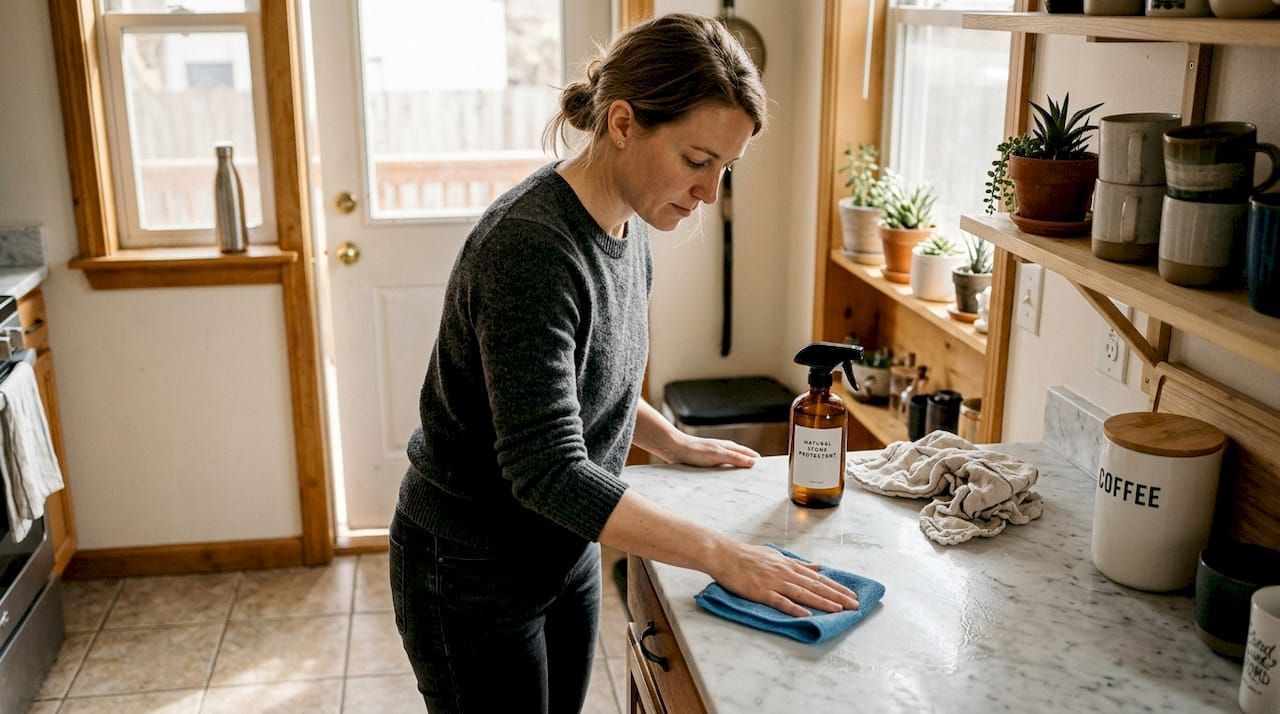
For application itself, less is more. Apply a thin, even coat using a clean applicator pad or microfiber cloth. Work in small sections. Let the first coat absorb for the time specified on the label, then wipe off any excess before it dries on the surface. A second thin coat is often better than one heavy coat.
Breathable formulas prevent moisture-related issues like efflorescence, which is especially important in humid climates or areas near water features. For outdoor stone near pools or in wet climates, this breathability is non-negotiable.
For tips on preventing tile stains naturally alongside your protectant routine, combining good habits with a quality product extends protection significantly. A helpful travertine decor maintenance workflow also shows how protectants fit into a broader care routine.
Common mistakes to avoid:
- Over-applying: Excess product sits on the surface, creating a sticky or hazy film
- Skipping prep: Protectant over dirty stone traps contaminants underneath
- Ignoring curing time: Walking on or wetting the surface too soon ruins the bond
- Using incompatible cleaners: Acidic or alkaline cleaners can strip the protectant layer
"In humid climates, breathable protectants are essential. Trapping moisture inside stone accelerates deterioration faster than almost any stain would." — Stone care professional insight
Reapply when you notice water no longer beads on the surface or when the stone starts absorbing spills more readily. Most eco-friendly protectants need reapplication every one to two years under normal residential use.
Why sustainable surface protection needs both science and common sense
Here's something the eco-friendly cleaning industry doesn't always say out loud: not every "green" product is worth your time. The label alone means nothing. What matters is whether the formula is backed by real surface science, not just good marketing.
We've seen homeowners swap to plant-based protectants that were genuinely innovative but untested on their specific stone type, only to deal with uneven absorption and early failure. The lesson isn't that eco products don't work. It's that breathability, ingredient compatibility, and proper application matter more than the "natural" claim on the front of the bottle.
The most reliable sustainable stone sealers combine proven water-based chemistry with transparent ingredient lists. You don't need cutting-edge antimicrobial silica on a kitchen countertop. You need a formula that bonds cleanly, repels stains, and lets your stone breathe. Simple, science-backed, and safe.
Balance innovation with reliability. That's where real sustainable surface care lives.
Explore eco-friendly protectants for your home
If this article has shifted how you think about surface protection, the next step is finding products that actually deliver on these principles. Not every eco-friendly label lives up to its promise, but the right formulas make a real difference for your surfaces and your household.
At
Oceancare Store, we've built our product range around exactly these standards: low VOC, biodegradable, plant-based where it counts, and genuinely effective on stone, tile, and grout. Browse our
biodegradable cleaner and sealer for an all-in-one solution, explore our full range of
stone and grout sealers for targeted protection, or check out our curated list of
eco-friendly home cleaners to build a complete sustainable surface care routine.
Frequently asked questions
Are eco-friendly protectants as durable as traditional products?
Eco-friendly protectants are just as durable as solvent-based products when properly applied, particularly on indoor surfaces. Water-based protectants are preferred for indoor and LEED-certified projects without sacrificing meaningful protection.
Will eco-friendly protectants cause surfaces to dull or lose shine?
Some water-based protectants won't replicate the deep, wet-look shine of solvent-based formulas, but they keep surfaces looking clean and natural. Water-based protectants may dull slightly compared to solvent options, which is often a fair trade for better safety.
Are eco-friendly protectants safe for families and pets?
Yes. Low VOC and low odor formulas make eco-friendly protectants a genuinely safer choice for enclosed spaces where children and pets spend time on treated floors.
Do eco-friendly protectants offer antimicrobial benefits?
Some newer formulas are exploring this area. Mesoporous silica with plant extracts shows promise for antimicrobial surface protection, though most of this research is still in early stages and not yet widely available in consumer products.
How often should eco-friendly protectants be reapplied?
Most eco-friendly protectants need reapplication every one to two years, depending on surface type, traffic level, and exposure to moisture or cleaning products.
Recommended
- Eco-Friendly Cleaning: Safer Solutions for Surface Care
- 7 Hard Surface Cleaning Best Practices for Eco Homes
- Natural Stone Sealers: Protecting Surfaces Sustainably
- Eco-Friendly Grout Cleaning Guide for Safe Surface Care
- Eco-Friendly Cleaning Defined – Healthier Homes in LA
- Sustainability in Commercial Roofing: Cost and Environmental Impact

