
Homeowners: Use Breathable Sealers on Limestone Patios, Reseal in 1–3 Years
Yes, seal an outdoor limestone patio. A penetrating sealer soaks into the stone, cuts water absorption, and blocks stains from setting deep into the pores, all without trapping moisture underneath or leaving a plastic-looking film on top. The one catch: check the stone's porosity first and pick a breathable, impregnating formula, not a topical coating.
TL;DR:
- Resealing every one to three years is recommended, with the water-bead test indicating whether the sealer is still effective.
- Use a penetrating, impregnating sealer suited for limestone's porosity, preferably a water-based formulation near plants or in enclosed spaces.
- Proper cleaning and drying, including removal of algae, efflorescence, and repair of cracks, are essential steps before sealing.
- Avoid sealing damp stone or using film-forming sealers, as these can cause moisture trapping, slipperiness, and surface damage.
- Choose eco-friendly, low-VOC sealers and cleaners designed for outdoor limestone to ensure breathability and safer application.
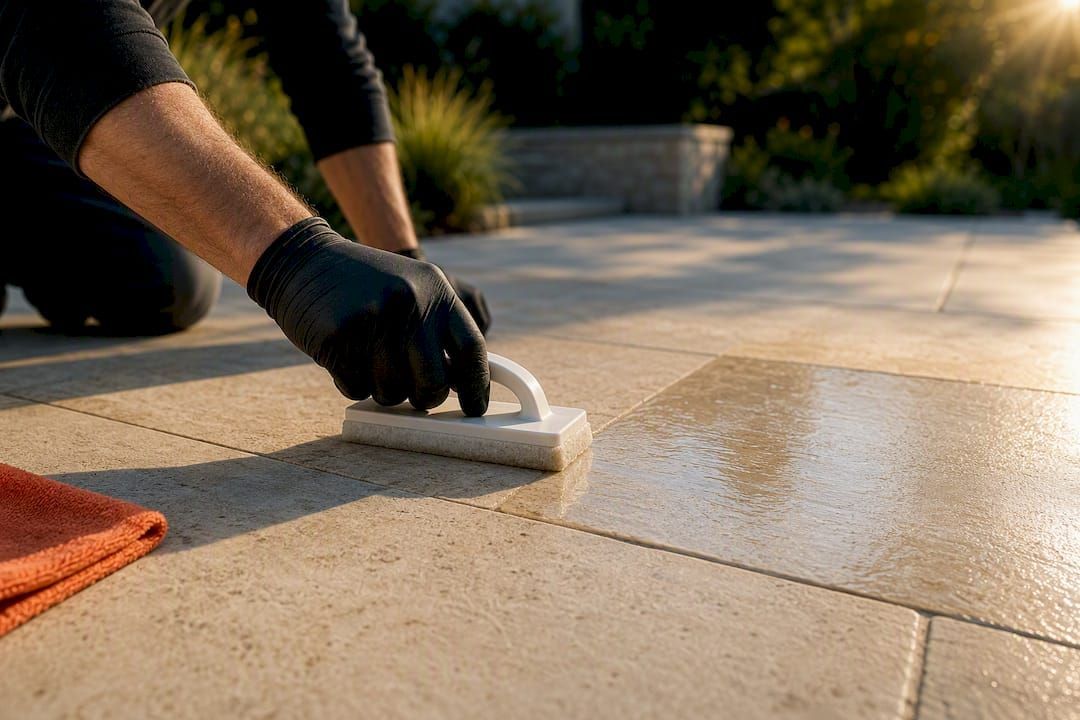
Table of Contents
- Why Sealing Matters for a Limestone Patio (and Where It Falls Short)
- Choosing the Right Sealer Type for Outdoor Limestone
- Cleaning and Prepping Limestone Before You Seal
- How to Seal a Limestone Patio Step by Step
- How Often Should You Reseal a Limestone Patio?
- Mistakes That Ruin a Limestone Sealing Job
- Why Product Choice Matters as Much as Technique
- What Homeowners Get Wrong About Sealing Limestone
- Get the Right Sealer and Cleaner for Your Patio
- Sources
Why Sealing Matters for a Limestone Patio (and Where It Falls Short)
Limestone is soft and porous compared to granite or slate, which is exactly why it stains so easily and why sealing works so well on it. A penetrating sealer fills the microscopic pores just below the surface, so spilled wine, grease from the grill, or leaf tannins sit on top of the barrier instead of soaking straight into the stone. Sealing reduces the depth and severity of stains, which is why a sealed patio wipes clean in minutes while an unsealed one might need an acid poultice and a weekend.
Sealing doesn't make the stone maintenance-free, though; for effective upkeep, follow how your business can keep the property in tip top shape. You still need to sweep, rinse, and occasionally clean it. Skip sealing entirely and you're gambling with:
- Deeper, harder-to-remove stains from oil, rust, and organic debris
- Algae and moss taking hold in shaded, damp corners
- Freeze-thaw damage in colder climates, where trapped water expands inside the stone and pops off small flakes
If your patio is a low-traffic side path, well-drained, and rarely exposed to standing water, sealing is less urgent. Everywhere else, it's worth doing.
Choosing the Right Sealer Type for Outdoor Limestone
The sealer you pick matters more than almost any other decision in this process. Penetrating, or impregnating, sealers are the most suitable choice for limestone because they soak into the stone rather than sitting on top of it, letting trapped moisture vapor escape instead of blistering the surface.
Within that category, you'll choose between two chemistries:
- Water-based impregnators : lower odor, lower VOCs, easier cleanup, and generally the better fit for patios near pools, gardens, or pets.
- Solvent-based impregnators : can penetrate more deeply in some cases, but carry stronger fumes and higher VOC content, which matters if you're sealing near plantings or working in a tight courtyard with poor airflow.
Topical, film-forming sealers are the wrong tool here. They create a visible coating that can turn slippery when wet and trap moisture underneath, which on an outdoor surface exposed to rain and freeze cycles is close to asking for trouble. They still show up on some indoor lobby floors or covered porches where slip risk and moisture cycling aren't factors, but they don't belong on an open patio.
Many stone-care professionals recommend penetrating sealers for outdoor limestone , largely because a penetrating formula preserves the stone's natural look while resisting water and oil-based stains, whereas topical products tend to alter the color and sheen. Color-enhancing sealers exist too, and they'll deepen the stone's natural tones, but they're a cosmetic choice layered on top of the protection decision, not a substitute for it.
Cleaning and Prepping Limestone Before You Seal
A sealer only performs as well as the surface underneath it. Sealing over dirt, algae, or old coating residue traps the problem instead of solving it, so work through this in order:
- Sweep off loose debris, leaves, and grit, then spot-treat any grease or oil marks.
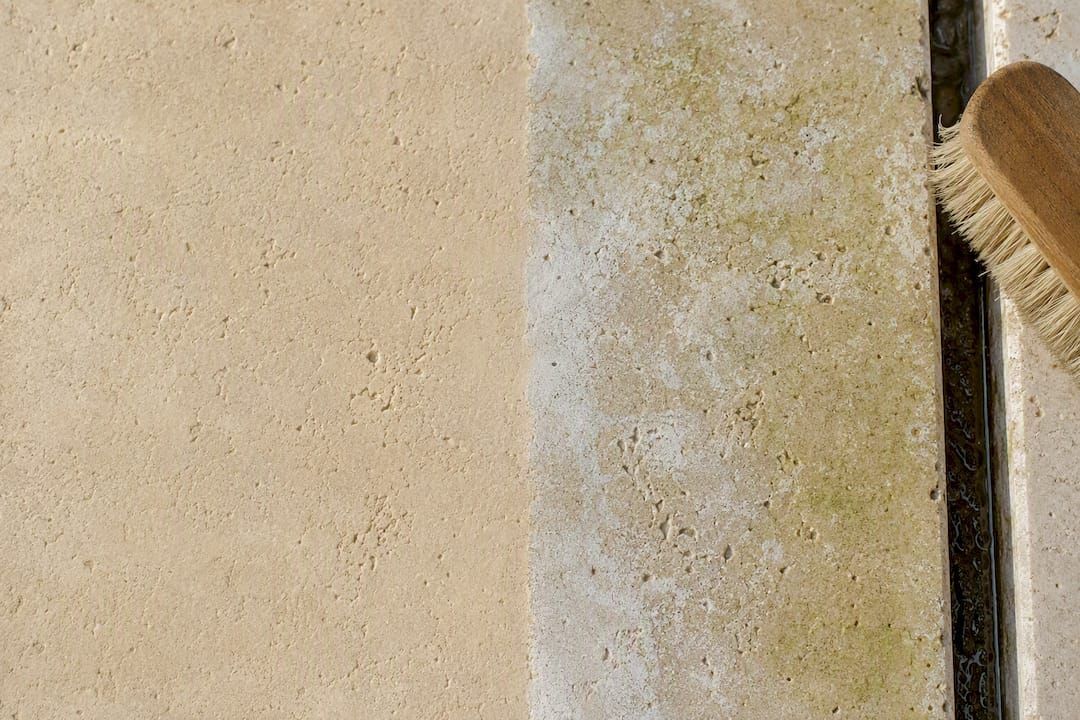
- Remove algae, moss, or lichen with a biological stone cleaner made for the job, not a generic household cleaner.
- Skip acid-based cleaners entirely. Acid cleaners enlarge the stone's pores and weaken the surface over time. Stick with a pH-neutral limestone cleaner instead.
- If you see a white, powdery haze (efflorescence), brush it off dry first, then rinse. It's mineral salt migrating to the surface, not damage, but it needs to come off before sealer goes down.
- Repair cracked pavers and re-point any open joints. Sealer won't fix structural gaps, and water will still find its way underneath.
- Let the patio dry fully. Most manufacturers call for a 24 to 48-hour dry window after cleaning, though some products ask for up to 72 hours depending on weather and humidity.
Pro Tip: Press a strip of clear packing tape onto the stone overnight. If condensation shows up underneath by morning, the surface is still too damp to seal.
How to Seal a Limestone Patio Step by Step
Once the stone is clean, dry, and repaired, the application itself is straightforward if you work in the right conditions and don't rush the coats.
- Check the forecast. Apply only within the temperature range listed on the sealer's label, typically avoiding direct sun or rain for at least 24 hours after each coat. Wear gloves and eye protection, and tape off adjacent wood, brick, or planting beds.
- Choose your applicator. A low-pressure pump sprayer covers large areas fast and evenly; a paint roller with a natural nap gives you more control on smaller patios; a microfiber mop works well for wiping excess and leveling out a thin, even coat.
- Apply the first coat evenly , working in manageable sections so you can wipe back any pooling before it dries into a hazy film.
- Wait the recommended window between coats , usually 30 minutes to a few hours depending on temperature and humidity, then apply a second coat if the label calls for it. Most limestone patios need two coats for full protection.
- Wipe away any standing sealer with a clean microfiber cloth before it cures. Puddled sealer dries into a cloudy patch that's a pain to correct later.
- Let it cure. Full cure typically runs 24 to 72 hours depending on the product and weather, and coverage rates shift with how porous your particular stone is. Keep foot traffic off during that window and hold off on placing furniture back until the surface has fully set.
A sealer that's still curing when you drag a chair across it will show a scuff mark that outlasts the whole season. Patience during those final hours is what separates a clean job from a redo.
If you'd rather follow a printable version of this workflow, Oceancarestore's step by step surface sealing guide walks through the same sequence with photos.
How Often Should You Reseal a Limestone Patio?
Reseal frequency isn't one-size-fits-all. It depends on the product, foot traffic, and your local climate, but most homeowners land somewhere between one and three years before a fresh coat is needed.
- Run the water-bead test every few months: pour a small amount of water on the surface. If it beads up, the sealer's still working. If it soaks in within a minute or two, it's time to reseal.
- Watch high-traffic zones first, like the path from the door to the grill or the area around outdoor seating. These wear out before the rest of the patio does.
- Clean routinely with pH-neutral, low-VOC cleaners rather than anything acidic or heavily fragranced, which can degrade the sealer film early. Oceancarestore's outdoor stone maintenance guide covers a simple rotation that won't strip protection between resealing cycles.
- Adjust for the season. Reseal before the wet or freezing months hit in colder regions, and stay ahead of algae season in humid climates by cleaning shaded, damp corners more often.
Sealing doesn't eliminate maintenance. It makes the maintenance you're already doing a lot more forgiving.
Mistakes That Ruin a Limestone Sealing Job
Most sealing failures trace back to one of a handful of avoidable errors:
- Sealing damp stone , including right after a heavy rain, which traps moisture under the new coat and can cause clouding or peeling.
- Using a film-forming topical sealer outdoors , which blocks vapor from escaping and turns the surface slick when wet.
- Over-applying sealer and letting it pool, leaving a hazy, uneven finish once it cures.
- Cleaning with acidic products before sealing , or switching to an incompatible cleaner afterward that breaks down the sealer early.
Why Product Choice Matters as Much as Technique
Oceancarestore focuses on eco-friendly, biodegradable, plant-based, and low-VOC cleaning and sealing products built for natural stone, grout, and other hard surfaces, which matters more on a patio than most homeowners realize. A low-VOC, plant-based impregnator makes practical sense wherever the sealing job happens near a pool, in a yard where pets and kids spend time, or close to garden beds where solvent runoff is a real concern.
These formulas fit directly into the prep and application steps already covered:
- pH-neutral cleaners for the pre-seal wash, avoiding the pore damage that acid cleaners cause
- Biodegradable formulas that are safer to rinse near lawns and planting beds
- Low-odor, water-based impregnators that cure clean without heavy fumes in enclosed courtyards
Choosing a plant-based sealer doesn't mean giving up protection. It means getting the same breathable barrier without the tradeoffs that come with harsher solvent-based chemistry.
What Homeowners Get Wrong About Sealing Limestone
Most sealing advice online treats the product like the whole story. It isn't. Prep does more of the actual work than people expect. A premium sealer applied over a patio with leftover efflorescence, algae residue, or acid-etched pores will underperform a cheaper sealer applied to properly cleaned, fully dry stone every time.
The other overlooked piece is the water-bead test. Homeowners tend to reseal on a calendar schedule, whether that's every year or every two years, instead of checking whether the sealer is actually still doing its job. That leads to two failure modes: resealing too early, which wastes product and money, or resealing too late, after stains have already set in. A thirty-second test with a cup of water tells you more than any calendar reminder.
If there's one place to push back on conventional wisdom, it's the assumption that topical sealers are an acceptable shortcut for a "glossier look." On an open-air patio exposed to rain, foot traffic, and freeze cycles, that shortcut tends to cost more in slip risk and trapped moisture than it ever saves in curb appeal. Breathable, penetrating protection isn't the compromise option here. It's the correct one.
Get the Right Sealer and Cleaner for Your Patio
There are plant-based, low-VOC alternatives to harsh solvent sealers that offer breathable protection suitable for limestone patios. The Stone & Grout Sealers line is built for exactly the outdoor application process covered above: impregnating formulas that resist water and stains while letting the stone breathe.
A few buying notes before you order: check the product label for outdoor patio suitability specifically, since some formulas are designed for interior stone only. Water-based options are the better call for lower odor and easier cleanup in enclosed or planted areas; save solvent-based formulas for cases where the label specifically calls for deeper penetration. Coverage varies by porosity, so measure your patio's square footage before ordering to avoid running short mid-job. If you'd rather handle cleaning and sealing in one pass, the Clean & Seal combination product covers both steps with a single biodegradable formula.
Head to the Stone & Grout Sealers page to compare formulas and get your patio protected before the next rain.
Sources

