
Patch Travertine Holes That Last With Low VOC Sealers for Homeowners
The fastest reliable fix is a stone-specific filler: water-activated travertine powder or polyester for small and medium holes, epoxy only for larger structural voids. Clean the hole completely, let it dry fully, then pack in the filler and seal once it cures. Skip any of those steps and the patch will fail or stand out.
TL;DR:
- Water-activated travertine powders are ideal for small pits, blending seamlessly with honed or tumbled surfaces, and are easy for beginners to use.
- Polyester fillers are suitable for medium holes on floors where a polished finish is desired, as they accept polishing after curing.
- Epoxy fillers provide maximum strength for large or structurally compromised voids but are overkill for small surface pits and may not match the surrounding stone color well.
- Proper cleaning, drying, precise mixing, and careful application are essential steps to ensure a durable and invisible repair.
- Sealing the patch with low-VOC, acid-free sealers after full curing is crucial to protect the repair from stains while maintaining long-term durability.
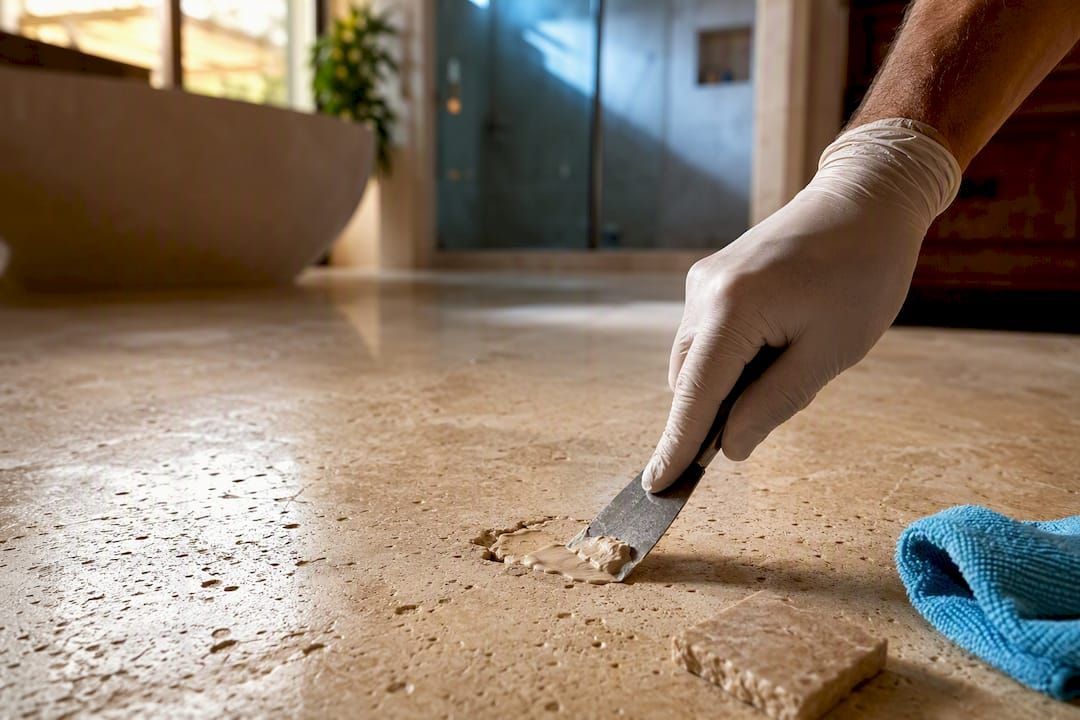
Table of Contents
- Which Filler Type Works Best for Travertine Holes?
- Step-by-Step DIY Workflow to Fill Travertine Holes
- How Do You Match Filler Color to Travertine?
- When Should You Call a Stone Professional Instead?
- How Do You Protect a Repaired Travertine Surface Long-Term?
- What Oceancare Recommends for Post-Repair Stone Care
- Recommended Products to Seal and Maintain Your Repair
- Sources
- FAQ
Which Filler Type Works Best for Travertine Holes?
Not every filler belongs in every hole. The right pick depends on the size of the void, whether you're working on a floor or a vertical surface, and how much polish you need at the end.
Water-activated travertine powders mix with plain water into a paste, similar to spackle. StonePro Traverfill is a common example, sold in light and dark shades so you can blend the two to approximate your stone's color. It dries to a matte finish, which suits honed or tumbled travertine but won't match a polished floor without extra work. This is the easiest entry point for a first-time repair because the mixing process feels familiar to anyone who has patched drywall.
Polyester (semi-solid) fillers offer more workability and, critically, they accept a polish after curing. Tenax's travertine filler falls in this category and is typically recommended for interior horizontal surfaces like floors and countertops, where you want the repaired spot to shine along with the rest of the stone. Polyester requires a catalyst, so timing and ratios matter more than with a powder.
Epoxy fillers bring the most strength and durability, which makes them the right call for larger voids or anywhere the repair needs to bear real structural load. The trade-off is color matching. Epoxy tends to cure harder and glossier than the surrounding stone, and it's genuinely over-specified for small surface pits, where a simpler powder does the job with less hassle and better blending.
Quick rule of thumb:
- Small pits and pinholes: reach for a water-activated powder.
- Medium holes on floors where polish matters: try a polyester filler.
- Larger or structurally compromised voids: use epoxy, and accept a visible color trade-off.
Step-by-Step DIY Workflow to Fill Travertine Holes
Follow this order every time. Skipping a step, especially drying time, is the number one reason DIY repairs fail.
- Clean the hole. Use a pH-neutral cleaner to strip out oils, dust, and any loose factory filler still sitting in the void. Harsh acidic cleaners can etch the surrounding stone, so avoid them here.
- Dry completely. Any trapped moisture will interfere with adhesion, whether you're using powder, polyester, or epoxy. Give it time, especially in humid bathrooms or near pools.
- Mix according to the product's ratio. Travertine powders use a water ratio, polyester needs a catalyst measured precisely, and epoxy requires the correct resin-to-hardener balance. Manufacturer directions exist for a reason. Guessing the ratio is where most first attempts go wrong.
- Pack the filler in firmly , slightly overfilling the hole so you have material to tool flush with the surface.
- Wait for the manufacturer's recommended window before touching the repair again.
- Clean excess with a damp, not wet, sponge , wiping in one consistent direction. A soaking sponge pulls fresh filler right back out of the hole, leaving a hollow, uneven patch, which is a common and avoidable DIY mistake.
- Cure fully before sealing or foot traffic. Curing times vary by product, so check the label rather than assuming.
- Test the set by pressing a fingernail gently at the edge of the patch. If it gives or crumbles, it needs more time.
Pro Tip: A 1 lb container of powder filler goes further than you'd think, since you're only filling isolated pits rather than resurfacing the whole tile. Buy the smaller kit first before assuming you need a bulk order.
How Do You Match Filler Color to Travertine?
Getting the patch to disappear into the surrounding stone comes down to mixing, not guessing. Manufacturers sell light and dark shades from the same product line specifically so you can blend a custom tone. Combine them in small increments rather than dumping both into one batch.
- Mix light and dark powders or polyester tints from the same product series to land on a close match.
- Never add outside pigments or dyes. Foreign pigments weaken the bond between filler and stone, which risks the patch popping loose later.
- Always test a small patch first and let it dry completely. Wet filler reads darker than cured filler, so judging color on a still-damp patch will mislead you.
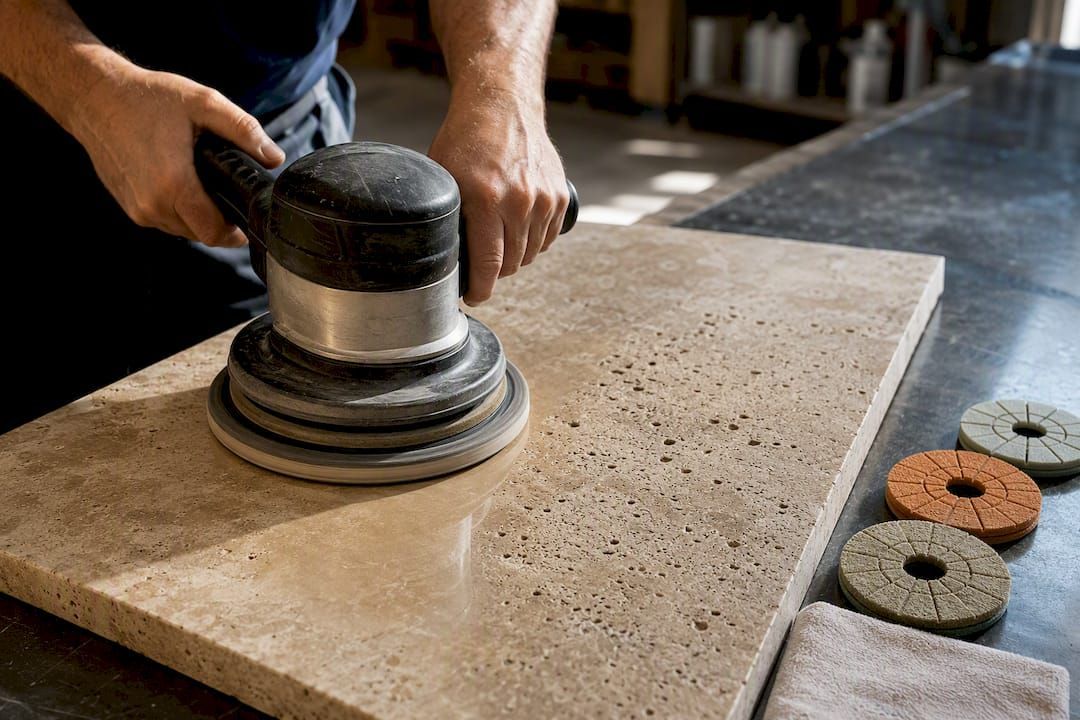
- For polished interior travertine, a light sanding or hone once the filler has fully cured can bring the sheen closer to the surrounding tile. Save this step for polyester fillers designed to accept polish. Powder fillers generally stay matte no matter how much you buff them.
When Should You Call a Stone Professional Instead?
Some repairs are outside the range of a weekend project. Large or structural cracks that run through the tile body, hollow-sounding tiles when tapped, and widespread missing factory filler across a large floor area all point toward professional restoration rather than a spot repair.
Finish requirements matter too. If you need a precise polished match or a full honed refinish, that typically requires diamond abrasives and equipment most homeowners don't own. Professional stone technicians deep-clean, remove loose material, fill, cure, and then hone or polish the repair flush with the surrounding stone for a near-invisible result, something hand-sanding can't reliably replicate.
Moisture-heavy or pool-edge applications raise the stakes further. A patch that fails on a bathroom floor is an inconvenience. A patch that fails on a pool deck exposed to constant water and freeze-thaw cycles is a repeat job, so long-term durability there is worth paying a professional for.
How Do You Protect a Repaired Travertine Surface Long-Term?
Travertine is naturally porous, which is exactly why the hole formed in the first place, and it's why sealing matters even more once you've patched it. Sealing fills the stone's small pores and reduces staining risk, and it also helps keep the new filler from collecting dirt in the exact spot you just repaired.
Wait until the filler has fully cured before applying any sealer. Sealing too early can trap moisture against fresh filler and interfere with the final set.
- Choose acid-free, low-VOC sealers designed for sensitive natural stone rather than generic hardware-store sealants.
- Clean routinely with pH-neutral products; acidic cleaners etch travertine over time and can degrade both the stone and the repair.
- Check for water beading every 6 to 12 months. When water stops beading and starts soaking in, it's time to reseal.
- Wipe up spills promptly, especially oils and wine, since porous stone absorbs stains fast around a fresh patch.
For daily upkeep between resealing, a routine like the one covered in this travertine shower cleaning guide applies just as well to floors and countertops.
What Oceancare Recommends for Post-Repair Stone Care
Filling the hole is only half the job. What you clean and seal with afterward decides whether that repair lasts five years or fifty. Oceancarestore focuses specifically on eco-friendly, biodegradable, plant-based, and low VOC products built for natural stone, grout, and other hard surfaces, which matters more right after a repair than almost any other time, since fresh filler is at its most vulnerable to harsh acids and heavy solvents.
Non-toxic, acid-free formulas protect the surrounding stone without stripping or discoloring the patch you just spent an afternoon blending. For anyone weighing whether to seal a pool-edge travertine deck after a repair, that timing question deserves its own careful answer rather than a guess.
Recommended Products to Seal and Maintain Your Repair
Once the filler has cured, the Stone & Grout Sealers line protects the filled pores and the surrounding travertine with an acid-free, low-VOC formula, built specifically for porous natural stone rather than generic hardware-store sealants that can discolor a fresh patch.
For the routine wipe-downs in between, Oceancarestore's Home Essential Cleaners are pH-neutral, so they won't etch the stone or break down the repair you just made. If you're not sure which sealer matches your finish, a guide to choosing the right stone sealer walks through the differences between matte, honed, and polished applications. Browse the full lineup on the Oceancarestore homepage and pick the sealer and cleaner combination that matches your repaired surface before your next cleaning cycle.
Sources
For manufacturer-specific mixing and safety directions, check the Miracle Sealants Travertine Fill Kit page directly, and always follow the printed instructions over general advice, including the guidance in this article.
FAQ
Should You Fill Holes in Travertine?
Yes. Unfilled holes trap dirt, moisture, and oils, which accelerates staining and makes the surrounding stone harder to clean, so filling them protects both appearance and long-term durability.
Does Home Depot Sell Travertine Fillers?
Availability varies by location and season, but travertine repair kits are widely sold online through specialty stone suppliers and manufacturer sites, with typical kits covering a moderate range of area depending on how many holes need filling.
Can I Fill Holes in Travertine With Epoxy?
Yes, epoxy works well for larger or structurally weak voids because of its strength, but it's often unnecessary for small surface pits and tends to be harder to color-match than powder or polyester fillers.
How Long Should Filler Cure Before Sealing?
Cure times vary by product, so always follow the manufacturer's stated window rather than a general rule, and never seal or walk on the repair until that time has fully passed.

