Mechanical vs Chemical Surface Cleaning: A 2026 Guide
TL;DR:
- Mechanical and chemical surface cleaning serve distinct but complementary roles in property maintenance. Mechanical methods physically remove contaminants and create surface profiles, while chemical agents dissolve soils at a molecular level, reaching inaccessible areas. Combining both approaches produces the most effective results, especially on complex surfaces and stubborn soils.
Mechanical surface cleaning is defined as the physical removal of contaminants through abrasion, impact, or scraping, while chemical surface cleaning dissolves or emulsifies deposits using formulated agents. Understanding the role of mechanical vs chemical surface cleaning is the foundation of any effective property maintenance program. Each method targets different soil types, surface conditions, and end goals. Used correctly, they work together to protect surfaces, extend material life, and reduce costly rework.
What is the role of mechanical vs chemical surface cleaning?
Mechanical and chemical cleaning serve distinct but complementary functions in surface maintenance. Mechanical methods physically disrupt and remove contaminants. Chemical methods break down soils at a molecular level, reaching areas tools cannot.
The distinction matters because no single method handles every soil type or surface condition. Rust on steel requires abrasion. Calcium scale on pool tile responds better to acid-based chemistry. Biofilm on grout needs both: mechanical action fractures the protective matrix, then chemical disinfectants finish the job. Relying on one method alone produces incomplete results and often damages surfaces.
Industry standards formalize this distinction. SSPC-SP11 governs power tool cleaning to bare metal, and SSPC-SP1 covers solvent cleaning before mechanical work begins. These standards exist because sequencing and method selection directly affect coating adhesion, surface longevity, and safety compliance.
How do mechanical cleaning methods work?
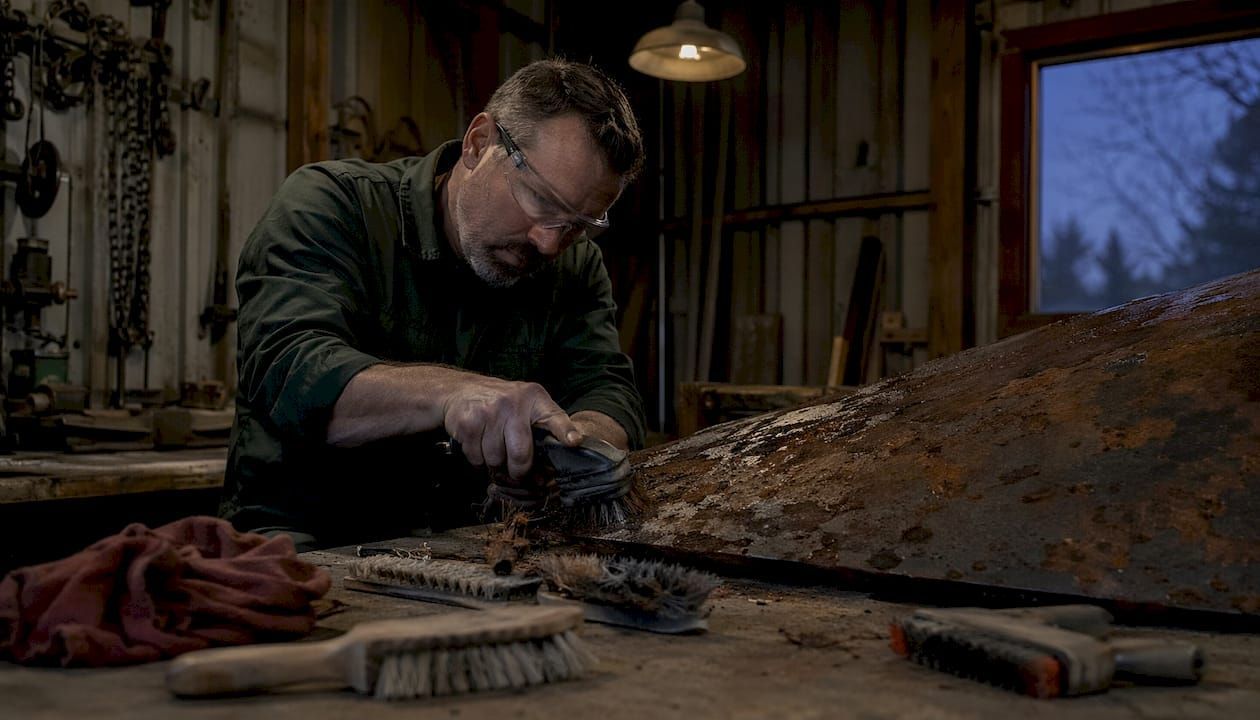
Mechanical cleaning removes contaminants by applying physical force directly to the surface. The tools range from rotary wire brushes and needle guns to purpose-engineered bristle tools that simultaneously impact and abrade.
The most important outcome of mechanical cleaning is the anchor profile. Purpose-engineered tools reliably create surface roughness in the 65–85 µm Rz range, which is the texture coating systems need to bond properly. Standard wire brushes rarely achieve this consistently. That gap in performance is why SSPC-SP11 specifies tool type, not just technique.
Key mechanical cleaning methods and their applications
- Rotary wire brushes: Effective for removing loose rust, mill scale, and flaking paint from flat or curved metal surfaces.
- Needle guns (needle scalers): Best for pitted surfaces and weld seams where rust sits in recesses a brush cannot reach.
- Bristle blaster tools: Rotating wire belt tools that impact and abrade simultaneously, producing SSPC-SP11 compliant surfaces with defined anchor profiles without abrasive blasting.
- Angle grinders with abrasive discs: Used for heavy buildup removal and surface leveling on concrete or stone.
- Pressure washing (wet mechanical): Removes loose debris, dirt, and biological growth from masonry, tile, and outdoor surfaces using water force alone.
Mechanical methods do have real limits. Tight corners, threaded fittings, and porous stone surfaces resist tool access. Aggressive abrasion on soft stone or glazed tile causes permanent surface damage. Mechanical cleaning also generates dust and debris, requiring containment and respiratory protection on job sites.
Pro Tip: Always degrease surfaces chemically before applying any mechanical tool. Oil or grease contamination on steel gets driven deeper into the surface by abrasion, making it impossible to meet SP11 cleanliness standards afterward.
When are chemical cleaning techniques the better choice?
Chemical cleaning is the right call when soils are chemically bonded to the substrate, when surfaces are too delicate for abrasion, or when contaminants sit in areas tools cannot reach. The four main chemistry families are alkaline agents, acids, solvents, and oxidizers. Each targets a specific soil category.
- Alkaline detergents (pH 9–14): Break down fats, proteins, and general organic soils. Used in Clean-In-Place (CIP) systems at 1–3% concentration for food-grade applications, and up to 10% caustic for heavy industrial degreasing.
- Acid cleaners (pH 1–5): Dissolve mineral scale, calcium carbonate, rust staining, and efflorescence. The standard choice for pool tile calcium removal and grout haze.
- Solvents: Cut through heavy oils, adhesives, and wax residues. Modern formulations favor bio-based, water-miscible alternatives over chlorinated solvents to reduce VOC emissions and disposal costs.
- Oxidizers (e.g., hydrogen peroxide, sodium hypochlorite): Effective against biological growth, mold, and organic staining on porous surfaces.
Optimized alkaline degreasing achieves 85–95% oil removal efficiency under proper conditions. That level of performance reduces the mechanical effort needed afterward and cuts hazardous sludge generation significantly.
Pro Tip: Never apply an acid cleaner directly after an alkaline wash without a thorough intermediate rinse. The two chemistries neutralize each other on contact, reducing effectiveness and potentially damaging the substrate. Correct sequencing with rinsing between steps is non-negotiable.
The shift toward eco-friendly chemical cleaning is accelerating in property maintenance. Plant-based, phosphate-free, and low-VOC formulations now match the performance of older harsh chemistries on most residential and commercial surfaces, with far lower risk to occupants and the environment.
Mechanical vs chemical cleaning: benefits, limits, and ideal use cases
Choosing between methods requires an honest look at what each does well and where each falls short.
| Category | Mechanical cleaning | Chemical cleaning |
|---|---|---|
| Cleaning power | Removes heavy, loose deposits and creates surface profiles | Dissolves chemically bonded soils and reaches confined areas |
| Surface effect | Creates anchor texture; risk of abrasion damage on soft surfaces | No surface profiling; risk of substrate etching if misapplied |
| Environmental impact | Generates dust and debris; no chemical waste | Chemical waste and VOC emissions; reduced with bio-based options |
| Typical applications | Rust removal, coating prep, heavy buildup on metal and concrete | Scale removal, degreasing, biofilm treatment, delicate stone |
| Speed | Fast on accessible surfaces; slow in confined areas | Faster on complex geometries; requires dwell time and rinsing |
| Cost | Higher labor cost; lower consumable cost | Lower labor cost; higher chemical and disposal cost |
The surface cleaning comparison above shows no clear winner. Mechanical cleaning excels on accessible, heavily contaminated metal or concrete where a defined surface profile is the goal. Chemical cleaning wins on pool tile calcium deposits, grout staining, and any surface where abrasion would cause damage.
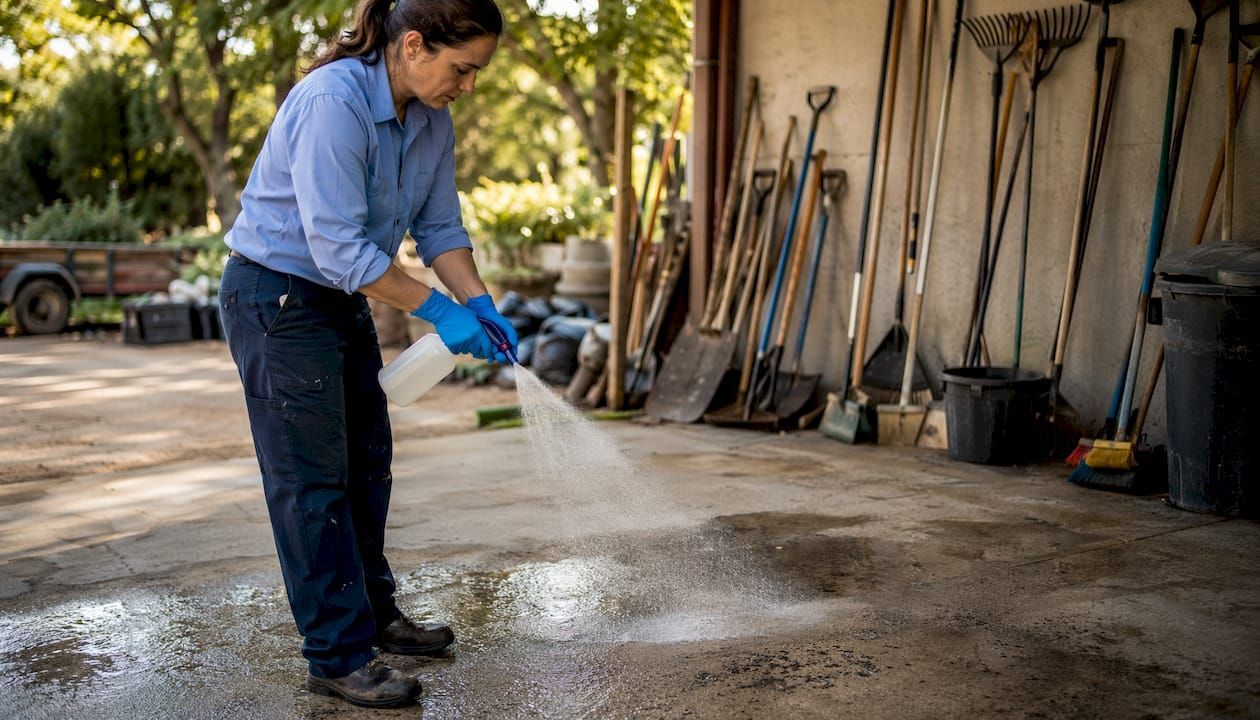
Hybrid cleaning strategies combining chemical detergents with mechanical agitation produce the best results on complex geometries and microscopic surface irregularities. A practical example: applying an acid-based calcium releaser to pool tile, allowing a full dwell time, then using a nylon brush or low-pressure washer to remove the loosened scale. The chemical does the dissolution work; the mechanical action clears the residue.
For hard surface cleaning best practices in eco-conscious property maintenance, the hybrid approach also reduces the total chemical load needed, since loosened soils require less product to remove completely.
How to integrate both methods into a maintenance workflow
A structured workflow prevents the most common cleaning failures: embedding contaminants, damaging substrates, and wasting product. The sequence matters as much as the method.
- Assess the soil type and surface. Identify whether the contamination is organic (fats, biofilm, mold), mineral (calcium, rust, scale), or petroleum-based (oil, grease, adhesive). Match chemistry to soil type before selecting tools.
- Apply solvent or alkaline degreaser first. SSPC-SP1 requires solvent cleaning before any mechanical cleaning on metal surfaces. Applying chemical cleaners first emulsifies and loosens contaminants, reducing the mechanical force needed and preventing deeper embedding into surface pores.
- Rinse thoroughly. Remove all chemical residue before mechanical work begins. Residual chemistry on a surface being abraded creates a contamination risk and can interfere with subsequent coatings.
- Apply mechanical cleaning to the specified standard. For metal surfaces requiring coating, target SSPC-SP11 compliance: zero staining and a minimum 25 µm Rz anchor profile. Use purpose-engineered tools, not standard wire brushes, to hit this consistently.
- Apply secondary chemical treatment if needed. For biofilm or biological contamination, mechanical disruption of the matrix makes chemical disinfectants significantly more effective. Apply the disinfectant after mechanical agitation, not before.
- Seal or coat promptly. Cleaned surfaces begin to oxidize or recontaminate quickly. Apply sealers or protective coatings within the window specified by the coating manufacturer.
Pro Tip: For delicate surfaces like natural stone or glazed pool tile, replace aggressive mechanical tools with soft-bristle brushes or low-pressure washing. Let the chemistry do the heavy lifting. Pair a low-VOC cleaner with gentle agitation to protect the surface finish while still removing stubborn deposits.
Safety protocols apply to both methods. Mechanical work requires dust containment, respiratory protection, and eye protection. Chemical handling requires appropriate gloves, ventilation, and spill containment. Properties with occupied spaces need extra care to prevent chemical exposure to residents. Eco-friendly commercial cleaning approaches reduce VOC exposure risk significantly, which matters in enclosed maintenance environments.
Key Takeaways
Mechanical and chemical surface cleaning are not competing methods. They are complementary tools that work best when sequenced correctly and matched to the specific soil and surface at hand.
| Point | Details |
|---|---|
| Sequence matters most | Apply chemical degreasing before mechanical cleaning to prevent embedding contaminants into the surface. |
| Match chemistry to soil | Use alkaline agents for organics, acids for mineral scale, and solvents for petroleum-based soils. |
| Mechanical profiling is non-negotiable | Achieving a 25–85 µm Rz anchor profile requires purpose-engineered tools, not standard wire brushes. |
| Hybrid methods outperform single methods | Combining chemical treatment with mechanical agitation cleans complex geometries and biofilm more effectively. |
| Eco-conscious chemistry is now viable | Bio-based, low-VOC formulations match the performance of harsh chemistries on most residential and commercial surfaces. |
What I've learned from watching maintenance teams get this wrong
Most cleaning failures I've seen come down to one mistake: skipping the degreasing step before mechanical work. Maintenance crews reach for the angle grinder or wire brush first because it feels productive. The surface looks clean. But oil and grease embedded deeper into the substrate by abrasion will cause coatings to fail within months, and the rework cost dwarfs the time saved.
The second most common mistake is treating chemical cleaning as a passive process. You apply the product, wait, and rinse. That works for light soils. For biofilm or heavy calcium scale, the chemistry needs mechanical help to clear the loosened material. A product sitting on a surface without agitation often underperforms its label claims.
What I find genuinely underappreciated is surface profiling. Property managers focus on whether a surface looks clean, not whether it has the texture a sealer or coating needs to bond. A surface can pass a visual inspection and still fail a coating adhesion test because the anchor profile is wrong. That is a mechanical cleaning problem, not a chemical one.
The trend toward plant-based and phosphate-free chemistries is real and worth taking seriously. These formulations have improved enough that there is rarely a performance reason to reach for a harsh chlorinated solvent or a high-caustic product on residential surfaces. The environmental and occupant safety benefits are clear, and the cleaning results are comparable.
Evaluate each job individually. A pool tile with calcium scale needs a different approach than a concrete floor with oil contamination or a stone countertop with mold staining. One-size-fits-all cleaning programs waste product, damage surfaces, and produce inconsistent results.
Oceancarestore's products for effective surface cleaning
Property maintenance demands products that perform on real surfaces without creating new problems through harsh chemistry or surface damage.
Oceancarestore offers a range of cleaners formulated specifically for pool tiles, natural stone, grout, and other hard surfaces. The pool tile restorer line targets calcium scale, mineral deposits, and staining using acid-based and plant-derived chemistries that dissolve buildup without etching glazed tile surfaces. For ongoing surface care, the pool tile maintenance products support both routine cleaning and periodic restoration. Every formulation is designed to be low-VOC, biodegradable, and safe for use around pool environments and occupied properties. Visit Oceancarestore to find the right product for your surface type and soil condition.
FAQ
What is the main difference between mechanical and chemical cleaning?
Mechanical cleaning physically removes contaminants through abrasion or impact, while chemical cleaning dissolves or emulsifies soils using formulated agents. Each method targets different soil types and surface conditions.
When should you use chemical cleaning instead of mechanical methods?
Chemical cleaning is preferable when soils are chemically bonded to the substrate, surfaces are too delicate for abrasion, or contaminants sit in areas tools cannot access, such as calcium scale on pool tile or grout staining.
Why must degreasing come before mechanical cleaning?
Oil or grease on a surface gets driven deeper into the substrate by mechanical abrasion, making it impossible to achieve SSPC-SP11 cleanliness standards. Chemical degreasing first emulsifies contaminants so mechanical tools remove them cleanly.
What is an anchor profile and why does it matter?
An anchor profile is the surface texture created by mechanical cleaning, measured in µm Rz. SSPC-SP11 requires a minimum 25 µm Rz profile to give coatings and sealers the texture they need to bond properly and last.
Can mechanical and chemical cleaning be used together?
Yes. Hybrid cleaning combining chemical detergents with mechanical agitation consistently outperforms either method alone, especially on complex geometries, biofilm, and surfaces with multiple soil types.

