
Maximize surface longevity with routine hard surface care
TL;DR:
- Maintaining hard surfaces prevents damage, extending their lifespan and reducing costly repairs. Consistent, eco-friendly routines like proper cleaning, sealing, and environmental awareness protect surfaces and the planet. Tailoring maintenance to specific materials and environments ensures long-lasting, sustainable results.
Hard surfaces like natural stone, grout, and pool decks carry a reputation for being tough and low-maintenance. That reputation is mostly a myth. Without consistent care, these surfaces absorb stains, crack under pressure from moisture, and break down in ways that cost far more to fix than to prevent. This guide walks you through evidence-backed, eco-friendly strategies for maintaining your hard surfaces, whether you're caring for a marble bathroom floor, a tiled pool surround, or a slate outdoor patio. You'll come away with a clear, practical routine that protects your investment and aligns with sustainable living.
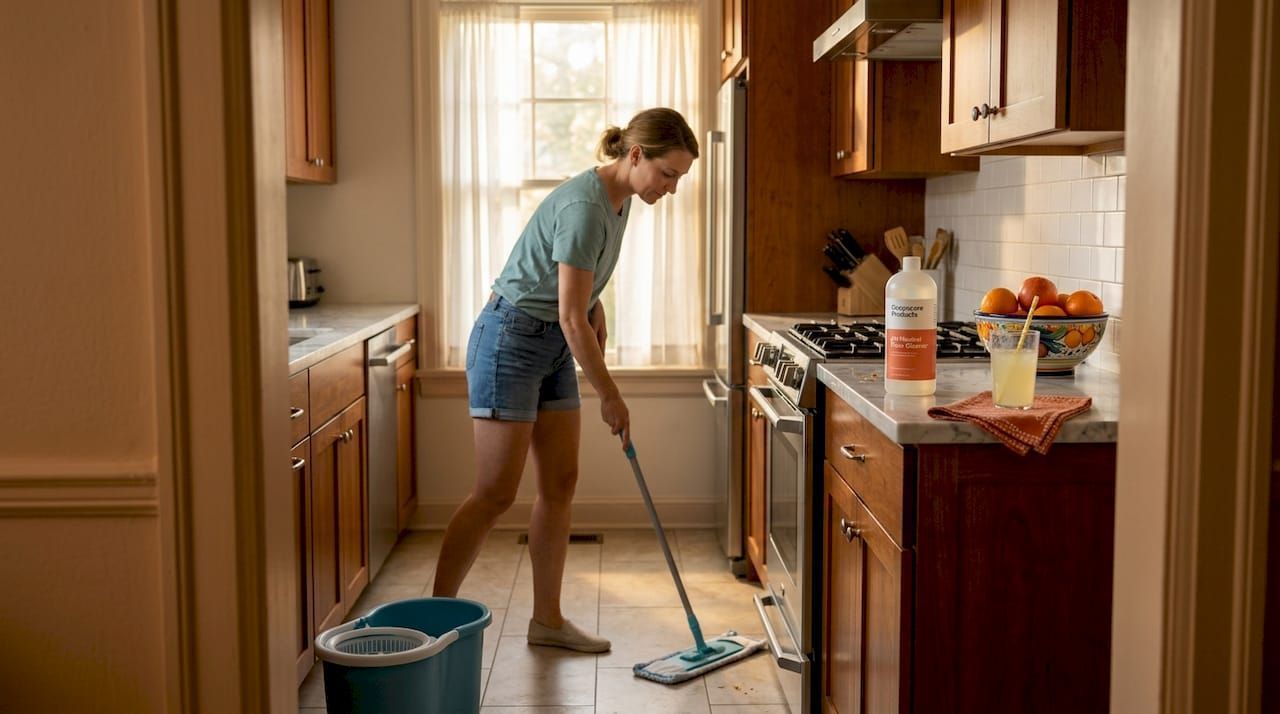
Table of Contents
- Why routine hard surface maintenance matters
- Essential maintenance routines for natural stone and grout
- Sealing: How, when, and why it matters
- Special considerations: Pools and outdoor hardscapes
- Mistakes to avoid: The maintenance pitfalls most people overlook
- Perspective: Why most maintenance advice isn't enough
- Eco-friendly solutions for lasting surface protection
- Frequently asked questions
Key Takeaways
| Point | Details |
|---|---|
| Prevention saves money | Routine hard surface maintenance can reduce costly restorations by up to 6–7 times. |
| Eco practices last longer | Using pH-neutral and biodegradable products protects surfaces and the environment. |
| Sealing needs strategy | Seal based on performance testing, not just the calendar, for optimal longevity. |
| Outdoor care is unique | Pools and decks require frequent cleaning and tailored sealing for safety and durability. |
| Small missteps add up | Using wrong products or neglecting timely care leads to early, expensive surface failure. |
Why routine hard surface maintenance matters
Every hard surface in your home is under constant attack. Foot traffic grinds grit into stone pores. Moisture from steam or rain pushes into grout lines. Organic debris feeds mold and algae on outdoor tiles. Over time, even the most durable materials show wear when they're not given the attention they need.
The good news is that most serious damage is entirely preventable. Routine maintenance prevents soils and moisture from accumulating in grout and porous substrates, stopping permanent discoloration before it takes hold. Think of routine care the way you think about brushing your teeth. Skip it for a week and not much happens. Skip it for a year and the damage becomes expensive to reverse.
The financial case for routine maintenance is also compelling. Research shows that $1 spent on preservation can save $6 to $7 in reconstruction costs. That ratio makes proactive care one of the highest-return investments a homeowner or property manager can make.
From an environmental standpoint, the logic is even stronger. Replacing a stone surface generates significant waste, uses considerable energy, and often requires chemical strippers and adhesives that aren't exactly gentle on the planet. Maintaining what you already have is inherently the greener option.
Here's what routine care protects against:
- Staining from oils, hard water, organic matter, and spilled liquids
- Etching caused by acidic cleaners or substances like citrus juice and vinegar
- Efflorescence , the white salt deposits that appear when moisture migrates through stone or grout
- Mold and algae growth in damp or shaded outdoor areas
- Surface erosion from abrasive cleaning tools or wrong product chemistry
For deeper reading on what eco-conscious care looks like in practice, check out our eco-friendly natural stone cleaning guide and our safe grout cleaning guide.
| Risk factor | Without maintenance | With routine eco care |
|---|---|---|
| Stain penetration | High | Low |
| Grout discoloration | Likely within 1 year | Prevented |
| Surface lifespan | 5 to 10 years | 20 to 30+ years |
| Restoration cost | High | Minimal |
To understand how these benefits play out in your home or property, it's key to know what "routine" actually means for different hard surface types.
Essential maintenance routines for natural stone and grout
Daily and weekly habits are the backbone of surface longevity. The goal isn't to deep-clean every day. It's to stop problems before they escalate.
Here's a practical routine broken down by frequency:
- Daily: Dust mop stone floors to remove abrasive grit that scratches finishes. Wipe spills immediately with a clean, damp cloth. Never let liquid sit on stone, particularly wine, coffee, or citrus juice.
- Weekly: Damp mop with a pH-neutral, stone-safe cleaner. Inspect grout lines for early signs of discoloration or cracking.
- Monthly: Check caulk joints around sinks and showers for mold or separation. Clean grout lines with a soft brush and a product designed specifically for grout, not a bleach spray or an all-purpose cleaner.
- Seasonally: Plan a deeper clean appropriate to your surface type, followed by a seal integrity check (more on that in the next section).
The most common mistake homeowners make is treating natural stone like it's ceramic tile. It isn't. Stone is porous and reactive. Marble etches on contact with vinegar. Travertine absorbs oils quickly. Slate can flake if subjected to freeze-thaw cycles without adequate sealing. Using wrong cleaner types or flooding surfaces during cleaning can damage sealers and cause long-term etching.
Pro Tip: Always test any new cleaning product in a hidden corner before applying it to the full surface. Give it 24 hours and check for color change, dullness, or texture shift.
For eco-friendly surface care options that work across stone types, our biodegradable stone care guide covers plant-based product categories in detail. And if you want to understand the chemistry behind why certain cleaners harm stone, our acid-free stone cleaners article is a helpful read.
Key things to avoid on natural stone and grout:
- Acidic cleaners including vinegar, lemon juice, and many "natural" bathroom sprays
- Abrasive scrubbing pads that scratch polished finishes
- Over-wetting, which forces water into pores and weakens grout
- Generic multi-surface cleaners that contain bleach or ammonia
For a broader strategy that covers outdoor tile as well, our green cleaning for natural stone guide provides a solid framework.
With daily and weekly routines in check, the next critical pillar is surface sealing.
Sealing: How, when, and why it matters
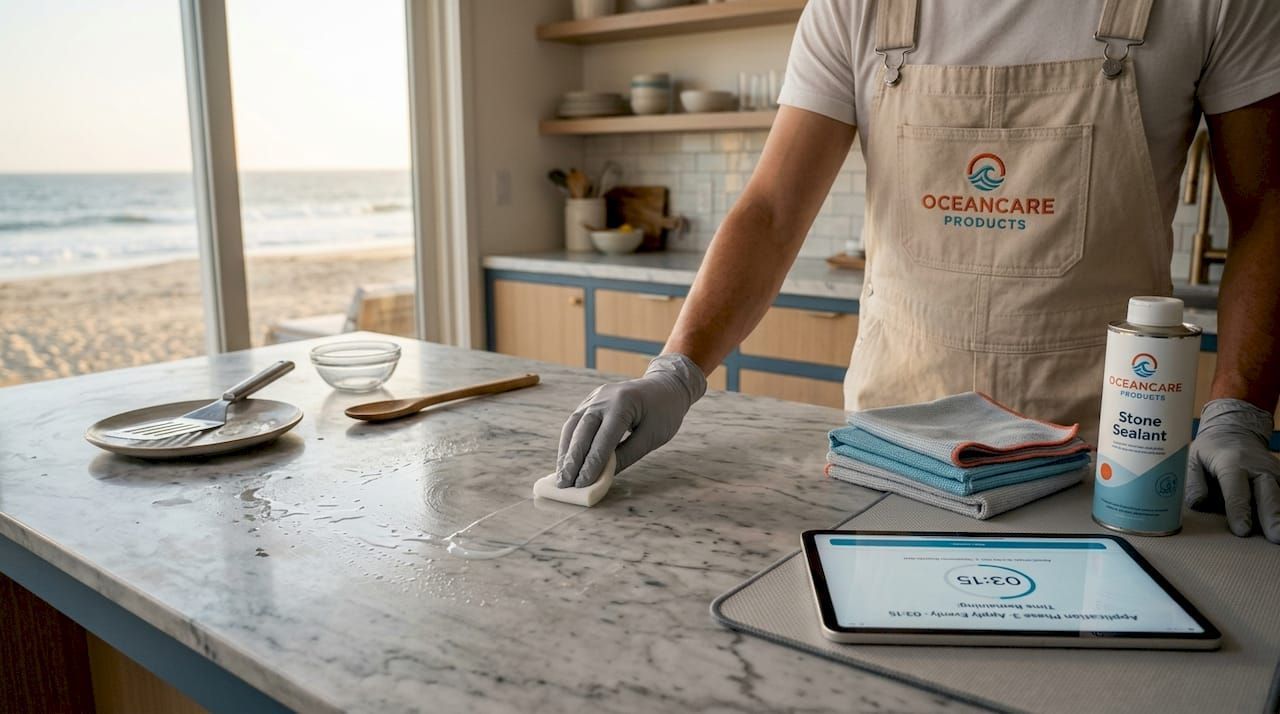
A sealer doesn't make your surface bulletproof. What it does is dramatically slow down the rate at which liquids and stains penetrate the surface. Think of it like a Gore-Tex jacket for your stone. Water still touches the fabric, but it doesn't soak through.
The timing of resealing matters more than most people realize. Many homeowners reseal on a fixed annual schedule regardless of whether the surface actually needs it. That's a mistake. Sealing should be managed by performance, not by the calendar, because over-sealing can trap residue and moisture just as surely as under-sealing leaves the surface vulnerable.
The water-bead test is your best diagnostic tool. Sprinkle a few drops of water on the stone. If they bead up, the seal is still active. If the water soaks in and darkens the stone within a few minutes, it's time to reseal.
| Surface type | Recommended seal frequency | Key signal to reseal |
|---|---|---|
| Polished marble | Every 1 to 2 years | Water absorbs in under 5 minutes |
| Travertine | Every 1 to 2 years | Visible staining after spills |
| Slate | Every 2 to 3 years | Surface feels rough or dry |
| Concrete pool deck | Every 2 to 3 years | Water soaks in immediately |
| Grout lines | Every 1 to 2 years | Discoloration despite cleaning |
Pro Tip: When sealing grout, tape off the stone tiles with painter's tape if you're using a penetrating grout sealer. Some formulas can slightly alter the appearance of certain stone surfaces if applied in excess.
Things to keep in mind when sealing:
- Apply sealer to a thoroughly clean and completely dry surface
- Work in small sections to avoid overlapping
- Remove excess sealer before it hazes or films on the surface
- Ventilate the area well and choose low-VOC options whenever possible
For more detail on how sealers function and what can go wrong, our cleaning tile floors with sealers guide walks through the process step by step. If you're experiencing issues like cloudiness or streaking, the problems with stone sealers article covers the most common causes and fixes. You can also learn more about how products work in our surface protection with sealers overview.
Besides indoor surfaces, the outdoor environment presents its own set of maintenance challenges.
Special considerations: Pools and outdoor hardscapes
Pool areas and outdoor hardscapes take more punishment than almost any indoor surface. They're exposed to UV radiation, freeze-thaw cycles, pool chemicals, organic debris, and constant wet-dry transitions. The surface degradation that would take a decade indoors can happen in two or three years outdoors without proper care.
Routine cleaning and periodic resealing of pool decks prevents cracking, warping, and mold growth, extending service life and keeping surfaces safe for bare feet. Algae and mold growth on a pool deck isn't just an aesthetic problem. It's a slip hazard and a structural one, as organic matter holds moisture and accelerates surface breakdown.
"A well-maintained pool deck can last 25 to 30 years. A neglected one often needs resurfacing within a decade." This isn't an exaggeration. The maintenance gap between those two outcomes is often just a few hours of work per year.
Here's a quick comparison of maintained versus neglected outdoor surfaces:
| Factor | Well-maintained surface | Neglected surface |
|---|---|---|
| Surface lifespan | 20 to 30+ years | 8 to 12 years |
| Slip risk | Low | High (algae, mold) |
| Resealing cost | Minor and infrequent | Major restoration required |
| Environmental footprint | Low | High (replacement materials) |
Pro Tip: For pool tile specifically, a buildup of calcium deposits (also called calcium scale) is one of the most common and damaging issues. Address it with an acid-free calcium releaser rather than an acidic product that could etch tile grout or neighboring stone. Check our guide on pool tile cleaning frequency to set the right schedule for your pool type and climate.
For outdoor hardscapes, schedule a deep clean and seal check every fall before winter moisture sets in. In warmer climates with heavy rainfall, a spring check is also a smart habit. Combining eco-friendly algae treatments with routine sweeping and prompt stain removal will keep surfaces looking and performing their best year-round.
Now that we've covered best practices for maintenance, let's look at how to avoid the most common pitfalls.
Mistakes to avoid: The maintenance pitfalls most people overlook
Even well-intentioned maintenance can cause damage when the wrong products or methods are used. These are the most frequent errors we see from homeowners and property managers:
- Using acid-based cleaners on natural stone or grout. Vinegar, citrus-based sprays, and many bathroom descalers seem harmless but etch marble, limestone, and travertine permanently.
- Ignoring spills. Even water can stain certain stones if left to sit. Oils and pigmented liquids penetrate rapidly into unsealed surfaces.
- Applying sealers over dirty surfaces. A sealer locks in whatever is on the surface at the time of application. Dirt, soap residue, or old sealer haze will be trapped underneath.
- Over-sealing. Over-sealing can trap moisture or residue, while under-sealing increases absorption and staining risk. Both extremes undermine the surface's performance.
- Skipping the compatibility check. Not all cleaners work on all surfaces. A product rated for glazed ceramic tile may be completely wrong for travertine or unglazed slate.
Pro Tip: Read the product label carefully and look for phrases like "safe for natural stone," "pH-neutral," and "non-acidic." If none of those appear, assume the product isn't right for stone or grout until you can verify it.
For confident guidance on sealer selection, our article on guidance on sealers covers the basics well. And if you're unsure which type of sealer to use for your specific surface, our detailed choosing a stone sealer guide walks through material types, traffic levels, and finish considerations.
Understanding these pitfalls can drastically improve your results. Next, let's explore an expert perspective that goes beyond the typical advice.
Perspective: Why most maintenance advice isn't enough
Most maintenance guides give you a calendar. Clean weekly. Seal annually. Done. That kind of advice is better than nothing, but it misses something critical: surfaces don't degrade on a schedule. They degrade in response to their specific environment, usage patterns, and the chemistry of the products used on them.
A marble countertop in a busy kitchen with a coffee-drinking family faces entirely different stresses than a marble floor in a guest bathroom used twice a week. A pool deck in Arizona baking in summer sun needs a different maintenance rhythm than one in a mild coastal climate with frequent rain. Generic advice can't account for those differences.
What we've seen consistently is that the homeowners and property managers who get the best long-term results aren't the ones who follow the strictest schedules. They're the ones who understand how their specific materials behave and respond to their environment. They check seal performance rather than sealing on autopilot. They investigate a product before applying it rather than reaching for whatever's under the sink.
The sustainability piece is just as nuanced. Choosing a plant-based, biodegradable cleaner is a meaningful step, but it still needs to be the right product for your surface type. An eco-friendly acid-based descaler might be great for the environment but devastating for your limestone tile. Good eco choices are material-specific, not just label-specific.
The deeper insight is this: surface longevity is a byproduct of attentiveness, not just routine. You need to observe your surfaces, test their performance, and adjust. A deeper look at sealer issues can help you understand what's actually happening beneath the surface level when things go wrong. Because when you understand the why behind the problem, you make far better decisions about the how.
Eco-friendly solutions for lasting surface protection
If this guide has shown you one thing, it's that the right product choice makes a significant difference in both the outcome and the environmental footprint of your maintenance routine.
At Oceancare Store, we specialize in exactly this kind of thinking. Our range of eco-friendly stone and grout sealers includes low-VOC, plant-based options designed to protect your surfaces without the harsh chemistry that damages finishes or pollutes your space. For pool owners, our pool tile maintenance products are formulated specifically to handle calcium scale, algae, and the demanding wet environment around pools without toxic runoff. And if your tiles are already showing buildup or discoloration, our pool tile restorer offers a safe, effective way to bring surfaces back without aggressive acids. Every product in our line is selected with surface compatibility and environmental responsibility in mind.
Frequently asked questions
How often should I reseal my stone floors or grout lines?
Check seal performance annually using the water-bead test, and plan on resealing every 1 to 3 years for most residential settings. High-traffic or wet areas like pool surrounds and kitchen floors may need attention more frequently, based on performance rather than a fixed interval.
What cleaning products are safest for natural stone surfaces?
Always use pH-neutral, stone-safe cleaners and avoid acidic products like vinegar, citrus sprays, or general bathroom descalers, which can permanently etch marble, limestone, and travertine surfaces.
Is regular hard surface maintenance more cost-effective than restoration?
Absolutely. Proactive maintenance consistently outperforms reactive restoration in cost terms, with research showing that $1 of preservation saves $6 to $7 in future reconstruction costs for hard surfaces.
Can I use the same cleaner for both pool tile and natural stone?
Not always. Wrong cleaner types can damage adjacent unglazed stone or grout systems, so always verify that a product is compatible with each specific surface type before applying it broadly.
Does sealing hard surfaces help the environment?
Yes. Routine sealing extends surface life, reduces how often chemical treatments are needed, and limits the environmental cost of early replacement by keeping materials in service far longer.

