
Protect Your Home Air, Homeowners: Low VOC vs Zero VOC and Emissions Tests
For most homeowners worried about indoor air quality, the smarter move is choosing a third-party emissions-certified paint, not just grabbing anything labeled zero VOC. A zero-VOC base can still off-gas once it's tinted, and a well-tested low-VOC paint sometimes performs better in the real world than its zero-VOC competitor. Pick a certified product, ventilate aggressively while it cures, and you'll manage the actual risk instead of the marketing claim.
TL;DR:
- Choosing a third-party emissions-certified paint significantly reduces indoor air risks compared to relying solely on zero-VOC labels.
- VOC content in labels varies by finish and can increase after tinting, making actual emissions unpredictable without certification.
- Emissions can persist for weeks after painting, especially affecting sensitive groups like children, pregnant women, and allergy sufferers.
- Certifications such as GREENGUARD Gold or Green Seal offer more reliable indicators of low emissions than VOC content alone.
- Proper ventilation during and after painting, along with careful selection of finishing products, is crucial for maintaining indoor air quality.
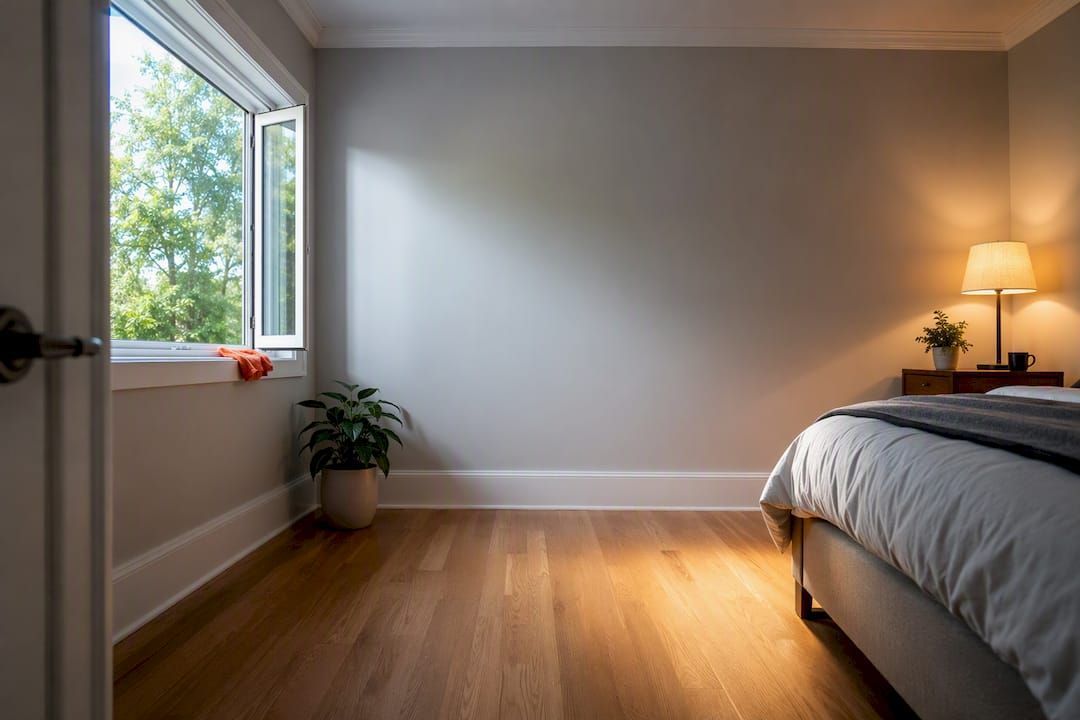
Table of Contents
- Low VOC vs. Zero VOC: What the Numbers on the Can Really Mean
- Content on the Label vs. Emissions in Your Air: Why They're Not the Same Thing
- How Long VOCs Linger and Who Should Worry Most
- Certifications That Actually Mean Something: GREENGUARD Gold, Green Seal, and CDPH 01350
- Painting Day, Step by Step: Cutting Your Exposure Before, During, and After
- What the Research Actually Shows About Low VOC vs. Zero VOC Emissions
- My Take: Stop Trusting the Can, Start Trusting the Testing
- Keep Your Freshly Painted Rooms Clean Without Undoing the Work
- Sources
- FAQ
Low VOC vs. Zero VOC: What the Numbers on the Can Really Mean
The terms aren't interchangeable, and the government doesn't enforce a single universal definition for either one. Most industry guidance treats "low VOC" as paint containing fewer than 50 grams of VOCs per liter for flat finishes, and fewer than 100 g/L for nonflat finishes like satin or semi-gloss, according to Green Seal's guide to VOCs in paint. "Zero VOC" typically means the product has VOC content under about 5 grams per liter, a threshold Green Seal also uses as its benchmark for the zero claim.
Notice the finish distinction. A flat ceiling paint and a semi-gloss trim paint face different thresholds because glossier finishes generally need more resin and solvent to level out and cure properly. That's why a can labeled "low VOC" in semi-gloss can legally carry twice the VOC content of a flat paint with the same label.
A few things worth keeping straight when you're standing in the paint aisle:
- "Low VOC" and "zero VOC" describe VOC content , the raw chemical makeup in the can, not what actually escapes into your air after rolling it on.
- Thresholds shift by finish: flat paints get held to a stricter limit than satin, eggshell, or semi-gloss.
- A "zero VOC" label can still legally include a small amount, often up to that 5 g/L mark, so treat it as very low, not literally none.
- Tinting a paint at the store counter can push VOC content higher, sometimes enough to erase the "zero" claim in practice.
That last point trips up more shoppers than any other detail on this topic, and it deserves its own explanation — including advice on choosing the ideal finish, as explained in What is the Best Sheen for Interior Doors?.
Content on the Label vs. Emissions in Your Air: Why They're Not the Same Thing
VOC content refers to the chemicals present in the can before application. Emissions measure what actually releases from the dried paint over time, and the two numbers can differ significantly.
Laboratory testing on multiple low-VOC and zero-VOC paints found no consistent pattern where lower content automatically meant lower emissions. Some of the tested low- and zero-VOC products released single substances, including acetic acid, in surprisingly high concentrations after application.
That finding comes from a peer-reviewed emissions study published in Building and Environment, and it's the single most important piece of evidence in this entire topic. A can that reads "zero VOC" isn't automatically the cleanest option for your bedroom air. It's a starting point, not a guarantee.
A gap worth remembering: a "zero VOC" base paint can test clean in the can, then pick up VOC-containing colorants the moment a store associate tints it to your chosen shade.
That's not a loophole in the law. It's a gap in how most consumers read labels. VOC regulations, including the ones referenced in EPA guidance on indoor air quality, were largely written to limit outdoor smog formation, not to certify indoor safety. A paint can comply fully with outdoor air rules and still off-gas compounds that matter for someone sleeping in a freshly painted room. Additives that improve mildew resistance, extend shelf life, or adjust texture also aren't always counted toward the VOC number on the label, which is part of why two "zero VOC" cans from different brands can smell completely different once opened.
How Long VOCs Linger and Who Should Worry Most
VOC exposure isn't a single event. It's a curve that starts high and tapers off, and knowing where you are on that curve changes how you should plan a paint job.
Short-term exposure to paint VOCs commonly causes headaches, dizziness, eye and throat irritation, and nausea, especially in a room with poor airflow. Longer-term or repeated exposure raises more concern for effects on the nervous system and, with some specific compounds, cancer risk, though the picture depends heavily on which VOCs are present and how much ventilation the space gets. The EPA's page on VOCs and indoor air quality notes that concentrations indoors can run several times higher than outdoors immediately after activities like painting.
Some people need to be more careful than others:
- Infants and young children breathe faster relative to their body size, so they take in proportionally more of whatever is in the air.
- Pregnant women are commonly advised to avoid freshly painted rooms during the highest-emission window as a precaution.
- People with asthma or chemical sensitivities can react to concentrations that wouldn't bother anyone else in the house.
- Anyone with existing respiratory conditions should treat a paint job as a multi-day event, not a same-day one.
Emissions run highest while the paint is still wet, and the bulk of off-gassing happens within the first 48 hours after application , based on ventilation and timing guidance summarized by the EPA. That doesn't mean the room is chemical-free after two days. Lower-level off-gassing can continue for several weeks, which is why sensitive individuals often wait longer than the general recommendation before spending extended time in a newly painted room.
Certifications That Actually Mean Something: GREENGUARD Gold, Green Seal, and CDPH 01350
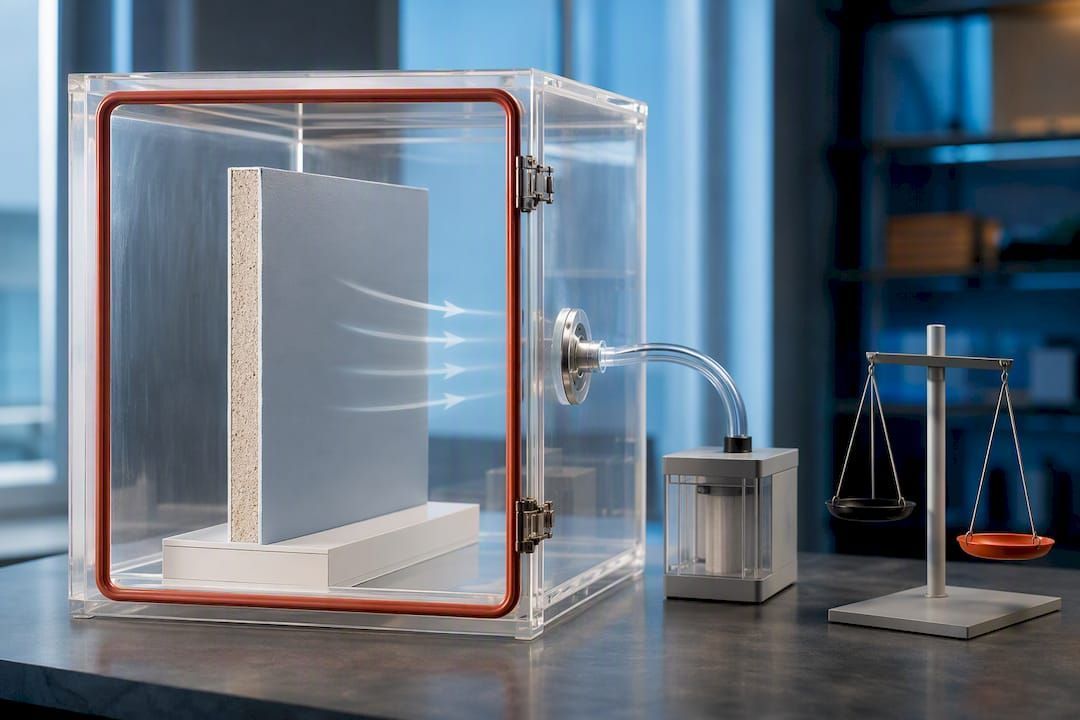
Content thresholds tell you what went into the can. Certifications tell you what came out of it after it dried on a wall, which is the number that actually affects your air. GREENGUARD Gold and the CDPH Standard Method v1.1 (commonly called CDPH 01350) both test finished, applied products for chemical emissions in a controlled chamber, then compare the results against health-based limits designed for sensitive spaces like classrooms and nurseries. Green Seal certification layers in content limits alongside broader environmental and health criteria.
Green Seal's own guidance recommends pairing a low- or zero-VOC content claim with one of these third-party emissions certifications whenever indoor air quality is the priority, according to its guide to VOCs in paint. Content numbers are self-reported by manufacturers. Emissions certifications involve independent lab testing after the fact, which is exactly why they carry more weight.
Here's a simple order of operations for reading a label at the store:
- Check for a recognized emissions certification logo first: GREENGUARD Gold, Green Seal, or CDPH 01350.
- Confirm the VOC g/L number matches flat or nonflat thresholds for that specific finish.
- Ask whether tinting will change the VOC content before you commit to a color.
- Look for ingredient transparency, whether the manufacturer lists it on the can or on its website.
- Request or search for an emissions test report if you're painting a nursery, bedroom, or a room for someone with respiratory sensitivities.
Pro Tip: Watch for soft language like "low odor" printed near the VOC claim. Odor and VOC content aren't the same measurement; a paint can smell mild while still emitting compounds that matter for indoor air, so don't let a pleasant smell substitute for an actual certification check.
Painting Day, Step by Step: Cutting Your Exposure Before, During, and After
Good paint choices only get you halfway there. What you do on painting day and the week after matters just as much for indoor air quality.
Before you open the can: Confirm you've picked a certified product and checked the tinting question in advance. Clear the room of anyone who doesn't need to be there, including pets, and plan the job for a stretch when the space can stay empty during the highest-emission window.
While you're painting:
- Open windows on opposite sides of the room to create genuine cross-ventilation, not just a single cracked window.
- Run box fans facing outward to actively pull fumes out rather than just stirring the air.
- Close doors to the rest of the house so fumes don't drift into bedrooms or nurseries.
- For long painting sessions or larger rooms, a NIOSH-approved respirator rated for organic vapors offers more protection than a basic dust mask.
After the last coat: Keep windows cracked and fans running for at least 48 to 72 hours, aligning with the highest-emission window the EPA describes. Sensitive individuals, including pregnant women and anyone with asthma, may want to extend that to a week before spending extended time in the room. Clean brushes and rollers with water for latex paints, away from drains where chemicals can concentrate, and dispose of leftover paint or rags according to your local hazardous waste guidelines rather than tossing them in household trash.
Pro Tip: Before committing to a full room, paint a small sample patch and let it dry in a ventilated space for a day. If the odor still bothers you after 24 hours, that's useful information before you're staring at four freshly painted walls.
What the Research Actually Shows About Low VOC vs. Zero VOC Emissions
The 2015 emissions study published in Building and Environment remains one of the more sobering pieces of research on this topic. Researchers tested a range of low-VOC and zero-VOC paints and found that content labels didn't reliably predict what came off the wall after drying, with some tested products releasing individual compounds like acetic acid at concentrations that raised questions about their "safer" positioning.
A few takeaways worth carrying forward from the available evidence:
- Content labels are a starting filter, not a finish line. Low content correlates with lower emissions on average, but not consistently enough to trust blindly.
- The EPA's indoor air quality guidance makes clear that VOC regulation historically targets outdoor smog reduction, which leaves a real gap for indoor-specific health protection.
- Green Seal's own recommendation, backed by its content and emissions guidance, is to prioritize third-party emissions certification whenever indoor air health is the deciding factor, not just the g/L number on the can.
None of this means low-VOC and zero-VOC paints are a bad choice. It means the label alone isn't the full story, and readers who want the fullest picture should look past the front-of-can claim toward the certification on the back.
My Take: Stop Trusting the Can, Start Trusting the Testing
The industry has trained homeowners to treat "zero VOC" as a finish line instead of a starting point, and that's the biggest misunderstanding I see in this space. A number on a can measures what a chemist put into the formula, not what actually leaves the dried film and enters a nursery's air six months later. That distinction is why Oceancarestore leans heavily into plant-based formulations and ingredient transparency across its sealers and cleaners rather than resting on a single VOC figure.
Picture a real project: a homeowner chooses a GREENGUARD Gold interior wall paint for a kid's bedroom, then finishes the baseboards and window trim with a low-VOC sealer built for wood and painted surfaces. That pairing, tested paint plus a transparent, low-VOC finish product, does more for indoor air than chasing the lowest g/L number available. If you're already rethinking what goes on your walls, it's worth applying the same scrutiny to what protects your trim, grout, and stone surfaces afterward.
Keep Your Freshly Painted Rooms Clean Without Undoing the Work
Once the paint cures, what you clean with matters just as much as what you painted with. A harsh, high-VOC cleaner can undo weeks of careful ventilation planning by reintroducing fumes right back into the same room you worked hard to air out.
Oceancarestore's low-VOC cleaning products are built for exactly this stage of a renovation, gentle enough for freshly painted trim and tiled surfaces, without the harsh solvent smell that undoes your ventilation effort. If your project includes painted trim near stone, tile, or grout, a plant-based penetrating sealer protects those surfaces without adding another layer of VOC exposure to a room you're trying to keep clean. Still choose a certified low-VOC or zero-VOC paint and follow the ventilation steps above, then pair that choice with a sealer and cleaner that won't reintroduce the problem you just solved. Browse the penetrating sealer page to see which formula fits your surfaces before your next coat goes on.
Sources
Check certification program websites directly for current lists of qualifying products, since certified SKUs change as manufacturers reformulate.
FAQ
What Are the Disadvantages of Low VOC Paint?
Low-VOC paints can take longer to level and cure in humid conditions, sometimes show brush marks more readily, and occasionally need an extra coat for full coverage compared to solvent-heavy traditional paint. Content alone also doesn't guarantee low emissions, so a "low VOC" label still requires checking for a third-party certification if indoor air quality is the main concern.
What Qualifies as Low VOC?
Most industry guidance defines low VOC as under 50 grams per liter for flat finishes and under 100 grams per liter for nonflat finishes like satin or semi-gloss, according to Green Seal. Finish type changes the threshold, so a low-VOC label covers different legal VOC limits depending on finish.
Is Zero VOC Paint Really VOC Free?
Not literally. "Zero VOC" commonly allows up to roughly 5 g/L of VOC content, and that number can rise further once a colorant is added at the point of sale. Treat it as very low VOC rather than truly zero, and check whether your chosen tint affects that figure.
Can You Sleep in a Room With Zero VOC Paint?
Wait at least 48 to 72 hours after painting before sleeping in the room, since emissions run highest during that early window. Sensitive sleepers, including pregnant women, infants, and people with asthma, often benefit from waiting longer and keeping ventilation running well past that initial period.

