
Homeowners: Test Granite Yearly With the Water Drop Sealing Schedule
Test yearly, and reseal only when the water-drop test fails. Most granites need resealing every 1 to 5 years depending on the stone's porosity and how hard you use it, but there's no universal calendar. Sealing buys you time to wipe up spills before they stain, not a permanent shield. It doesn't make granite waterproof, so the test matters more than the date on your calendar.
TL;DR:
- Dense, dark granites like Absolute Black or Uba Tuba may only need resealing every 3 to 5 years due to their low porosity and resistance to absorption.
- Outdoor or high-use areas, including near sinks and chopping zones, often require more frequent resealing because of increased contact, weather, and wear.
- The water-drop test, which involves observing absorption over 5 to 15 minutes, is the most accurate way to determine if resealing is necessary, with retesting recommended every 6 to 12 months.
- Resealing a granite countertop typically takes 24 to 72 hours to cure, with DIY costs limited to the price of the sealer, while professional sealing can take 2 to 3 hours plus labor charges.
- Using low-VOC, plant-based sealers provides effective protection and safer indoor air quality, but you should always test compatibility and follow manufacturer instructions for best results.
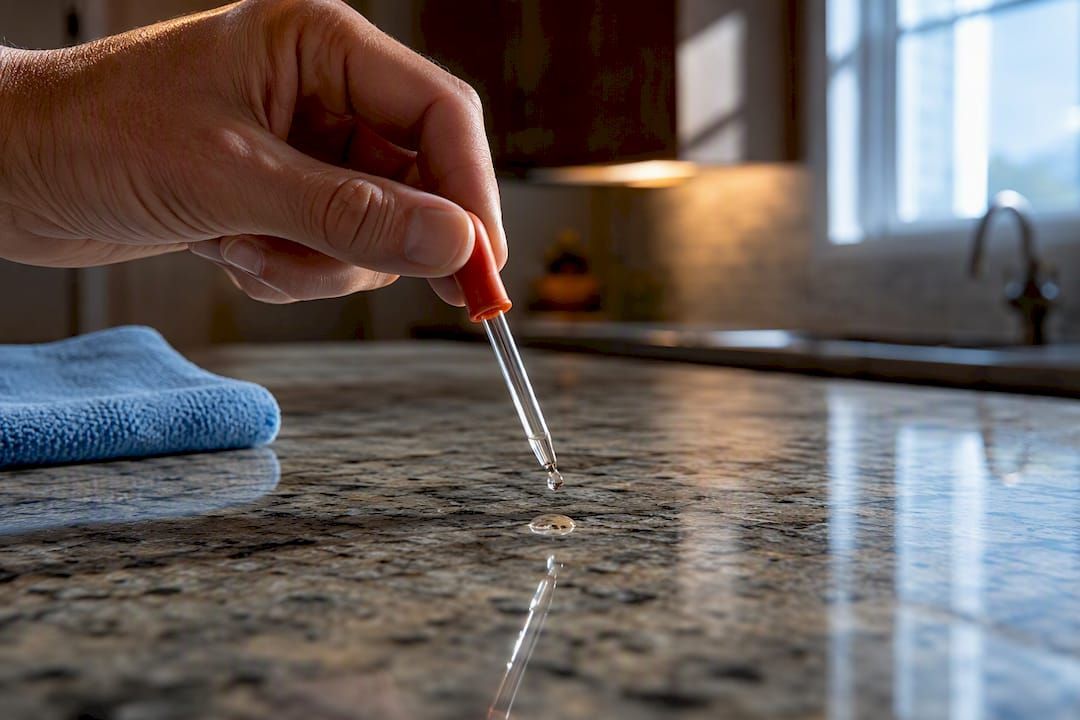
Table of Contents
- How Often Should You Follow a Granite Sealing Schedule?
- How Do You Test if Granite Needs Resealing?
- How Do You Seal Granite Countertops Yourself?
- What Factors Change How Often You Should Reseal?
- How Long Does Granite Sealer Take to Cure, and What Does It Cost?
- What Makes an Eco-Friendly Sealer a Good Choice for Granite?
- The One Habit That Actually Protects Your Countertop
- Protect Your Stone With Sealers Built for Real Homes
- Where This Guidance Comes From
- Sources
- FAQ
How Often Should You Follow a Granite Sealing Schedule?
Forget the idea that every countertop needs a reseal on the same clock. Dense, dark granites such as Absolute Black or Uba Tuba often last several years between treatments due to their tight crystal structure which resists liquid absorption. Mid-density granites common in kitchens usually require resealing more frequently, while lighter, more porous stones may need attention more often, especially in high-use areas.
Location changes everything. The strip around your kitchen sink and the section where you chop vegetables and set down hot pans absorb far more contact than the rest of the slab. Outdoor kitchen islands and bar tops face sun, rain, and temperature swings that wear down sealer faster than an indoor counter ever will.
A simple way to plan around this:
- Dense, dark granite such as Absolute Black or Uba Tuba may require resealing less frequently due to low porosity.
- Common mid-density granites typically need resealing at moderate intervals.
- Light or porous granite and heavy-use areas should be checked regularly and resealed as necessary.
- Outdoor or sun-exposed surfaces may require more frequent evaluation because weather conditions can degrade sealers faster.
Mark one date a year on your calendar to run the water test. That's the whole system. You only pull out the sealer when the stone tells you it needs it, and modern penetrating sealers often outlast the old annual advice by several years.
How Do You Test if Granite Needs Resealing?
The water-drop test takes less time than loading a dishwasher, and it beats guessing.
- Pick an inconspicuous spot, ideally near where the counter gets the most use.
- Pour a tablespoon of water onto the surface and let it sit undisturbed.
- Wait 5 to 15 minutes without wiping it.
- Check the spot: if the stone darkens or the water soaks in, the seal is failing. If the water still beads or sits on top, you're covered.
For oil-sensitive stones, or if the water test gives you a fuzzy answer, run an oil test the same way with a few drops of cooking oil. Oil penetrates faster than water on a weakened seal, which makes it a good tiebreaker.
Quick Fact: According to Better Homes & Gardens, waiting the full 5 to 15 minutes before checking absorption is what separates a real reading from a false pass. Retest every 6 to 12 months. If water disappears in under a minute anywhere on the slab, don't wait for the next scheduled check. Reseal right away.
How Do You Seal Granite Countertops Yourself?
Sealing granite isn't complicated, but rushing the prep is exactly how homeowners end up with a hazy film or a sealer that never really bonded.
- Clean thoroughly with a pH-neutral stone cleaner. Skip anything acidic like vinegar.
- Let it dry completely , not just on the surface. The stone needs to dry through its pores, which typically takes a full 24 hours with a fan or open window running. Sealing over trapped moisture is one of the top causes of a cloudy, failed sealer job.
- Test the sealer in a hidden spot first, following the manufacturer's directions exactly.
- Apply an even coat and let it sit for the dwell time listed on the label, usually 2 to 15 minutes.
- Wipe off every bit of excess before it dries on the surface. Leftover residue is what causes streaking.
- Add a second coat only if the label calls for it , or if a porous section drank the first coat unusually fast.
- Let it cure for 24 to 48 hours before regular use. Some premium sealers ask for up to 72 hours.
Run the water test again once the cure time passes. That confirms the seal actually took before you go back to chopping onions on it.
Pro Tip: Keep a soft cotton cloth dedicated only to sealer application. Any lint or debris left behind can dry into the surface and show up as a dull patch later.
What Factors Change How Often You Should Reseal?
No two granite countertops age the same way, and four variables explain most of the difference.
- Porosity and color : lighter, open-grained granites absorb liquid faster and need more frequent attention than dense, dark slabs.
- How you use it : a bar top that sees daily cocktails and citrus needs more frequent testing than a rarely used guest bathroom vanity.
- Sealer type : penetrating (impregnating) sealers soak into the stone and often last 3 to 5+ years; topical coatings sit on the surface and wear differently, sometimes needing more frequent touch-ups depending on foot traffic and cleaning habits.
- Environment : outdoor exposure to sun and rain shortens sealer life noticeably compared to a climate-controlled kitchen.
If your countertop was sealed at the factory during fabrication, that initial seal can hold for several years before it needs a first touch-up. Test before you assume it needs anything at all.
How Long Does Granite Sealer Take to Cure, and What Does It Cost?
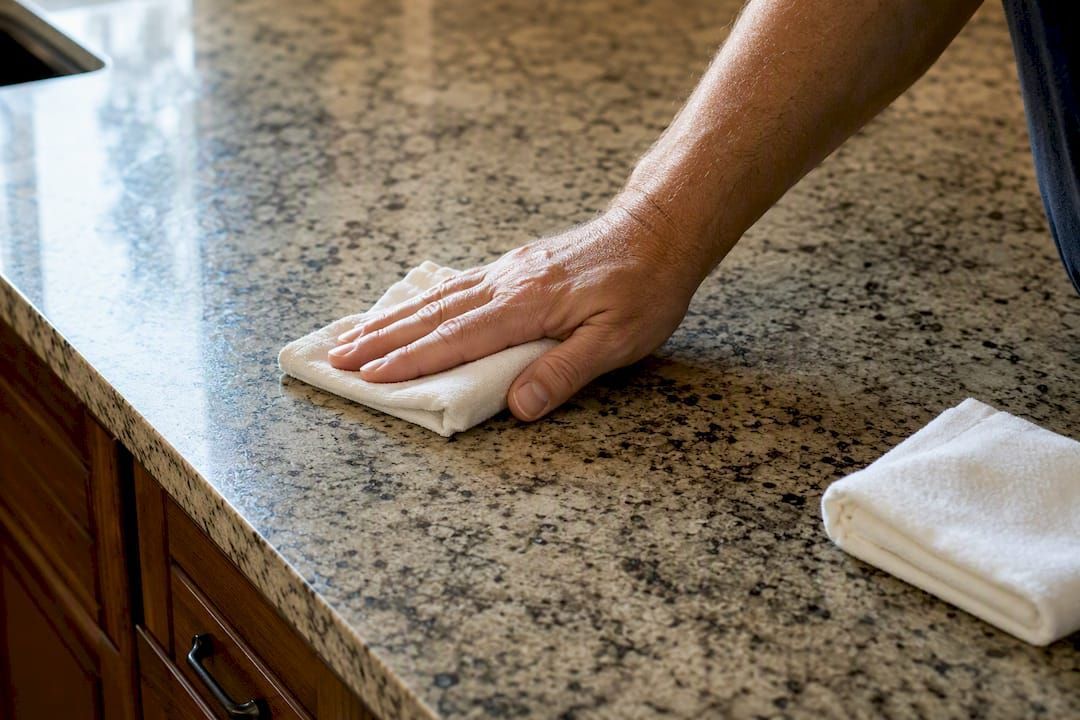
Once you've applied sealer, patience matters more than speed. Standard cure times commonly range from about one to two days, although some premium penetrating sealers recommend longer cure periods, sometimes up to three days, before using the surface normally.
Doing it yourself takes about 30 to 90 minutes of active work, spread across cleaning, drying, application, and wipe down. A professional crew typically finishes a residential kitchen in 2 to 3 hours, since they're working with commercial-grade equipment and experience reading absorption rates on sight.
Cost-wise, DIY sealing runs you the price of the sealer itself, often a single bottle covers multiple applications. Professional service adds labor on top of materials, which is why most homeowners who test annually and reseal only when needed end up spending far less over time than those on a rigid yearly schedule.
- Use pH-neutral cleaners for daily wipe-downs
- Avoid vinegar, bleach, and ammonia, which degrade sealer over time
- Wipe spills within minutes, especially wine, oil, and citrus
What Makes an Eco-Friendly Sealer a Good Choice for Granite?
Plant-based, low-VOC sealers matter more than most homeowners realize, especially in a kitchen where food prep and sealer fumes share the same air. Traditional solvent-based sealers can off-gas for days, while a low-VOC impregnating sealer protects the stone without turning your kitchen into a ventilation project.
- Better indoor air quality during and after application
- Safer for households with kids, pets, or anyone sensitive to strong chemical odors
- Still delivers real penetrating protection when matched to the right stone
Always test any sealer, eco-friendly or not, in a hidden spot first, and check the compatibility guidance for your specific granite before committing to a full application. For most homeowners, an impregnating low-VOC sealer covers everyday protection needs. Save stronger solvent-based products for genuinely stubborn staining that a gentler formula can't touch.
Pro Tip: A low-VOC sealer that needs reapplication a bit sooner is still a better trade than a harsh solvent formula you have to air out the house for.
The One Habit That Actually Protects Your Countertop
If you take one thing from this, make it the yearly water test paired with fast spill cleanup. That combination does more for your granite than any fixed resealing calendar. It costs you nothing but a few minutes a year, and it stops you from resealing stone that never needed it, or worse, ignoring stone that did.
Protect Your Stone With Sealers Built for Real Homes
Specialized stores sell low-VOC, plant-based sealers that protect granite without the fumes or harsh chemicals found in solvent-based competitors. If your water test comes back showing absorption, you don't need a contractor visit to fix it.
Start with the stone and grout sealers collection, where impregnating, low-VOC formulas are built for granite, marble, and other natural stone surfaces. Most homeowners do fine with a penetrating sealer rather than a topical coating, and each product page lists the dwell time and cure window you'll need to plan around. If you're troubleshooting haze or a sealer that didn't take the first time, the common problems with stone sealers page walks through the usual causes before you buy a replacement product. Pick your sealer, check the label against your countertop's stone type, and schedule your next application around the cure time it needs.
Where This Guidance Comes From
- Natural Stone Institute: industry standard on what sealing actually does
- Countertop Advisor: installer-level sealing process detail
- Better Homes & Gardens: consumer-tested application steps
- Rose Restoration: professional frequency benchmarks
Sources
FAQ
How often does granite need to be sealed?
Most granite countertops typically require resealing within a period that can vary, often ranging from a few years depending on stone density and use, but the water-drop test is the best way to determine the exact timing rather than following a fixed schedule.
How much does it cost to have granite sealed?
DIY sealing costs only the price of the sealer product, while professional service adds labor for a job that typically takes 2 to 3 hours in a residential kitchen.
How long do you have to wait after sealing granite?
Standard cure time is 24 to 48 hours, though some premium penetrating sealers require up to 72 hours before the surface handles normal kitchen use.
Is it better to seal granite myself?
DIY sealing works well for most homeowners since the process takes only 30 to 90 minutes of active work, as long as you follow the drying and cure times on the product label.

