
Homeowners: Remove Grout Algae With Baking Soda; Use Chlorine Only for Pools
Start with a baking soda paste, or a 3% hydrogen peroxide and baking soda mix, for indoor grout algae. For pool grout, break a chlorine tablet directly onto the affected lines and let it work overnight. Most homeowners see visible improvement after one treatment, though embedded algae in porous grout may need a second round. Once the grout dries fully, seal it. That single step prevents most repeat outbreaks.
TL;DR:
- Baking soda and hydrogen peroxide formulas are effective at whitening embedded algae and safer for colored grout, while bleach should only be used on glazed ceramic or porcelain tiles.
- Reapplying a sealant every six to twelve months prevents algae from re-entering porous grout, especially in damp areas like showers and pool decks.
- Chlorine tablets effectively remove stubborn algae in pool grout but must be used with gloves and left undisturbed for 24 hours before scrubbing; they are unsafe for indoor grout.
- Regular maintenance like quick weekly cleaning, running exhaust fans, and monitoring sanitizer levels significantly reduces algae recurrence in both indoor and pool grout.
- Natural, eco-friendly cleaning options are available that avoid harsh acids and bleach, providing effective algae control while protecting natural stone and sensitive surfaces.
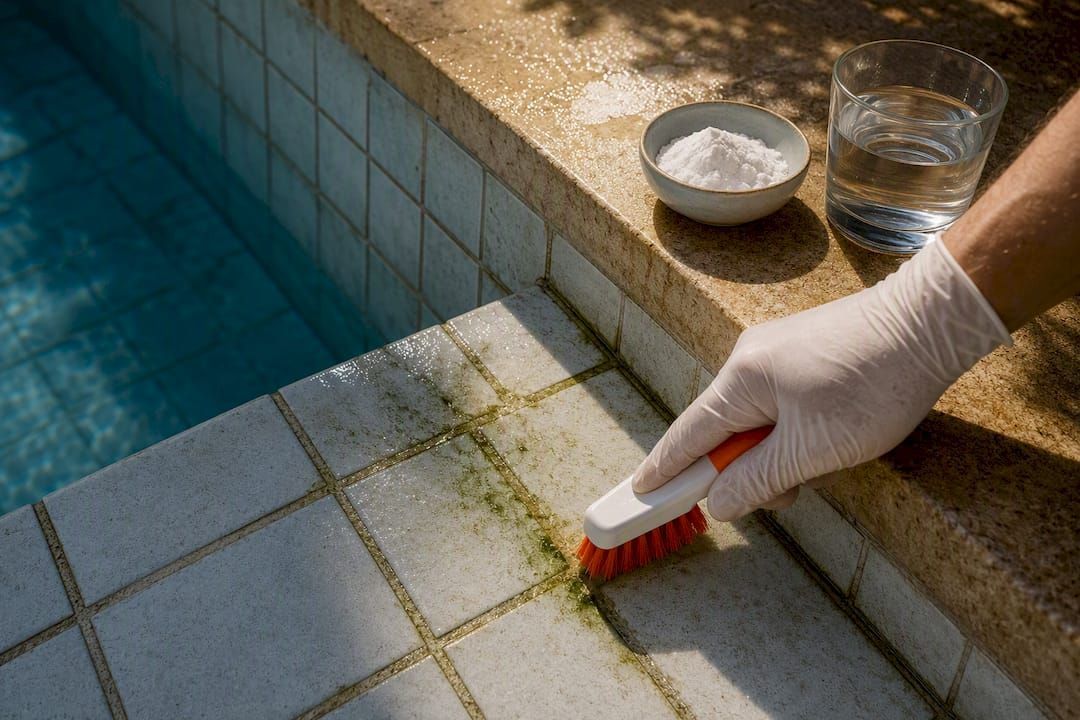
Table of Contents
- What Causes Algae in Grout, and How Do You Know It's Algae?
- How Do You Remove Algae From Grout Step by Step?
- How Do You Remove Algae From Pool Tile Grout?
- What Safety Precautions Should You Take When Cleaning Grout?
- How Do You Stop Algae From Coming Back?
- What Does Eco-Friendly Grout Care Actually Look Like?
- Why Gentle, Consistent Care Beats Aggressive Whitening
- Ready to Clean and Protect Your Grout the Eco-Friendly Way?
- Sources
- FAQ
What Causes Algae in Grout, and How Do You Know It's Algae?
Algae needs three things to take hold: moisture, light, and organic residue for food. Grout lines near showers, pool decks, and north-facing bathroom tile check all three boxes, which is why algae shows up there long before it appears on the tile itself. It ranges from pale green to olive brown, and it often looks slimy when wet, then chalky once it dries out.
A few quick checks help separate algae from mold or plain staining:
- Location matters. Algae tends to cluster where sunlight and water both reach, while mold prefers dark, poorly ventilated corners.
- The smear test. Wipe a damp cloth across the spot. Algae smears green or brown; a mineral stain usually doesn't budge at all.
- Reappearance speed. If the discoloration comes back within days of cleaning the surface, it has likely worked its way into the grout's pores, not just sitting on top.
That last point matters most. Grout is porous by nature, and once algae gets below the surface, wiping it down does nothing. You're cleaning the top layer while the source stays put underneath.
How Do You Remove Algae From Grout Step by Step?
Work from the gentlest method up. Jumping straight to bleach on a light stain wastes a strong chemical and risks damaging grout you didn't need to touch.
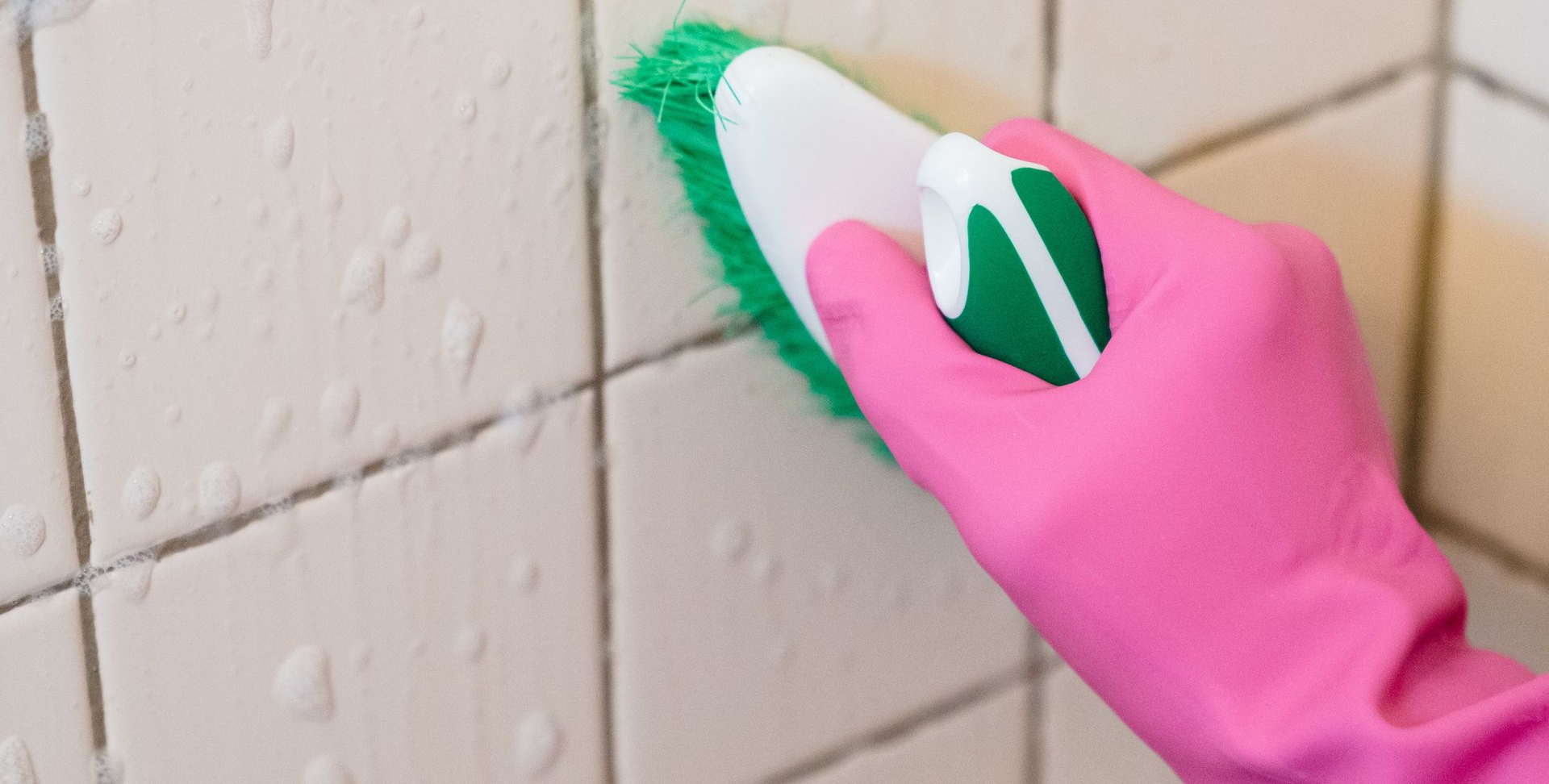
- Baking soda and water paste. Mix baking soda with just enough water to form a thick paste, about the texture of toothpaste. Apply it directly to the grout lines, let it sit for 10 to 15 minutes, then scrub with a stiff nylon brush in small circular motions. Rinse with clean water. This handles light surface algae on its own roughly seven times out of ten, based on hands-on testing from Apartment Therapy.
- Baking soda and 3% hydrogen peroxide. When the plain paste isn't cutting it, swap the water for 3% hydrogen peroxide. The mixture foams slightly as it reacts, which helps lift embedded grime. Let it dwell for 15 to 20 minutes, scrub, and rinse. In the same Apartment Therapy test, this combination scored noticeably higher for whitening than the water-only version. Spot-test on colored grout first. Peroxide can lighten dark grout over repeated use.
- Plant-based, pH-neutral commercial cleaners. For larger areas or grout that's been neglected for months, a plant-based cleaner saves time without the fumes of bleach. Look for products carrying the EPA Safer Choice label, which signals the formula meets stricter environmental and safety criteria than a standard store-brand cleaner.
- Steam cleaning. A steam cleaner with a narrow grout attachment loosens algae through heat and pressure alone, no chemicals required. It works well on ceramic tile but can drive moisture into unsealed natural stone, so skip it on travertine or limestone unless the stone is fully sealed.
- Bleach or acid, only on compatible tile. Diluted bleach can knock out stubborn algae on glazed ceramic or porcelain, but it has no place on marble, travertine, limestone, or any unsealed natural stone, where it can etch the surface permanently. If you go this route, ventilate the room, wear gloves, and never combine bleach with any other cleaner.
Pro Tip: Test any paste or cleaner on a hidden grout section first, even the mild baking soda mix. Grout color and sealant condition vary tile to tile, and a two-minute test spot beats an afternoon of regret.
How Do You Remove Algae From Pool Tile Grout?
Pool grout algae behaves differently because water sits against it constantly, and standard scrubbing rarely reaches what's grown into the pores. A targeted chlorine tablet method built specifically for pool grout tends to outperform general surface cleaning here.
- Break a standard 3-inch chlorine tablet into smaller fragments and press them directly against the algae-stained grout lines, above or below the waterline as needed.
- Wear gloves throughout. Chlorine tablets are concentrated and will irritate bare skin on contact.
- Let the tablet fragments sit undisturbed for around 24 hours, then scrub the lines with a stiff brush and rinse thoroughly before anyone swims.
- Expect to repeat the process once or twice on badly embedded stains. One pass rarely finishes the job when algae has penetrated deep into the grout.
Once the grout is clear, the real work is keeping it that way. Stable sanitizer levels stop algae from ever getting a foothold again, and a periodic shock treatment handles any spores that survive routine chlorine levels. If staining keeps returning despite consistent water balance, that's usually a sign to bring in a pool maintenance professional rather than keep repeating the tablet method.
What Safety Precautions Should You Take When Cleaning Grout?
Grout cleaning looks harmless until you're standing in a small bathroom with fumes building up. A few basics apply no matter which method you choose:
- Wear rubber gloves and eye protection, especially with peroxide, chlorine, or any commercial cleaner.
- Open a window or run the exhaust fan. Indoor spaces trap fumes faster than most people expect.
- Never mix cleaning agents. Hydrogen peroxide plus vinegar and bleach plus ammonia both produce reactions you don't want to breathe in.
- Keep acids and bleach away from marble, travertine, and unsealed natural stone entirely. These surfaces etch and discolor with exposure that ceramic tile shrugs off.
- Spot-test every product, even ones labeled natural or eco-friendly, before treating a full floor or wall.
Call a professional when the stain won't budge after two or three safe attempts, when the affected area covers a large floor or pool deck, or when you're dealing with natural stone or a finished pool surface where a mistake is expensive to fix. Sometimes the smartest move is admitting a DIY paste isn't going to out-muscle years of buildup, and a light regrouting or professional deep clean is the faster, cheaper fix in the long run.
How Do You Stop Algae From Coming Back?
Cleaning grout once and walking away just resets the clock until conditions line up again. A few habits keep algae from returning.
- Reseal grout every 6 to 12 months in damp zones like showers, tub surrounds, and pool decks. A penetrating, stone-safe sealer closes off the pores algae would otherwise colonize, and the 6 to 12 month cadence holds up well across most climates.
- Do a weekly quick pass. A pH-neutral spray and a fast brush pass on shower and bathroom grout takes under five minutes and keeps buildup from ever accumulating enough to feed algae.
- Run the exhaust fan after every shower. Cutting ambient moisture even by a small margin makes the environment far less hospitable to new growth.
- For pools, track sanitizer levels weekly , brush tile lines routinely, and shock the water on a regular schedule rather than only when you notice a problem. Keeping a simple log of readings makes it obvious when something's drifting before algae shows up again.
What Does Eco-Friendly Grout Care Actually Look Like?
Some cleaners and sealers available on the market are built around plant-based, biodegradable, low VOC formulas designed specifically because grout and natural stone don't need bleach or acid to come clean. The company's guide to deep-cleaning grout without harsh acids walks through the same escalation logic covered above, dwell times, scrubbing technique, and where to stop before reaching for something stronger. For readers restoring grout on a tighter timeline, the step-by-step cleaning guide covers the full process from first scrub to final seal.
Why Gentle, Consistent Care Beats Aggressive Whitening
The instinct to reach for the strongest bleach on the shelf usually backfires. Aggressive whitening strips grout's protective surface, leaving it rougher and more porous, which means it grabs onto the next batch of algae spores even faster than before. Stone can etch permanently under the same treatment.
The more durable path is boring on purpose: gentle cleaning, done regularly, followed by sealing. It costs less effort per session and it's the only approach that actually breaks the cycle instead of restarting it.
Ready to Clean and Protect Your Grout the Eco-Friendly Way?
Skip the bleach fumes and the guesswork. Oceancarestore's Home Essential Cleaners line gives you a plant-based option strong enough for algae and mildew but gentle enough for daily use around kids and pets, without the acid-based sealer strippers other brands still sell.
Once the grout dries after cleaning, follow up with the High Performance Penetrating Sealer to close the pores back up and keep algae from moving back in. Not sure which product fits your situation? The cleaner versus sealer guide breaks down exactly when to use each one. Pick your cleaner, place the order, and get the sealer queued up for the moment your grout is dry.
Sources
FAQ
Does Vinegar Remove Algae From Grout?
Vinegar can help with light mineral buildup, but its acidity makes it risky on natural stone grout and it's weaker against embedded algae than a hydrogen peroxide and baking soda paste.
Is Hydrogen Peroxide or Bleach Better for Grout Algae?
Hydrogen peroxide mixed with baking soda whitens grout effectively in hands-on testing and is safer for colored grout and sensitive surfaces than bleach, which should be reserved for compatible ceramic or porcelain tile only.
How Often Should You Reseal Grout to Prevent Algae?
Reseal grout every 6 to 12 months in damp areas like showers and pool decks, using a penetrating, stone-safe sealer to keep moisture and organic matter from settling into the pores.
Can You Use Chlorine Tablets on Bathroom Grout?
No. Chlorine tablets are formulated for pool water chemistry and can be too harsh and unsafe for enclosed bathroom spaces; stick to a baking soda or peroxide paste indoors instead.
When Should You Call a Professional for Grout Algae?
Call a professional if algae keeps returning after repeated safe treatments, if the affected area is large, or if you're dealing with natural stone or a pool surface where the wrong product could cause permanent damage.

