
Low VOC cleaning: healthier, safer, greener homes
TL;DR:
- Low VOC cleaning products enhance indoor air quality and protect respiratory health.
- They prevent surface damage and preserve costly natural stone and tile investments.
- Switching to eco-friendly cleaners significantly reduces environmental impact without sacrificing cleaning effectiveness.
Every time you spray a conventional cleaner on your kitchen counter or scrub pool tiles with a harsh chemical product, you're making a choice that affects more than just how clean your surfaces look. The chemicals in those products vaporize into the air you breathe, react with your stone finishes, and eventually make their way into the environment. Low VOC cleaning products reduce indoor air pollution by limiting volatile organic compound emissions that are common in traditional cleaners as solvents and fragrances. This article breaks down seven concrete benefits, with real evidence to back each one up.
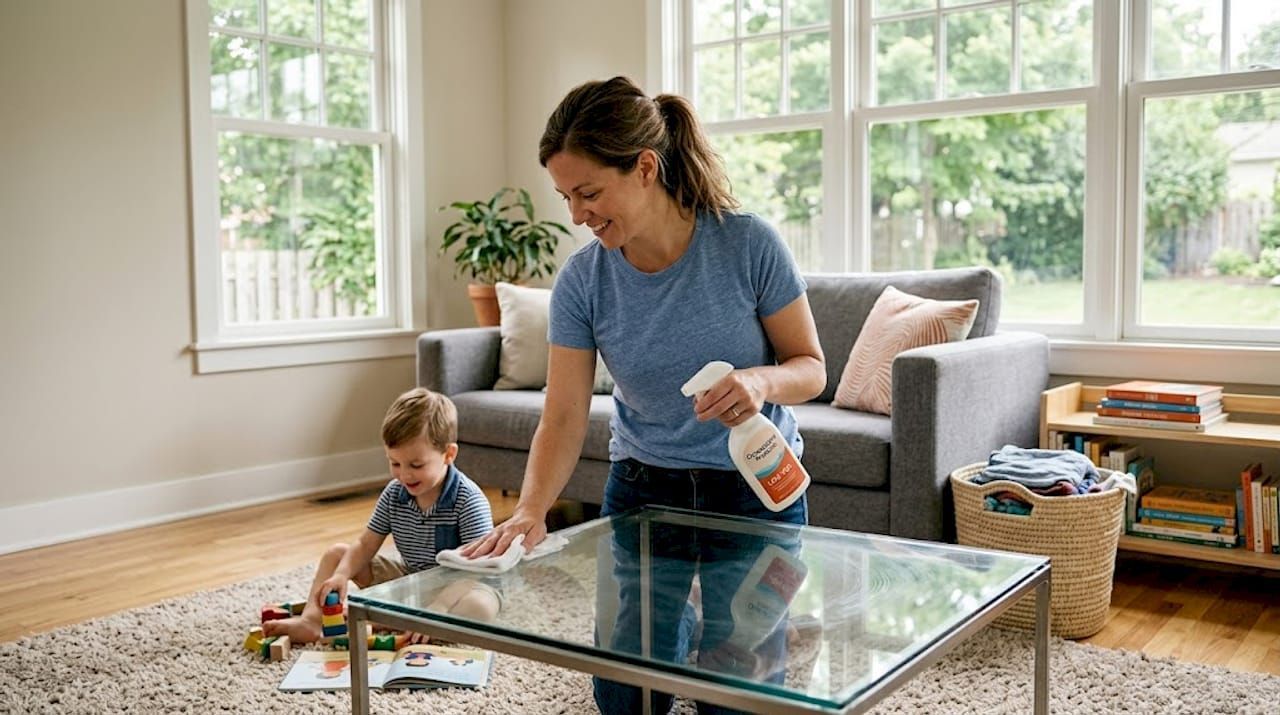
Table of Contents
- Indoor air quality and health protection
- Surface safety for stone, pools, and hard surfaces
- Environmental impact: Reduced carbon footprint and pollution
- Effectiveness: Same cleaning power with fewer risks
- Choosing and using low VOC products: Practical tips
- Why surface-safe, low VOC cleaning is the new essential for modern home care
- Make the switch to healthier, safer cleaning today
- Frequently asked questions
Key Takeaways
| Point | Details |
|---|---|
| Improved indoor air quality | Low VOC cleaning products keep indoor air purer by minimizing chemical emissions. |
| Surface-safe for valuable materials | pH-neutral, low VOC cleaners protect marble, granite, pool tiles, and sealers from damage. |
| Reduced health risks | Using fewer toxic chemicals reduces the likelihood of headaches, allergies, and respiratory issues. |
| Positive environmental impact | Switching to low VOC products slashes greenhouse gas emissions and waste. |
| No performance trade-off | Studies confirm low VOC cleaners match traditional options on cleaning power and hygiene. |
Indoor air quality and health protection
With the stakes for indoor air quality so high, let's look closely at why low VOC cleaning makes such a difference in everyday home maintenance.
Most people don't think twice about the air inside their home, yet indoor air can be significantly more polluted than outdoor air, especially right after cleaning. Traditional cleaners release a cocktail of volatile organic compounds that immediately begin to affect the air around you. The problem isn't limited to an unpleasant smell. These compounds actively reduce the oxygen quality in enclosed spaces.
The health consequences are not subtle. Acute VOC exposure causes coughing, headaches, and decreased lung function, while chronic exposure has been linked to neurological disorders and respiratory illness. The World Health Organization estimates 3.8 million deaths annually are attributable to indoor air pollution, a category in which VOC-heavy cleaning products play a significant role.
Here's what's happening on a practical level when you clean with high-VOC products:
- Solvents and fragrance compounds vaporize within seconds of being sprayed
- Enclosed spaces like bathrooms, kitchens, and pool enclosures trap these vapors
- Ventilation systems often recirculate rather than fully expel these compounds
- Residue left on surfaces continues to off-gas for hours after cleaning
Low VOC cleaners dramatically reduce these risks. By switching to plant-based, certified formulas with minimal solvent content, you're not just making a health-conscious choice. You're actively protecting your family's lung function, your guests' comfort, and the air quality throughout your home. This matters even more in homes with children, elderly residents, or anyone with asthma or allergies. Exploring eco-friendly stone cleaners that are also low VOC gives you the best of both worlds: effective cleaning and clean air.
Surface safety for stone, pools, and hard surfaces
Beyond protecting air quality, safety for costly surfaces is a major reason to consider low VOC solutions for your cleaning routine.
Natural stone, pool tiles, and sealed hard surfaces represent some of the most significant investments in your home. A marble countertop, a travertine pool deck, or a granite kitchen island can each cost thousands of dollars to install. What many homeowners don't realize is that the cleaner they use every week may be doing slow but measurable damage.
Traditional cleaners often contain acids, strong alkalis, or abrasive chemical compounds. These etch the surface of natural stone, dull polished finishes, and strip away the protective sealers that were applied to extend the life of the material. Once a sealer is compromised, moisture, stains, and bacteria have direct access to the porous stone underneath.
Low VOC cleaners offer a fundamentally different approach. They are pH-neutral, non-acidic, and no-rinse, making them safe for marble, granite, travertine, and limestone without stripping sealers or dulling the finish. The no-rinse feature is especially useful for pool tile maintenance, where excess water and repeated rinsing can create ongoing problems.
Pro Tip: Always check the pH rating on any cleaner you use for natural stone. Anything below 7 (acidic) or significantly above 7 (alkaline) risks surface damage over time, regardless of what the label claims.
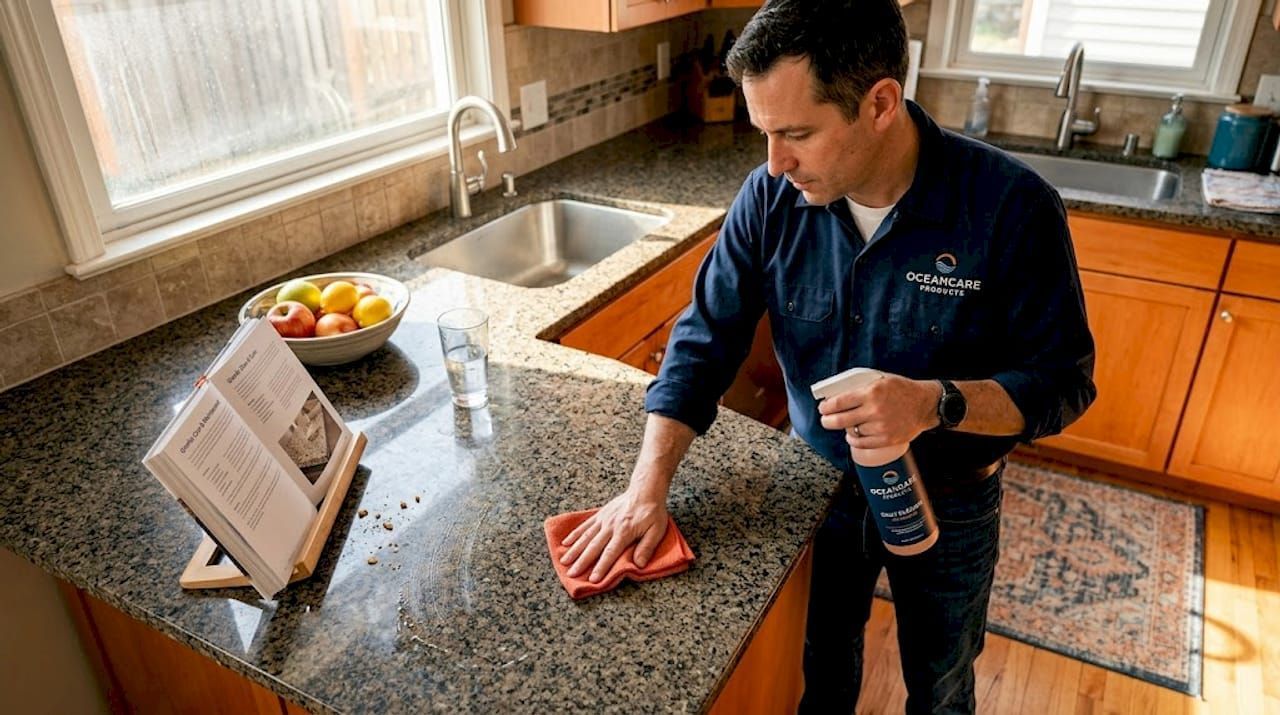
The practical benefits add up quickly. When you use a surface-safe, low VOC cleaner consistently, you preserve your sealants longer, reduce the frequency of professional restoration work, and protect the visual appeal of your investment. Look into pool tile cleaners specifically formulated for this purpose, and consider pairing them with sustainable stone protection products that extend the life of your sealers between applications.
Environmental impact: Reduced carbon footprint and pollution
Protecting your family's health and your surfaces is only part of the equation. Let's consider the bigger environmental picture that comes with every cleaning decision you make.
When you switch a home or commercial property to green cleaning protocols, the environmental benefit is measurable and significant. Research comparing conventional cleaning methods to CAM-compliant green protocols found that green cleaning reduces Global Warming Potential by 47.7%, equating to a reduction of 110 g CO2e per square meter per year. That number adds up fast across a large home, a pool facility, or a commercial property.
The breakdown of where those savings come from is instructive:
| Factor | Green cleaning reduction |
|---|---|
| Chemical use | 82.6% reduction |
| Energy consumption | 49.5% reduction |
| Solid waste | Measurable reduction |
| Microbiological hygiene | Equivalent maintained |
The critical point in that last row is that hygiene is not compromised. Green, low VOC cleaning maintains the same microbiological effectiveness on hard surfaces, meaning there's no environmental cost without a practical cost. You're simply eliminating unnecessary chemical burden from the supply chain, your home, and the waterways that eventually receive runoff from cleaning activities.
For pool owners and property managers, this matters even more. Chemicals used around pools or outdoor stone features often make direct contact with soil and water systems. Reducing VOC content and chemical load in those cleaners directly limits the impact on local ecosystems. Adopting eco-friendly cleaning best practices is one of the most direct actions a property owner can take to reduce their environmental footprint without changing their cleaning standards.
Effectiveness: Same cleaning power with fewer risks
Some still doubt whether eco cleaning can really match traditional options. Let's look at what the data actually shows.
The most common objection to low VOC cleaners is the assumption that "stronger" chemicals must mean "better" cleaning. That assumption is simply not supported by evidence. Research measuring total volatile organic compound (TVOC) and fine particle (PM2.5) increases after cleaning found that cleaning with quats (quaternary ammonium compounds) raises TVOC levels by 10 to 104 ppbv and PM2.5 by 0.7 to 14.5 µg/m³. Low VOC alternatives like thymol-based cleaners show no measurable TVOC increase, while delivering equivalent cleaning results.
Here's a practical comparison of VOC behavior across cleaner types:
| Cleaner type | TVOC increase (ppbv) | PM2.5 increase (µg/m³) |
|---|---|---|
| Quaternary ammonium (quats) | 10 to 104 | 0.7 to 14.5 |
| Standard fragrance-based cleaners | Moderate to high | Moderate |
| Thymol-based low VOC | None detected | None detected |
| pH-neutral plant-based | Minimal | Minimal |
The effectiveness of a cleaner depends far more on proper application than on chemical aggression. The biggest gaps in cleaning performance occur when the wrong product is used for the wrong surface, not when a lower-VOC formula is used correctly. Following a clear application process ensures you get full performance from your low VOC cleaner:
- Clear the surface of loose debris before applying any cleaner
- Apply the product evenly and allow appropriate dwell time
- Agitate gently with a soft brush or cloth for embedded grime
- Buff or allow to air dry (for no-rinse formulas)
- Repeat in high-traffic or heavily soiled areas as needed
Pro Tip: For stubborn calcium deposits on pool tiles, a specifically formulated calcium releaser will outperform any multi-purpose cleaner, low VOC or otherwise. Use the right tool for the job, and low VOC products will never disappoint.
Using a hard surface cleaning checklist takes the guesswork out of which steps matter most and ensures consistent results across different surfaces and cleaning scenarios.
Choosing and using low VOC products: Practical tips
Equipped with all these facts, knowing how to choose and use the right low VOC product is the next practical step in improving your cleaning routine.
Not every product labeled "natural" or "eco-friendly" meets genuine low VOC standards. Marketing language is not regulated the same way that third-party certifications are, so knowing what to look for protects you from greenwashing. Low ventilation significantly amplifies VOC and PM emissions during cleaning, which means your choice of product and how you use it both matter enormously.
Here's a practical approach to selecting and using low VOC cleaners effectively:
- Look for verified certifications. Green Seal certification and CAM compliance set strict VOC limits that go beyond most state regulations, giving you a reliable benchmark.
- Prioritize pH-neutral, no-rinse formulas. These avoid etching stone, protect existing sealers, and reduce water and time waste.
- Ventilate during and after cleaning. Even low VOC products benefit from good airflow. Open windows, use exhaust fans, and allow surfaces to fully dry before closing up spaces.
- Test on a small, inconspicuous area first. This is especially important for natural stone. Different stone types react differently to even mild formulas.
- Match the cleaner to the surface type. A cleaner designed for pool tiles may have different requirements than one designed for sealed marble or kitchen granite.
- Store products according to label directions. Improper storage can degrade formula stability and reduce both safety and performance.
Pro Tip: When managing multiple surfaces across a property, simplify by finding a single certified pH-neutral cleaner for daily use that works across stone, tile, grout, and hard surfaces. It reduces storage clutter and ensures you're always using a surface-safe formula.
When you're working through your options, a resource like choosing safe home cleaners walks through the key questions room by room, so you can match the right product to each space in your home.
Why surface-safe, low VOC cleaning is the new essential for modern home care
Here's the perspective that most cleaning guides miss: the damage done by conventional cleaners is almost entirely invisible until it's expensive.
Nobody notices that their granite countertop's sealer has been slowly stripped away by an acidic daily cleaner. Nobody connects their recurring headaches to the bathroom cleaner they spray in a poorly ventilated space three times a week. The costs accumulate quietly, showing up later as a professional stone restoration job, a medical appointment, or an accelerated replacement of pool tile grout.
Most conventional advice focuses on cleaning frequency and product volume, but the real variable is chemical quality. Spending a little more on a certified low VOC, pH-neutral formula is not a lifestyle upgrade. It's damage prevention. When you factor in the cost of resealing stone more frequently, replacing grout, dealing with etched marble, or managing recurring respiratory irritation, the economics of quality cleaning products become obvious.
The other thing most advice gets wrong is the importance of consistent technique over occasional deep cleaning. A well-ventilated, low VOC cleaning routine applied regularly does more for your surfaces and your air quality than periodic aggressive chemical treatments. The eco home cleaning best practices that matter most are the ones you actually stick to, which is far easier when your products are safe, pleasant to use, and don't require you to leave the room after spraying them.
The shift to low VOC cleaning isn't a trend driven by marketing. It's a response to genuinely better science, better product formulation, and a clearer understanding of what happens when you repeatedly expose stone, tile, grout, and indoor air to compounds that were never designed with long-term safety in mind.
Make the switch to healthier, safer cleaning today
You now have the evidence. Low VOC cleaning protects your health, preserves your surfaces, and reduces your environmental impact without sacrificing cleaning performance. The next step is putting those better cleaning choices into practice with products that are actually built to deliver on all three.
At The Oceancare Store, our full range of certified, surface-safe cleaning solutions is designed specifically for pool tiles, natural stone, grout, and hard surfaces. Start with our pH-neutral tile and stone cleaner for everyday maintenance, or explore our everyday shine kitchen and bath cleaners for interior surfaces. If you're building out a complete cleaning routine from scratch, our guide to essentials for a sparkling home is a great starting point. Every product we carry is selected for eco-safety, surface compatibility, and real-world performance.
Frequently asked questions
What does VOC stand for in cleaning products?
VOC stands for Volatile Organic Compounds, chemicals that easily vaporize at room temperature and can reduce indoor air quality when released from cleaners, solvents, and fragrances.
Are low VOC cleaners safe for marble, granite, or tile?
Yes. Low VOC and pH-neutral cleaners are specifically recommended for these surfaces because they are non-acidic and no-rinse, protecting against etching, sealer damage, and dulling of polished finishes.
How do I know if a cleaning product is truly low VOC?
Look for Green Seal or CAM certification, as these programs set VOC limits stricter than California regulations , including restrictions on fragrances that standard labeling does not require.
Do low VOC cleaners work as well as traditional products?
Studies confirm that green and low VOC cleaners match conventional products on hygiene benchmarks while cutting emissions significantly, making effective cleaning and environmental responsibility fully compatible.
Can low VOC cleaning help with household allergies or respiratory issues?
Reducing VOC exposure directly lowers the triggers for respiratory irritation. Acute VOC exposure causes coughing, headaches, and decreased lung function, so using low VOC cleaners consistently can provide meaningful relief for sensitive individuals.

