
Eco-friendly guide to sustainable stone and pool tile care
TL;DR:
- Sustainable surface care requires matching products, methods, and routines to each specific surface.
- Certifications like Nordic Swan, Green Seal, and EPA Safer Choice verify truly eco-friendly cleaners.
- Prevention through proper cleaning and sealing extends surface lifespan and reduces environmental impact.
Most homeowners assume that "natural" means safe for every surface. Pour some vinegar on pool tiles, scrub with a baking soda paste, and you're cleaning green, right? Not quite. Some of the most popular DIY eco-cleaners quietly destroy expensive natural stone, eat through grout, and leave pool tiles looking worse than before. Truly sustainable surface care is about more than choosing plant-based ingredients. It means matching the right product, the right method, and the right routine to each specific surface so you protect both your investment and the environment at the same time.
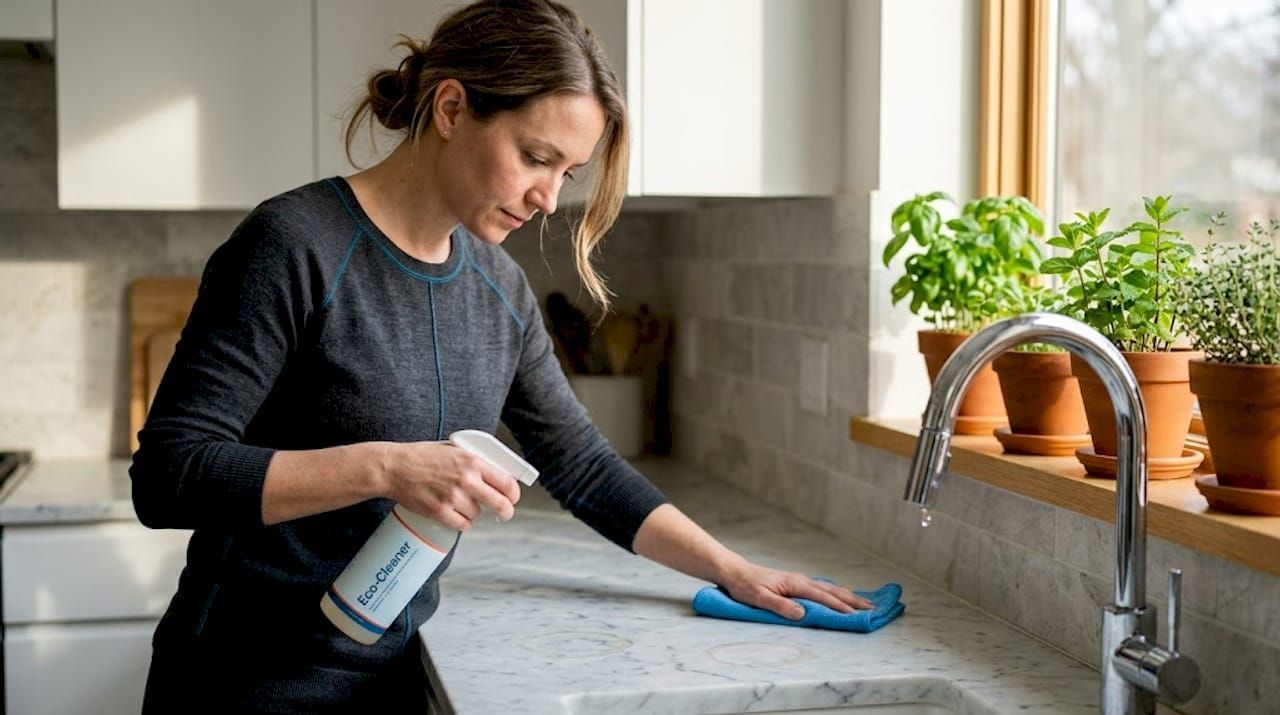
Table of Contents
- Understanding sustainable surface care
- Safe and sustainable cleaning products: What to look for
- Choosing and applying the right method for your surface
- Best practices for long-term sustainable surface care
- Why sustainable surface care is more than just eco products
- Get started with proven sustainable surface solutions
- Frequently asked questions
Key Takeaways
| Point | Details |
|---|---|
| Sustainability means safety | True sustainable surface care safeguards both your surfaces and the environment by minimizing harm from chemicals and waste. |
| Match cleaner to surface | Not all eco-friendly or natural cleaners are safe for every material—choose pH-neutral options for stone to prevent damage. |
| Certifications matter | Trust recognized eco-labels like Nordic Swan or Green Seal to ensure products are genuinely eco and safe for your home. |
| Prevention saves effort | Routine maintenance, such as sealing and regular cleaning, extends surface life and reduces the need for harsh products. |
| System approach wins | Combine safe products, the right method, and smart habits to achieve lasting, eco-friendly results for all hard surfaces. |
Understanding sustainable surface care
Sustainable surface care means maintaining your stone, tile, and grout surfaces in a way that minimizes environmental harm, protects the health of people in the space, and keeps surfaces in excellent condition for as long as possible. It is not just about swapping one cleaner for another. It requires thinking through the entire lifecycle of how you clean, from product selection and application technique to disposal and long-term maintenance routines.
The environmental case for going sustainable is well documented. A green cleaning protocol reduced global warming potential by 47.7% (that is 110 g CO2e/m²/year less), cut chemical use by 82.6%, lowered energy consumption by 49.5%, and slashed waste by 92.4%, all while achieving the same hygiene standards as conventional methods. Those are not minor improvements. That is a dramatic shift in environmental impact without sacrificing cleanliness.
Key benefits of sustainable surface care:
- Reduced chemical runoff into waterways and soil
- Healthier indoor air quality from lower volatile organic compounds (VOCs)
- Longer-lasting surfaces that need fewer replacement cycles
- Lower total cost of ownership over time
- Safer environments for children, pets, and people with chemical sensitivities
There are three frameworks worth building your approach around. First, product selection : choosing cleaners and sealers that are biodegradable, pH-appropriate for your surface, and certified by credible third-party organizations. Second, cleaning protocols : using the right dilution ratios, application tools, and dwell times for each surface. Third, lifecycle thinking : planning ahead for sealing schedules, restoration timelines, and preventive care rather than reacting to damage after it appears.
Following surface care best practices from the start saves you from the expensive mistake of learning this the hard way. Green certifications matter here because they remove the guesswork about whether a product actually lives up to its eco-friendly label. More on that in the next section.
| Approach | Environmental impact | Surface longevity | Health safety |
|---|---|---|---|
| Conventional chemical cleaners | High pollution, slow to biodegrade | Moderate, can degrade grout over time | Low, high VOC exposure |
| DIY natural (unverified) | Variable, often unknown | Risk of surface damage | Generally safer but unpredictable |
| Certified sustainable products | Low impact, fast biodegradation | High, formulated to protect surfaces | High, low-toxicity formulas |
Safe and sustainable cleaning products: What to look for
Once you understand what sustainable surface care means in practice, the next question is how to identify products that genuinely deliver on their promises. This is where label reading becomes a critical skill, because the cleaning product aisle (and many online marketplaces) is crowded with vague claims like "green," "natural," and "non-toxic" that have no legal definition and no verification behind them.
The three certifications that carry real weight for hard surface cleaners are Nordic Swan Ecolabel, Green Seal, and EPA Safer Choice. These programs evaluate products for low toxicity, rapid biodegradability, and demonstrated cleaning performance on hard surfaces. They test formulations, not just marketing claims. Seeing one of these logos on a product means an independent organization has verified what's inside.
Beyond certifications, there are three chemical characteristics to understand:
- pH-neutral formulas (pH 6.5 to 7.5) are essential for marble, travertine, limestone, and any calcareous stone. These surfaces react chemically with acidic or alkaline substances.
- Biodegradable surfactants break down quickly in water systems and do not accumulate in the environment the way petroleum-based surfactants do.
- Low or zero VOC formulas protect indoor air quality, particularly important in enclosed spaces like indoor pool rooms, bathrooms, and kitchens.
When matching products to surfaces, the stakes are real. Marble countertops, travertine pool surrounds, and limestone pavers all need pH-neutral cleaners. Ceramic and porcelain tiles are more forgiving and can handle a wider pH range. Glass pool tiles need non-abrasive, streak-free formulas. Our guide to best eco-friendly stone cleaners breaks down specific recommendations for each surface type so you do not have to guess.
Pro Tip: Before buying any cleaner marketed as "natural," check for one of the three certifications listed above. If none are present, flip to the ingredient list. If you see anything with "fragrance" listed as a single ingredient (which can legally hide dozens of undisclosed chemicals), treat it with skepticism regardless of how the front label reads.
One thing many homeowners overlook is that improper cleaner selection does not just cause cosmetic damage. It can structurally weaken stone, destroy sealer coatings, and etch surfaces in ways that require professional restoration to fix. That kind of repair bill typically runs hundreds to thousands of dollars, depending on the surface and the severity of the damage. Getting the product right from the start is a genuinely cost-saving decision.
Choosing and applying the right method for your surface
Products matter, but method matters just as much. You can own the most sustainable, correctly pH-balanced cleaner on the market and still damage a travertine tile if you apply it incorrectly, leave it on too long, or scrub with the wrong tool. Understanding your surface type is the starting point for everything else.
How to identify your surface:
- Check original installation paperwork or receipts, which often list the stone or tile type.
- Look at the tile edge. Natural stone shows variation and layering; ceramic and porcelain are uniform.
- Perform a water drop test. Natural stone absorbs water quickly; porcelain repels it.
- When in doubt, contact the tile manufacturer or installer before applying any chemical.
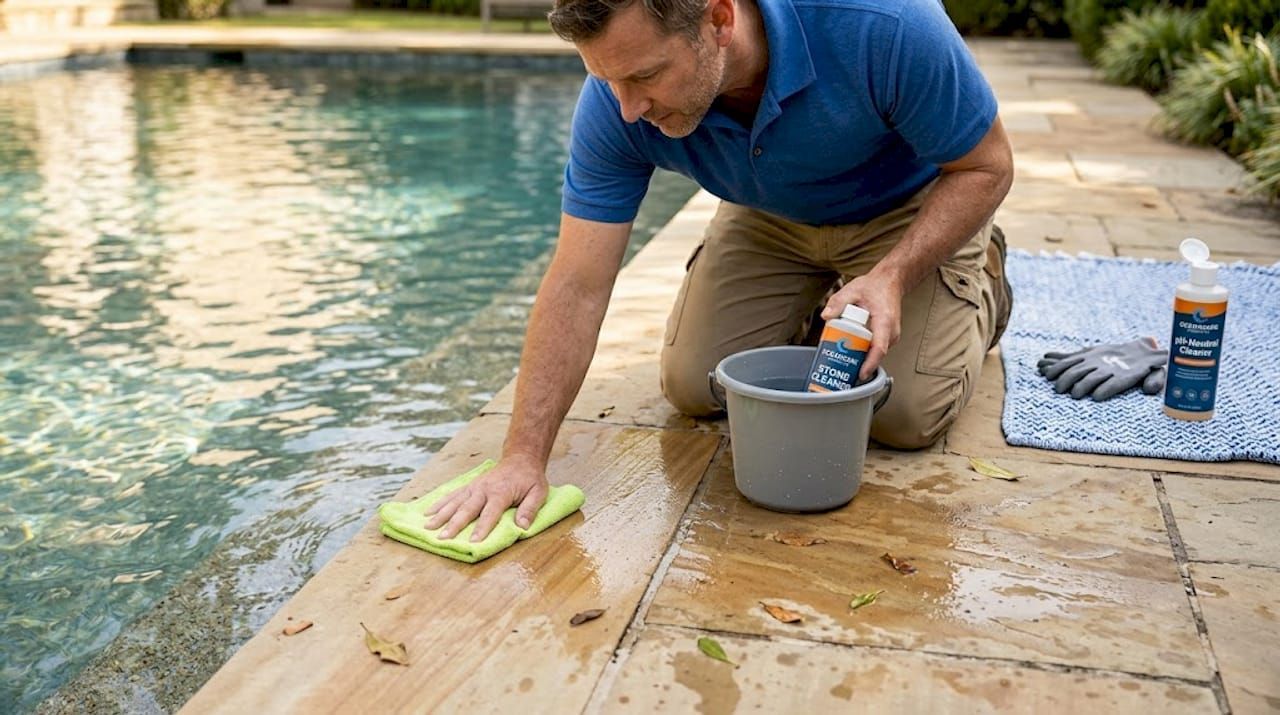
For natural stone surfaces like marble, travertine, and limestone, pH-neutral cleaners are non-negotiable. These stones require strictly pH-neutral formulas in the 6.5 to 7.5 range to prevent etching. Even diluted vinegar causes irreversible surface damage because the acetic acid reacts with the calcium carbonate in the stone. Once that etching occurs, you cannot buff it out at home.
A debate worth addressing directly: some sources suggest using mild acids like vinegar for light calcium scale on pool tiles. There is truth to this, but only in a narrow set of circumstances. Mild acids can work on ceramic or porcelain pool tiles that are acid-resistant, but the moment any stone tile is in the mix, that approach is risky. The safest default is to use a purpose-formulated, eco-certified calcium releaser and reserve any acid-based approach strictly for acid-resistant ceramic or porcelain surfaces confirmed in writing.
For marble maintenance basics that go deeper on stone-specific technique, external expert resources can fill in helpful detail alongside product-specific guidance.
"The single most common and expensive mistake we see is homeowners applying the wrong cleaner to the wrong surface. The surface looks fine for a few weeks, then the etching becomes visible under light. By then, professional restoration is the only option."
When it comes to sealing, acidic cleaners are only safe for acid-resistant tiles like ceramic and porcelain. Pumice-based scrubs should only be used wet and only on hard, non-stone tile surfaces. For sealing schedules, the water bead test is your guide: drip water on the surface. If it beads up and rolls off, the sealer is intact. If it soaks in within a few seconds, it is time to reseal. Most stone and pool tile surfaces need stone sealer usage attention every one to two years.
Sustainable application technique also means using microfiber cloths instead of abrasive pads, working in small sections to avoid product drying on the surface, and rinsing thoroughly to prevent residue buildup. These habits preserve both the surface and the product's environmental integrity by avoiding excess chemical runoff. Our guide on preventing tile stains naturally covers daily habits that reduce how often you need intensive cleaning in the first place.
Best practices for long-term sustainable surface care
Prevention is where sustainability really pays off. Reactive cleaning, where you wait for heavy buildup, staining, or scaling before acting, always requires more product, more effort, and more water than consistent preventive maintenance. It also tends to push homeowners toward stronger, less eco-friendly products because they need something that can cut through months of accumulated grime fast.
Weekly brushing and balanced pool pH between 7.4 and 7.6, combined with proper sealing, dramatically extends surface life and reduces the need for intensive cleaning sessions. That pH range is not arbitrary. It is the sweet spot where calcium does not scale aggressively on tile surfaces and where the water is not corrosive enough to eat into stone or grout.
Core sustainable maintenance habits:
- Brush pool tiles weekly to prevent biofilm and calcium from bonding to the surface
- Test and adjust pool water chemistry at least twice per week during swimming season
- Wipe down stone countertops and surrounds after each use to prevent staining
- Reseal stone surfaces on a 1 to 2 year cycle based on the water bead test
- Use a squeegee on glass pool tiles and shower enclosures after each use to prevent water spotting
- Store cleaning products in cool, shaded areas to preserve their biodegradable formulas
Pro Tip: Set calendar reminders for your sealing schedule. Most homeowners simply forget, and when they notice the surface looking dull or starting to stain, the sealer has been gone for a year or more. A short 30-minute sealing session every 12 to 24 months takes five minutes of planning and saves hours of restoration work later.
One often overlooked benefit of prevention is the reduced use of specialty restoration products. Restorers, heavy degreasers, and etching treatments are almost always more chemically intensive than routine maintenance cleaners, even when they carry eco-friendly labels. Keeping surfaces in good condition means you rely primarily on gentle, pH-neutral daily cleaners. That is the most sustainable outcome: using the mildest possible product because prevention kept the surface clean enough for it to work.
Building these habits into your regular eco home cleaning routines creates a system that is both easier to follow and kinder to your surfaces and the environment over time.
Why sustainable surface care is more than just eco products
Here is the perspective that most guides miss entirely. When people decide to "go green" with their surface cleaning, the focus almost always lands on the product. Switch to a plant-based cleaner, choose one with a green label, done. But that mindset produces an incomplete result and sometimes a damaging one.
We have seen firsthand what happens when a genuinely eco-certified, biodegradable cleaner gets applied to the wrong surface. The product itself is fine. But when a pH-7.5-and-above cleaner is used repeatedly on travertine, or when an acidic descaler marketed as "natural" meets limestone coping around a pool, the surface chemistry does not care how responsibly the ingredients were sourced. The damage is the same.
True sustainability in surface care requires a systems approach. That means understanding your surface type before selecting a product, knowing which maintenance routine matches your real-world usage pattern, and planning sealing and restoration on a schedule rather than waiting for visible deterioration. It means the product choice is only one part of a three-part equation: product plus method plus maintenance.
The homeowners and property managers who get the best long-term results are not necessarily the ones with the most expensive products. They are the ones who spend time understanding what their specific surfaces need and build a consistent routine around that. A $25 eco-certified pH-neutral cleaner used correctly and consistently outperforms a $60 premium product applied at the wrong dilution on the wrong surface.
Accessing eco cleaning insights that go beyond product labels and address application, surface chemistry, and maintenance timing is where the real gains come from. Think of your surfaces as a long-term investment. Managing that investment well means using knowledge as much as products.
Get started with proven sustainable surface solutions
If this guide has clarified anything, it is that the right product for the right surface, applied the right way, is the foundation of genuine sustainable care. At Oceancare Store, we have built our entire product range around exactly that principle: eco-certified, biodegradable, plant-based formulas that are designed specifically for stone, pool tile, and grout care.
For pool tile owners, our pool tile restorer tackles calcium scaling and staining without harsh acids, making it safe for use around pool water and landscaping. For daily cleaning, our pH-neutral tile cleaner works across stone, ceramic, and glass surfaces without risking etching or surface damage. And for long-term protection, our range of stone and grout sealers uses low-VOC, penetrating formulas that protect without sealing in existing grime. Browse by surface type to find the exact match for your space.
Frequently asked questions
What are the environmental benefits of sustainable surface care?
Switching to sustainable surface care cuts chemical use, waste, and carbon emissions dramatically. A verified green cleaning protocol reduced global warming potential by 47.7%, chemical use by 82.6%, and waste by 92.4% while maintaining the same hygiene outcomes.
Are all natural or homemade cleaners safe for stone and tile?
No. Natural stone like marble or travertine requires strictly pH-neutral cleaners in the 6.5 to 7.5 range, and even diluted vinegar causes irreversible etching on these surfaces.
How do I know a surface cleaner is truly sustainable?
Look for credible third-party certifications. Nordic Swan Ecolabel, Green Seal, and EPA Safer Choice all verify low toxicity, biodegradability, and real-world cleaning performance on hard surfaces.
How often should stone and pool tile be sealed?
Use the water bead test every 12 to 24 months. If water soaks into the surface quickly rather than beading up, it is time to reseal to maintain protection and prevent staining.
What habits extend the life of eco-friendly surface care results?
Weekly brushing and balanced water pH between 7.4 and 7.6 are the two highest-impact habits. They reduce mineral buildup and protect the surface between deeper cleaning sessions, keeping your eco-cleaners effective for longer.

