
Eco-friendly pool tile and stone protection checklist
TL;DR:
- Use eco-friendly, pH-neutral cleaners tailored to specific surfaces for safe, effective maintenance.
- Regularly seal natural stone surfaces every 1-2 years to prevent damage and staining.
- Avoid acidic cleaners like vinegar on natural stone to prevent permanent etching and surface dulling.
Your pool tiles and natural stone surfaces are investments worth protecting, but the wrong cleaning approach can strip finishes, etch delicate stone, and send harmful chemicals straight into your pool water or backyard soil. Most homeowners discover this the hard way after a well-intentioned scrub session leaves their travertine looking dull or their grout crumbling. This checklist gives you a clear, expert-backed system for maintaining beautiful surfaces using eco-friendly products that are safe for your family, your stone, and the environment around your pool.
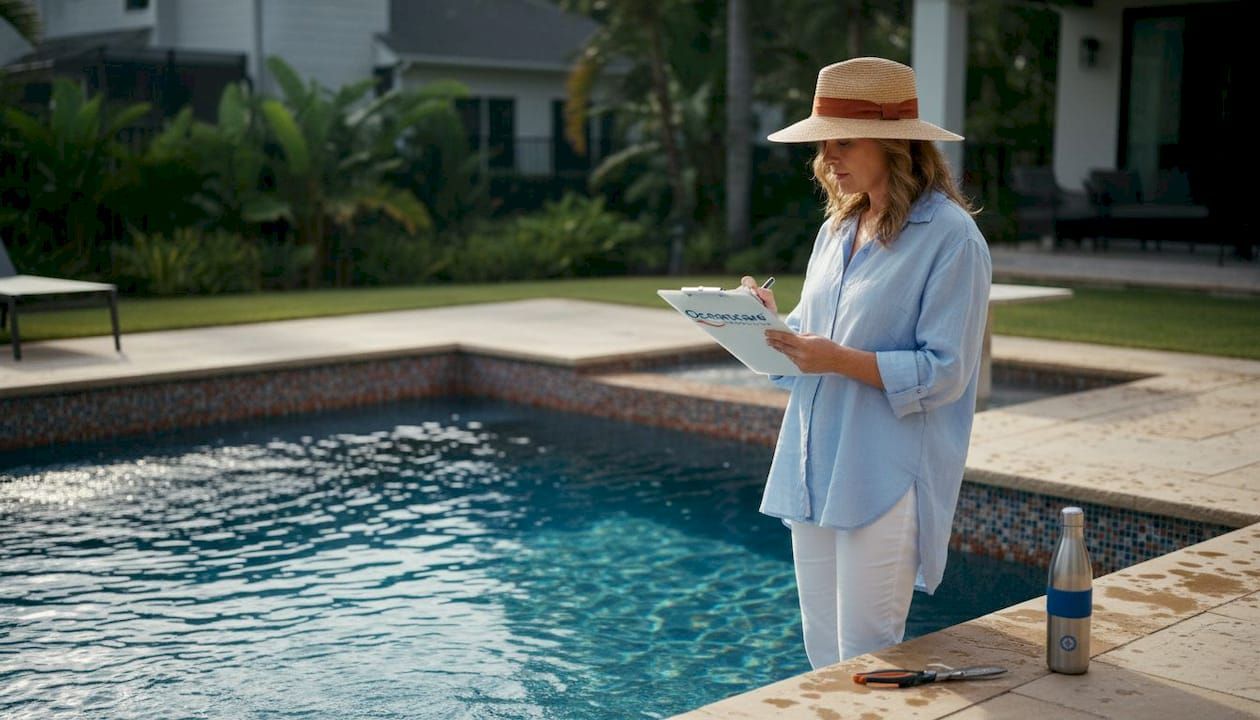
Table of Contents
- Set your criteria: Essential factors for surface protection
- Eco-friendly cleaners: Pros, cons, and expert recommendations
- Sealing and routine care: The checklist for long-term protection
- Mistakes to avoid: Common errors that reduce surface life
- Our take: Surface protection isn't about shortcuts, it's about systems
- Eco-friendly surface protection made simple with Oceancare
- Frequently asked questions
Key Takeaways
| Point | Details |
|---|---|
| Avoid harsh chemicals | Using acids like vinegar can damage natural stone and pool tiles even if they seem eco-friendly. |
| Commit to routine care | Regular cleaning and sealing prevents costly repairs and keeps surfaces looking new. |
| Select the right products | Choose cleaners and sealers that are both effective and safe for your pool and stone surfaces. |
| Follow a proven checklist | A step-by-step protection routine ensures you never miss a maintenance task. |
Set your criteria: Essential factors for surface protection
Before you reach for any cleaner or sealer, you need a clear picture of what you're actually trying to accomplish. Surface protection is not one-size-fits-all. A glazed ceramic pool tile behaves completely differently than a honed limestone coping or a tumbled travertine deck, and treating them the same way is one of the most common and expensive mistakes homeowners make.
Define your goals first. The three pillars of smart surface maintenance are longevity, appearance, and safety. Longevity means protecting your surfaces from physical erosion, chemical damage, and water infiltration over years, not just weeks. Appearance means keeping grout bright, tiles glossy or naturally matte depending on the finish, and stone free from scale and discoloration. Safety means choosing products that won't harm people, pets, or the surrounding landscape.
Understanding eco-friendly vs. traditional cleaners is the next step. Traditional chemical cleaners often contain hydrochloric acid, bleach, or phosphates. These work fast, but they can strip sealers, pit stone surfaces, increase pool chemical load, and create toxic runoff in your yard. Eco-friendly, plant-based, and biodegradable cleaners take a gentler approach. They use surfactants derived from natural sources, avoid harsh acids, and break down safely after use. The trade-off is that some eco options require a little more dwell time or a second application for heavy buildup, but the surface and environmental benefits far outweigh that minor inconvenience.
Material-specific sensitivities are non-negotiable. Natural stone like travertine, limestone, marble, and slate is acid-sensitive. Even mildly acidic solutions can cause a chemical reaction called etching, which permanently dulls the surface. Following eco cleaning best practices for each material type is essential before you start any maintenance routine. Experts unanimously warn against using vinegar on natural stone pools, even though it's widely promoted as a natural cleaning hack. Porcelain and glazed ceramic tiles are more forgiving, but they still benefit from pH-neutral cleaners that won't degrade grout or seal coatings.
Check product ingredients and certifications. Look for terms like "plant-based," "biodegradable," "low VOC," and "pH neutral." Certifications from recognized environmental organizations add an extra layer of confidence. The presence of these markers means the product was formulated with both performance and environmental responsibility in mind.
"Not all 'green' labels are created equal. Read the ingredient list and look for genuine certifications, not just green-colored packaging."
Finally, consider water and chemical runoff . Every time you clean a pool deck or tile waterline, residues flow somewhere. Acid-based or phosphate-heavy cleaners can disrupt soil chemistry, harm nearby plants, and even affect local water systems. Choosing safe surface care solutions from the start eliminates this risk entirely.
- Set clear goals: longevity, appearance, and safety
- Understand eco vs. traditional cleaner trade-offs
- Know your surface material before choosing any product
- Verify ingredients and certifications
- Account for environmental runoff when selecting cleaners
Pro Tip: Before purchasing any product, take a photo of your surface and note whether it's polished, honed, or tumbled. This detail alone will help you narrow down which cleaners and sealers are safe for your specific finish.
Eco-friendly cleaners: Pros, cons, and expert recommendations
Once your criteria are clear, it's time to evaluate the major cleaning options available for pool tiles and natural stone. The market has expanded significantly in recent years, and you now have genuinely effective eco choices for nearly every surface type and cleaning challenge.
The table below compares the most common cleaner categories across key performance and safety factors:
| Cleaner type | Safe for natural stone | Safe for pool tiles | Eco rating | Best use case |
|---|---|---|---|---|
| pH-neutral plant-based | Yes | Yes | Excellent | Routine cleaning, all stone |
| Diluted white vinegar | No | Some ceramic only | Moderate | Non-stone tile scale |
| Citrus-based enzyme cleaner | Generally yes | Yes | Good | Organic stains, algae |
| Hydrochloric acid | No | Limited use only | Poor | Aggressive scale removal |
| Bleach solution | No | Avoid near pool | Poor | Surface disinfection only |
| Biodegradable calcium releaser | Yes (check label) | Yes | Good | Calcium and hard water scale |
Diluted vinegar may work for non-sensitive tiles but is absolutely not suitable for natural stone. Many homeowners apply vinegar to marble or travertine coping and notice the surface becoming cloudy or rough within a few applications. That damage is permanent without professional restoration.
What eco-friendly cleaners do well: Plant-based surfactants lift grime, oils, and soft mineral deposits effectively. Enzyme-based cleaners break down biological matter like algae and mildew without leaving toxic residue. Biodegradable calcium releasers dissolve hard water scale at the waterline without damaging the tile glaze or surrounding stone. These products are also safe to use near pool water, which is critical since pool chemistry is easily disrupted by cleaning product runoff.
Where eco cleaners require patience: Heavily calcified waterline buildup or embedded rust stains may need repeated applications or longer dwell times compared to acid-based alternatives. The key is starting regular cleaning before buildup becomes severe, which makes eco products plenty sufficient.
For the best results on natural stone specifically, look for best eco stone cleaners that are formulated to penetrate without etching. These products are designed to clean deeply while respecting the porous nature of materials like travertine and limestone.
The most frequent product-related errors stem from mixing categories, such as using a tile cleaner meant for ceramic on honed marble. Reviewing common cleaning mistakes before starting your routine can save your surfaces from costly damage.
- pH-neutral plant-based cleaners are the safest choice for routine care
- Avoid acid-based cleaners on all natural stone, no exceptions
- Enzyme cleaners excel at organic stains and algae near pool areas
- Always match the cleaner to the surface material, not just the stain type
- Use biodegradable calcium releasers for waterline mineral deposits
Pro Tip: Always spot-test a new cleaner on a small, hidden area of your surface before full application, even if the product is labeled eco-friendly and safe for stone. Wait 24 hours to confirm there's no discoloration or surface change before proceeding.
Sealing and routine care: The checklist for long-term protection
With your cleaning products selected, the next step is a consistent maintenance and sealing routine. Here's a step-by-step checklist that covers everything from initial prep to seasonal resealing:
- Clear and sweep the surface. Remove all debris, furniture, and poolside accessories. A dry sweep prevents dirt from turning into mud during wet cleaning and scratching the surface.
- Pre-rinse with clean water. Lightly rinse the surface to loosen surface dirt and reduce cleaner dilution when applied.
- Apply your selected eco-friendly cleaner. Work in small sections, allowing the product to dwell for the manufacturer's recommended time. Don't let it dry on the surface.
- Scrub with a soft-bristle brush. Never use metal scrapers or abrasive pads on natural stone or glazed tiles. A nylon brush or soft-bristle deck brush protects the surface while cleaning effectively.
- Rinse thoroughly. Remove all cleaning residue before moving to the next step. Leftover cleaner can interfere with sealer adhesion.
- Allow the surface to dry completely. Most sealers require a bone-dry surface. Moisture trapped under a sealer can cause cloudiness or adhesion failure.
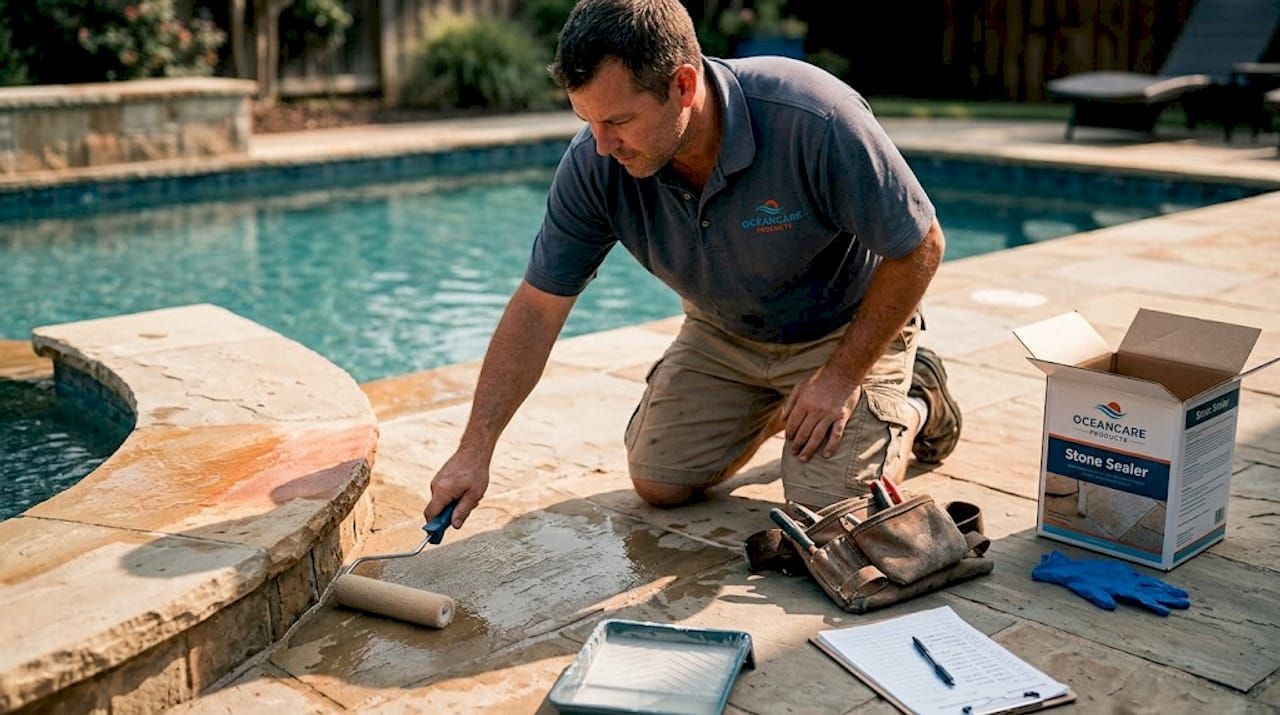
- Apply your eco-safe sealer in thin, even coats. Work in manageable sections and follow the manufacturer's guidance on how many coats are needed for your specific stone type.
Following proper guidelines for maintaining natural stone surfaces ensures that you're not just cleaning but actively preserving the material at a structural level. Refer to our 7-step cleaning checklist for a more detailed breakdown of each step in the process.
Understanding why sealing matters is just as important as doing it. Porous stone without a sealer absorbs water, oils, and minerals, which creates staining and accelerates physical breakdown over time. Reading more about the importance of sealing stone will help you understand what's happening at the surface level and why skipping this step is rarely worth the risk.
The table below outlines recommended maintenance frequencies for common pool and outdoor surfaces:
| Surface type | Routine cleaning frequency | Sealer reapplication |
|---|---|---|
| Glazed ceramic pool tiles | Weekly light clean | Every 2 to 3 years |
| Natural travertine coping | Weekly or biweekly | Every 1 to 2 years |
| Limestone decking | Weekly | Every 1 to 2 years |
| Porcelain pavers | Biweekly | Every 2 to 3 years |
| Grout lines (all types) | Weekly | Annually |
Pro Tip: Schedule your resealing at the start of spring or just before summer pool season opens. Temperature and low humidity are ideal for sealer application and curing, and you'll protect your surfaces right before they see the most use and UV exposure.
Mistakes to avoid: Common errors that reduce surface life
Following the checklist is powerful, but knowing what to avoid is just as crucial for maintaining your surfaces. The most damaging mistakes aren't dramatic accidents. They're slow, repeated errors that quietly erode your surfaces over time.
Using acidic or harsh cleaners on stone surfaces is the most consequential mistake you can make. Acids cause etching, a form of chemical erosion that permanently dulls and pits the surface texture of any calcium-based stone. Even a single application of an acidic cleaner can leave visible marks on polished marble or travertine. Some sources suggest vinegar for scale removal, but experts are unanimous that it should never be used on natural stone pools. The short-term descaling effect is not worth the permanent surface damage.
Skipping sealers or using the wrong type is the second most common error. Applying a topical film sealer to a stone meant for penetrating sealers traps moisture below the surface. This can cause spalling, where sections of stone physically break away. Always confirm the sealer type matches your stone's porosity and finish.
Neglecting regular inspections allows small problems to grow into large ones. A hairline grout crack found early can be regrouted in an hour. Left unattended for a season, that same crack becomes a water infiltration point that undermines the entire tile installation.
Inconsistent cleaning schedules are more damaging than most people realize. Allowing scale and mineral deposits to accumulate over months means you'll eventually need more aggressive cleaning methods to remove them, creating a cycle where harsher products become "necessary" simply because routine maintenance was skipped.
Overlooking environmental runoff is a mistake that costs more than your own surfaces. Cleaning chemicals that flow off your pool deck enter your lawn, garden beds, and potentially local waterways. Reviewing surface protection mistakes and DIY cleaner mistakes before establishing your routine helps you build habits that protect both your property and the environment from the start.
"A surface you protect consistently will outlast one you restore dramatically every few years. Prevention always costs less than repair."
- Never use acidic cleaners, including vinegar, on natural stone
- Match sealer type to your specific stone and its porosity
- Inspect grout and tile for cracks or staining at least once per season
- Maintain a regular cleaning schedule to avoid needing aggressive products
- Choose biodegradable products to minimize environmental runoff impact
Our take: Surface protection isn't about shortcuts, it's about systems
We've seen thousands of pool and stone surfaces over the years, and the pattern is always the same. Surfaces that look pristine decade after decade belong to homeowners who followed quiet, consistent routines. The ones that need expensive restoration every few years belong to people who tried shortcuts.
Vinegar is the perfect example. It's cheap, it's in every pantry, and it genuinely works on some surfaces. But the moment someone applies it to travertine or limestone coping, they've started a slow erosion process that no amount of resealing will fully reverse. The cost of "free" cleaning that requires professional resurfacing is never actually free.
The real insight is that surface protection is a system, not a single product or a once-a-year effort. The right cleaner, paired with the right sustainable stone protection approach and applied on a consistent schedule, delivers results that no dramatic one-time treatment can match. Small steps, done regularly, beat big fixes every time. Build the system, trust the routine, and your surfaces will show it.
Eco-friendly surface protection made simple with Oceancare
Ready to put your checklist into action? Every step in this guide works better when you have the right products behind it.
Oceancare offers a carefully developed line of eco-friendly cleaners, sealers, and surface treatments specifically designed for pool tiles, natural stone, and outdoor hard surfaces. Every product is formulated to be non-toxic, biodegradable, and safe for pool environments, so you never have to choose between performance and responsibility. Start with a pH-neutral cleaner for routine maintenance, use the stone cleaner concentrate for deeper cleaning sessions, and protect everything with our range of stone and grout sealers built for lasting results. Your surfaces deserve a system that works with them, not against them.
Frequently asked questions
Can I use vinegar to clean all pool tiles?
No. Vinegar is not suitable for natural stone tiles like travertine, marble, or limestone, as it causes permanent etching and surface damage even in diluted form.
How often should I reseal my natural stone surfaces?
Most natural stone surfaces around pools should be resealed every one to two years, though high-traffic areas or surfaces exposed to heavy UV and chemical splash may need annual attention.
Are eco-friendly cleaning products safe for all types of stone?
Not automatically. Even eco-friendly products vary in pH and formulation, so always verify that the product is labeled safe for your specific stone type and do a spot test before full application.
What's the best way to prevent hard water stains on pool tiles?
Consistent weekly cleaning with a pH-neutral cleaner combined with a properly applied sealer forms the most effective barrier against mineral deposit buildup at the waterline.

