
Reseal Grout: Room by Room Schedule and 60–90s Water Test
Reseal shower grout about every 12 months, kitchen and high-traffic floors every 1 to 3 years, and low-use walls or backsplashes as infrequently as every 3 years. Exterior and pool-area grout wears faster and needs closer attention. Before you reseal anything, run the water bead test: drip water on the grout line and see if it beads up or soaks in. If your grout is epoxy, skip sealing altogether.
TL;DR:
- Reseal shower grout annually or sooner if water no longer beads up, especially in high-moisture areas prone to faster sealer degradation.
- Use the water bead test to determine if grout needs resealing, as calendar-based schedules may not reflect actual surface condition.
- Porous grout and high-traffic or exterior surfaces require more frequent resealing due to exposure to wear, chemicals, and environmental factors.
- Epoxy grout does not need sealing because it is non-porous, and damaged or crumbling grout should be repaired before sealing.
- Choosing the right sealer depends on grout type and use conditions; penetrating sealers last one to three years and are common for interior use, while pigmented options can last over a decade.
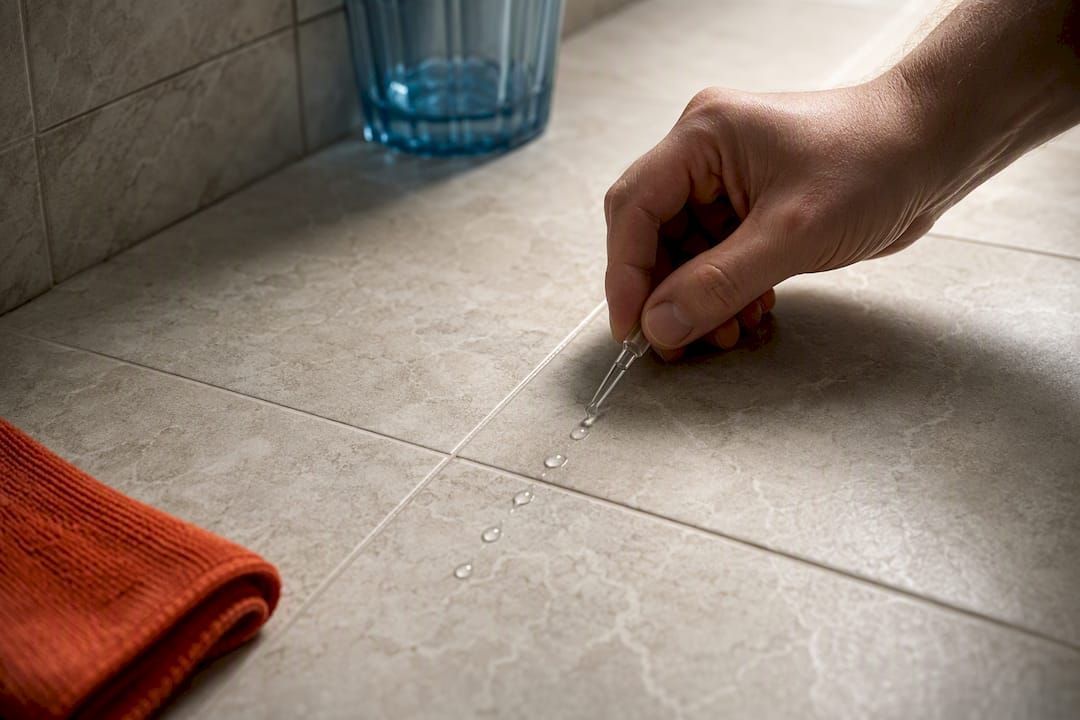
Table of Contents
- Practical reseal schedule by room and use case
- How to test grout sealing and visual signs it's time
- Factors that change how long a sealer lasts
- Sealer types and realistic lifespan expectations
- When not to seal: epoxy grout and other exceptions
- Quick reseal checklist and timing for grout sealing
- Oceancare Store guidance on eco-friendly sealers and maintenance
- What the schedule doesn't tell you
- Matching Oceancare Store products to your grout sealing needs
- Sources
- FAQ
Practical reseal schedule by room and use case
Grout sealing frequency depends less on the calendar and more on how much water, foot traffic, and chemical exposure a surface handles. Still, a working schedule helps you plan ahead instead of guessing.
Showers and wet rooms see daily water contact, so their sealer breaks down fastest. Bathrooms used every day typically need resealing on a roughly annual cycle, though some households stretch that to 18 months if the grout is holding up well. Kitchen floors and backsplashes fall in a wider band because spills and grease vary so much from one kitchen to another. Entryways and other heavy-traffic floors face constant abrasion from foot traffic and dirt, which grinds down sealer faster than water exposure alone. Exterior patios and pool-adjacent tile have it worst: sun, temperature swings, and in pool areas, chlorine or bromine chemistry all shorten sealer life. Manufacturer guidance from MAPEI recommends resealing interior and exterior surfaces every 1 to 3 years, with the exact interval depending on surface hardness, location, wear, and how well you maintain it.
Here's a practical breakdown to work from:
- Showers and wet rooms: reseal roughly every 12 months, with some products holding up to 18 months under lighter use.
- Kitchen floors and backsplashes: reseal every 12 to 36 months depending on spill frequency and cleaning habits.
- Entryways and high-traffic floors: plan on 12 to 24 months for heavily walked areas.
- Exterior patios and pool tile: expect shorter intervals, often 6 to 24 months, depending on climate and pool chemical exposure.
The smartest approach combines a fixed cadence with an annual check. Test your grout once a year using the water bead method described below, and reseal early if the test fails, even if you're not due yet on the calendar. For pool-adjacent tile specifically, pool tile maintenance guidance can help you account for the chemical load that regular household grout never faces.
How to test grout sealing and visual signs it's time
You don't need to guess when grout needs resealing. A simple water bead test tells you in under a minute.
- Clean a small patch of grout and let it dry completely.
- Drip a few drops of water directly onto the grout line.
- Watch for 60 to 90 seconds: if the water beads up and sits on the surface, the sealer is still working.
- If the water darkens the grout or soaks in within a minute, the sealer has worn through and it's time to reseal.
This test mirrors the periodic water-drop testing manufacturers recommend, which calls for reapplying sealer whenever water soaks in rather than beading.
Beyond the water test, watch for grout that darkens noticeably when wet, stays damp longer than the surrounding tile, or feels powdery or crumbly when you run a finger across it. Powdering usually means the grout itself is degrading, not just the sealer, which calls for repair or regrouting before you seal anything. A stain that won't lift with cleaning often points to a deeper problem, mold, mineral buildup, or grout that's already compromised, rather than a simple resealing job.
Pro Tip: Test the highest-traffic patch of grout in your home once a year. It fails first and gives you the clearest early warning.
Factors that change how long a sealer lasts
Sealer lifespan isn't fixed. It shifts based on what the grout is made of, what you clean it with, and what the space throws at it every day.
- Grout composition: cementitious and sanded grout are porous and absorb sealer, while epoxy grout is non-porous and generally can't be sealed the same way.
- Cleaner chemistry: high-alkaline, acidic, or solvent-based cleaners break down sealer chemically, and technical bulletins from Custom Building Products note that harsh cleaning methods shorten expected wear.
- Traffic and abrasion: floors and entryways wear faster than walls simply from repeated foot contact and grit.
- Environment: UV exposure and temperature swings degrade exterior sealers faster, while pool chemicals accelerate breakdown on pool-adjacent tile.
- Application quality: a sealer that didn't penetrate deep enough or cure fully fails sooner than one applied correctly.
Porosity matters more than most homeowners realize. Grout with a rougher, more absorbent surface takes in more sealer and can hold protection longer, but it also shows wear patterns sooner if the sealer starts to fail unevenly. Cleaning habits matter just as much: a household that reaches for a bleach-based bathroom cleaner every week is working against its own sealer, no matter how good the product was on application day.
Sealer types and realistic lifespan expectations
Two broad categories cover most grout sealers on the market, and picking the right one shapes both how long it lasts and how your grout looks afterward.
- Penetrating (clear) sealers soak into the grout and protect from within without changing its color or texture.
- Topical or color-bond sealers sit on top of the grout as a coating, often changing its color or adding a slight sheen.
- Consumer spray products are easier to apply but generally trade off some depth of penetration for convenience.
- Professional-grade impregnating sealers penetrate deeper and are typically used for high-wear commercial or heavy residential applications.
Clear penetrating sealers typically protect floors for 1 to 3 years and shower grout for 1 to 2 years , while pigmented color seals can last far longer, in the range of 8 to 15 years, according to the same source, because the coating itself is the color layer rather than a clear film sitting over porous grout.
Before buying any sealer, check the manufacturer's technical data sheet. A TDS spells out expected wear, cure times, and application limits, and following it closely matters more than the brand name on the bottle. If a product's TDS calls for reapplication once water testing shows soak-in, that's your real schedule, not a generic number pulled from a blog post.
When not to seal: epoxy grout and other exceptions
Not every grout line needs a sealer. Epoxy grout is non-porous, so penetrating sealers can't soak into it effectively, which means most epoxy installations skip this maintenance step entirely.
Old grout that's already crumbling or pulling away from the tile needs repair or regrouting first. Sealing over failing grout just traps the problem underneath a fresh layer that won't hold. In cases where you want a color change or extra surface durability rather than pure water resistance, a topical or color seal is the better fit, since it's designed to sit on top rather than absorb in.
Quick reseal checklist and timing for grout sealing
Resealing grout is a short project if you follow the right order and give each step time to work.
- Clean the grout with a neutral pH cleaner and let it dry fully, ideally 24 hours in a humid space like a bathroom.
- Apply the sealer in a thin, even coat following the product label, and check between coats using the water bead test.
- Allow the initial cure window before light traffic. Some products are testable in as little as 2 hours and traffic-ready within 2 hours, while others need 24 hours before foot traffic and up to 14 days for a full cure.
- Keep the surface dry during the cure window specified on the label, since early water exposure can compromise the seal.
- Switch to a neutral pH cleaner going forward to protect the new sealer.
Cure times vary a lot between products, so the label is the only reliable source. A fast-cure aerosol sealer and a professional impregnating sealer can have completely different timelines even when applied to the same grout.
Pro Tip: Reseal on a dry day and avoid scheduling it right before guests arrive. Even fast-cure products need a buffer before heavy use.
If the grout underneath is already damaged, hire a professional to repair or regrout before you attempt to reseal. For a full walk-through with photos, the grout renewal checklist covers the same steps in more depth. Shower-specific timing and prep are covered separately in this guide to sealing shower grout.
Oceancare Store guidance on eco-friendly sealers and maintenance
There are product lineups available that cover this maintenance cycle, with an emphasis on formulas that are plant-based, biodegradable, low VOC, and acid-free rather than the harsher options common in the category. That matters because harsh, high-alkaline, or acidic cleaners are one of the main reasons sealers fail early. Sticking with a neutral pH cleaner between resealing cycles protects whatever sealer you've already applied and stretches its working life.
For readers weighing whether sealing is worth the effort at all, 9 reasons to seal grout lays out the practical case, and grout protection ideas for homeowners and property managers offers a broader maintenance routine beyond just resealing.
What the schedule doesn't tell you
Most advice on grout sealing frequency treats the calendar as the answer, but the calendar is a proxy for something else: how the surface actually behaves under water. A shower that gets a strong exhaust fan and daily squeegee use can outlast its "12 month" sealing window by a wide margin, while a poorly ventilated bathroom can fail in half that time. The number on the label is a starting assumption, not a rule.
The bigger mistake homeowners make isn't skipping resealing, it's skipping the test. Buying a sealer and reapplying it on a fixed schedule feels responsible, but without the water bead check, you're just as likely to reseal a surface that didn't need it yet, or miss one that failed months ago. The test costs nothing and takes a minute. Prioritize it over any generic timeline, including the ranges in this article.
Matching Oceancare Store products to your grout sealing needs
- Showers, kitchen floors, and backsplashes: the Stone & Grout Sealers line covers penetrating sealers built for regular interior grout.
- Pool-adjacent tile and grout: Pool Tile Maintenance Products are formulated to handle the chlorine and pH swings that break down standard sealers faster.
- Ongoing care between resealing cycles: Home Essential Cleaners are neutral pH, so they won't strip the sealer you just applied.
Some sealers and cleaners are formulated to be plant-based, biodegradable, low VOC, and acid-free, which means grout protection is achieved without compromising household safety. Browse the full lineup or reach out with your specific surface and location, and we'll help you find the right match.
Sources
FAQ
Why do contractors not seal grout during installation?
Contractors often leave sealing as a separate step because grout needs to cure fully before sealer will bond correctly, and rushing it can trap moisture underneath. Many installers recommend waiting several days to weeks before sealing, based on the grout product's cure guidance.
Is it ever too late to seal grout?
Grout can be sealed at almost any point in its life as long as it's clean, dry, and structurally sound. If the grout is crumbling or already damaged, repair or regrouting needs to happen first, since sealer won't fix underlying deterioration.
Can I put grout sealer on old grout?
Yes, as long as the old grout is intact and not powdering or cracking. Clean it thoroughly with a neutral pH cleaner, let it dry completely, and run a water bead test first to confirm the surface will actually absorb a penetrating sealer.
Is sealing grout really necessary?
Sealing isn't strictly required, but unsealed grout absorbs water, stains, and grime much more easily, which shortens its lifespan and appearance. Epoxy grout is the main exception, since its non-porous surface doesn't accept penetrating sealer and generally doesn't need it.

