
10 Grout and Stone Safety Tips for Homeowners
TL;DR:
- Using wet methods and PPE effectively minimizes silica dust exposure during tile work. Homeowners must identify stone types and use pH-neutral cleaners to prevent damage. Immediate slurry removal and proper ventilation are critical for safety and surface preservation.
Before you pick up a grout float or pour a cleaner, run through this checklist. It covers every grout and stone safety tip that matters for a DIY job done right.
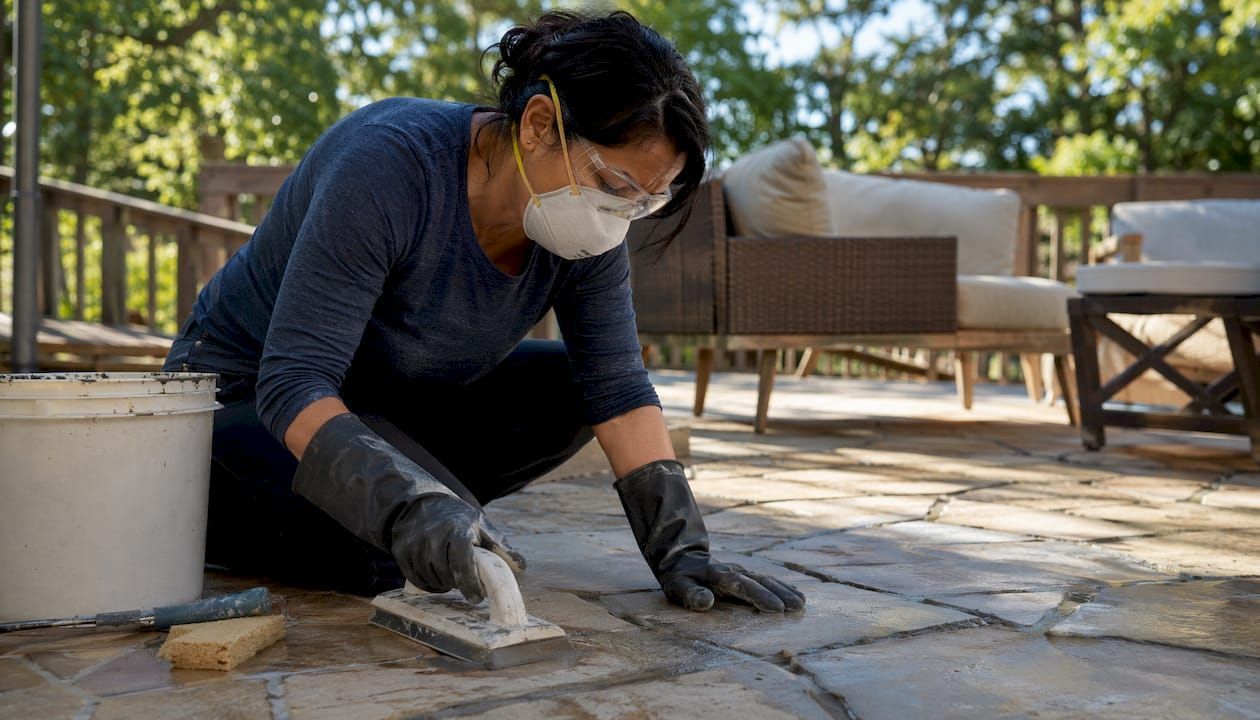
Quick Safety Checklist:
- Wear safety glasses, nitrile gloves, and knee pads before starting
- Use a NIOSH-rated N95 or better respirator any time you cut, grind, or sand stone or grout
- Cut and grind wet only; never dry-cut silica-bearing materials
- Vacuum dust with a HEPA-filtered vac; never dry sweep or blow with compressed air
- Use pH-neutral cleaners on all natural stone; avoid acids on marble, limestone, and travertine
- Plug all power tools into a GFCI-protected outlet when water is present
- Extract slurry with a wet/dry vac immediately after scrubbing; do not let it dry in place
- Test any cleaner or sealer on a small hidden area before full application
- Bag solidified slurry for trash; never wash heavy silica slurry to a storm drain
- Call a pro for large demolition, structural cracks, or persistent mold behind grout
These ten actions reflect OSHA silica control requirements, NIOSH respirator guidance, and Natural Stone Institute stone-type rules. Oceancarestore's pH-neutral, low-VOC cleaners and penetrating sealers fit directly into this protocol.
Table of Contents
- What PPE do you actually need for grout and stone work?
- How do you control silica dust during cutting and grinding?
- Which cleaners are safe for stone, and which ones damage it?
- How do you set up tools safely when water and power are both present?
- What is the right sequence for testing, sealing, and rinsing stone?
- How do you clean up slurry and dispose of it responsibly?
- Common DIY mistakes that damage stone or create safety risks
- How do you choose eco-friendly, stone-safe products?
- How do you ventilate properly during grinding or sanding?
- How do you ground tools and use them safely in wet environments?
- What OSHA rules apply to DIYers handling silica materials?
- Key Takeaways
- The detail most guides skip
- Safer stone cleaners and sealers from Oceancarestore
- Useful sources and authoritative references
What PPE do you actually need for grout and stone work?
The short answer: eye protection, nitrile gloves, knee pads, and a properly fitted respirator whenever dust is generated. Hearing protection belongs on the list too if you are running an angle grinder or wet saw for more than a few minutes.
PPE checklist for grout and stone jobs:
- Eyes: ANSI Z87.1-rated safety glasses or goggles; splash-rated goggles for chemical mixing
- Hands: Nitrile gloves for all cleaners, sealers, and epoxy grouts; latex is insufficient for solvent-based products
- Knees: Foam or gel knee pads; hard tile floors cause cumulative joint stress fast
- Lungs: NIOSH N95 minimum for light sanding or grout removal; P100 half-face respirator for extended grinding or cutting
- Ears: Foam earplugs or earmuffs rated NRR 25+ for power tool use over 15 minutes
- Clothing: Long sleeves, closed-toe non-slip shoes; no loose cuffs near spinning blades
Respirator selection is where most homeowners underestimate the risk. A disposable N95 works for brief, low-dust tasks like light grout scrubbing. For cutting, grinding, or removing grout over a larger area, step up to a P100 elastomeric half-face respirator. GFCI protection and proper PPE together are the two most commonly skipped precautions on wet tile jobs.
Pro Tip: Before each use, do a quick seal check on a reusable respirator: cup both hands over the mask, exhale sharply, and feel for air escaping around the edges. If it leaks, adjust the straps or replace the seal. A paper dust mask from the hardware bin provides almost no protection against respirable silica particles.
How do you control silica dust during cutting and grinding?
Wet methods first, always. OSHA's silica standard requires wet cutting or equally effective dust controls for construction work involving stone, and the same logic applies to any DIY job at home. Respirable crystalline silica from common household stone tasks can cause silicosis, and even small home projects generate hazardous exposures without wet methods and HEPA capture.
On-site dust controls:
- Run a wet saw with the water feed fully on; never dry-cut tile, stone, or cementitious grout
- Use wet polishing pads and a continuous water feed for any grinding or polishing
- Attach a HEPA-filtered vacuum to handheld grinders via a shroud or dust shroud adapter
- Isolate the work room with plastic sheeting when doing significant removal work
- Never dry sweep or use compressed air to clean floors or surfaces with silica dust
| Control measure | Standard / threshold |
|---|---|
| OSHA PEL for respirable crystalline silica | 50 µg/m³ as an 8-hour TWA |
| Recommended respirator at or above PEL | P100 half-face or powered air-purifying respirator |
| Housekeeping method | Wet sweeping or HEPA vacuum only |
Ventilation matters even with wet methods. Open windows on opposite walls to create cross-ventilation, and run a box fan exhausting outward from the work area. For enclosed bathrooms with no windows, a portable air scrubber with a HEPA filter is worth renting for any job that involves more than spot grinding.
Which cleaners are safe for stone, and which ones damage it?
The rule is simple: pH-neutral cleaners for routine care, and nothing acidic on calcareous stone. Marble, limestone, and travertine all contain calcium carbonate, which reacts with acids. The result is not a stain you can clean off. It is an etch, a physical removal of the stone surface that requires mechanical repolishing to fix.
Natural Stone Institute guidance is clear: identify your stone's geological class before applying any cleaner or sealer. Siliceous stones like granite and slate tolerate a wider range of products. Calcareous stones need pH-neutral products exclusively.
Chemical safety rules for stone and grout:
- Never use vinegar, lemon juice, or any acid-based bathroom cleaner on marble, limestone, travertine, or onyx
- Avoid chlorine bleach on colored grout; it can lighten pigment permanently
- Never mix bleach and ammonia; the combination produces toxic chloramine gas
- Use oxygen bleach or purpose-made alkaline cleaners for organic stains and mildew
- Wear nitrile gloves when handling epoxy grout components; resins cause skin sensitization with repeated contact
- Read the SDS (Safety Data Sheet) for every product before opening it
Pro Tip: Always blot a spill rather than wiping it. Wiping spreads the liquid across more stone surface and drives it deeper into pores. Blot from the outside edge inward, then rinse with clean water. For grout discoloration caused by cleaners, the culprit is almost always a product left to dry in the joint rather than extracted.
How do you set up tools safely when water and power are both present?
Every power tool on a wet tile or stone job must run from a GFCI-protected circuit. Ground Fault Circuit Interrupter outlets cut power in milliseconds when they detect a current leak, which is the difference between a shock and a fatality when water is on the floor.
Wet tool safety checklist:
- Plug all tools into a GFCI outlet or use a portable GFCI adapter on a standard outlet
- Inspect cords before each use; replace any cord with cracked insulation or a damaged plug
- Set the wet saw on a stable, level surface with a drip tray underneath
- Route extension cords overhead or along walls, never across wet walking paths
- Keep a dry mat at the saw station so you are not standing in water while operating it
- Never reach across a spinning blade; reposition the workpiece from the side
Cord management is underestimated. A tripping hazard near a wet saw is a serious injury risk. Use cord covers or tape cords flat to the floor along the wall, and keep the cutting station at least three feet from any standing water.

What is the right sequence for testing, sealing, and rinsing stone?
Test before you commit to anything. That applies to cleaners, sealers, and grout compatibility. A five-minute patch test on a hidden area saves hours of remediation.
Step-by-step work sequence:
- Identify your stone type (calcareous vs. siliceous) before selecting any product
- Test your chosen cleaner on a small hidden area; wait 10 minutes and check for etching or discoloration
- If sealing before grouting, apply sealer to porous stone and allow full cure per manufacturer instructions
- Grout or repair in small sections, working no more than 3–4 square feet at a time
- While grout is still workable, rinse the tile surface with clean water
- Extract the dirty slurry immediately with a wet/dry vac or damp microfiber; do not let it dry
- Rinse again until the rinse water runs clear
- Allow grout to cure fully before applying a final sealer
Extraction after scrubbing is the step most homeowners skip, and it is the most consequential one. Dirty slurry left to dry re-deposits soils into grout pores, causing re-staining within weeks.
Sealing frequency depends on use and porosity. Natural Stone Institute recommends resealing floors every 1–3 years and shower surfaces roughly annually, though the water bead test is the most reliable indicator: if water soaks in rather than beading, it is time to reseal. For outdoor pavers, sealing concrete pavers follows similar porosity-based logic.
Pro Tip: For grout sealing timing, wait at least 48–72 hours after grouting before applying sealer to cement-based grout. Sealing too early traps moisture and causes haze or discoloration.
How do you clean up slurry and dispose of it responsibly?
Capture slurry wet and bag it for trash. Washing silica-laden grout slurry down a drain sends fine particles into the storm sewer system, which is prohibited under most municipal codes and harmful to waterways.
Cleanup tools and method:
- Use a wet/dry HEPA vac to pick up the bulk of slurry before it sets
- Collect residual slurry in a designated bucket lined with a disposable bag
- Rinse tools and buckets into the same waste bucket, not the sink
- Allow slurry to solidify in the bucket, then seal the bag and place it in regular trash
- Wipe down surfaces with damp microfiber; dispose of used cloths in a sealed bag
Pro Tip: A small amount of Portland cement-based slurry can be neutralized with a pinch of baking soda before bagging, which reduces any residual alkalinity. Check your local municipality's website or call your waste management provider for specific disposal rules; some counties have drop-off sites for construction waste.
Common DIY mistakes that damage stone or create safety risks
The most damaging mistakes are also the most common, and most of them happen in the first five minutes of a job.
Mistakes to stop making:
- Using vinegar or lemon-based cleaners on marble or limestone (causes permanent etching)
- Dry sweeping or blowing silica dust with compressed air
- Scrubbing grout with a wire brush (scratches stone and breaks grout edges)
- Skipping extraction after cleaning (re-deposits soils into grout pores)
- Using a respirator without checking the seal
- Applying sealer over damp or uncured grout
Stop and call a professional when you see any of these: Large-scale demolition that will generate sustained silica dust over hours; visible structural cracks that appeared after installation; persistent mold or mildew that returns within days of cleaning (indicating colonization behind the substrate); or etched stone that has lost its polish and requires mechanical repolishing. These jobs involve either hazardous exposure levels beyond typical DIY controls or structural assessments that require a licensed installer.
Silicosis is irreversible. Even brief, repeated exposures without proper controls accumulate over time. For common DIY cleaner mistakes that go beyond safety into surface damage, the pattern is almost always the same: the wrong product, no extraction, and no patch test.
How do you choose eco-friendly, stone-safe products?
For day-to-day care, pH-neutral and low-VOC cleaners are the right choice for every stone type, and penetrating (impregnating) sealers are the right choice for porous stone. Topical film sealers change the surface appearance and can peel; penetrating sealers protect from within without altering the look.
Product selection checklist:
- Confirm pH is neutral (6.5–8.5) for any cleaner used on natural stone
- Read the SDS and check for VOC content; prefer biodegradable, plant-based formulations for indoor use
- Match the sealer to the stone's porosity and finish (honed marble needs different protection than polished granite)
- For showers, choose a sealer rated for wet, high-humidity environments
- For exterior pavers, select a penetrating sealer with UV resistance; see patio sealing options for longevity comparisons
| Setting | Cleaner type | Sealer type | Resealing frequency |
|---|---|---|---|
| Kitchen countertop | pH-neutral concentrate | Penetrating, food-safe | Every 1–2 years |
| Shower floor/walls | pH-neutral, mold-resistant | Penetrating, wet-rated | Annually |
| Exterior pavers | pH-neutral or alkaline | Penetrating, UV-resistant | Every 2–3 years |
A light, routine maintenance schedule with pH-neutral cleaners prevents the need for aggressive restoration that introduces both safety and material-damage risks. The role of cleaners in home safety for natural stone comes down to this: the right product used consistently beats a strong product used occasionally.
How do you ventilate properly during grinding or sanding?
Cross-ventilation is the baseline. Open a window on one side of the room and a door or second window on the opposite side to create airflow that carries dust out rather than recirculating it. For enclosed bathrooms or laundry rooms with no exterior windows, a portable HEPA air scrubber exhausting to the outside is the practical solution.
Run the ventilation before you start grinding, not after. Dust particles become airborne within seconds of contact and settle slowly; starting the airflow early keeps the concentration lower throughout the job. Turn off any central HVAC return vents in the work area to prevent silica dust from spreading through ductwork to other rooms. After the job, let the air scrubber or fan run for at least 30 minutes before removing your respirator and re-entering without PPE.
How do you ground tools and use them safely in wet environments?
Grounding and GFCI protection are not the same thing, and both matter. A properly grounded tool routes fault current safely to earth through the ground wire in a three-prong plug. A GFCI outlet adds a second layer by detecting even small current imbalances (as low as 4–6 milliamps) and cutting power before that current can pass through a person.
Never use a two-prong adapter ("cheater plug") to connect a three-prong tool to an ungrounded outlet. That removes the ground path entirely. If your work area lacks GFCI outlets, a portable GFCI adapter plugged into any standard outlet provides the protection you need. Keep all tools, cords, and adapters away from standing water, and never operate a corded tool while standing in a puddle regardless of GFCI protection.
What OSHA rules apply to DIYers handling silica materials?
OSHA's respirable crystalline silica standard (29 CFR 1926.1153) was written for construction employers, but its exposure limits and control methods are the best available benchmark for any homeowner doing the same tasks. The OSHA PEL of 50 µg/m³ as an 8-hour time-weighted average applies to workers, but the underlying health risk is identical for a homeowner cutting a dozen tiles in a bathroom.
California's Proposition 65 requires warnings on products containing crystalline silica, which is why many tile and stone products carry silica hazard labels. Even outside California, those warnings signal real risk. NIOSH classifies respirable crystalline silica as a human carcinogen. The practical takeaway for DIYers: follow OSHA's hierarchy of controls (wet methods first, then HEPA capture, then respiratory protection) regardless of whether you are legally required to. No regulation exempts you from silicosis.
This article provides general safety information, not professional legal, medical, or occupational health advice. Confirm current OSHA standards and local regulations with OSHA.gov or a qualified safety professional for your specific situation.
Key Takeaways
Safe grout and stone work requires wet dust controls, pH-neutral chemistry, GFCI protection, immediate slurry extraction, and a properly fitted respirator before any cutting or grinding begins.
| Point | Details |
|---|---|
| Silica dust control | Use wet cutting and a HEPA vac; the OSHA PEL is 50 µg/m³ as an 8-hour TWA. |
| Respirator selection | N95 minimum for light work; P100 elastomeric for cutting, grinding, or extended removal. |
| Stone-safe chemistry | pH-neutral cleaners only on calcareous stone; acids cause permanent etching, not stains. |
| Slurry extraction | Extract dirty slurry immediately after scrubbing; skipping this step causes re-staining. |
| Oceancarestore products | Oceancarestore's pH-neutral cleaners and penetrating sealers align with every chemical safety step in this guide. |
The detail most guides skip
Most grout and stone safety content focuses on PPE and stops there. The part that actually prevents the most damage, both to surfaces and to health, is the extraction step and the stone identification step. Etches from acids are not stains. They are material removals. No cleaner fixes them. That distinction matters because homeowners reach for vinegar or a citrus cleaner thinking they are being safe and natural, and they are not. On marble or limestone, those products cause the exact damage they are trying to clean.
The silica risk follows the same pattern. People assume a short home project is not enough exposure to matter. It can be, especially in a small enclosed bathroom with no ventilation and no wet methods. The controls are not complicated or expensive: a wet saw, a HEPA shop vac, and a P100 respirator cover most of it.
Safer stone cleaners and sealers from Oceancarestore
Homeowners who want products that match the safety steps in this guide, pH-neutral, low-VOC, and stone-type compatible, will find them at Oceancarestore. The pH-neutral tile and stone cleaner is formulated for daily use on all natural stone without etching calcareous surfaces or degrading existing sealers. For a complete maintenance setup, the Clean & Seal bundle pairs a biodegradable cleaner with a penetrating sealer designed for both indoor and outdoor surfaces.
Both products are plant-based, low-VOC, and safe for use in kitchens, bathrooms, and pool surrounds. Browse the full range at Oceancarestore's stone and grout sealers category, or start with the home essential cleaners collection for everyday maintenance products that work with your stone, not against it.
Useful sources and authoritative references
The following sources support the safety guidance in this article.
| Source | What it covers |
|---|---|
| OSHA 1926.1153 Silica Standard | Silica PEL, wet cutting requirements, HEPA housekeeping, respirator thresholds |
| OSHA Silica in Countertop Work (PDF) | Engineering controls, PEL details, respirator selection for stone fabrication |
| Natural Stone Institute — Care Guidance | Stone type classification, pH-neutral cleaner guidance, sealing frequency |
| DG Floors — How to Clean Grout Lines | Extraction technique, mildew remediation, re-staining prevention |
| Tom's Guide — Expert Grout Cleaning Tips | Vinegar and bleach risks, oxygen bleach alternatives, stain-type guidance |
| Cursa — Tile Installation Safety | PPE checklist, GFCI requirement, hearing protection guidance |

