
Eco-friendly pool tile and stone care guide
TL;DR:
- Proper sealing of pool tiles and natural stone surfaces using eco-friendly penetrating sealers prevents water infiltration, calcium scaling, and algae growth. Applying the sealer only after thorough drying and testing ensures long-lasting protection and maintains surface appearance and durability. Resealing every one to two years and avoiding shortcuts like film-forming sealers help preserve environmental safety and property value.
Cracked grout, stubborn calcium deposits, and algae-stained coping are frustrating to deal with, expensive to repair, and surprisingly easy to prevent. Pool tiles and natural stone surfaces face a relentless combination of water, UV exposure, pool chemicals, and biological growth that steadily breaks down even the toughest materials. The good news is that a targeted, eco-friendly protection routine can stop that deterioration in its tracks, preserve your property's value, and keep your surfaces looking sharp for years without introducing harsh chemicals into your pool water or your home environment.
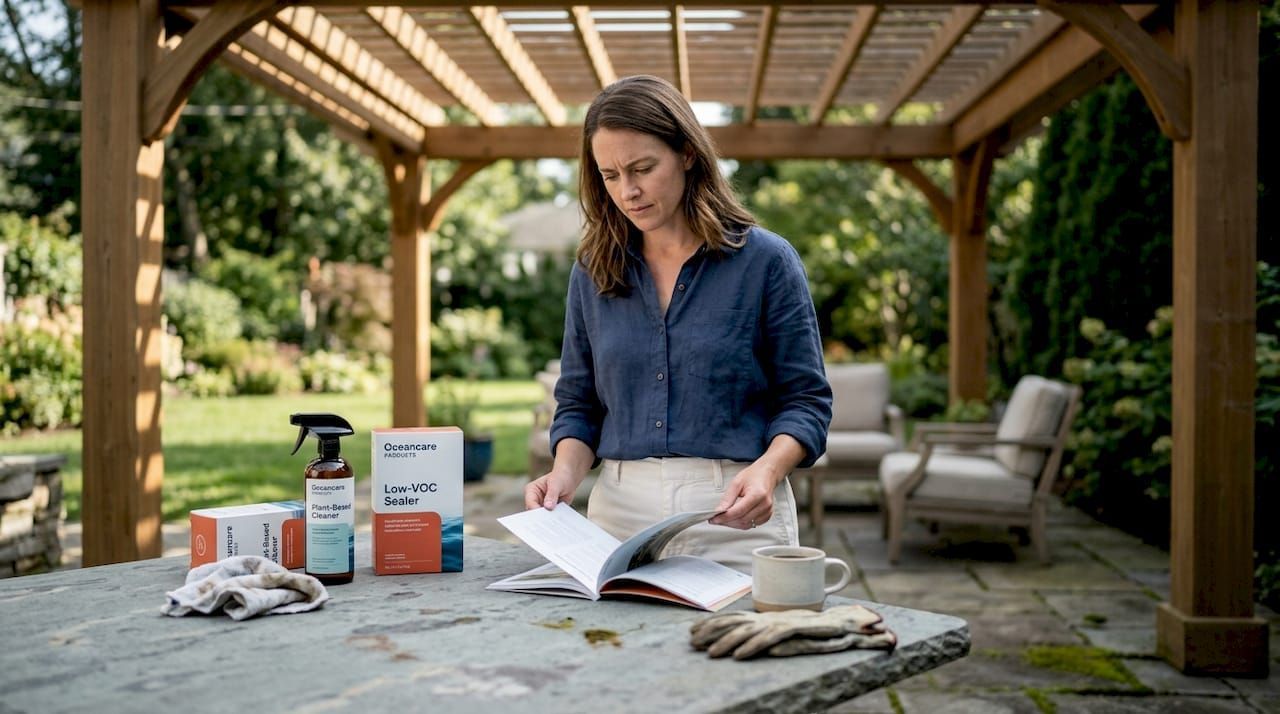
Table of Contents
- Understanding hard surface vulnerabilities
- Tools and products needed for eco-friendly protection
- Step-by-step hard surface protection process
- Common mistakes and troubleshooting
- Why shortcuts fail: Lessons from sustainable surface care
- Eco-friendly solutions for superior surface protection
- Frequently asked questions
Key Takeaways
| Point | Details |
|---|---|
| Choose breathable protection | Penetrating sealers offer superior, eco-friendly defense against stains and chemicals. |
| Avoid sealing damp surfaces | Sealing wet stone traps moisture and leads to costly damage. |
| Retest regularly | Surface protection needs periodic testing—reseal when water stops beading. |
| Eco-friendly solutions work | Safe, non-toxic products now deliver outstanding durability and maintenance ease. |
| Follow step-by-step processes | Careful cleaning and application maximize protection and reduce future repairs. |
Understanding hard surface vulnerabilities
Pool environments are genuinely hostile to hard surfaces. Tiles and natural stone are porous at the microscopic level, and those tiny pores act like sponges, soaking up water, mineral deposits, and chemical residues every single day. Over time, repeated wet and dry cycles cause the surface to expand and contract, which weakens grout joints, loosens tile edges, and creates micro-cracks where algae and mold can take hold.
The main threats to watch for include:
- Water infiltration that erodes the substrate beneath tiles
- Calcium scaling from hard water and pool chemistry imbalances
- Algae and biofilm growth in shaded or low-circulation zones
- Chemical etching from chlorine, bromine, and pH-adjusting agents
- UV degradation that bleaches and weakens surface sealers over time
- Staining from iron deposits, tanning oils, and organic matter
To counter these threats, most professionals rely on penetrating sealers , also called impregnating sealers. As natural stone maintenance guides explain, these products soak into the stone's pores to repel water, stains, and chemicals while still allowing vapor transmission. That breathability matters enormously. A surface that can't release trapped moisture from beneath will eventually crack, spall, or discolor. The breathability factor is why penetrating sealers are almost always the better choice for pool tiles and natural stone.
Topical film-forming sealers sit on the surface rather than inside it, creating a visible coating. They can add sheen, but they wear off faster in high-moisture pool environments and can trap moisture below. For most homeowners and property managers, sustainable stone protection using a penetrating formula is the smarter, longer-lasting approach.
| Feature | Penetrating sealer | Topical film-forming sealer |
|---|---|---|
| Breathability | Yes, allows vapor transmission | No, blocks moisture movement |
| Appearance change | Minimal or none | Adds sheen or gloss |
| Durability in wet areas | High | Moderate, wears off faster |
| Best for pool tiles | Yes | Limited situations only |
| Eco-friendly options | Widely available | Less common |
Understanding why seal natural stone from the start protects you from costly repair bills. The difference between a sealed and unsealed surface in a pool setting becomes obvious within a single season.
Tools and products needed for eco-friendly protection
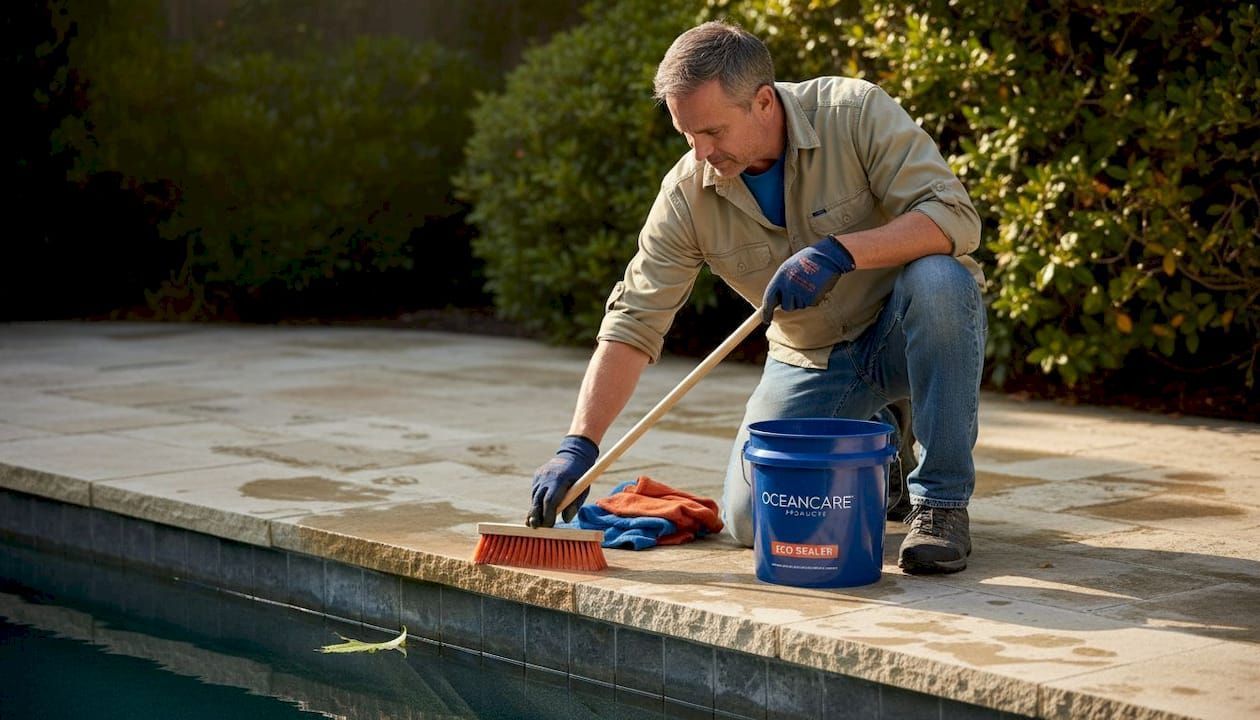
Before you start any sealing or cleaning project, having the right products and equipment organized ahead of time saves you from costly mid-project mistakes. Here is what you need on hand:
Cleaning supplies:
- Plant-based or biodegradable tile and stone cleaner
- Soft-bristle brush or non-abrasive scrubbing pad
- pH-neutral eco-friendly rinse solution
- Bucket and garden hose or low-pressure sprayer
Sealing and protection products:
- Penetrating, breathable sealer formulated for pool environments
- Calcium releaser for existing mineral deposits
- Eco-friendly grout protector
Safety equipment:
- Chemical-resistant gloves
- Safety glasses or goggles
- Ventilation mask if working in enclosed spaces
- Old clothing you don't mind staining
Choosing the right sealer is where many homeowners make a critical error. The stone's density and finish type determine which product will actually work. Polished marble, honed travertine, and flamed granite all behave differently. One useful benchmark from industry standards is that a properly sealed granite surface should show water absorption under 0.03% compared to unsealed granite at 0.3 to 0.7%. For pool tile coping and pool decking, safety also matters, so you want a sealer that keeps the coefficient of friction (slip resistance) at or above 0.60 wet.
Pro Tip: Always buy an eco-friendly stone cleaner designed for the specific surface you're treating. Using a general-purpose cleaner can strip existing sealer, introduce residues that block penetration of the new sealer, or etch sensitive stones like limestone and marble.
When shopping for stone and grout sealers, look for labels that indicate low VOC (volatile organic compounds), plant-based active ingredients, and compatibility with chlorinated water environments. These products protect your family, your pets, and the surrounding landscape while still delivering professional-grade results.
Step-by-step hard surface protection process
With your supplies ready, follow this sequence carefully. Rushing any stage, especially the drying and prep stages, is one of the most common reasons protection fails within the first year.
- Test surface compatibility. Apply a few drops of water and a drop of your chosen sealer on an inconspicuous area. Wait 30 minutes. If the sealer beads up instead of absorbing, the surface is too dense, too damp, or already sealed with an incompatible product.
- Allow the surface to dry completely. Sealing wet or even slightly damp stone is one of the fastest ways to ruin your project. Allow a minimum of 24 to 48 hours of dry weather after cleaning or rainfall before applying any sealer.
- Clean the surface with an eco-friendly cleaner. Use a plant-based, pH-neutral cleaner to remove algae, calcium deposits, body oils, and chemical residues. Scrub gently with a soft-bristle brush. Rinse thoroughly and let dry again.
- Address calcium scaling before sealing. If scaling exists, use a dedicated calcium releaser first. Sealing over calcium deposits locks them in and makes future removal much harder. Follow the instructions on your specific product, as application times vary. More information on cleaning pool tiles can guide you on tackling mineral buildup safely.
- Apply the penetrating sealer in thin, even coats. Pour a small amount onto the surface and spread it with a lint-free applicator pad or soft cloth. Work in small sections (about 3 to 4 square feet) to avoid the sealer drying before it penetrates. Do not flood the surface.
- Wipe away excess sealer before it dries. Any sealer that hasn't absorbed within 10 to 15 minutes will dry as a sticky haze on the surface. Wipe it off promptly with a clean cloth.
- Allow full cure time before water contact. Most penetrating sealers need 24 to 72 hours to fully cure before the surface is exposed to pool water or rain. Check your product's specific instructions.
- Verify protection with the water bead test. Splash a small amount of water on the sealed surface. If it beads up and rolls off cleanly, the sealer is working. If water soaks in immediately, a second coat may be needed.
Resealing frequency for high-traffic or wet pool areas should be every one to two years, or whenever the water-bead test shows that absorption has returned. Knowing your pool tile maintenance frequency prevents gaps in protection that lead to staining or mineral damage.
Pro Tip: Schedule sealing in late spring or early fall when temperatures are moderate and humidity is lower. Extreme heat can cause sealers to dry too quickly on the surface, preventing proper penetration.
Common mistakes and troubleshooting
Even experienced property managers sometimes get these steps wrong. Understanding the failure modes helps you diagnose problems quickly and fix them before minor issues become expensive ones.
Common mistakes to avoid:
- Sealing over a damp or wet surface
- Using a film-forming topical sealer on highly porous stone in pool environments
- Skipping the compatibility test on new or unknown stone types
- Applying sealer too thickly and leaving a hazy residue
- Using acid-based cleaners before sealing, which can etch softer stones
- Neglecting grout lines, which absorb water and harbor algae just as readily as the tile itself
As maintenance guidelines caution, sealing damp surfaces traps moisture inside the stone, which leads to spalling, discoloration, and eventual surface failure. It's a mistake that can be hard to reverse.
Important: Not every stone or tile needs the same sealer or even any sealer at all. Some very dense stones like quartzite with less than 0.5% water absorption require less frequent sealing because they naturally resist water penetration. Polished non-porous tiles often reject penetrating sealers entirely because there are no open pores to absorb them. Always match the product to the actual surface.
Troubleshooting quick-reference:
| Problem | Likely cause | Solution |
|---|---|---|
| White hazy film after sealing | Excess sealer not wiped off | Buff with damp cloth or use a sealer residue remover |
| Sealer won't absorb | Surface is damp, polished, or already sealed | Test, dry fully, or strip old sealer |
| Rapid sealer wear in pool area | Film-forming sealer used instead of penetrating | Re-clean and switch to penetrating formula |
| Discoloration after sealing | Moisture trapped beneath sealer | Allow stone to dry fully and re-treat |
| Persistent calcium scaling | Scaling not removed before sealing | Use calcium removal methods and reseal |
If you encounter persistent discoloration or hazing, consult a stone sealer troubleshooting guide before applying more product. Adding more sealer on top of a problem almost always makes it worse.
Why shortcuts fail: Lessons from sustainable surface care
There is a tempting logic to shortcuts in surface maintenance. Film-forming sealers are cheaper upfront, faster to apply, and give an immediate visual result that looks polished and professional. But in a pool environment, they are a poor investment. The same chemistry that makes pool water safe for swimming, chlorine, pH adjusters, shock treatments, attacks topical coatings aggressively. Within a single pool season, that glossy film cracks, peels, and traps moisture beneath it. Then you have a worse problem than when you started.
We have seen this pattern repeatedly. A homeowner applies a hardware store topical sealer in May, and by September they are dealing with a milky white haze across their travertine coping and calcium deposits sealed beneath the surface. Stripping it back requires significant effort and sometimes professional help.
The deeper issue is that surface care shortcuts also undermine eco-friendly goals. Topical sealers with high VOC content off-gas into your outdoor space, and when they degrade in pool water, those chemical compounds end up in the water you swim in. Choosing sustainable sealers with penetrating, low-VOC, plant-based formulas protects the environment and your health simultaneously. These products cost a little more up front, but they typically last longer, require fewer applications, and don't create a toxic removal problem down the road.
The most practical advice we can offer is this: invest 20 minutes in a compatibility test and surface assessment before you spend an entire afternoon applying the wrong product. That small investment of time prevents the most common and costly errors. Long-term property value depends not just on the materials you install, but on the quality of care those materials receive year after year. Eco-friendly surface protection is not just the responsible choice; it is the smart financial choice.
Eco-friendly solutions for superior surface protection
Protecting your pool tiles and natural stone does not have to mean navigating a confusing catalog of harsh chemicals or generic products that weren't designed for your specific surfaces.
At Oceancare Store, we specialize in plant-based, biodegradable, and low-VOC formulas built specifically for pool environments and natural stone. Our pool tile restorer tackles staining, calcium deposits, and surface dullness safely and effectively. For ongoing care, our pool tile maintenance range gives you everything needed to keep surfaces protected between full sealing applications. If you are just getting started, our guide on eco-friendly pool tile cleaning walks you through the safest, most effective cleaning methods before sealing. Every product we carry is selected to deliver real results without compromising your pool water, your household, or the environment.
Frequently asked questions
How often should I reseal my pool tiles and natural stone?
Reseal high-traffic wet areas every one to two years, or any time water stops beading on the surface during a simple drop test.
What is the difference between penetrating and topical sealers?
Penetrating sealers absorb into the stone's pores and allow moisture vapor to escape, while topical film-formers sit on the surface and tend to wear off or peel faster in pool environments.
Why shouldn't I seal damp stone surfaces?
Sealing damp stone traps moisture inside the pores, which leads to spalling, unsightly discoloration, and accelerated surface breakdown that is difficult and costly to reverse.
How can I tell if my stone or tile needs resealing?
Splash a small amount of water on the surface. If the water soaks in rather than beading up, the sealer is no longer effective and it is time to reseal.
Are there eco-friendly options for hard surface protection?
Yes, modern penetrating sealers and stone cleaners are available in low-VOC, biodegradable, and plant-based formulas that are safe for pool water, household members, and the broader environment.
Recommended
- Pool Tile Maintenance: Protecting Beauty and Health
- Oceancare Products Store: Elevate Your Tile Care Experience!
- 7 Effective Types of Pool Tile Cleaners Explained
- Pool Tile Maintenance: Clean, Protect, and Renew with Confidence
- Benefits Of Eco-friendly Pool Materials For Florida
- Pool tile guide: Options, benefits & best choices

