
Defining Premium Cleaning Solutions for Lasting Care
TL;DR:
- Premium cleaners for natural stone and pool tiles are pH-neutral, residue-free, and surface-specific.
- Using acid-based cleaners like vinegar damages calcium carbonate stones, causing irreversible etching.
- Sustainable routines focus on concentrates, routine sealing, and preventive cleaning to protect surfaces long-term.
Most homeowners assume the strongest cleaner or the most natural ingredient equals the safest, most effective choice for pool tiles and stone surfaces. That assumption causes real damage every season. Marble etches, travertine dulls, and grout breaks down, not because of neglect, but because of the wrong chemistry applied with confidence. Premium cleaning for natural stone and pool tile is not about maximum strength or a reassuring ingredient list. It is about pH balance, surface compatibility, routine discipline, and environmental responsibility working together. This guide breaks down what premium really means, what the science says about damaging choices, and how to build a cleaning approach that protects your surfaces for years.
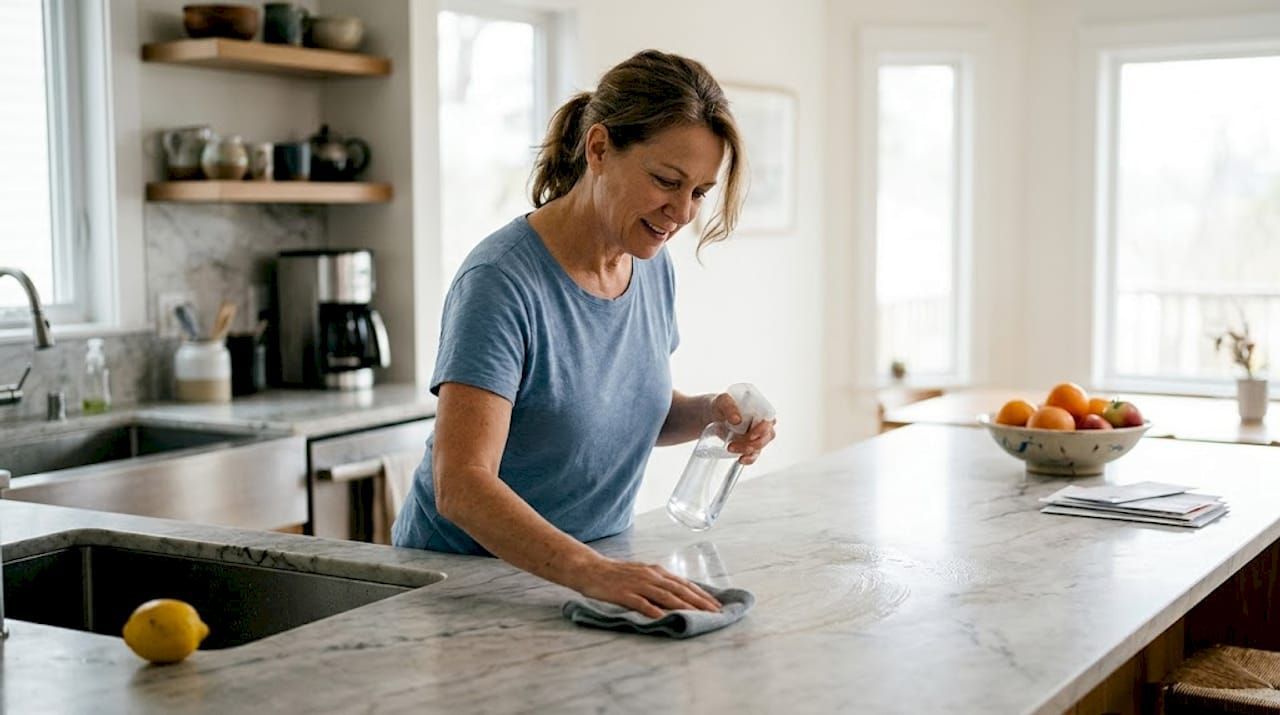
Table of Contents
- What makes a cleaning solution 'premium'?
- The science of surface-safe cleaning: Avoiding damage to stone and tile
- Sustainability in premium cleaning: Ingredients and maintenance routines
- Routine care and sealing: The foundation of premium surface protection
- Why defining 'premium' cleaning is more than just the label
- Eco-friendly cleaning solutions to protect your investment
- Frequently asked questions
Key Takeaways
| Point | Details |
|---|---|
| Premium means pH-neutral | High-quality cleaners are pH-neutral and non-acidic to protect delicate stone and tile. |
| Surface compatibility is critical | Always verify cleaners suit your specific stone type and spot-test to avoid damage. |
| Routine care prevents problems | Frequent maintenance and sealing reduce the need for strong chemicals or repairs. |
| Sustainability extends beyond ingredients | Eco-friendliness involves concentrated formulas and routines that cut waste and chemical use. |
What makes a cleaning solution 'premium'?
The word "premium" gets applied to almost every cleaning product on the market, making it nearly meaningless on its own. For pool tiles and natural stone, the term has a specific and measurable definition grounded in chemistry and surface science.
A genuine premium cleaner starts with pH-neutral, non-acidic chemistry . Stone surfaces, particularly marble, limestone, travertine, and slate, are mineralogically sensitive. Alkaline or acidic cleaners, even mild ones, can react with the calcium carbonate in these stones and cause permanent surface deterioration. pH-neutral cleaning solutions are formulated to clean without triggering those reactions, which is non-negotiable for high-value surfaces.
Beyond pH, eco-friendly stone cleaners in the premium category share another defining quality: they leave no residue. Residue-heavy products may clean on contact but slowly build a film that dulls finishes, attracts more dirt, and can compromise any existing sealer. No-rinse or low-rinse formulas avoid this problem entirely, which is especially important for pool tile where water constantly contacts the surface.
As StonePro Pro Clean Concentrate defines it, premium stone-first cleaning means pH-neutral, non-acidic chemistry combined with a no-residue approach as the baseline standard. Anything short of that is a compromise.
Here is how standard and premium cleaners compare side by side:
| Feature | Standard cleaner | Premium stone-safe cleaner |
|---|---|---|
| pH range | Variable, often alkaline or acidic | Neutral (6.5 to 7.5) |
| Residue | Common | Minimal to none |
| Surface compatibility | General use | Stone and tile specific |
| Eco credentials | Rarely certified | Biodegradable, low VOC |
| Use scope | Routine only | Routine and restoration |
Premium cleaners also bridge routine maintenance and deeper periodic cleaning. You should not need a separate product for weekly upkeep and quarterly descaling. A well-formulated concentrate handles both, reducing your product cabinet and chemical exposure.
Key characteristics to look for in a premium stone and tile cleaner:
- Non-acidic and pH-neutral formulation verified on the label
- Biodegradable and plant-based surfactants
- Low or zero VOC content for indoor and outdoor safety
- Concentrate format that reduces packaging and waste
- Stone type compatibility clearly listed by the manufacturer
If a product cannot confirm all of these, it is not premium, regardless of the price.
The science of surface-safe cleaning: Avoiding damage to stone and tile
Understanding what a premium cleaner avoids is just as important as knowing what it contains. The most common damage to pool tile and natural stone does not come from neglect. It comes from using the wrong cleaner with complete confidence.
Calcium-based stones, meaning marble, travertine, and limestone, react chemically with acids. When acid contacts calcium carbonate, a fizzing reaction occurs that literally dissolves the surface layer of the stone. The result is etching: dull, rough patches that cannot be polished away without professional intervention. This is not a cosmetic problem you can clean off later.
The trap that catches many well-intentioned homeowners is assuming that natural equals safe. Many DIY acids, including vinegar, and strong mineral removers damage calcium-based stones in exactly the same way as commercial acid cleaners. Vinegar is acetic acid. Lemon juice is citric acid. Both are highly reactive with marble, travertine, and similar surfaces. Using them on a natural stone pool surround or kitchen counter is not a gentle, green solution. It is a slow but reliable path to surface degradation.
Here is what you should and should not use on calcium-based stone surfaces:
- Safe: pH-neutral stone cleaners, plant-based surfactants, low-concentrate degreasers formulated for stone
- Avoid: Vinegar, citrus cleaners, bleach, ammonia, general bathroom tile sprays
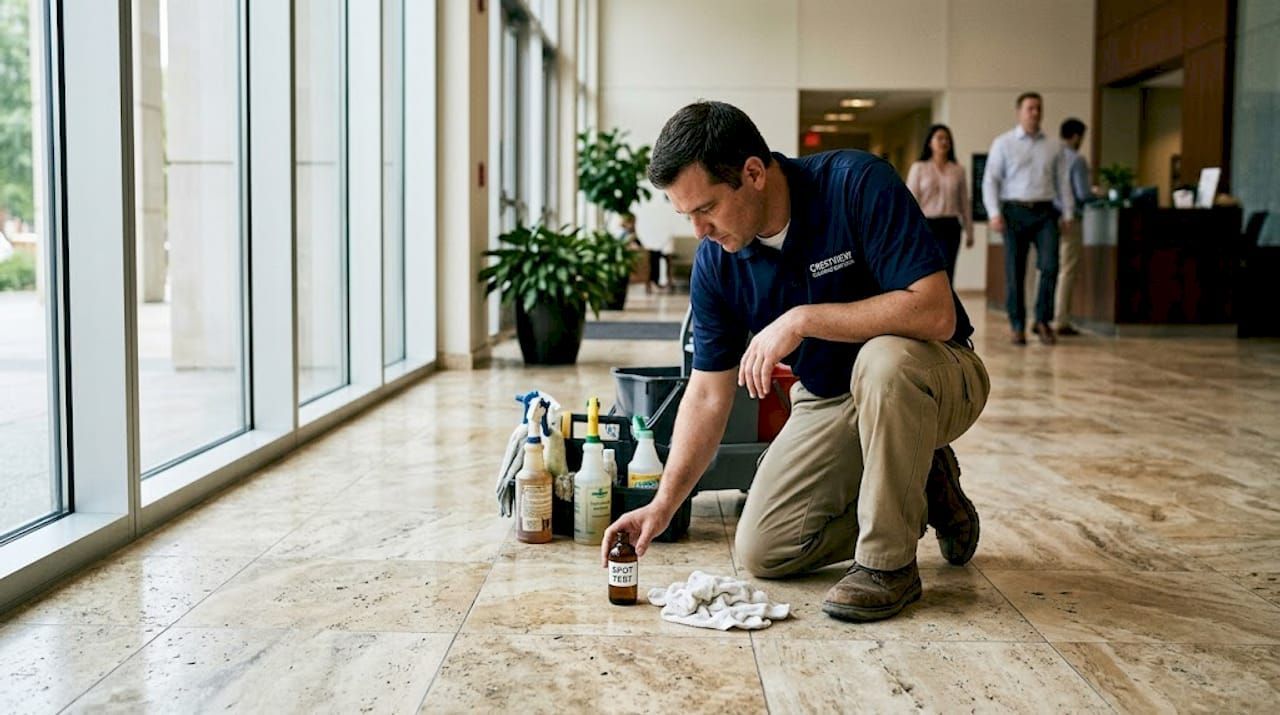
- Test first: Even safe-labeled products need spot-testing on an inconspicuous area for at least 24 hours before full use
Pro Tip: Always read the label for a specific list of compatible stone types, not just general "natural stone" language. A product safe for slate may not be appropriate for marble.
"Premium cleaning programs define acceptable chemistries by stone mineralogy, not just stain type. The mineral makeup of the surface determines the cleaner, not the other way around."
Spot-testing is one of the most underused practices in surface care. Even products marketed as stone-safe can react unpredictably with specific stone finishes, sealers, or colorants. A quick test costs nothing and can save a surface worth thousands. Learn how to prevent tile stains naturally before resorting to stronger solutions that risk surface integrity.
The premium approach flips the usual logic. Instead of starting with the stain and choosing the strongest available remover, you start with the surface mineralogy and choose the gentlest chemistry that still gets the job done.
Sustainability in premium cleaning: Ingredients and maintenance routines
Eco-friendly claims have become almost as overused as the word "premium." In the stone and tile cleaning space, sustainability is not just about swapping synthetic ingredients for plant-based ones. It is a system, and the system matters as much as any single ingredient.
Genuine sustainability in this context means several things working together:
- Biodegradable surfactants that break down safely in water systems, especially important for pool environments
- Concentrate formats that reduce packaging volume and shipping emissions per cleaned surface
- No-rinse formulas that cut water use and avoid introducing excess runoff into drainage systems
- Preventive routines that eliminate the need for heavy corrective cleaning with harsher chemistry
That last point is often overlooked. Sustainability means reducing chemical load through concentrates, no-rinse formulas, and preventive routines that stop heavy buildup before it starts. When surfaces are maintained correctly, you rarely need aggressive products at all. That is a real environmental benefit, not just a marketing angle.
Here is how conventional and sustainable cleaning routines compare in practice:
| Routine element | Conventional approach | Sustainable premium approach |
|---|---|---|
| Product format | Ready-to-use bottles | Concentrate, diluted as needed |
| Cleaning frequency | Reactive (when visibly dirty) | Proactive (scheduled intervals) |
| Chemical strength | Heavy-duty as default | Mildest effective option first |
| Rinse requirement | Heavy rinsing often needed | Low or no-rinse formulas used |
| Sealing frequency | Infrequent or skipped | Regular, as part of the routine |
Exploring eco-friendly stone cleaner choices reveals that the best options are also often the most economical when you factor in dilution ratios and reduced frequency of use.
Pro Tip: When purchasing a concentrate, calculate the cost per diluted liter, not the bottle price. A concentrate that makes 20 liters of ready-to-use solution at a higher upfront cost is almost always cheaper per cleaning session than a ready-to-use alternative.
For pool tile specifically, concentrated cleaner options designed for hard water mineral deposits are especially valuable. Pool environments accumulate calcium scale at the waterline constantly. A routine that incorporates a gentle, pH-neutral concentrate applied weekly prevents the thick calcium bands that require aggressive descaling products later.
Routine care and sealing: The foundation of premium surface protection
Chemistry is the starting point. Routine is the multiplier. Even the best cleaner cannot compensate for sporadic, reactive maintenance on natural stone or pool tile.
Sealing and weekly pH-neutral cleaning are consistently identified by surface care specialists as the most effective protection strategy for natural pool tile. The logic is straightforward: a sealed surface repels moisture, oils, and minerals before they can penetrate the stone. That means surface deposits are easier to remove and far less likely to cause permanent staining or discoloration.
The benefits of combining regular sealing with routine cleaning include:
- Fewer aggressive treatments needed because buildup does not reach the point of requiring heavy descalers
- Preserved finish and color as sealers prevent deep mineral absorption into porous stone
- Extended grout life since grout sealed against moisture holds up to pool chemistry much longer
- Lower overall cost because preventive maintenance is always cheaper than restoration
Pro Tip: For pool tile, apply a penetrating sealer at the start of pool season and once more mid-season if the tile is exposed to heavy use. Use a pH-neutral cleaner weekly at the waterline to prevent calcium accumulation between sealing cycles.
The why seal natural stone question has a simple answer: unsealed stone absorbs everything it contacts. Oils, minerals, algae, and cleaning product residues all penetrate more deeply without a sealer barrier. Once embedded, these contaminants require harsh removal that risks the stone surface itself.
Weekly maintenance beats occasional intensive scrubbing every time. A five-minute wipe-down with a pH-neutral solution prevents the calcium band that would otherwise require 20 minutes of careful descaling with a stronger product. Stone and grout protection products pair naturally with this routine, and using them consistently is what separates surfaces that look great after five years from ones that look tired after two.
Think of routine care as an investment with compounding returns. Each scheduled cleaning session reduces the chemical work needed in the next one.
Why defining 'premium' cleaning is more than just the label
Here is something we see regularly: a homeowner reads every label, chooses the most responsibly worded product, and still damages their stone. Not because the product was bad, but because context was missing.
Premium cleaning is not a static product choice. It is an ongoing, informed process. You cannot buy your way to premium results with one product and no system behind it. The surface type, the water quality in your area, the frequency of use, and the application technique all determine whether a good product performs as expected or falls short.
Most buyers focus on ingredient claims and ignore frequency and technique. Spot-testing gets skipped because the label says "stone-safe." Sealers get applied once and forgotten. And when something goes wrong, the product gets blamed, when often the process failed. Reading about common cleaning mistakes confirms this pattern is nearly universal.
Premium cleaning means committing to an educated, continuous practice, not just a purchase.
Eco-friendly cleaning solutions to protect your investment
Once you understand what genuinely premium cleaning looks like, the next step is finding products that actually meet that standard for your specific surfaces. At Oceancare Store, we have built our product range around exactly the principles covered here: pH-neutral chemistry, biodegradable ingredients, concentrate formats, and routines that reduce long-term chemical use.
Explore our top eco-friendly cleaners designed for pool tile, natural stone, and grout. For daily care for hard surfaces, our pH-neutral tile and stone cleaner is formulated to be safe on every stone type without leaving residue. When you are ready to lock in that protection with a sealer, our superior protection sealer delivers deep penetrating performance without compromising surface safety or environmental standards.
Frequently asked questions
What makes a cleaner safe for natural stone and pool tile?
A safe cleaner for these surfaces is pH-neutral and non-acidic, leaves no film or residue behind, and has been spot-tested on the specific stone type before full application.
Why should I avoid acid-based or vinegar cleaners on stone?
Vinegar and acid cleaners chemically react with calcium-based stones like marble and travertine, causing etching and permanent dull patches that cannot be buffed away at home.
How does sealing stone or tile help in premium cleaning routines?
Sealing creates a protective barrier that resists stain absorption and mineral buildup, which means weekly cleaning stays easy and you rarely need to reach for heavy-duty descalers.
What is the role of sustainable practices in premium cleaning?
Sustainability means choosing concentrates and no-rinse formulas and maintaining preventive routines that reduce total chemical use, packaging waste, and the frequency of intensive corrective treatments.
Recommended
- Clean & Seal: Biodegradable Everyday Cleaner with Oceancare Sealing Protection
- Pool Tile Maintenance: Clean, Protect, and Renew with Confidence
- High Performance Penetrating Sealer: Superior Protection
- 7 Hard Surface Cleaning Best Practices for Eco Homes
- Chemical Controllers - Premium Clean - Unique Companies
- Professional cleaning teams: boost property value and health

