
Homeowners: Clean Quartzite Safely With pH Neutral, Low VOC Products
The safest everyday way to clean quartzite is to wipe with warm water plus a few drops of mild dish soap or a pH-neutral stone cleaner, then rinse and dry with a soft cloth. Blot spills the moment they happen instead of wiping them around, and keep acids and abrasive pads away from the surface entirely. Once a year, check whether your sealer still beads water, and reseal if it doesn't.
TL;DR:
- Regularly test your quartzite sealer with a water drop to determine if resealing is needed, especially if water no longer beads and soaks in.
- Use only pH-neutral stone cleaners or mild dish soap for daily cleaning, avoiding acidic, abrasive, or harsh household products that can damage the surface or sealant.
- React quickly to spills by blotting them immediately and avoid rubbing to prevent deep staining or surface etching, especially with oil or organic stains.
- Sealing longevity varies, with most modern sealers lasting between one and ten years, so periodic testing and careful reapplication are essential for ongoing protection.
- Avoid household chemicals like vinegar, lemon, bleach, ammonia, and rust removers, since these can etch, discolor, or damage the quartzite surface and its sealant.
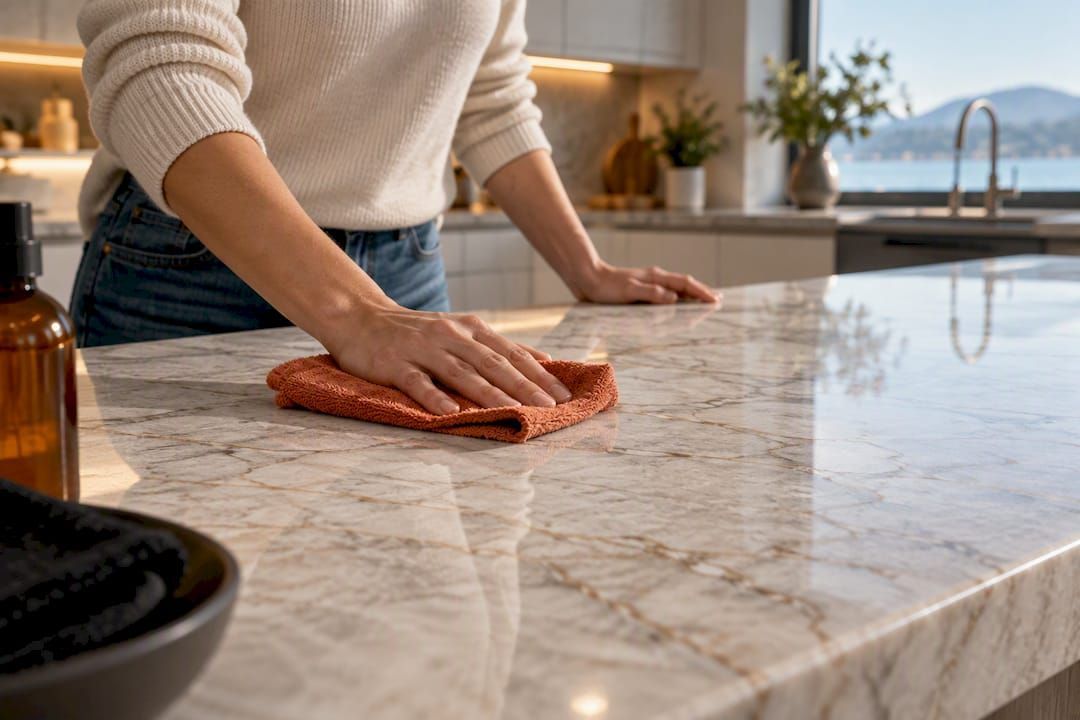
Table of Contents
- Daily cleaning routine step-by-step
- Safe cleaners and tools worth keeping on hand
- What not to use and why it damages the stone
- Handling spills and removing stains the right way
- Sealing quartzite: why it helps and how to test it
- Identifying your stone and testing its porosity
- Practical protection habits that extend sealer life
- Why eco-friendly stone care matters more than it seems
- Where to find safe sealers and cleaners for your countertop
- Sources
- FAQ
Daily cleaning routine step-by-step
A consistent routine protects quartzite far better than an occasional deep scrub. The goal is simple: clear debris, wash gently, rinse, and dry before water has a chance to sit.
- Clear loose grit and crumbs first with a dry microfiber cloth so nothing gets dragged across the surface and causes fine scratches.
- Mix warm water with a small amount of mild dish soap or a pH-neutral stone cleaner. The Natural Stone Institute warns against applying concentrated soap directly to the stone, since leftover residue can leave a dull film.
- Wring your cloth so it's damp, not dripping, then wipe in gentle circular motions.
- Rinse with clean water and buff dry with a fresh microfiber towel to prevent water spots and soap film from building up.
A quick daily wipe handles most kitchen grime. Save a slightly more thorough clean, soap and all, for once a week, and reserve deeper cleaning for spills or buildup that daily wiping doesn't clear.
Safe cleaners and tools worth keeping on hand
Stick with products made for natural stone, and keep your tool kit simple.
- pH-neutral stone cleaners or stone soaps formulated for granite and quartzite work well for daily use.
- A few drops of mild dish detergent in warm water is an acceptable substitute when a dedicated stone cleaner isn't available.
- Microfiber cloths and non-abrasive sponges lift grime without scratching the surface.
- A soft-bristle brush handles grout lines and edges where a cloth can't reach.
Before adopting any new cleaner as a regular habit, test it on a hidden corner or under-sink edge. Apply it, let it sit as directed, then check after 24 hours for film, dulling, or darkening before using it on visible surfaces. Eco-friendly, low-VOC formulas tend to be gentler on sealers over time than heavily fragranced or dye-added cleaners, which matters if you're trying to protect a slab you plan to keep for decades. Our essential eco-friendly cleaning routine walks through product choices in more detail.
Pro Tip: Keep a small labeled bottle of your patch-tested cleaner near the sink so you're never tempted to grab something harsher out of convenience.
What not to use and why it damages the stone
Some common household cleaners actively harm quartzite, even though they're marketed as all-purpose.
- Vinegar, lemon juice, and other citrus cleaners contain acids that can etch trace acid-sensitive minerals in the stone, according to the Natural Stone Institute.
- Bleach and ammonia strip sealers and can discolor the surface; never mix the two, since combining them produces toxic chloramine gas.
- Abrasive powders, scouring pads, and steel wool scratch the surface, creating dull patches that trap dirt.
- Hydrofluoric-acid-based rust removers and some toilet bowl cleaners attack silicate minerals directly and should never touch quartzite.
For sticky residue, a gentle solvent made for stone is a safer bet than a household degreaser. If you're dealing with rust, use only a rust remover whose label specifically states it's safe for natural stone.
Handling spills and removing stains the right way
How you react in the first minute after a spill often decides whether it leaves a mark.
- Blot the spill immediately with a paper towel or soft cloth. Don't rub, which spreads the liquid and pushes it deeper into any pores.
- Clean the area normally with your mild cleaner, then dry it completely.
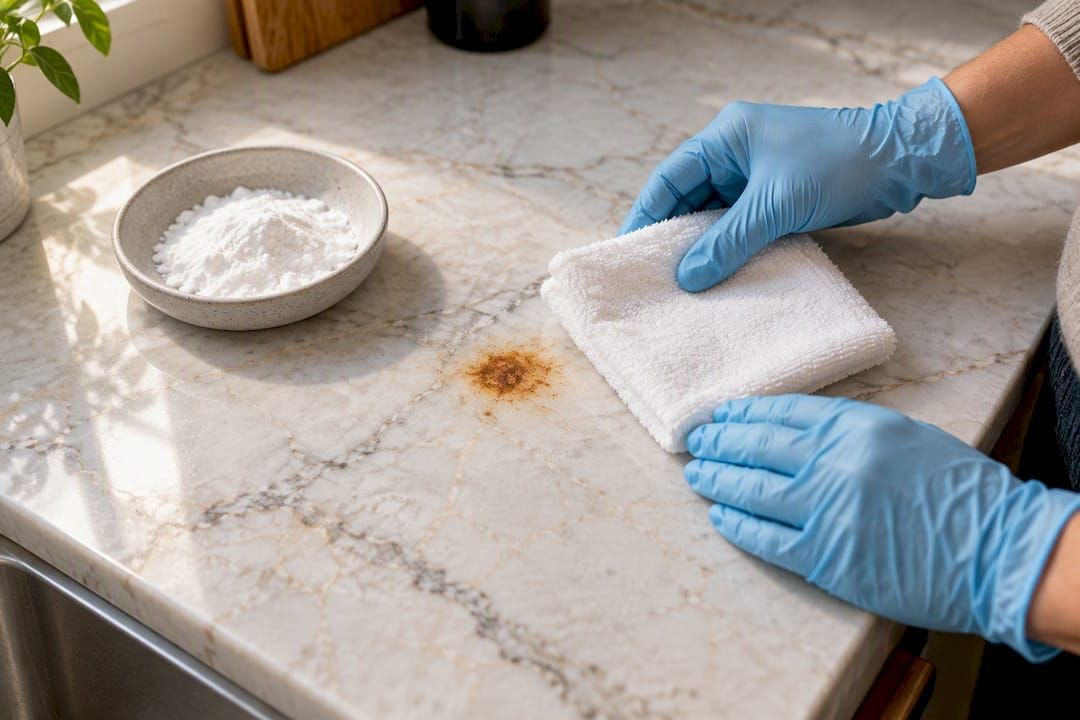
- Identify the stain type before treating it further: organic stains (coffee, wine, fruit) usually leave a brownish ring, oil-based stains darken the stone and often show near cooking areas, and rust appears as an orange or reddish spot.
- For oil-based stains, mix baking soda with water into a paste. For organic stains, kaolin or diatomaceous earth mixed with hydrogen peroxide works better.
- Apply the paste about a quarter to half an inch thick, cover it with plastic wrap, tape the edges, and let it dry undisturbed for 24 to 48 hours, per Natural Stone Institute poultice guidance.
- Remove the dried poultice, rinse the area, and repeat if the stain persists.
Pro Tip: Always patch-test a poultice mixture on a small hidden area first, and stop immediately if the surface changes color or texture.
If a stain doesn't respond after a couple of attempts, or you're not sure what caused it, call a stone-restoration professional rather than reaching for a stronger chemical. Our guide to poultice-based rust removal covers material sourcing and technique in more depth.
Sealing quartzite: why it helps and how to test it
Sealers make quartzite more resistant to staining, but they don't make it stain-proof, and how long they last depends heavily on the specific stone and product. Modern impregnating sealers can last anywhere from 1 to 10 years, according to the Natural Stone Institute, so a fixed yearly resealing schedule isn't always necessary.
- Run a water-bead test on a low-use section: pour a few drops of water and watch for a few minutes.
- If the water beads up, your sealer is still working. If it soaks in and darkens the stone, it's time to reseal.
- Clean and dry the surface thoroughly before applying any impregnating sealer.
- Follow the label directions exactly, and keep the room ventilated while you work.
Use Natural Stone notes that sealing needs vary with porosity and density, so when in doubt, ask your fabricator which sealer type and coverage rate they recommend for your specific slab. Our low-VOC resealing guide covers the process step by step.
Identifying your stone and testing its porosity
Not every countertop sold as quartzite actually is quartzite. Some slabs labeled that way are mislabeled marble or a softer stone, and the difference changes how you should clean and seal it.
- A true quartzite slab will scratch glass and generally resist etching from mild acids; if a test spot etches or dulls, you may be working with a softer, more porous stone.
- Test multiple spots in an inconspicuous area, and stop immediately if you see etching or discoloration.
- A simple water-drop test shows porosity: if water darkens the stone quickly instead of beading, it's more porous and needs more frequent sealing.
- Darkening around sink edges over time is a sign the sealer there has worn down faster than elsewhere.
Because porosity varies by slab even within the same quarry batch, your fabricator's slab-specific guidance should always override a generic sealing schedule found online, a point Use Natural Stone makes directly when discussing mislabeled stone.
Practical protection habits that extend sealer life
Most quartzite damage comes from everyday habits rather than one big accident.
- Always use cutting boards and trivets. Quartzite resists heat and scratches better than many stones, but direct contact with hot pans or knives still wears down the surface and sealer over time.
- Keep coasters near coffee makers and bar areas where acidic drinks are most likely to spill.
- Clear grit before wiping, and avoid dragging heavy pots or pans across the surface.
- Keep a small kit on hand: two or three microfiber cloths, your patch-tested mild cleaner, paper towels for immediate blotting, and poultice materials stored away from children and pets.
Pro Tip: Do a seasonal walkthrough with the water-bead test at each sink and stovetop edge, since those spots wear fastest. For a fuller checklist, see our kitchen stone protection guide.
Why eco-friendly stone care matters more than it seems
Some companies specialize in eco-friendly, biodegradable, plant-based, and low-VOC sealers and cleaners built for natural stone, with a focus on non-toxic, acid-free formulas that are safer for sensitive surfaces and the people using them daily. Most quartzite damage we see traces back to a well-meaning homeowner reaching for a harsh, fast-acting product instead of a gentler one that simply takes an extra minute. For readers who want a deeper look at product selection or step-by-step reseal guides, our maintenance kit checklist is a good next stop.
Where to find safe sealers and cleaners for your countertop
Once you've confirmed your slab's porosity and checked whether your current sealer still beads water, the next step is choosing a replacement that won't undo the work you've put in. We recommend starting with an impregnating, low-VOC sealer paired with a pH-neutral daily cleaner, both formulated for natural stone rather than general household use.
- Patch-test any new sealer or cleaner on a hidden section before applying it across the whole countertop.
- Follow your fabricator's guidance on sealer type and coverage before resealing a slab they installed.
- Browse our Stone & Grout Sealers collection for impregnating formulas built for quartzite and similar stone.
If your daily routine needs restocking too, our Home Essential Cleaners line covers pH-neutral options for kitchens and bathrooms alike.
Sources
For deeper technical detail, the Natural Stone Institute covers cleaning products, poultice methods, and chemical hazards, while Use Natural Stone explains quartzite properties and porosity testing. Tom's Guide offers practical, consumer-facing maintenance checks.
FAQ
What cleaner is safe for quartzite countertops?
A pH-neutral stone cleaner or warm water with a few drops of mild dish soap is the safest daily option. Rinse thoroughly and dry with a microfiber cloth to avoid film buildup, and avoid anything acidic or abrasive.
Can you use Dawn dish soap on quartzite?
Yes, a small amount of mild dish soap like Dawn diluted in warm water is generally considered safe for occasional use. Use it sparingly, since concentrated soap left on the surface can leave a dull residue, and rinse well afterward.
Can I use Clorox wipes on quartzite?
Bleach-based wipes are not recommended for quartzite because bleach can strip sealers and discolor the stone over time. Stick with a pH-neutral cleaner instead, and never combine bleach products with ammonia-based cleaners on any surface.
Can you use Mrs. Meyer's on quartzite?
Mrs. Meyer's and similar all-purpose cleaners can contain fragrance oils or mild acids that aren't ideal for regular stone use, so it's best to patch-test on a hidden area first. A dedicated pH-neutral stone cleaner remains the safer everyday choice.
How often should I reseal my quartzite countertop?
Resealing frequency depends on the specific stone and sealer product, with modern impregnating sealers lasting anywhere from 1 to 10 years. Test your sealer with a water-bead check periodically and reseal once water stops beading and starts soaking in.

