
The real benefits of biodegradable sealers for stone and pools
TL;DR:
- Biodegradable sealers provide environmentally friendly, low-VOC protection for natural stone and pool surfaces, ensuring breathability and reducing health risks. They outperform traditional solvent-based products in safety, ease of application, and long-term maintenance, making them a smart choice for modern homeowners. Choosing the right sealer involves surface type, porosity, and proper application, offering durable protection without compromising sustainability.
You've probably heard it before: eco-friendly products are fine for light-duty tasks, but when it comes to protecting your pool tile or natural stone from water, stains, and years of wear, you need something stronger. That belief has kept a lot of homeowners and property managers stuck using harsh, high-VOC sealers when water-based biodegradable options have quietly caught up and, in many cases, surpassed them. This guide breaks down what biodegradable sealers actually are, how they perform on stone and pool surfaces, and why making the switch is one of the smartest moves you can make in 2026.
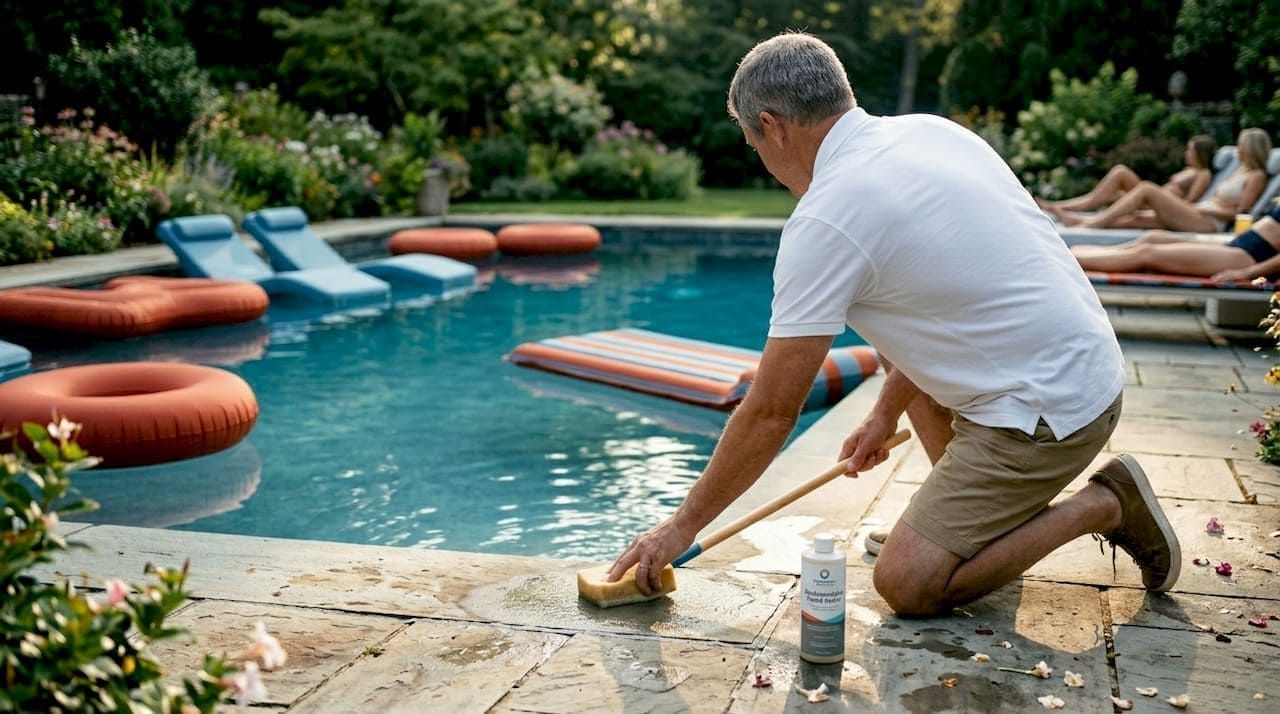
Table of Contents
- What are biodegradable sealers?
- Why biodegradable sealers matter for stone and pool surfaces
- Comparing biodegradable sealers to traditional options
- How to choose and apply biodegradable sealers effectively
- A fresh look: What most homeowners miss about biodegradable sealers
- Find the right sealer for your home or pool
- Frequently asked questions
Key Takeaways
| Point | Details |
|---|---|
| Safe and sustainable | Biodegradable sealers offer eco-friendly protection without sacrificing durability or indoor air quality. |
| Concrete and stone ready | Advances make modern biodegradable options ideal for both pool and natural stone surfaces. |
| Long-lasting performance | Expect protection for 3–5 years with easier maintenance and reduced chemical exposure. |
| No-stress reapplication | Water-based formulas allow for simple recoating without removing old layers. |
What are biodegradable sealers?
Let's start with the basics, because the word "biodegradable" gets thrown around a lot without much explanation. A biodegradable sealer is a surface protectant formulated from materials that break down naturally in the environment without leaving toxic residues. Unlike petroleum-based or solvent-heavy sealers, biodegradable versions rely on water-based carriers, plant-derived resins, and low-VOC (volatile organic compound) chemistry.
VOCs are the chemical compounds that evaporate into the air during application and curing. Traditional solvent-based sealers can release high levels of VOCs, creating strong fumes, indoor air quality problems, and potential health risks for anyone nearby. Biodegradable sealers are specifically engineered to keep VOC levels minimal, so application is safer in enclosed or semi-enclosed spaces like covered pool areas, indoor kitchens, and bathrooms.
Here's what separates biodegradable sealers from conventional products at a glance:
- Base chemistry: Water-based or plant-derived versus petroleum or solvent-based
- VOC content: Low or near-zero versus moderate to high
- Odor during application: Minimal versus noticeable fumes
- Environmental breakdown: Harmless degradation versus persistent chemical residue
- Surface breathability: Generally higher, which matters a lot for stone and pool tile
- Recoating: Easier without stripping versus often requiring chemical removal first
The growing demand for biodegradable sealers in concrete and stone applications reflects this shift. Regulations around green building certifications and stricter VOC standards are pushing the market toward sustainable formulations, with penetrating sealer types dominating for exterior durability. This isn't a niche trend anymore. It's mainstream, and for good reason.
| Feature | Biodegradable sealer | Conventional solvent-based sealer |
|---|---|---|
| VOC emissions | Low to none | Moderate to high |
| Environmental impact | Minimal | Persistent residue possible |
| Fumes during application | Minimal | Strong, requires ventilation |
| Breathability | High | Low to moderate |
| Recoating process | Easy, no stripping needed | Often requires stripping |
| Green certification compatible | Yes | Rarely |
Understanding low-VOC cleaner basics can also help you choose complementary cleaning products that keep your surfaces in great shape between sealing cycles.
Why biodegradable sealers matter for stone and pool surfaces
Understanding what these products are, it's important to see their real-world relevance, especially if you manage active, high-use areas.
Stone and pool tile are two of the most demanding surface types for any sealer. Natural stone is porous, which means moisture, oils, minerals, and cleaning chemicals can penetrate and cause staining, cracking, or surface damage over time. Pool tile faces constant water exposure, UV radiation, chlorine chemistry, and calcium buildup. A sealer that cannot handle those conditions isn't doing its job, regardless of how "green" it claims to be.
Here's where biodegradable sealers have a distinct structural advantage: breathability . When a sealer allows moisture vapor to escape from within the stone or tile substrate, it prevents the pressure buildup that causes whitening, flaking, and delamination. This is critical in pool environments where surfaces experience constant wet-dry cycles. Water-based biodegradable sealers are specifically noted for providing this breathability, which solvent-based film-forming sealers often lack.
Real-world benefits worth knowing:
- Health protection for your family: Low-VOC formulas mean no harsh fumes lingering after application. Your kids and pets can return to the area much sooner than they could after solvent-based sealer use.
- No whitening or hazing on pool tile: Breathable formulas prevent the trapped moisture effect that causes pool tile to turn milky or start peeling from the substrate.
- Eco-compliance: If your property is pursuing LEED certification or you simply want to meet local VOC regulations, biodegradable sealers satisfy those requirements without sacrificing protection.
- Less surface damage over time: Because these sealers work with the stone rather than coating it with a heavy film, you get longer-lasting surface integrity and better aesthetics.
- Simplified maintenance: Recoating is straightforward. You don't need harsh chemical strippers or lengthy downtime. Clean the surface, reapply, and you're done.
"Breathability is not a bonus feature in pool environments. It is a requirement. Without it, sealers trap moisture, and that's when you start seeing surface failure." This principle from sealer technology development reflects what pool tile owners experience firsthand every season.
Pro Tip: Before recoating any sealed surface, do a quick water droplet test. Place a few drops of water on the surface and watch how they behave. If they bead up, the existing sealer is still active. If they absorb quickly, it's time to recoat. This simple check saves you from applying sealer prematurely or too late.
Learning how sealers protect surfaces in practice can sharpen your maintenance strategy, and exploring sustainable stone protection gives you a deeper look at why biodegradable chemistry is particularly well-suited for natural stone care.
Comparing biodegradable sealers to traditional options
You might be wondering how biodegradable sealers stack up in the real world. Here's an evidence-based comparison.
The honest answer is that the performance gap between biodegradable and solvent-based sealers has narrowed dramatically. In some areas like pool tile maintenance, breathability performance, and ease of maintenance, biodegradable options have clearly pulled ahead. The shift to bio-based low-VOC sealers is being driven by LEED certification requirements and EPA regulations, and the standard lifespan for quality products in both categories sits at 3 to 5 years.
| Performance factor | Biodegradable sealer | Conventional sealer |
|---|---|---|
| Lifespan | 3-5 years | 3-5 years |
| Pool tile suitability | Excellent (breathable) | Variable (film-forming risk) |
| Natural stone compatibility | Excellent | Moderate to good |
| Maintenance/recoating | Simple, no stripping | Often requires stripping |
| VOC and fume exposure | Minimal | Significant |
| Total cost over 5 years | Lower (no strip, easier recoat) | Higher (stripping products, labor) |
| LEED/EPA compliance | Yes | Rarely |
Where conventional sealers might still make sense:
- High-traffic commercial surfaces where a hardened film layer provides additional abrasion resistance
- Surfaces exposed to industrial-grade chemicals or heavy machinery
- Specific stone types with extremely high porosity requiring deep solvent penetration for initial sealing
For the vast majority of residential stone surfaces, pool tile, kitchen countertops, and outdoor pavers, a high-quality biodegradable penetrating sealer will deliver everything you need without the downsides.
The performance of penetrating sealers demonstrates why penetrating formulas are often preferred over film-forming options, particularly for natural stone surfaces that need to breathe. You can also browse a curated selection of top eco-friendly sealers if you want to see how current biodegradable options compare in practice.
How to choose and apply biodegradable sealers effectively
Once you know the differences, here's how you can put biodegradable sealers to work and get the most from your investment.
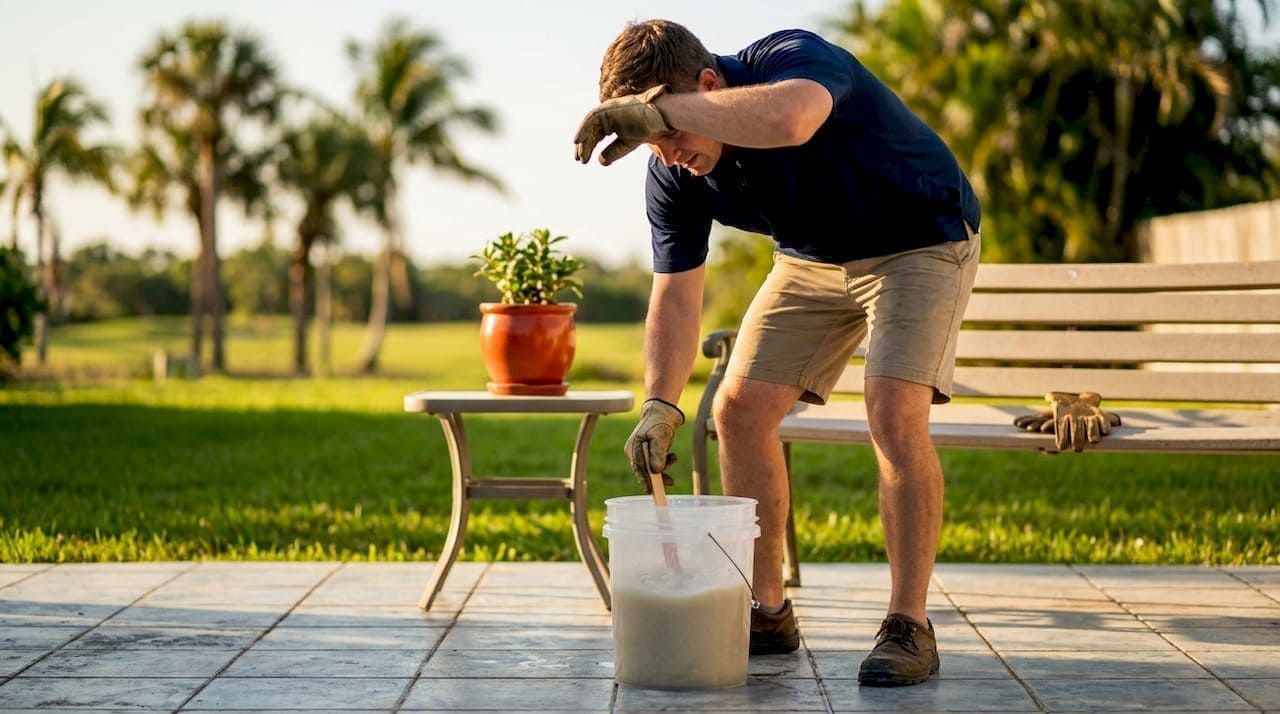
Choosing the right product starts with asking a few targeted questions about your specific surfaces and conditions. Not all biodegradable sealers are formulated the same way, and matching product properties to your surface type makes a significant difference in both protection and longevity.
Step-by-step approach to selection and application:
- Identify your surface type and porosity. Limestone, travertine, marble, slate, and granite all have different porosity levels. Higher porosity means the sealer absorbs more deeply, which requires a product designed for that absorption rate. Pool tile tends to be lower porosity, so a lighter penetrating formula works well.
- Check the application environment. Is it indoors, outdoors, or in a covered pool area? Outdoor stone needs UV-stable formulas. Covered pool areas benefit most from biodegradable, low-fume options since ventilation is limited.
- Look for LEED and EPA-compliant labeling. The growing demand for certified biodegradable products has made these labels easier to find. Certification tells you the product has been independently tested for both environmental performance and surface safety.
- Test on an inconspicuous area first. Apply a small amount in a hidden corner or edge. Wait 24 hours. Check for color change, hazing, or unexpected texture. This simple step protects you from surprises on your most visible surfaces.
- Clean thoroughly before sealing. Any existing dirt, calcium deposits, or biological growth needs to be removed before sealer application. A clean, dry surface lets the sealer penetrate evenly and bond correctly. Rushing past this step is the most common cause of premature sealer failure.
- Apply in thin, even coats. More sealer is not better. Thin coats penetrate more effectively and cure faster. Apply, let the first coat absorb fully, then assess whether a second coat is needed based on how the surface reacted.
- Allow proper cure time before water or foot traffic. Most biodegradable penetrating sealers need 24 to 48 hours of dry curing time. Rushing this step reduces protection and can leave a sticky or uneven finish.
Pro Tip: Always check weather forecasts before sealing outdoor surfaces. Applying sealer when rain is expected within 24 hours or when temperatures drop below 50°F can prevent proper curing and wash away your work entirely.
The ultimate guide to choosing the right stone sealer goes deeper on surface compatibility, and if you're managing pool tile specifically, knowing how often to clean and seal pool tiles will keep your maintenance schedule on track.
A fresh look: What most homeowners miss about biodegradable sealers
All these practical tips matter, but let's zoom out and consider what most people really overlook when it comes to going green with sealers.
The biggest misconception isn't about performance. It's about cost. Many homeowners assume biodegradable sealers cost more overall. When you factor in the actual 5-year picture, the math flips. Because water-based biodegradable sealers recoat without stripping, you skip the cost of chemical strippers, the labor time of surface prep, and the downtime of multi-day projects. Property managers who have made the switch consistently report fewer rework situations and less surface damage between sealing cycles.
There's also a property value dimension that rarely gets discussed. Green certifications, low-VOC compliance, and eco-responsible maintenance practices are becoming visible checkboxes for property buyers and tenants. Maintaining your stone and pool surfaces with certified biodegradable products contributes to that story in a way that standard chemical sealers simply cannot.
The 3 to 5 year lifespan standard for bio-based sealers is not a compromise, it's a match for conventional products. The durability is there. What biodegradable sealers add on top of that baseline is a maintenance experience that is genuinely easier, safer, and less disruptive. There's no strong-odor clearing-the-house event. There's no waiting for fumes to dissipate before letting your family near the pool deck or kitchen floor.
We also think it's worth saying plainly: the formulations have changed dramatically in recent years. Early water-based sealers had real limitations with penetration depth and initial performance on dense stone. Modern versions have closed that gap through improved resin chemistry and application technology. Dismissing biodegradable sealers based on experiences from 10 years ago means missing out on products that genuinely work.
Understanding why sealing natural stone matters is the foundation of this whole conversation. Once you see how vulnerable unprotected stone really is, the case for using the best available protection, biodegradable or otherwise, becomes obvious. And right now, biodegradable is often the best available option.
Find the right sealer for your home or pool
If you're ready to make your next maintenance project sustainable and easy, here's where to start.
At Oceancare, we've built our entire product range around this exact challenge: giving homeowners and property managers access to high-performance, eco-friendly sealers and cleaners that don't require choosing between effectiveness and responsibility. Our formulations are plant-based, low-VOC, and specifically tested for pool tile, natural stone, grout, and outdoor surfaces.
Whether you're sealing travertine pavers, pool tile, a marble bathroom floor, or a slate kitchen countertop, the right starting point is matching the product to the surface. Our stone sealer guide walks you through every major surface type with clear, practical recommendations. From there, our team is ready to help you choose the exact product that fits your project, your timeline, and your commitment to keeping things safe and sustainable.
Frequently asked questions
How long do biodegradable sealers last on stone or pool surfaces?
Most high-quality biodegradable sealers last 3 to 5 years before reapplication is needed, which matches the lifespan of conventional solvent-based sealers.
Do biodegradable sealers protect as well as solvent-based sealers?
Modern biodegradable sealers using water-based formulas offer comparable durability and superior safety for most residential stone and pool applications, with the added advantage of better breathability that prevents surface delamination.
Are biodegradable sealers safe for families and pets?
Yes, low-VOC biodegradable sealers release minimal or no harmful fumes during and after application, making them significantly safer for indoor and outdoor use around kids and pets compared to solvent-based alternatives.
Is it necessary to strip old sealer before applying a biodegradable option?
In most cases, water-based sealers recoat without requiring harsh stripping, which saves time, reduces chemical exposure, and lowers the total cost of your maintenance cycle.

