
Why protect pool tiles? Prevent damage, save money
TL;DR:
- Pool tiles serve a critical function by protecting the pool structure from damage and reducing maintenance needs. Regular cleaning, sealing, and water chemistry balance are essential prevention strategies, especially for sensitive materials like glass and natural stone. Eco-friendly products and proactive maintenance can extend tile lifespan, prevent costly repairs, and safeguard your pool investment.
Pool tiles are easy to take for granted. They look sharp, they frame the water line, and most homeowners assume they pretty much take care of themselves. That assumption is one of the most expensive mistakes a pool owner can make. Pool tiles protect the underlying pool structure from water damage, chemical erosion, and structural deterioration, extending the pool's lifespan. Without consistent care, what starts as a faint calcium ring or a hairline crack can turn into a full-scale repair project costing thousands. This guide breaks down the real reasons to protect your pool tiles, the specific threats you are up against, and how to handle all of it with eco-friendly solutions that are safe for your family and your backyard environment.
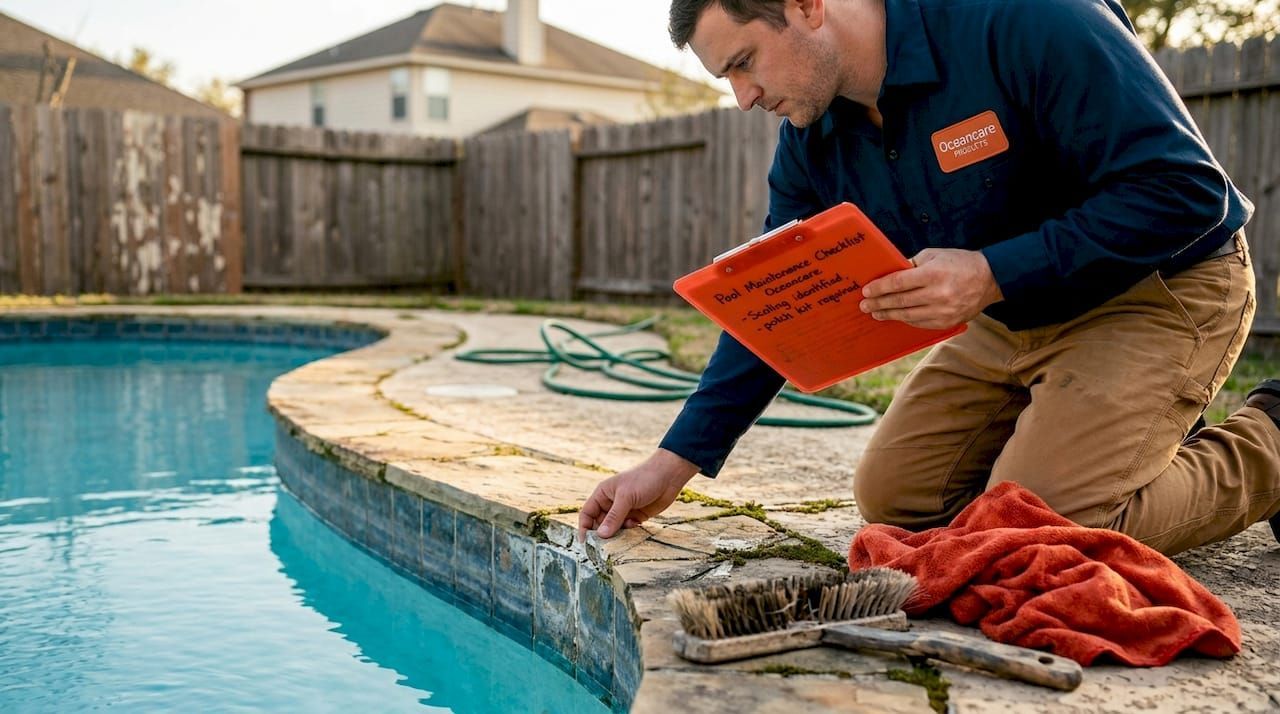
Table of Contents
- The critical role of pool tiles
- Common threats to unprotected pool tiles
- How material type and climate affect protection strategies
- Eco-friendly solutions for protecting and cleaning pool tiles
- What most owners overlook about protecting pool tiles
- Protect your pool tile investment with proven solutions
- Frequently asked questions
Key Takeaways
| Point | Details |
|---|---|
| Tiles prevent damage | Well-protected pool tiles shield your pool from costly water and chemical damage. |
| Neglect invites repair bills | Unprotected tiles can crack, stain, or detach, leading to expensive fixes and leaks. |
| Tailor strategies to climate | Tile material and local climate affect how you should clean and protect your pool. |
| Prevention is eco-friendly | Eco-friendly cleaners and sealants extend tile life and avoid harsh chemical cycles. |
| Act before issues appear | Proactive care keeps your pool beautiful and reduces headaches down the road. |
The critical role of pool tiles
Most people think pool tiles are purely cosmetic. The truth is that they are one of the most hardworking components of your entire pool system.
Tiles form a physical barrier between the pool water and the structural shell beneath. That shell, whether it is concrete, gunite, or fiberglass, is not designed to handle constant direct contact with chemically treated water. Without tiles, water and pool chemicals would eat into the substrate, weakening bonds, causing leaks, and shortening the life of the entire structure. Tiles also prevent algae from embedding into porous surfaces, which makes cleaning far more manageable over the long run.
Well-maintained pool tiles also reduce how often you need to reach for aggressive cleaners. When the tile surface is intact and sealed, routine brushing is usually all you need. Neglected tiles, on the other hand, become a cycle of emergency cleaning and escalating repair costs. Consistent pool tile maintenance is what keeps that cycle from ever starting.
| Condition | Maintenance frequency | Average repair cost over 5 years | Tile lifespan |
|---|---|---|---|
| Well-protected tiles | Quarterly light cleaning | $200 to $500 | 20 to 30 years |
| Partially maintained | Monthly scrubbing | $800 to $1,500 | 10 to 15 years |
| Neglected tiles | Emergency cleaning | $2,500 to $6,000+ | Under 10 years |
The numbers tell a clear story. A small investment in regular protection multiplies the return many times over.
Key benefits of properly maintained pool tiles:
- Prevent water infiltration into the structural shell
- Slow down algae growth at the waterline
- Reduce chemical consumption by maintaining a cleaner surface
- Lower the likelihood of grout failure and tile loosening
- Keep the pool looking sharp without aggressive scrubbing
"Properly protected pool tiles dramatically reduce routine maintenance demands while significantly extending the overall lifespan of your pool structure."
Common threats to unprotected pool tiles
Understanding the essential role pool tiles play makes it clear why their protection is mission-critical. So what actually happens when you skip that protection? The list of threats is longer than most owners expect.
The single biggest culprit is unbalanced water chemistry. Pool water that drifts too acidic (low pH, below 7.2) etches tile surfaces, eats through grout, and can even dissolve the adhesive holding tiles in place. Water that swings too alkaline (high pH, above 7.8) triggers calcium scaling, those chalky white deposits that build up at the waterline. Unprotected tiles suffer from staining, cracking, loosening, etching from unbalanced water chemistry, calcium scaling, grout deterioration, and freeze damage in winter.
Beyond chemistry, there are five major threats to watch:
- Calcium scaling forms when hard water minerals deposit along the waterline. Left alone, scaling becomes rock-hard and increasingly difficult to remove without abrasive tools that scratch the tile.
- Grout deterioration happens when moisture seeps behind tiles through micro-cracks in grout lines. Once grout fails, tiles start loosening one by one.
- UV exposure fades and weakens glazed tile surfaces over time, especially on uncovered pools in sunny climates.
- Freeze-thaw cycles are brutal. Water trapped behind poorly sealed tiles expands when it freezes, and that pressure pops tiles right off the wall.
- Staining from algae and metals leaves permanent discoloration if not addressed early, especially on lighter-colored tiles.
| Condition | After 5 years (protected) | After 5 years (unprotected) |
|---|---|---|
| Tile surface | Smooth, intact | Etched, pitted, stained |
| Grout lines | Firm, sealed | Crumbling, discolored |
| Calcium buildup | Minimal | Heavy scaling at waterline |
| Structural integrity | Sound | Potential water infiltration |
| Repair costs | Low | High to very high |
Seasonal risks deserve special attention. Winter is when most damage happens invisibly. Checking your pool tile maintenance tips before the cold season can prevent the kind of spring-opening surprises that ruin your budget.
Pro Tip: Before cleaning or sealing your tiles, always test on a small, hidden section first. Balance your water chemistry to the correct pH range (7.4 to 7.6) before applying any product. This prevents you from sealing in residue or causing unexpected reactions on the tile surface.
For homeowners in areas with hard water, the scale threat is constant year-round. Explore eco-friendly pool tile care practices that combine safe cleaners with scale inhibitors to stay ahead of buildup without resorting to harsh acid washes.
How material type and climate affect protection strategies
Knowing what can go wrong, the next step is getting specific. Your pool's location and tile material change the entire protection playbook.
Not all pool tiles are created equal, and neither are the risks they face. Glass tiles etch easily with low pH water, natural stone needs sealing to manage porosity, and freeze-thaw environments require impervious tiles with water absorption rates at or below 0.5%. High-temperature spas add another layer, requiring expansion joints to handle thermal movement without cracking.
Glass tiles are popular for their reflective quality and bright colors. However, they are among the most sensitive to acidic conditions. Even a brief dip in pH can leave permanent etch marks on the surface that no amount of cleaning will fix. If you have glass tiles, pH monitoring needs to happen at least twice a week during swim season.
Porcelain tiles are the most durable and lowest-maintenance option. Their density means water absorption is minimal, making them naturally resistant to staining and scaling. They still need clean and seal cycles to keep grout lines protected, but they forgive occasional chemistry fluctuations better than other materials.
Natural stone tiles (travertine, slate, limestone) bring a premium look but come with the highest maintenance demands. Stone is porous by nature. Without sealing, water and chemicals absorb directly into the material, causing discoloration, weakening the structure, and creating a breeding ground for algae in the microscopic pores. Resealing natural stone is not optional. It is essential maintenance.
Quick-start protection checklist by tile type:
- Glass tiles: Test pH twice weekly, use only pH-neutral cleaners, avoid any acid-based descalers
- Porcelain tiles: Seal grout lines annually, inspect for chips or cracks, clean quarterly with a gentle brush
- Natural stone tiles: Apply penetrating sealer every 1 to 2 years, test sealer in a hidden spot first, avoid alkaline cleaners that strip sealant
- Ceramic tiles: Inspect glaze for crazing (fine crack patterns), reseal grout annually, brush off calcium deposits early before they harden
Climate also shapes how you maintain. In cold climates, knowing how often to clean and seal pool tiles before winter is one of the highest-value tasks on your maintenance calendar. In hot, sunny climates, UV protection for grout and glazed surfaces matters just as much.
Eco-friendly solutions for protecting and cleaning pool tiles
Not all tile care has to be harsh or damaging. Eco-friendly solutions are often the best choice for long-term prevention, and they work without putting your family, pets, or pool chemistry at risk.
The core principle of eco-friendly pool tile care is simple: work with the tile and the chemistry, not against them. Aggressive acid washes strip sealants, eat into grout, and dump harmful runoff into your yard. Plant-based, pH-neutral cleaners remove scale, stains, and grime without causing secondary damage.
Here is a practical, step-by-step eco-friendly tile protection routine:
- Test your water chemistry first. Before touching the tiles, check pH, alkalinity, and calcium hardness. Adjust to proper ranges (pH 7.4 to 7.6, alkalinity 80 to 120 ppm) before cleaning. Chemistry out of range will undo your cleaning work immediately.
- Dry brush the waterline. Use a soft nylon brush to loosen any loose debris or light calcium deposits before applying a cleaner. This saves product and prevents grinding grit into the tile surface.
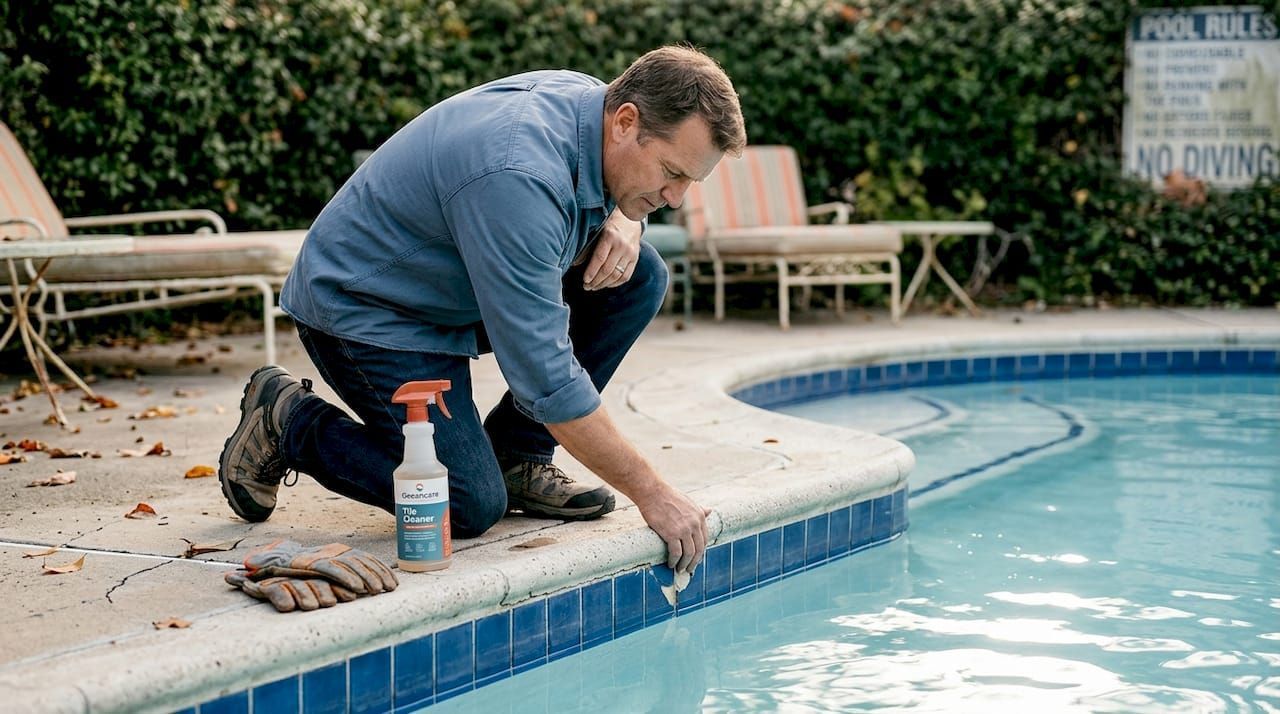
- Apply a pH-neutral cleaner. Spray or apply a plant-based, neutral-pH tile cleaner to the surface. Allow proper dwell time as directed. This breaks down oils, algae residue, and light scale without etching or bleaching.
- Rinse thoroughly. Remove all cleaner residue with clean water before it dries back onto the surface.
- Inspect grout lines. Check for cracks, crumbling, or discoloration. Address minor grout issues before they turn into tile failures.
- Apply a penetrating sealer. On clean, dry tiles, apply a low VOC penetrating sealer. This fills the microscopic pores in both the tile and grout, blocking water, chemicals, and stains from getting in.
- Repeat on schedule. Light cleaning every 4 to 6 weeks. Full clean-and-seal cycles every 12 months, or every 6 months for natural stone and in harsh climates.
Prioritizing water chemistry balance and sealing over reactive cleaning is the smartest long-term approach. Premium materials like porcelain and glass do reduce the frequency of intervention, but no material is immune to neglect.
Choosing the right products matters as much as the routine. When you learn how to easily clean pool tiles using biodegradable formulas, you protect both the surface and the surrounding environment. Understanding pool tile cleaner types also helps you match the right product to your specific tile and stain type, instead of defaulting to the harshest option on the shelf.
Pro Tip: In hard water regions, add a scale inhibitor to your maintenance routine alongside your eco-friendly cleaner. Scale inhibitors keep calcium carbonate in suspension in the water so it does not deposit on your tiles in the first place. This is far easier than removing hardened scale after the fact.
What most owners overlook about protecting pool tiles
Most pool tile guides focus on what to do after the problem shows up. That reactive mindset is exactly what causes the most expensive repairs.
In our experience, the majority of serious pool tile damage comes not from one dramatic event but from gradual, invisible neglect. A waterline that gets a little more scale each week. Grout that absorbs a little more water each season. A pH that drifts just slightly low for months at a time. None of these feel urgent until they all compound at once, and suddenly you are looking at cracked tiles, exposed substrate, and a repair bill that could have been avoided entirely.
The "out of sight, out of mind" problem is real. Tiles below the waterline are not visible during normal pool use, so early signs of deterioration go unnoticed. Proactive pH balancing and a consistent sealing schedule matter far more than any amount of reactive scrubbing later.
We also see a persistent belief that stronger chemicals equal better cleaning. The opposite is often true. Acid washes and harsh descalers strip protective coatings, weaken grout, and leave the surface more vulnerable than before. After an aggressive acid treatment, tiles actually need to be resealed immediately, a step many homeowners skip entirely.
The 9% expansion that water undergoes when it freezes is a number worth memorizing if you live in a cold climate. Any water sitting in micro-cracks, behind loose grout, or beneath an unsealed tile will expand with that kind of force every single freeze cycle. Sealing before winter is not a nice-to-have. It is structural protection.
Glass and natural stone tiles especially benefit from preemptive sealing. These materials do not forgive repeated exposure to chemistry extremes the way porcelain does. For those tile types, think of sealing as the first line of defense, not a finishing touch.
The real insight? Protection is a system. Chemistry management, periodic sealing, and gentle eco-friendly cleaning all work together. Skipping one part weakens the whole approach.
Protect your pool tile investment with proven solutions
With a clearer picture of what is at stake, choosing the right products becomes straightforward. Whether you are dealing with calcium scale, faded grout, or tiles that simply need a fresh layer of defense, the right starting point is a cleaner and sealer you can trust.
At Oceancare Store, every product is designed around the same core idea: high performance without compromise. Start with a pH neutral tile cleaner that lifts scale, oils, and algae residue safely from any tile type. Then lock in your results with a tile sealer for protection that penetrates the surface and guards against water and chemical intrusion for years. For a streamlined approach, the eco-friendly clean and seal system covers both steps with biodegradable, plant-based formulas that are safe for your family, pets, and the environment. Your pool tiles are a long-term investment. Protecting them should not require harsh trade-offs.
Frequently asked questions
What causes pool tiles to crack or fall off?
Cracks and detachment often result from unbalanced water chemistry, freeze-thaw cycles, and lack of sealing, which weaken tile bonds and grout over time. Unprotected tiles are particularly vulnerable to calcium scaling and grout deterioration that accelerate these failures.
Is cleaning enough to protect my pool tiles?
Cleaning alone removes surface buildup but does nothing to stop water and chemicals from penetrating tile and grout. Prioritizing sealing alongside balanced water chemistry gives your tiles complete, long-lasting protection.
Are eco-friendly cleaners safe for all pool tile types?
Yes, most eco-friendly cleaners work safely across tile types as long as you select a pH-neutral formula and test a small inconspicuous area first. In hard water areas, a scale inhibitor alongside your cleaner adds an important layer of preventive protection that keeps mineral deposits from forming.
How often should I seal natural stone pool tiles?
Natural stone tiles typically need resealing every 1 to 2 years due to their natural porosity, though harsh climates may require more frequent cycles. Natural stone needs sealing to manage water absorption and prevent chemical damage from reaching the material beneath the surface.

