
What is calcium remover? Eco solutions for pool tiles & stone
TL;DR:
- Eco-friendly calcium removers are safer and environmentally gentler than traditional acid-based options.
- They work through chelating agents, dissolving mineral deposits without damaging surfaces.
- Proper selection, testing, and application ensure effective cleaning while protecting your surfaces and surroundings.
Calcium buildup has a reputation for being stubborn, and the old advice was always the same: reach for the strongest acid you can find. That approach worked, but it came with real costs. Etched stone, damaged grout, faded tile finishes, and chemical runoff into your yard are just a few of the downsides. Today, a new generation of eco-friendly calcium removers is changing the game. These products dissolve mineral deposits just as effectively, without putting your surfaces or your family at risk. This guide breaks down exactly what calcium remover is, how it works, and how to choose and use the right one for your home.
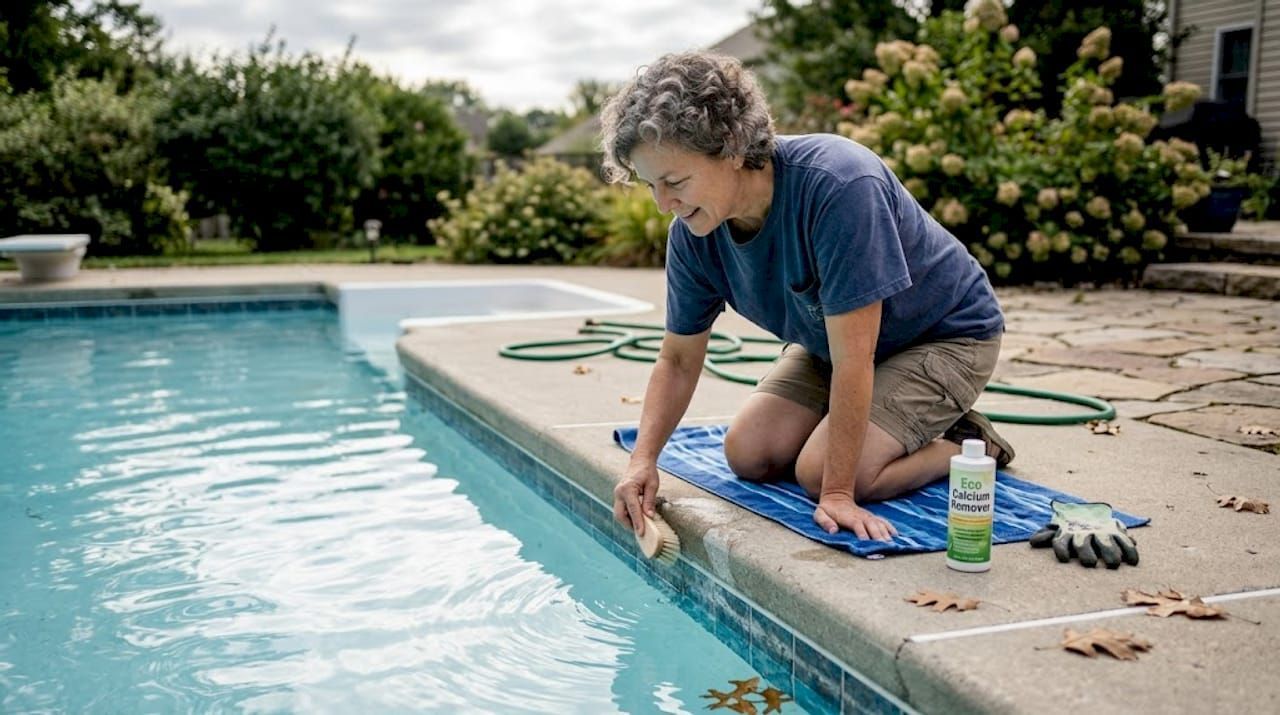
Table of Contents
- Understanding calcium remover: More than just a cleaner
- How calcium removers work: Chemistry behind the clean
- Choosing the right calcium remover for your surfaces
- How to use calcium remover safely and effectively
- Why eco-friendly calcium removers are the better choice for your home and the planet
- Safer, smarter cleaning: Discover proven calcium removers and expert resources
- Frequently asked questions
Key Takeaways
| Point | Details |
|---|---|
| Definition clarified | A calcium remover is a specialized cleaner that dissolves mineral deposits from hard surfaces like pool tile and stone. |
| Eco-friendly tested | Acid-free calcium removers deliver safe, powerful results without risks to your home or the environment. |
| Smart selection | Choosing the right remover depends on your surface type and safety needs, especially for natural stone. |
| Proper use matters | Following application steps and safety tips ensures both effective results and surface protection. |
Understanding calcium remover: More than just a cleaner
A calcium remover is a specialty cleaning product formulated to dissolve calcium carbonate and other hard mineral deposits that build up on surfaces exposed to hard water. This is not the same as an all-purpose cleaner. Standard cleaners are designed to lift dirt, grease, and grime. Calcium deposits are mineral crystals bonded to a surface, and they need a targeted chemical reaction to break apart, not just a detergent.
You'll find calcium buildup on pool tiles, natural stone countertops, bathroom fixtures, grout lines, outdoor fountains, and kitchen surfaces near water sources. Anywhere hard water sits or evaporates, it leaves behind a white or gray crusty residue. That residue is mostly calcium carbonate, and it gets harder to remove the longer it sits.
Calcium removers come in two main categories:
- Acid-based removers: These use strong acids like muriatic, phosphoric, or sulfamic acid to dissolve mineral deposits quickly. They work fast, but acid-based cleaners can damage natural stone and delicate surfaces if used without care.
- Acid-free (eco-friendly) removers: These rely on chelating agents, biodegradable surfactants, and plant-derived compounds to break down calcium without the harshness. They're safer for surfaces, safer for people, and safer for the environment.
The risks of acid-based products go beyond surface damage. Strong acids release fumes that are harmful to breathe, can burn skin on contact, and create chemical runoff that damages soil and nearby plant life. For homeowners and property managers who care about their investment and their surroundings, these risks add up fast.
Eco-friendly acid-free calcium removers have become the preferred choice for a simple reason: they protect your surfaces while doing the job. They're also much easier to use safely around children, pets, and landscaping. Pair that with effective limescale prevention strategies and you can dramatically reduce how often you need to clean in the first place.
Pro Tip: If you're unsure whether a product is truly acid-free, check the pH level on the label. A pH above 6 is a good indicator that the formula won't etch stone or corrode grout.
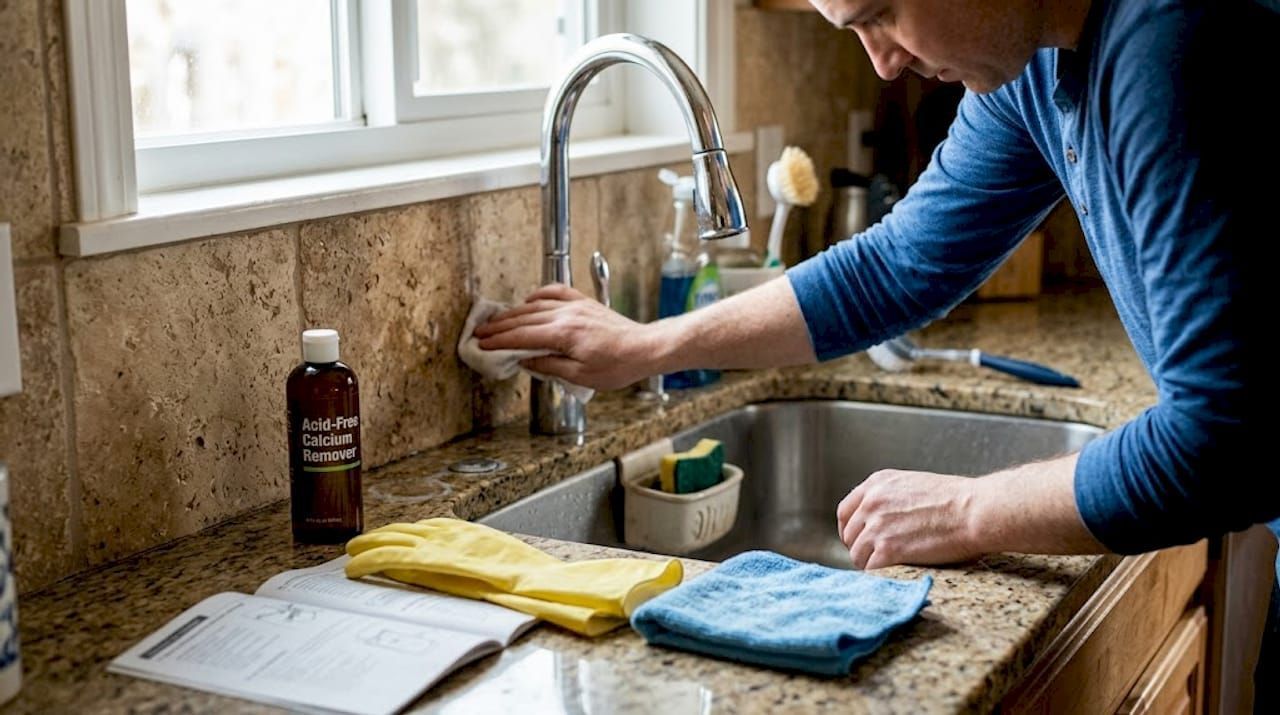
How calcium removers work: Chemistry behind the clean
Now that you understand what calcium removers are, let's explore exactly how they break down stubborn mineral residues.
Calcium deposits are made mostly of calcium carbonate, a compound that forms when calcium ions in hard water combine with carbonate ions as water evaporates. The result is a hard, crystalline crust that bonds tightly to tile, stone, and grout.
Acid-based removers work by a straightforward neutralization reaction. The acid donates hydrogen ions that react with the calcium carbonate, breaking it apart into calcium salts, water, and carbon dioxide gas. You'll often see fizzing during this process. It's fast, but the same reaction can also eat into porous stone, strip sealers, and weaken grout over time.
Eco-friendly removers take a different approach. They use chelating agents, which are molecules that grab onto calcium ions and pull them away from the surface without a corrosive reaction. Biodegradable surfactants help lift the loosened mineral residue so it rinses away cleanly. As calcium removers react with mineral deposits to dissolve them without scrubbing, you get results without the elbow grease or the risk.
Here's a quick comparison to put it in perspective:
| Feature | Acid-based remover | Eco-friendly remover |
|---|---|---|
| Active ingredient | Strong acids | Chelating agents, plant surfactants |
| Surface safety | Risk of etching/damage | Safe for stone, tile, grout |
| Fumes/VOCs | High | Low to none |
| Scrubbing needed | Sometimes | Rarely |
| Environmental impact | High | Low |
| Biodegradable | No | Yes |
"The best calcium remover isn't the one that works fastest. It's the one that works without leaving behind a bigger problem than the one you started with."
For methods for pool tile calcium removal and step-by-step guidance on easy pool tile cleaning, eco-formulas consistently deliver results on even heavy buildup when given proper dwell time.
Choosing the right calcium remover for your surfaces
Understanding the chemistry helps, but knowing which calcium remover fits your unique surfaces is just as important.
Not all surfaces respond the same way to mineral removers. Porcelain and ceramic tiles are generally more forgiving. Natural stone like travertine, limestone, marble, and slate is much more sensitive. Plaster pool surfaces sit somewhere in between. Choosing the wrong product can mean etching, discoloration, or stripping the protective sealer you worked hard to apply.
Here's a comparison of the main product types:
| Product type | Best for | Avoid on |
|---|---|---|
| Acid-based | Heavy buildup, concrete | Natural stone, marble, unsealed grout |
| Acid-free chelating | Pool tiles, stone, grout | N/A (broadly compatible) |
| Enzyme-based | Light deposits, routine care | Heavy scale buildup |
Some calcium removers may cause etching or discoloration if used incorrectly on delicate surfaces, so always match the product to the surface before you start.
Here's how to check compatibility before committing to a full application:
- Read the product label carefully. Look for specific surface approvals or warnings.
- Test a small, hidden area first. Apply a small amount, wait the recommended dwell time, and rinse.
- Inspect for any color change, dullness, or texture shift before proceeding.
- If the surface has a sealer, confirm the remover is sealer-safe. Some formulas can strip sealers.
- When in doubt, contact the manufacturer or check the product FAQ.
For a broader look at types of pool tile cleaners and guidance on eco cleaning for hard surfaces, you'll find that acid-free chelating formulas cover the widest range of surfaces safely.
Pro Tip: Natural stone surfaces like travertine and marble are calcium-based themselves. Using an acid-based remover on them is essentially dissolving your own surface. Always go acid-free on stone.
How to use calcium remover safely and effectively
Once you've selected the right remover, using it correctly is key for spotless, long-lasting results.
Preparation matters more than most people realize. Before you apply anything, clear loose debris from the surface. Rinse the area with clean water to remove dust and dirt that could interfere with the product's contact with the calcium deposit. Then do a small patch test in an inconspicuous spot and wait a few minutes to confirm no adverse reaction.
Here's a step-by-step process for safe, effective application:
- Apply the calcium remover directly to the affected area. For vertical surfaces like pool tile walls, a spray or gel formula clings better.
- Allow the product to dwell. Most eco-friendly formulas need 3 to 10 minutes of contact time to work. Don't rush this step.
- Gently agitate with a soft brush or non-abrasive pad if needed. Heavy buildup may need a second application rather than hard scrubbing.
- Rinse thoroughly with clean water. Make sure no product residue remains on the surface.
- Inspect the area. Repeat if necessary for thick or layered deposits.
Safety tips worth keeping in mind:
- Wear gloves even with eco-friendly formulas, especially if you have sensitive skin.
- Work in a ventilated area when possible.
- Avoid letting product runoff reach garden beds or grass. Rinse with plenty of water to dilute any residue.
- Store products away from direct sunlight and heat.
Properly following product instructions prevents accidental damage and maximizes effectiveness, which is why reading the label before you start is non-negotiable. For a detailed walkthrough, the guide on using calcium remover like a pro and the hard surface cleaning steps checklist are both worth bookmarking.
Pro Tip: To slow calcium return, consider applying a stone or tile sealer after cleaning. Sealed surfaces give calcium deposits less to grip onto, making your next cleaning session much easier.
Why eco-friendly calcium removers are the better choice for your home and the planet
Here's something the cleaning industry doesn't say loudly enough: the real cost of acid-based cleaners isn't the price on the bottle. It's the tile you have to replace in five years, the grout you need to regrout, and the stone sealer you have to reapply every season because the acid stripped it. Those are the hidden costs.
We've seen this pattern repeat itself. Homeowners reach for the strongest product available, get fast results, and then wonder why their pool tile looks dull or their travertine is pitting. The "quick fix" ends up being the expensive fix.
Eco-friendly calcium removal without acids isn't a compromise. Modern chelating formulas match or outperform traditional acid products on most residential buildup, including heavy pool waterline scale. And eco-friendly cleaning products reduce surface and environmental damage compared to harsh chemicals, which means your surfaces last longer and your yard stays healthier. Choosing these products is a practical decision, not just an ethical one. Your surfaces, your family, and your landscape all benefit.
Safer, smarter cleaning: Discover proven calcium removers and expert resources
You now have a clear picture of what calcium remover is, how it works, and why eco-friendly formulas are worth choosing. The next step is finding products that actually deliver on these promises.
At Oceancare Store, we specialize in biodegradable, acid-free solutions built for pool tiles, natural stone, grout, and hard surfaces. Whether you want to revitalize pool tile after a season of buildup, explore proven calcium removal methods, or get a practical walkthrough on how to clean pool tiles without damaging them, our product range and expert guides are built to help you get lasting results the safe way.
Frequently asked questions
What surfaces can I use calcium remover on?
Most calcium removers are suitable for pool tiles, ceramic, porcelain, and sealed natural stone, but always check compatibility before applying to any delicate or unsealed surface.
Are acid-free calcium removers as effective as acid-based ones?
Yes, modern acid-free formulas are engineered to break down mineral deposits effectively without risking damage to sensitive surfaces like marble or travertine.
Can I prevent calcium buildup permanently?
Permanent prevention isn't realistic, but regular cleaning and water management can significantly reduce how often and how severely calcium deposits form.
Is calcium remover safe for the environment?
Eco-friendly calcium removers use biodegradable ingredients that break down naturally, and eco formulas reduce environmental impact compared to traditional acid-based products that can harm soil and waterways.
Recommended

