
What is a low VOC cleaner? Healthier home cleaning explained
TL;DR:
- Conventional cleaning products can significantly increase indoor VOC levels, harming health.
- Low VOC cleaners use enzymes, plant-derived surfactants, and pH-neutral formulas for safer cleaning.
- Certifications like EPA Safer Choice and Green Seal ensure truly low VOC, effective cleaning options.
Most homeowners never suspect that the cleaner they spray on their pool tile or kitchen stone could be quietly polluting the air inside their home. Conventional cleaning products can push indoor VOC levels 2-5 times higher than outdoor air, even when you follow the label directions exactly. For pool owners and property managers who clean frequently and in enclosed spaces, that exposure adds up fast. This guide explains what low VOC cleaners actually are, how to read the labels, which certifications matter, and how to pick the right formula for pools, natural stone, and grout without compromising your family's health or your surfaces.
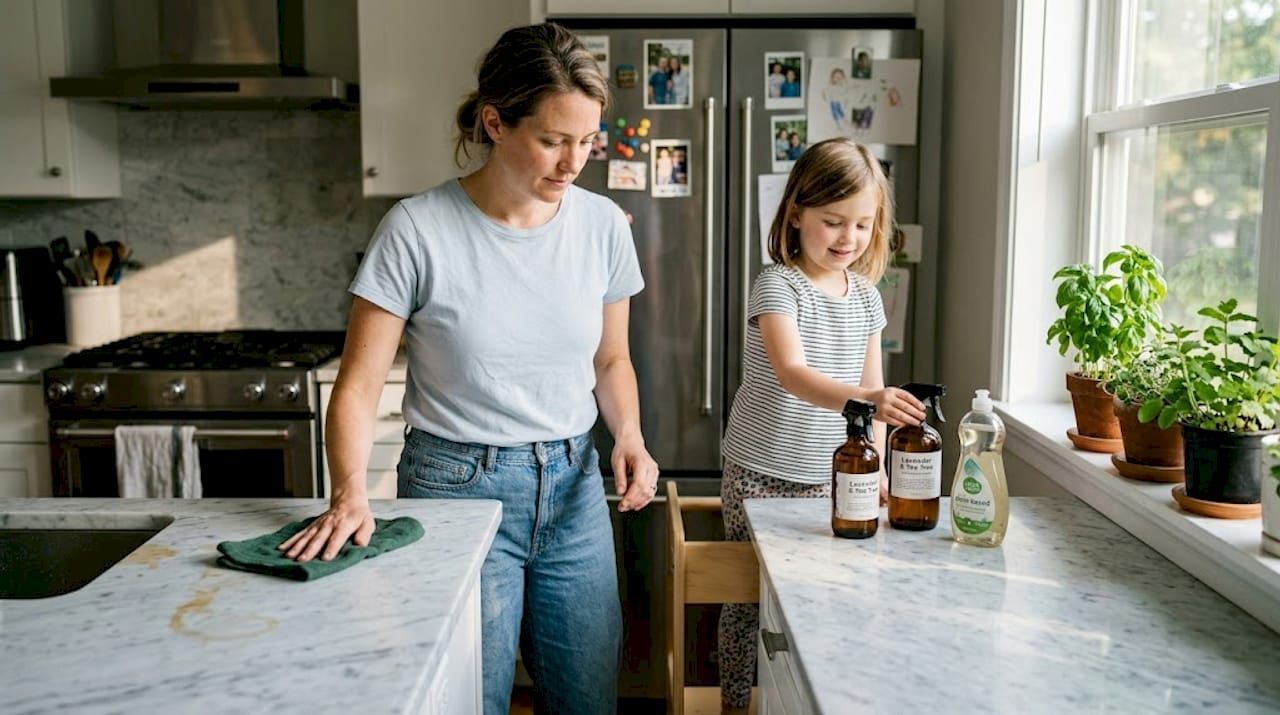
Table of Contents
- What are VOCs and why do they matter?
- How do low VOC cleaners work?
- Regulations, certifications, and what 'low VOC' really means
- Choosing and using low VOC cleaners for pools and natural stone
- Our take: What most guides miss about low VOC cleaners
- Looking for safer, eco-friendly cleaners for your pool or stone surfaces?
- Frequently asked questions
Key Takeaways
| Point | Details |
|---|---|
| VOCs explained | VOCs are chemicals in many cleaners that easily become harmful indoor air pollution. |
| Healthier alternatives | Low VOC cleaners reduce exposure to hazardous fumes, especially important indoors. |
| Certification matters | EPA Safer Choice and Green Seal labels are reliable cues for low VOC, eco-friendly cleaning. |
| Choose smart | For stone and pool areas, always pick pH-neutral, acid-free, certified cleaners to avoid damage and protect health. |
What are VOCs and why do they matter?
VOC stands for volatile organic compound. These are carbon-based chemicals that turn into vapor at room temperature, which means they leave the product and enter the air you breathe almost immediately after you open the bottle or apply the cleaner. VOCs evaporate easily at room temperature, contributing to indoor air pollution, health issues like headaches and respiratory distress, and outdoor smog.
The problem is not just one dramatic exposure. It is the repeated, low-level contact that happens every time you clean your pool surround, scrub grout, or wipe down a stone countertop. Over time, that adds up.
Short-term effects of VOC exposure include:
- Headaches and dizziness
- Eye, nose, and throat irritation
- Nausea or worsening asthma symptoms
- Skin reactions from direct contact
Long-term or chronic exposure is more serious. Some VOCs are classified as possible or probable carcinogens. Others disrupt hormones or damage the liver and kidneys with repeated exposure over months and years.
Why pool and stone cleaning is especially risky: Indoor pools, enclosed bathrooms, and stone-tiled kitchens have limited airflow. When you spray a conventional cleaner in a space like that, the VOCs have nowhere to go. Concentration builds quickly, and you are breathing it all in.
Common sources of VOCs in cleaning products include solvents used to dissolve mineral deposits, synthetic fragrances added for scent, preservatives, and surfactants derived from petrochemicals. Many products marketed as "fresh" or "clean-smelling" are actually among the highest VOC offenders.
If you are comparing types of pool tile cleaners, VOC content is one of the most important factors to check, especially if you clean regularly or have children or pets nearby. Choosing products with Safer Choice certification from the EPA is one of the most reliable ways to avoid high-VOC formulas.
How do low VOC cleaners work?
Low VOC cleaners are formulated to do the same job as conventional cleaners, removing calcium deposits, grime, algae staining, and mineral buildup, without relying on high-evaporation solvents. Low-VOC cleaners use biotech or enzymes for cleaning without heavy evaporation, and fragrances count as VOCs too, which is why fragrance-free formulas are often the safest choice.
Here is what makes them different at the ingredient level:
- Enzyme-based formulas use biological molecules that break down organic soils, body oils, and algae without harsh solvents
- Plant-derived surfactants lift dirt and mineral deposits with low vapor pressure, meaning they do not evaporate into the air the way petroleum-based versions do
- Fragrance-free or naturally scented options skip synthetic fragrance compounds, which are a surprisingly large source of VOC emissions in cleaning products
- pH-neutral bases avoid the need for acidic or alkaline solvents that often carry high VOC loads
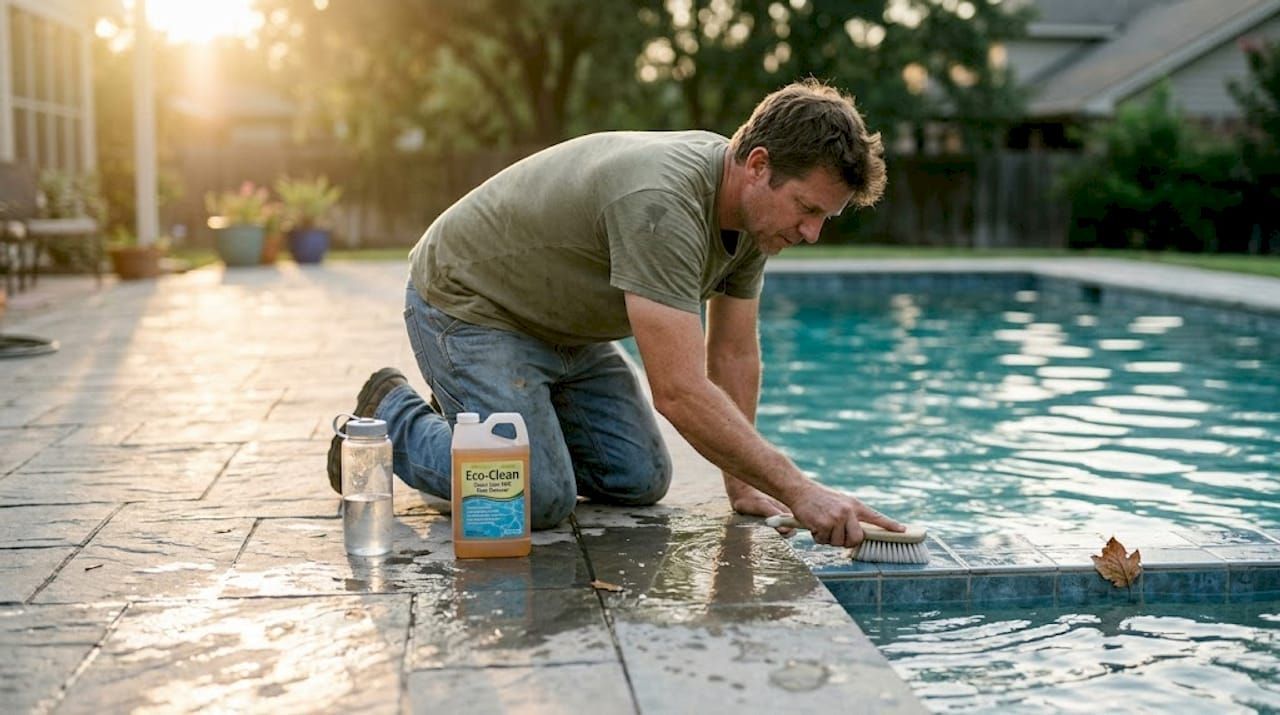
For natural stone and pool tile specifically, pH neutral stone cleaners are the gold standard. Stone like travertine, marble, and limestone is acid-sensitive. A cleaner that is both low VOC and pH-neutral protects your surfaces and your air quality at the same time.
Pro Tip: Check the ingredient list for words ending in "-ene," "-ane," or "-ol" (like toluene, hexane, or ethanol). These are common high-VOC solvents that appear even in some products labeled as "natural."
One often-overlooked point: the delivery method matters too. Aerosol sprays aerosolize more particles into the air than trigger sprays or pour-on concentrates, which means they can increase your effective VOC exposure even if the formula itself is low VOC. Switching from aerosol to a pump or concentrate format is a simple change that makes a real difference.
For anyone invested in natural stone protection, pairing a low VOC cleaner with a low VOC sealer creates a complete, safer maintenance system from the ground up.
Regulations, certifications, and what 'low VOC' really means
Here is where things get confusing fast. "Low VOC" is not a single, universally enforced standard. Different certifying bodies and regional regulations set different thresholds, and a product that qualifies as "low VOC" under one standard might not pass another.
Understanding the benchmarks helps you shop smarter:
| Category | VOC Content (g/L) | Example Standard |
|---|---|---|
| Zero VOC | Less than 5 g/L | Green Seal, some EPA categories |
| Low VOC | 5 to 50 g/L | Green Seal GS-37, CARB limits |
| Conventional | 50 g/L and above | No special certification |
No VOC is under 5 g/L, low VOC is 5-50 g/L, and Green Seal applies stricter limits than California's CARB standards in many product categories.
Here is how to prioritize certifications when you are shopping:
- EPA Safer Choice is one of the most rigorous programs. It evaluates every ingredient in a product, not just the VOC total, and requires that the formula meet performance standards too. EPA Safer Choice certifies safer, low VOC products and is a reliable indicator that the cleaner has been independently verified.
- Green Seal GS-37 applies specifically to commercial cleaning products and sets strict VOC limits alongside biodegradability and toxicity requirements.
- CARB (California Air Resources Board) sets VOC limits by product category. These are regulatory minimums, not best-in-class benchmarks.
- "Natural" or "eco" labels without certification mean almost nothing. Any brand can print those words on a bottle without third-party verification.
When you are choosing safe cleaners for your home or property, look for the EPA Safer Choice or Green Seal logo on the label. A VOC content listed in g/L on the product data sheet is a good secondary check.
Choosing and using low VOC cleaners for pools and natural stone
Knowing the theory is one thing. Applying it to your specific surfaces is where it gets practical. Pool tile, natural stone, and grout each have different needs, and not every low VOC cleaner works equally well across all of them.
| Surface | Key requirement | What to avoid |
|---|---|---|
| Pool tile (ceramic/porcelain) | Low VOC, calcium-dissolving formula | High-acid cleaners, aerosols |
| Natural stone (marble, travertine) | pH-neutral (6.5-7.5), non-etching | Acidic or alkaline solvents |
| Grout | Enzyme or oxygen-based, low VOC | Bleach-based, high-fragrance products |
| Outdoor stone | UV-stable, biodegradable | Petroleum solvent-based formulas |
Acid-sensitive stone needs non-etching formulas with a pH between 6.5 and 7.5, and overexposure to any VOCs still poses a risk to both health and surface protection.
Here are practical steps for using low VOC cleaners effectively:
- Ventilate even with low VOC products. Open windows or run exhaust fans. Low VOC does not mean zero VOC.
- Follow dwell time instructions. Enzyme-based cleaners need time to work. Rinsing too early reduces effectiveness and can lead you to apply more product than necessary.
- Dilute concentrates correctly. Using more than the recommended amount does not clean better. It increases exposure and waste.
- Check for hidden VOCs. Ingredients like "fragrance," "parfum," or "preservative blend" can mask high-VOC components in otherwise green-sounding products.
Pro Tip: For grout lines in pool surrounds or wet areas, look into acid-free grout cleaning methods that use oxygen-based or enzyme formulas. These protect grout integrity while keeping VOC exposure minimal.
If you want a starting point for product research, reviewing top eco-friendly stone cleaners gives you a curated look at what performs well on sensitive surfaces without the chemical load.
Our take: What most guides miss about low VOC cleaners
Most articles stop at "buy certified products" and call it done. That is only half the picture. In our experience working with homeowners and property managers who clean pools and stone surfaces regularly, the bigger issue is behavior, not just product choice.
A certified low VOC cleaner stored in a hot garage or left open between uses off-gasses far more than the label suggests. Mixing two "safe" products together, even accidentally, can create chemical reactions that generate new VOC compounds neither product contains alone. And ignoring dwell time leads people to scrub harder and use more product, which defeats the purpose entirely.
Another thing most guides skip: many products labeled "fragrance-free" still contain masking agents, which are synthetic compounds used to neutralize odor. These still emit VOCs. True fragrance-free means no added scent compounds of any kind.
The practical lesson is that certification matters, but so does how you store, dilute, apply, and dispose of your cleaners. Reviewing stone sealer best practices alongside your cleaner choices gives you a more complete approach to low-emission surface care.
Looking for safer, eco-friendly cleaners for your pool or stone surfaces?
If this guide has you rethinking what is under your sink or in your pool shed, you are in the right place. At
Oceancare Store, every product we carry is selected with VOC content, biodegradability, and surface safety in mind.
Our pool tile restorer is formulated to remove calcium and mineral buildup without harsh acids or high-VOC solvents. If you are building out a safer cleaning routine from scratch, our guide to eco-friendly cleaning essentials walks you through what actually works. You can also browse our full roundup of best eco-friendly cleaners to find certified, low VOC options for every surface in your home.
Frequently asked questions
Are low VOC cleaners always safe for natural stone surfaces?
Not all low VOC cleaners are safe for stone. Always choose a pH-neutral, non-etching formula, since acid-sensitive stone needs pH 6.5-7.5 to avoid surface damage.
How can I tell if a cleaner is truly low VOC?
Look for EPA Safer Choice or Green Seal certification on the label, and check that the VOC content is below 50 g/L. EPA Safer Choice certifies low VOC products through independent ingredient-level review.
Do low VOC cleaners work as well as regular cleaners?
Yes. Certified low-VOC cleaners meet tested efficacy standards as part of the certification process, and many enzyme-based formulas outperform conventional solvents on organic soils and mineral deposits.
Can VOCs from cleaners impact my family's health?
Absolutely. VOCs from cleaners cause acute and chronic health effects including headaches, asthma flare-ups, and with long-term exposure, more serious respiratory and systemic conditions.
Recommended

